
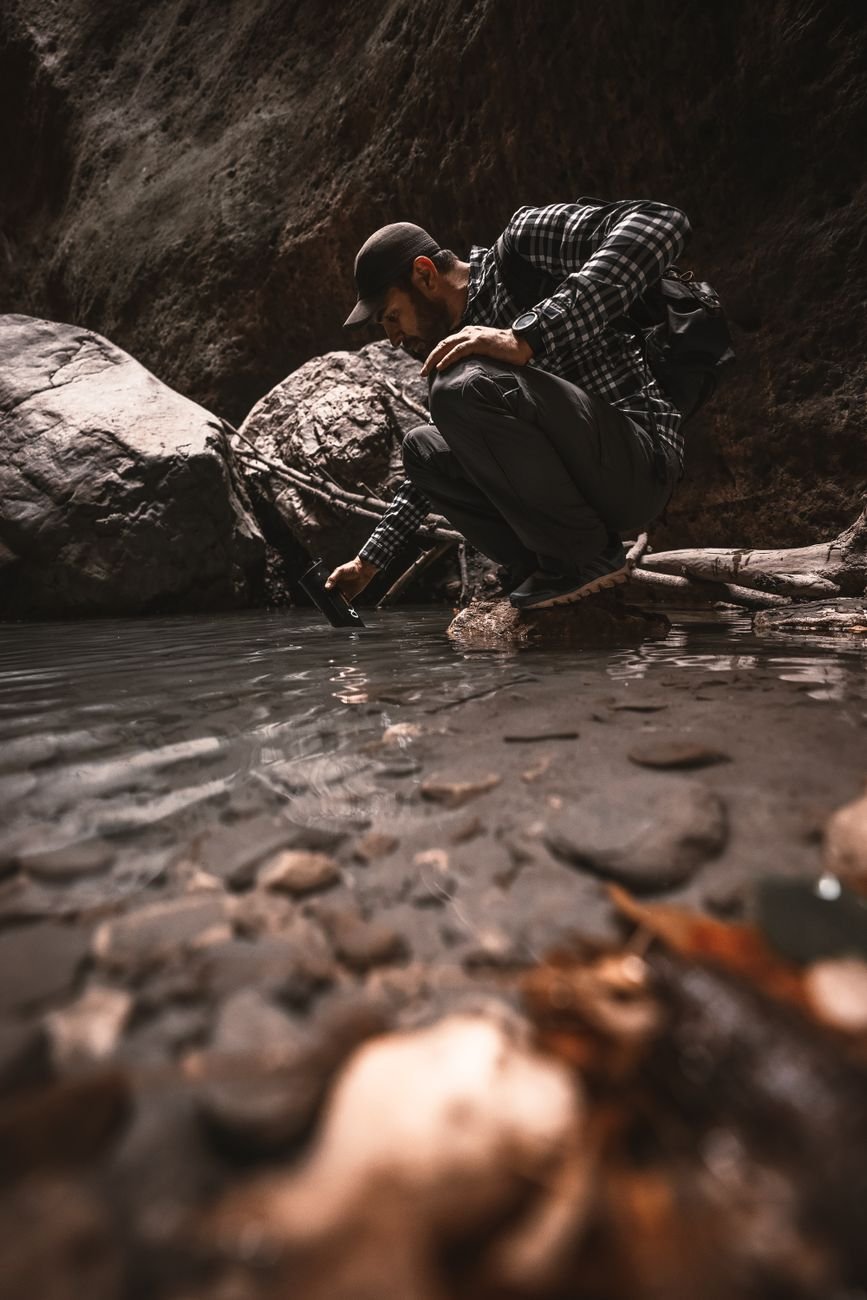
When the bottle is nearly empty, the source—not the gadget—sets the terms.
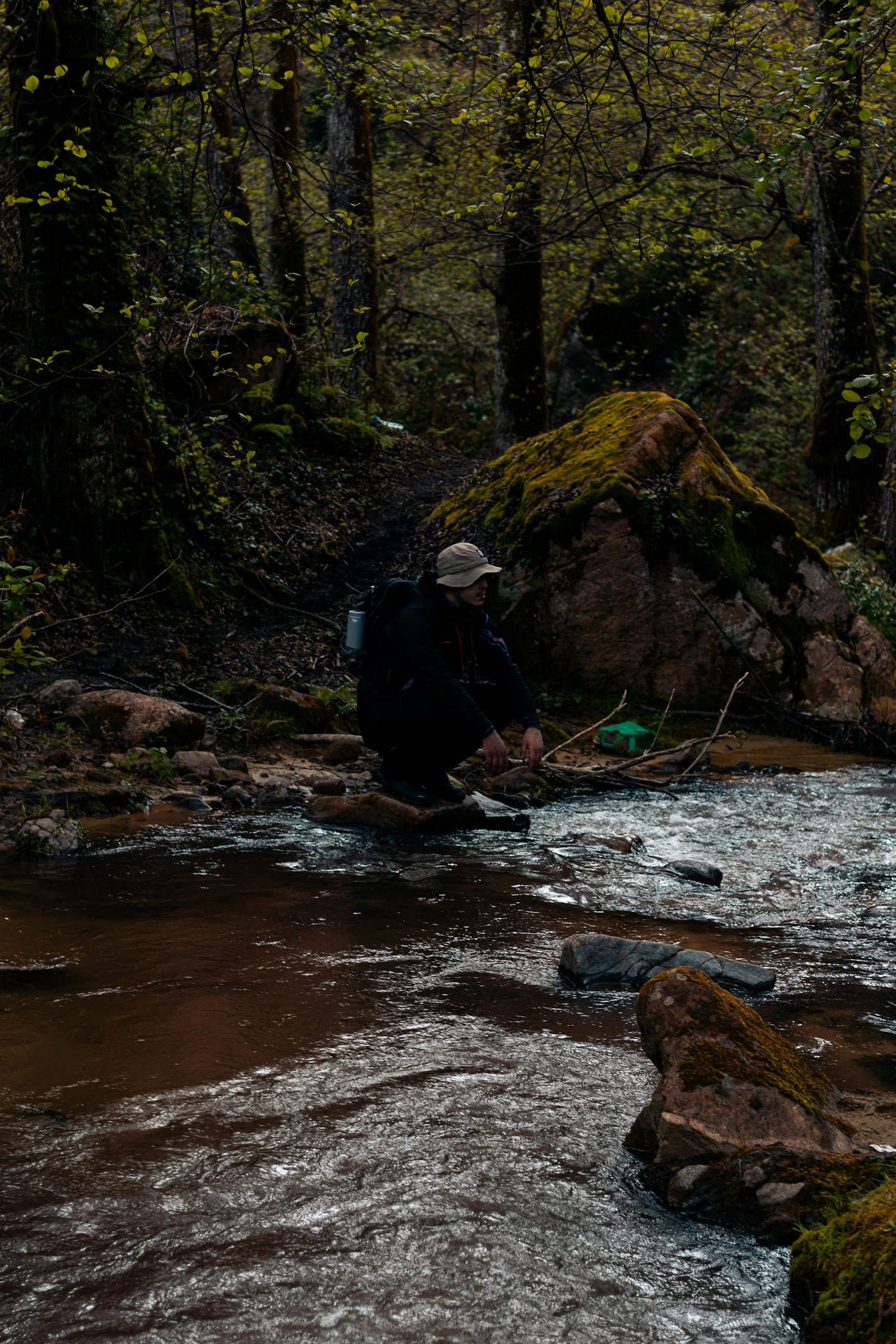
A hiker arrives at a shallow creek with one bottle left, fading daylight, and no certainty about what lies upstream. In that moment, dependability is conditional. A UV pen can treat clear water quickly, but suspended silt, tea-colored tannins, a scratched lamp, cold-drained batteries, or an awkward wide-mouth bottle can interrupt the process. Pre-filtering clears particles but adds time and equipment.
Tablets travel silently in a pocket and do not rely on charge, yet their waiting period matters when the stop is rushed. They also leave water unchanged in appearance: debris still needs to be removed, and effectiveness varies by active ingredient, contact time, temperature, and organism. Chlorine dioxide is commonly used because it has stronger activity against Cryptosporidium than iodine, though its full treatment time can be longer. Clear source plus reliable power favors UV; uncertain gear, a backup need, or a long pause can favor tablets.
What a tablet or UV pen is—and is not—removing
Disinfection
Inactivates or kills microorganisms. UV targets microbes with light; tablets use a chemical disinfectant. Neither process automatically removes particles from the water.
Filtration
Physically strains material through a medium. A separate filter may reduce sediment and some organisms, but its capability depends on pore size and certification.
Turbidity
Cloudiness from suspended silt, algae, or organic debris. It can shield microbes from UV light and makes a treated bottle look unpleasant even when disinfection has occurred.
Dissolved contaminants
Chemicals, salts, metals, fuel residues, and many agricultural pollutants are dissolved rather than floating as particles. Standard tablets and UV pens generally do not reduce them.
Log reduction
A laboratory measure of microbial reduction under stated conditions. The organism tested, water clarity, dose, temperature, and contact time behind the claim matter as much as the headline number.
A mountain stream can carry microorganisms without visible cloudiness, while a silty pool may also contain contaminants that neither method addresses. Taste, odor, sediment, and chemical pollution are separate questions from disinfection.
Product labels often specify the organisms covered and the conditions required. Those limits are especially relevant near roads, mines, farms, industrial areas, or saltwater influence, where dissolved pollution may be the larger concern.
Why the tablet label matters
A water purification tablets vs uv pen approach is not a single treatment category.
Its active ingredient sets the likely coverage, wait time, taste, storage, and dose.
Choosing the right tablet means matching its chemistry to the scenario and the water source at hand.
The product label’s instructions take precedence over generic rules because formulations and claims differ.
| Factor | Why it changes field use |
|---|---|
| Active ingredient | Iodine, chlorine dioxide, and chlorine-based tablets do not perform identically against bacteria, viruses, Giardia, and Cryptosporidium. |
| Contact time | A short wait may address many bacteria and viruses, while protozoa can require substantially longer treatment. |
| Water temperature | Cold water slows disinfectant action; labels commonly specify an extended wait in cold conditions. |
| Treated volume | One tablet may be intended for a particular bottle size, not any full reservoir. Overfilling dilutes the dose. |
| Age and storage | Heat, humidity, damaged packaging, and expiry can reduce reliability. |
Protozoa are the crucial distinction
Cryptosporidium is notably resistant to iodine and many chlorine treatments at ordinary backcountry contact times. Chlorine dioxide products may carry a Cryptosporidium claim, but often only after a much longer wait than the standard bacteria-and-virus time. Giardia coverage also varies by chemistry, temperature, and exposure period.
Taste is more than a comfort issue on a day hike: iodine can leave a distinctive flavor, while chlorine-based products may smell or taste like a pool. When you choose between options such as water purification tablets vs uv pen, neutralizing tablets can improve palatability, but they are typically added only after the full disinfection contact time. A hiker comparing tablets therefore needs to match the label’s organism claims, volume, water temperature instructions, and expiration date to the actual source—not simply choose the smallest packet.
A label may list separate contact times for bacteria, viruses, Giardia, and Cryptosporidium. The relevant time is the longest one for the organisms the product claims to address under the current water conditions.
UV treatment depends on the full routine
A UV pen exposes water to short-wave ultraviolet light, usually UV-C.
That energy damages the genetic material of susceptible microorganisms, preventing reproduction.
The treatment is inactivation, not filtration.
Microbes remain in the bottle along with silt, algae fragments, dissolved chemicals, and other nonliving contaminants, which is why UV exposure works best as one step in a broader water plan rather than a complete fix.
Clear water is the starting condition
UV light must reach organisms throughout the water column.
Additionally, suspended sediment, cloudiness, and organic particles can absorb or scatter the light.
Moreover, they can shelter microbes in tiny shadows.
A pen’s advertised cycle time applies to water within its stated clarity limit.
Additionally, pre-filtering murky water through a cloth, coffee filter, or dedicated backcountry filter can improve UV performance.
The cycle needs complete exposure
Bottle geometry and stirring are part of the treatment, not incidental motions. The lamp must be immersed to the indicated level, and the water needs to circulate around it for the entire programmed cycle. Slow, continuous stirring helps eliminate poorly exposed zones near the base and walls. Wide-mouth bottles are generally easier to stir; narrow bottles can restrict lamp placement and movement.
Power and lamp condition matter
A healthy battery, intact lamp, clean sensor area, and completed cycle are essential. Many pens signal low battery, excessive turbidity, or a failed cycle, but such indicators do not substitute for checking the device before departure. Cold conditions can shorten battery runtime, while scratches, cracks, or contamination on the lamp can interfere with output. UV can be remarkably quick in clear water, yet its speed is conditional on this entire operating discipline.
Match treatment to the water source
A clear-looking mountain stream is not automatically a low-risk source. Bacteria such as E. coli are linked to animal waste and addressed by water purification tablets vs uv pen. Viruses are smaller and may be more relevant where sewage dominates; labels, not the term, guide the comparison.
Protozoa can determine the schedule
Protozoan cysts, especially Cryptosporidium, are unusually important for day hikes. They tolerate some common chemical treatments far better than bacteria, and a tablet that handles bacteria quickly may require a much longer wait for protozoa—or may not claim Cryptosporidium control at all. Chlorine-dioxide products that carry a protozoa claim can require extended contact time, particularly in cold water. That delay can make a planned lunch stop or a short hike feel very different from the package’s initial treatment time.
UV can inactivate protozoa rapidly when the water is clear and the pen is operated correctly. It does not, however, solve a muddy-source problem: suspended sediment can shade organisms from UV exposure, while particles can also shelter microbes from chemical disinfectants. Settling, prefiltering, or finding clearer water can therefore be more consequential than choosing between the two methods.
Neither approach removes silt, dissolved agricultural runoff, fuel residues, heavy metals, or salty water. A source downstream of mining, roads, farms, or dense development raises a different problem from microbial contamination; disinfection alone does not make those contaminants disappear.
For tablet users, the meaningful clock is the label’s time for the hardest organism likely in that source, at the current water temperature—not the shortest bacteria-treatment interval. UV’s equivalent constraint is water clarity and a complete treatment cycle.
Trail details that change the answer
A treatment method has to fit the containers already in the pack. Tablets scale easily: the correct number is added to any compatible bottle or bladder, provided the volume can be estimated accurately. A UV pen is quickest in a wide-mouth bottle of its stated maximum volume; narrow necks, opaque bladders, and very large reservoirs make stirring and exposure harder to verify.
Cold mountain water changes the pace. Chemical reactions slow as temperature falls, so a tablet label may call for a much longer contact period than it would in warm water—especially when protozoa are a concern. That wait can be used while eating, navigating, or walking with the bottle secured, but it is less convenient when the day’s water carries are short and frequent. UV has no comparable contact-time extension, yet each bottle still needs a complete, properly stirred cycle.
Plan for the failure that ends the option
A tablet kit’s weak points are usually expired, heat-damaged, wet, or insufficient tablets. A UV pen concentrates risk in one device: depleted batteries, a damaged lamp or sensor, a lost cap, or an electronic fault can stop treatment altogether. Carrying a small backup—often tablets—reduces that single-point failure; spare compatible power matters where a pen is the primary method.
Cloudy water deserves separate attention. A bandanna, coffee filter, or purpose-made prefilter can remove silt and make UV treatment more dependable by letting light reach organisms. It can also make treated water less gritty. Prefiltering is not disinfection: it does not reliably inactivate bacteria, viruses, or protozoa, and it does not remove dissolved chemicals.
Choose for the conditions, not the gadget
For a clear, fast-running alpine source, a UV pen can be a convenient option when its bottle requirements, battery status, and treatment cycle are easy to manage. It provides a rapid turnaround and avoids chemical taste, but only after a visual check confirms that the water is genuinely clear—not merely colorless.
For silty runoff, glacial streams, or water stirred up by rain, neither method solves the sediment problem alone. Settling water briefly and pouring through a cloth can reduce larger debris, but fine turbidity may still shield organisms from UV and makes visual treatment checks less dependable. In these conditions, sediment removal often points toward a filter, potentially followed by a disinfection step where the water source is uncertain.
Time, delays, and party size
On a short, planned outing with known reliable sources, tablets can be the simpler reserve system: light, compact, and unaffected by depleted electronics. Their limitation is the clock. A delayed group, a cold stream, or a label-directed protozoa wait can turn a quick refill into a long stop.
UV tends to suit a solo hiker or a small party treating one bottle at a time from clear water. For larger groups, repeated cycles can become slow and battery use accumulates; tablets can treat a larger volume in parallel if containers and contact time are available.
During shoulder season, cold water and shorter daylight shift the trade-off. Tablets may require longer contact times, while UV equipment needs protected power and a dry, functional device. Carrying tablets as a backup for a UV pen—or retaining a UV option alongside tablets when speed matters—adds resilience, but does not replace selecting the cleanest available source.
Pack for the failure most likely to occur
- Documented operating limits
Compare the actual label and manual before packing. The deciding detail is often a temperature limit, bottle requirement, treatment time, or supported organism claim.
Look forInstructions that match the day’s water, containers, and expected temperature.AvoidAssuming all tablets or UV pens have equivalent claims and limits. - Independent backup mode
A second method matters most when it fails differently from the primary one. Tablets add passive capacity; UV adds speed when water is clear and power is sound.
Look forA backup that remains usable after the primary method’s likely failure.AvoidRedundancy that shares the same weak point, such as two battery-dependent devices.
Read the instructions as field constraints
A UV pen’s manual may specify a maximum bottle opening, water volume, stir cycle, lamp-cleaning routine, and battery type. A tablet label may set different wait times for cold water and make narrower claims for protozoa. Those details are more useful than a brand’s general reputation.
For a short hike with reliably clear water, UV can provide rapid treatment if its power check, bottle, and stirring routine are practical. Tablets weigh little, occupy almost no space, and can remain available after a dead battery, damaged lamp, or lost cap—but treatment time can become the limiting failure.
Carrying both can be sensible when the marginal weight is acceptable: UV handles clear-water stops; tablets preserve a no-power fallback. Neither layer makes silty water clear or removes dissolved pollutants, so a small prefilter or alternate source plan may still matter.
Water Purification: Common Questions
Do water purification tablets remove sediment from water?
No. Tablets disinfect but do not filter, so debris and silt still need to be removed separately — and suspended particles can even shield some microbes from the treatment itself.
Does a UV pen work in cloudy water?
Not reliably. Suspended sediment and cloudiness can absorb or scatter UV light and shelter microbes from exposure. Pre-filtering murky water through a cloth or dedicated filter improves UV performance.
Why do purification tablets take longer to treat Cryptosporidium?
Cryptosporidium is unusually resistant to iodine and many chlorine-based treatments. Chlorine dioxide products that carry a Cryptosporidium claim often require a much longer contact time than the standard bacteria-and-virus wait, especially in cold water.
Is it better to carry both tablets and a UV pen on a day hike?
For many hikes, yes. The two methods fail differently: a UV pen depends on battery charge and clear water, while tablets are unaffected by dead batteries but are slower and depend on accurate dosing and wait time.
Confirm the water plan at the trailhead
Before departure, map the likely sources: clear spring or silty runoff, expected volume, water temperature, and any agricultural, mining, or sewage influence. A pocket survival-kit checklist helps keep the treatment plan and its backups together.
Then confirm the tablet’s chemistry, expiry date, dose, and wait time—or the UV pen’s charge, spare power, clear wide-mouth bottle, and prefilter. Chemical discharge, algal toxins, seawater, and heavily contaminated wastewater can exceed what either compact method addresses; neither removes dissolved pollutants.
If a source has an unusual odor, visible industrial runoff, dense algal growth, or concentrated waste contamination, its hazards may extend beyond disinfection.





6 Comments
The distinction between disinfecting and filtering is the part I wish more gear lists made clear. If a creek is cloudy, is a coffee filter/bandana prefilter enough for a UV pen, or does “clear-looking” still leave too much uncertainty?
Bottle geometry is such an underrated issue. My wide-mouth steel bottle is great for filling, but my old UV pen’s instructions basically wanted a certain water depth and a narrow-ish opening. “Just stir for 90 seconds” sounds easy until you’re trying not to drop the cap in a creek.
What about water that is clear but downstream of farms or an old mining area? This article correctly says neither method removes dissolved contaminants, yet lots of hiking advice just says “treat the water.”
At what point should the recommendation be: don’t use that source at all, even if it looks pristine and you have tablets plus UV?
Exactly. Clear water can be doing a very convincing impression of safe water. I treat tablets/UV as biological tools, not a magic reset button for questionable watersheds; I’d bring extra water or identify a different source if contamination is a known concern.
I appreciate the warning about Cryptosporidium, but the tablet labels remain confusing to me. Some give one wait time for bacteria/viruses and a much longer one for protozoa, particularly in cold water.
If I only have a few hours left on the trail, a four-hour crypto wait is not really a workable plan. Is the practical answer to carry a mechanical filter as the primary treatment in areas where crypto is plausible, rather than pretending the tablet’s short wait covers everything?
Slightly skeptical of the “UV is faster” framing, although it’s technically true. By the time I’ve found a reasonably clear source, let silt settle, prefilter it, fill the right bottle, and run two cycles for a liter, tablets may be less annoying because I can start walking while they work.
Not a knock on UV—just seems very dependent on the actual water and whether you need to drink immediately.