
No universal kit can compensate for an unsafe or unsupported cleaning procedure. Before selecting rods, cables, brushes, or solvents, the owner’s manual establishes the sequence: verify the firearm is...

Your Everyday Carry Load Out Starts Here
Essential gun cleaning kits for meticulous maintenance. Get the tools you need to achieve deep bore cleaning and keep your firearm in perfect condition.
No universal kit can compensate for an unsafe or unsupported cleaning procedure. Before selecting rods, cables, brushes, or solvents, the owner’s manual establishes the sequence: verify the firearm is...

The bronze vs nylon bore brush choice really comes down to what’s fouling the bore and what solvent you’re running with it — bronze gives more mechanical bite for routine powder residue an...

Choosing a non-toxic gun cleaner mostly comes down to what’s actually on the bench that day — loose carbon around the bolt face, oily powder grime in the action, and fresh bore fouling all respo...

Even well-stocked kits are only a starting supply. Patches disappear fastest, especially after wet or high-volume days; keep gauge-correct cotton patches on hand rather than forcing an oversized squar...

For a bolt-action rifle cleaned from the rear, a bore guide is strongly beneficial. It centers the cleaning rod as it enters the chamber, reducing the chance that the rod repeatedly bears against the ...
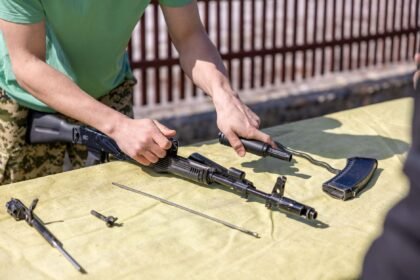
Learning how to safely remove carbon buildup from a gun protects both accuracy and reliability, since carbon fouling in the barrel and action is the most common cause of feeding issues and degraded pr...
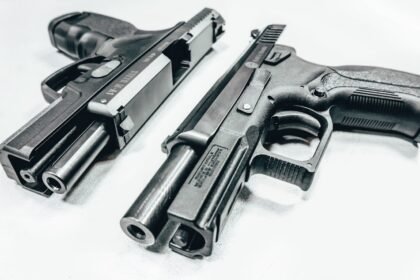
Confirming that a product is genuinely safe on polymer frames means checking the actual solvent formula and contact time, not just trusting a bottle labeled polymer safe gun solvent at face value. A f...
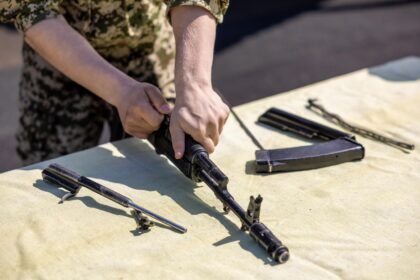
Knowing how much gun oil to use comes down to one small drop wiped into a thin, barely visible film on each moving contact point, not a wet, glossy coat across the whole action. Before applying lubric...
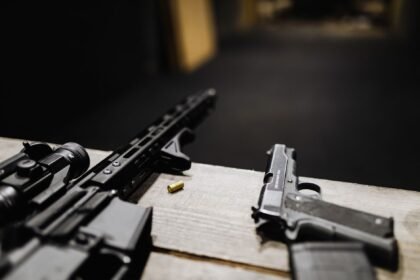
As a starting point, most centerfire pistols and rifles hold up fine on a quick wipe-down after light use, with a standard cleaning every few hundred rounds. Rimfires and suppressed guns need a shorte...
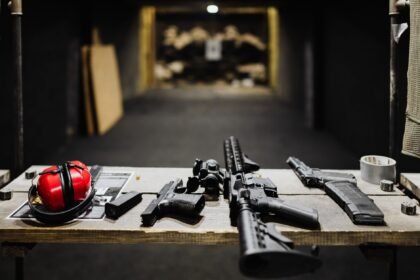
A beginner’s cleaning setup usually fails from the work area, not from a missing bottle or brush. Small parts roll away, dirty patches touch clean components, and weak light hides carbon, copper fouli...