
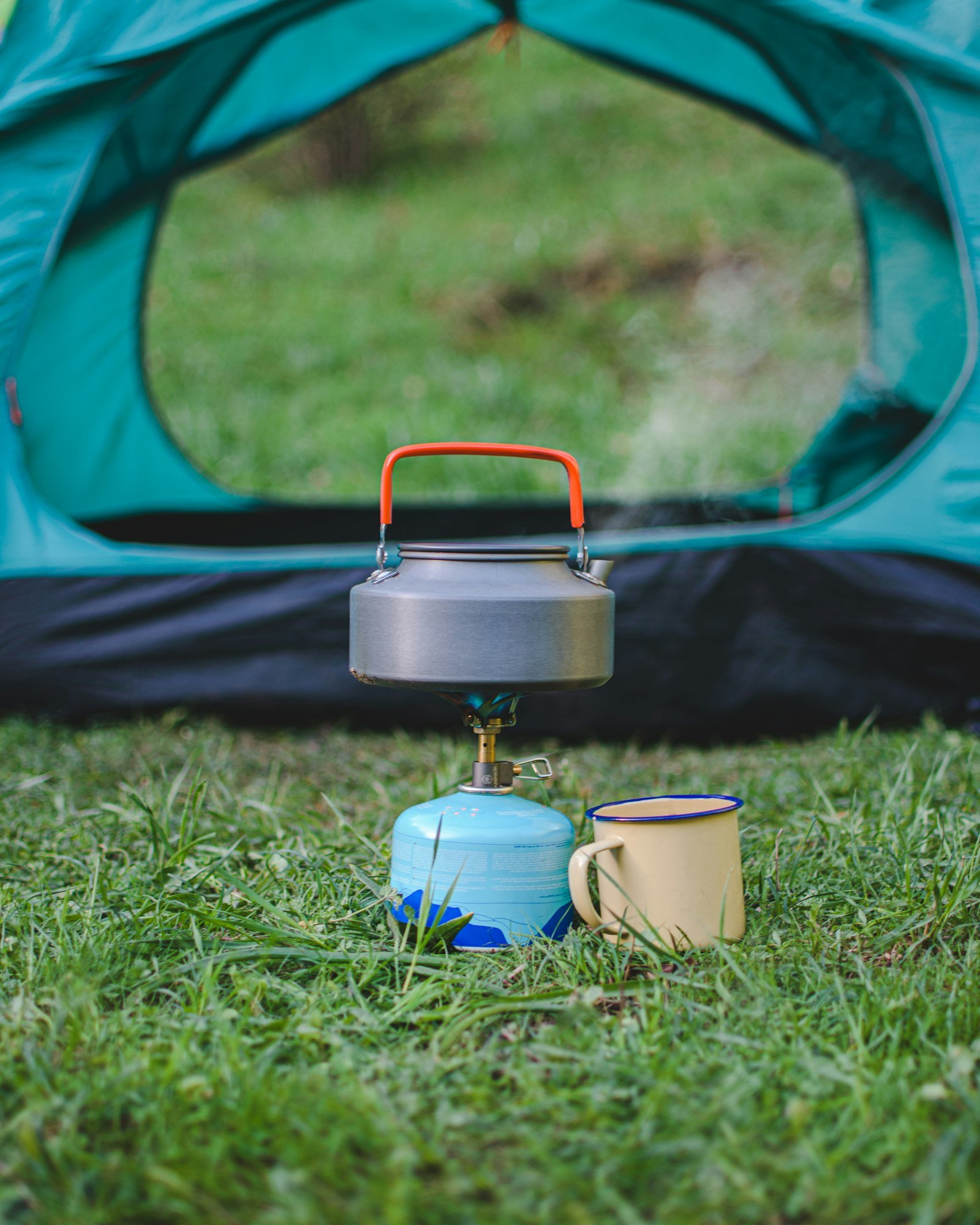
In cold rain, a fast boil is less a stove trick than a tightly managed system.
A wind-driven shower can turn a routine boil into a race: damp gloves fumble with a valve, the pot sheds heat as fast as the flame supplies it, and fading light makes every dropped item costly. A pocket stove may look insignificant, yet its output is only one part of the result.
Water volume, starting temperature, pot shape, lid, wind protection, fuel-canister temperature, and burner-to-pot fit determine whether steam appears in a few minutes or the effort drags on. A wide, lidded pot with a heat exchanger can capture far more of the flame than a tall mug; a shielded setup can preserve that advantage, provided it does not trap dangerous heat around a gas canister. In exposed conditions, the practical question is not simply how powerful the burner is, but how efficiently the entire kit turns limited fuel into hot water.
- Cold canisters lose pressure; upright gas stoves can slow markedly as fuel temperature falls.
- A lid reduces convective heat loss and also shortens the time the flame must run.
Fast enough, within a small window
In emergencies, a small amount of hot or boiling water is enough rather than full meal cooking.
A capable pocket stove can bring roughly 250–500 mL to a boil quickly in mild, sheltered conditions. It can boil about 1 liter, but that takes longer and uses more fuel.
The compromise is sustained performance. Tiny gas-canister, alcohol, solid-fuel, and ultralight wood stoves may produce adequate heat at first, but output can fall with wind, cold fuel, low remaining pressure, wet biomass, or a narrow pot that sheds heat.
For realistic planning, treat a pocket stove as a tool for:
- One mug of tea, instant food, or warm water
- A small shared pot of roughly 0.5–1 liter
- Short-duration use with a wind-resistant setup and suitable fuel
A lidded, appropriately sized pot and a stable windbreak—used without enclosing a fuel canister—can matter as much as the stove’s advertised power.
Heat Is Not the Same as a Boil
Drinkably hot
Water can feel very hot long before it reaches a boil. It may be useful for warmth or rehydrating food, but temperature has not been verified by steam alone.
Simmer
Small, intermittent bubbles rise from parts of the pot, often around the edges. A simmer signals substantial heat, not that the full volume has reached boiling temperature.
Rolling boil
Large bubbles break vigorously across the entire surface and continue even when stirred. This is the clearest field sign that the bulk of the water—not just the base—is at its boiling point.
Treatment boil
For water-treatment guidance, the relevant event is a sustained rolling boil, not the first bubbles. Public-health guidance commonly treats one minute at a rolling boil as the baseline, with longer boiling time often cited above 2,000 m (6,500 ft).
Altitude effect
At higher elevation, lower air pressure makes water boil at a lower temperature. It can reach a rolling boil sooner, yet that lower-temperature boil is why treatment guidance may call for extra time.
What actually sets the boil time
Boiling is a heat-budget problem. A stove must raise every gram of water from its starting temperature to the local boiling point. However, at higher elevations that point is lower, while colder air, wind, and fuel performance can offset some advantage.
For a rough comparison, doubling the water nearly doubles the energy required. Heating 500 mL from 10°C to 100°C takes about twice the energy of 250 mL under the same conditions. In an emergency, heating only the amount needed now can therefore save more time and fuel than moving to a slightly more powerful stove.
Where rated output gets lost
A burner’s advertised heat output is not all delivered to the water. The useful share depends on pot coupling: whether the flame stays beneath the pot, the base is broad enough to catch it, and heat is not streaming up the sides. A stable, appropriately sized pot usually outperforms an oversized vessel perched above a narrow flame.
A lid sharply reduces convective heat loss and typically speeds heating, provided it is not sealed. Wind is often the larger penalty: it strips heat from the pot and can distort the flame, consuming fuel without warming water efficiently. A purpose-built windscreen used safely with the stove’s fuel system, or a sheltered location with ventilation, can have a greater effect than a modest burner-output increase.
- Start warmer: protect water from freezing conditions when possible.
- Heat less: boil in small batches rather than filling a large pot.
- Keep the flame under the pot: avoid flames licking far up the sides.
- Cover and shelter: use a lid and reduce wind exposure without trapping dangerous heat around the fuel canister.
Match the Stove to the Conditions, Not the Advertised Boil Time
- Canister burner: quickest repeatable boils in mild weather
A screw-on burner paired with a lidded, appropriately sized pot commonly offers the lowest setup burden and strong control for several boils. Its apparent speed drops when wind strips heat from the pot or a cold canister cannot vaporize fuel freely.
Works well whenKnown fuel supply, sheltered use, and several small-to-medium boils.Weak fit whenExpecting summer-like output from a chilled canister or an exposed pot. - Integrated canister system: speed comes from the whole package
A burner frame alone is not an integrated system. These systems couple burner, heat-exchanger pot, lid, and often wind management, reducing heat loss and making a realistic boil quicker for the fuel used; they can be bulkier and less flexible with ordinary cookware.
Works well whenFast water heating with the matched pot and predictable canister fuel.Weak fit whenComparing its result directly with a bare burner tested with an unprotected pot. - Tablets and alcohol: simple, quiet, but time is less certain
Solid-fuel tablets are compact and tolerate long storage, while alcohol burners have few moving parts. Both usually deliver lower heat rates, are highly vulnerable to wind, and can turn a short boil into a long wait—especially with larger volumes or cold water.
Works well whenSmall, sheltered boils where low mechanical complexity matters more than speed.Weak fit whenA narrow time window, gusty conditions, or repeated litre-scale heating. - Biomass stove: fuel may be nearby, but fire is the setup cost
Twig-burning stoves can avoid carrying much fuel, yet dry material, ignition time, tending, soot, and local fire restrictions all affect whether water heats promptly. In wet weather, finding burnable fuel can take longer than the boil itself.
Works well whenDry natural fuel, time to tend a fire, and conditions permitting its use.Weak fit whenRain-soaked terrain, fire-sensitive areas, or a clean, immediate boil.
Measure real boils
Measure water; record lidded pot, starting temperature, wind.
- Time the endpoint
Stop at a sustained rolling boil.
- Compare exposure
Cold breezes lengthen sheltered manufacturer results.
Pocket-stove boil testing
NLoutdoors75’s Taykit test offers a visual reference; compare its setup with field water temperature and wind.
Why a Boil Can Suddenly Stall
A stove that boiled quickly in a calm test can falter outdoors for mundane reasons. Wind is usually the first culprit: it strips heat from pot walls, disrupts the flame, and can make fuel use climb sharply. A close-fitting lid and a windscreen designed for that stove help; an improvised screen wrapped around a canister can trap dangerous heat around the fuel container.
The pot must sit flat and centered. A narrow pot balanced on tiny supports loses contact with the flame zone and can tip when handled; a wide pot can spread heat beyond the burner’s effective footprint. Match pot diameter to the burner head, and keep the load modest enough that supports remain stable.
Fuel also has a temperature and condition problem. Cold canisters may deliver a weak flame as internal pressure falls; nearly empty canisters lose output sooner. Tablets and biomass can be damp, while alcohol burners can suffer from spilled fuel or an under-filled charge. Dry fuel, protected ignition, and a pocket stove setup around a compact emergency shelter reduce these avoidable delays.
Put ventilation before speed
A stove belongs on level, non-combustible ground, clear of sleeping material, loose fabric, and the shelter wall. It must never run inside a sealed tent, vehicle, snow cave, or other enclosed space: combustion consumes oxygen and can produce carbon monoxide. Even under an open tarp or vestibule, airflow, overhead clearance, and an immediate exit path matter more than shaving a minute from the boil.
Wind protection is useful only when it does not enclose the burner or fuel. Keep flames and hot cookware outside occupied shelter space, with stable ground and clear ventilation around the setup.
Carry a small efficiency kit, not extra stove hardware
-
Keep the lid on from ignition
A close-fitting lid sharply reduces convective heat loss. Crack it only enough to prevent boil-over; avoid sealing a pot tightly while heating.
-
Heat only a measured portion
Mark 250 mL and 500 mL levels inside the pot. Heating the immediate amount needed for drinking or treatment preserves both time and fuel.
-
Pair the burner with a compact pot
A short, lidded pot with a base that sits inside the burner’s flame pattern captures more heat than a wide pan or oversized mug. Stable pot supports matter as much as nominal burner output.
-
Block wind without enclosing the flame
Use terrain, a pack, or a purpose-made open windscreen positioned at a safe distance. Fully surrounding a canister stove can overheat the fuel canister and create a hazardous pressure rise.
-
Keep fuel dry and instantly reachable
Dry tablets, tinder, and biomass reduce startup delays; a warm, accessible canister maintains more consistent output in cold conditions. Store fuel separately from wet cooking gear.
-
Treat boiling as one part of water planning
Choose a source carefully and let cloudy water settle; cloth or a coffee-filter-style prefilter can remove sediment that wastes fuel and clogs filters. Filters, chemical treatments, or UV devices may reduce fuel demand, but each has limits for viruses, turbidity, temperature, and battery or contact time.
Boiling addresses many biological hazards, but it does not remove dissolved chemicals, salts, or fuel contamination.
Plan the System, Not the Promise
A pocket stove can be fast enough when the task is defined as small, repeatable boils, not an advertised time achieved under ideal conditions. A lid, correctly sized pot, measured water, usable fuel reserves, and a stable, ventilated windbreak matter as much as burner output.
The practical readiness rule is simple: test the actual stove, fuel, and pot in mild air and in wind, then base the plan on small batches and enough fuel for repeat boils. Speed is dependable only when the whole system—and a backup method—has been planned rather than assumed.
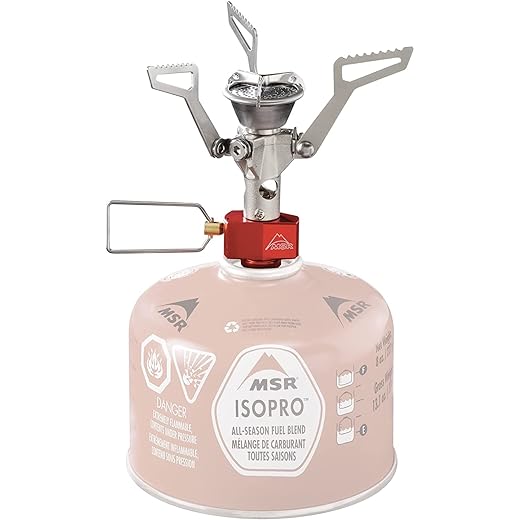
MSR PocketRocket 2 Ultralight Camping and Backpacking Stove
Features
| Brand Name | MSR |
| Number of Items | 1 |
| UPC | 300717978204 040818098851 689560987800 040818098844 |
| Unit Count | 1 Count |
| Warranty Description | Limited Warranty |
| Global Trade Identification Number | 00040818098844 |
| Included Components | PocketRocket 2 Stove, Hard Shell Carry Case |
| Item Type Name | Ultralight Camping and Backpacking Stove |
| Manufacturer | Cascade Designs Inc. |
| Model Number | 040818098844 |
| Part Number | 09884 |
| ASIN | B01N5O7551 |
| Fuel Type | Isobutane |
| Power Source | fuel_powered |
| Item Dimensions L x W x H | 1.7"L x 1.3"W x 3.1"H |
| Item Weight | 2.56 ounces |
| Material | Aluminum |
- Ultralight (2.6 oz) and compact (2x2x3 in) folding canister stove for minimalist adventures, backpacking, hiking, trekking, camping, and global travel
- Boils one liter of water in just 3.5 minutes and flame easily adjusts from a simmer to a rolling boil for gourmet cooking in the outdoors
- Fueled by high-performance isobutane-propane fuel canister (not included); self-sealing threaded canister fuel is available in most countries
- Easy to setup and operate—no priming, preheating, or pressurizing is required; serrated pot-supports accommodate a wide range of pot sizes and styles
- Lightweight protective case included; stove weighs 2.6 oz (4.2 oz with case), measures 4.8x4.8x3.6 inches open, collapses to 2x2x3 inches

Fire-Maple Fixed Star 1 Backpacking and Camping Stove System, Black 18oz
Features
| Brand Name | Fire-Maple |
| Number of Items | 1 |
| UPC | 734779986721 |
| Warranty Description | 3 Years |
| Number of Packs | 1 |
| Global Trade Identification Number | 06900150770010 |
| Manufacturer | Fire-Maple |
| Model Number | Firemaple-FMS-X1-BLACK |
| Part Number | Firemaple-019 |
| ASIN | B07F2VP353 |
| Fuel Type | Liquefied Petroleum Gas |
| Power Source | Propane, Butane, Isobutane |
| Maximum Energy Output | 7500 british thermal units |
| Item Dimensions L x W x H | 5.04"L x 5.04"W x 6.81"H |
| Item Weight | 1.1 pounds |
| Material | Aluminum |
- HIGHLY EFFICIENT - Our industry leading heat exchange technology minimizes wind impact and reduces boiling times by up to 30% compared to traditional backpacking stoves.
- COMPACT AND LIGHTWEIGHT - All accessories including stove, bowl and fuel canister fit into the 1 liter cook pot. THIS SET DOES NOT INCLUDE A FUEL CANISTER, but is compatible with most canisters EXCEPT the COLEMAN fuel canisters. This item weighs only 18 oz!
- INTEGRATED AND EASY TO USE SYSTEM - The 1 liter cooking pot and the stove are one integrated unit, the built in piezoelectric ignitor ignites the stove instantly.
- SAFE, STURDY AND DURABLE - The sturdy, hard anodized aluminum pot features a locking stainless steel handle for secure and safe handling, this combined with the insulating neoprene cover on the pot will ensure years of safe outdoor cooking pleasure.
- Please use a windscreen when using the stove for better performance in windy conditions.

BRS Outdoor BRS-3000T Ultra-Light Titanium Alloy Miniature Portable Picnic Camping Gas Cooking Stove Portable Ultralight Burner 25gram
Features
| Brand | BRS |
| Fuel Type | Liquefied Petroleum Gas |
| Material | Titanium Copper Stainless Steel |
| Product Dimensions | 3.2"L x 1"W x 5.5"H |
| Power Source | Gas Powered |
| Maximum Energy Output | 2700 watts |
| Item Weight | 1.44 ounces |
| UPC | 761460880099 756910054892 724943608122 608651135814 661596153893 616233565782 |
- Powerful and efficient,generates 2700W; Boils water quickly, about 2 minutes 58 seconds to boil 1L water. Rated gas consumption is around 140g per hour.
- Stable, even flame; Smooth flame adjustment.Super easy. Just flip those pot support legs out and twist the stove on your canister. Tip: make sure the control valve is fully turned off before twisting the stove on.
- This stove is suitable for lightweight backpacking when weight and size are more important than some features.
- If you're looking for a functional, ultralight canister stove, this is your stove. BRS-3000T stove and 110g canister can be nested into 750ml Pot perfectly. Ideal for backpackers. (package list: 1*BRS-3000T Stove+1* Pouch+1*O-Ring)
- BRS 3000T stove is extremely lightweight. It only weighs 25g. and extremely compact




5 Comments
The “small efficiency kit” idea is more useful than buying another gadget. A lid, a pot that actually sits stable, and measuring 500 mL instead of casually filling to the brim seems boring… until you’re on boil number three and the fuel is nearly gone. What’s your preferred way to measure water without bringing a separate measuring cup?
I appreciate the reminder that a bigger burner doesn’t automatically equal a faster real-world boil. People love quoting the box time like wind, cold water, and a flimsy pot somehow don’t exist 😅
How would you approach a winter car-emergency kit? A canister stove sounds like the quickest option for a mug or two, but the cold-fuel issue is exactly what worries me. Would you carry a small backup like tablets, or just plan around warming the canister first?
Also, I’m glad you mentioned open wind protection. I see “windshield” advice online that looks dangerously close to wrapping a canister in a heat trap.
For a winter vehicle kit, I would treat the canister stove as the primary fast-boil tool only if the fuel can be kept reasonably warm before use—for example, inside a coat or sleeping bag, never heated directly. A compact backup can make sense, but test it in cold conditions rather than assuming its label performance. And agreed: wind protection should block wind while leaving plenty of ventilation and clearance around a canister stove; enclosing the fuel canister is not a safe workaround.
I keep mine in an inside jacket pocket while I set up the pot, then use it right away. Not magic, but it made a huge difference on a freezing morning. I would not trust tablets as my only plan if I needed a full liter, though.