
A useful caddy carries enough for the stage—not every shell that fits on the belt.
A competitor arrives at the final array, misses a target, and finds the caddy empty. The opposite mistake is less dramatic but still costly: unused shells crowd the belt, add weight, interfere with movement, and may be knocked loose during a sprint or awkward shooting position.
Capacity should follow the stage plan, not a maximum-load mindset. Start with the shells needed for planned reloads after accounting for the shotgun’s legal starting condition. Then add a modest contingency for make-up shots or a dropped shell, based on the stage’s difficulty and the competitor’s reload consistency. Carrying too little turns one error into an unfinished stage; carrying too much can make every transition and reload less repeatable. The practical target is enough reserve to recover from a realistic mistake without turning the belt into ammunition storage.
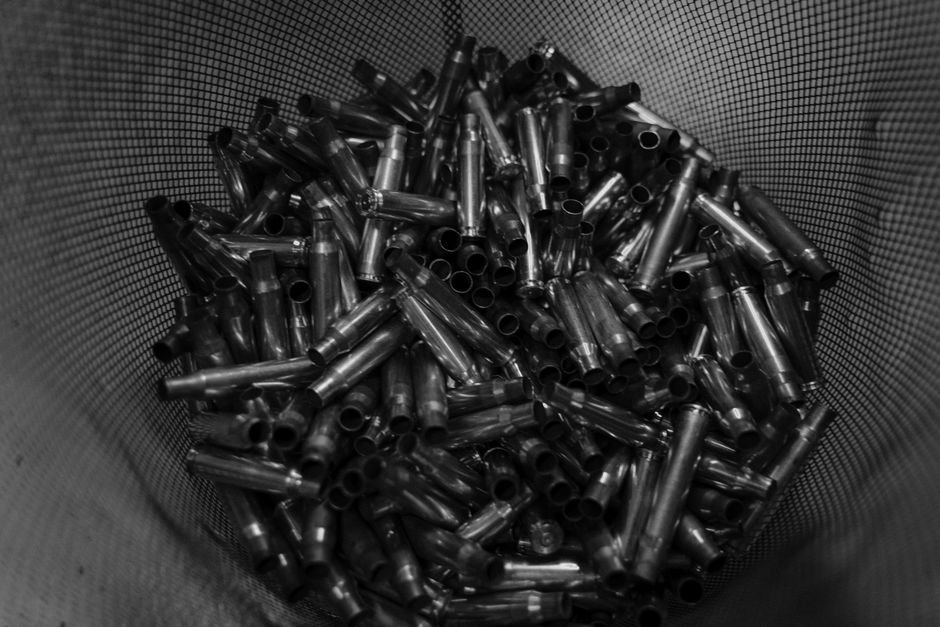
Size capacity to the stage
A practical starting point is the largest anticipated on-stage reload requirement plus a modest contingency. For example, if the stage plan calls for loading eight shells, carrying ten accessible shells provides two for a missed pickup, dropped shell, or revised shooting order. The margin should remain small enough that extra equipment does not obstruct movement or complicate access.
This calculation determines total accessible capacity, not the size of each caddy. Eight shells could be carried in one eight-shell unit, two four-shell modules, or another arrangement permitted by the applicable rules. The suitable layout depends on loading technique, belt space, body position, and whether every shell can be reached consistently.
Consult the guide to shotgun shell carrier systems when comparing belt-mounted caddies, chest rigs, side saddles, and other configurations. Manufacturer-stated capacity should be checked on the current official product page; stage requirements and equipment restrictions should likewise be confirmed against the current match briefing and governing rulebook.
A useful planning sequence is:
- Identify the highest number of shells expected to be loaded after the start signal.
- Add a limited contingency based on plausible errors—not every remote possibility.
- Confirm that those shells are immediately reachable in the required positions.
- Treat additional ammunition as reserve capacity rather than part of the primary reload plan.
More capacity is not automatically more useful. A larger module may reduce belt transitions, while several smaller modules may offer easier placement or partial-load flexibility. The relevant measure is reliably accessible ammunition under stage conditions.
Module capacity
The number of shells one individual caddy or carrier component is designed to hold, according to its manufacturer.
Total capacity
All shells carried across the complete setup, including primary carriers and reserve storage.
Accessible capacity
Shells that can be reached and loaded reliably during the planned stage sequence.
Reserve capacity
Extra ammunition carried for contingencies but not required by the primary loading plan.
Calculate reload capacity from the stage plan
- Count every required shot after the signal
Start with the written stage procedure and count the minimum rounds needed. In this hypothetical example, the course requires 18 shots.
- Confirm the legal starting load
Check the match rules and stage briefing, then compare them with the shotgun’s actual permitted capacity. If eight shells may be loaded at the start, those eight reduce the number that must come from a caddy.
- Subtract the starting load
Use the basic calculation: 18 required shots − 8 starting shells = 10 planned reloads. This is the minimum caddy capacity only if every shot scores and every shell is loaded successfully.
- Add a measured contingency
Use practice or match records to estimate makeup shots and shells dropped during loading. If those records support a two-shell allowance, the target becomes 10 planned reloads + 2 contingency shells = 12 shells.
- Choose how to carry the total
The 12-shell target could be carried in one caddy or divided among smaller modules. Placement should keep all planned reloads accessible without interfering with movement or other required equipment.
This example is hypothetical; it is a calculation method, not a default capacity recommendation.
The result can change when the legal starting condition, shotgun capacity, target sequence, or ammunition rules change. A stage mixing birdshot, buckshot, or slugs may also require separate planning so the correct shell is selected at the correct point. The stage briefing and governing rules should control the final count.
Match the caddy to the loading technique
A caddy’s useful capacity depends on how shells are taken from it. For load-two, modules in multiples of two preserve complete grabs: a six-shell carrier provides three pairs, while a seven-shell layout may leave one shell that requires a different hand motion. That extra shell can still serve as a reserve, but it should not be counted as another normal loading cycle.
Quad-loading favors capacities divisible by four and enough clearance to grasp all four shells cleanly. An eight-shell module creates two complete quads; a ten-shell module creates two quads plus a pair, which is useful only if the shooter has deliberately planned a load-two finish. Larger nominal capacity can be counterproductive when the last group sits behind gear, near the belt buckle, or beyond a comfortable wrist angle.
Shell orientation must match both the technique and the carrier’s retention design. Rim position, shell spacing, and whether cartridges are presented brass-up or brass-down affect how the stack enters the loading hand. Orientation should remain consistent across modules unless a specific transition has been practiced.
Emergency singles belong where either hand can reach them without disturbing paired or quad-loaded shells. A separate one- or two-shell holder often makes the reserve easier to identify by touch. When comparing 3-Gun caddy capacity and mounting choices, count complete, accessible loading groups first; treat awkward remainders as contingency ammunition rather than full working capacity.
Let the stage rules set the minimum
A short stage may require only one compact caddy, while a high-round-count stage can justify several modules. Published round count is only the starting point: the plan should also account for the shotgun’s legal starting load, required reloads, and a modest reserve for a missed plate, dropped shell, or loading error.
An unloaded start shifts more ammunition onto the belt because the first shells must come from carried or staged equipment. Match instructions may further specify chamber condition, magazine condition, or where ammunition may be placed. Capacity should therefore be calculated from the current rulebook and written stage briefing—not from how a similar stage was run previously.
Mandatory birdshot, buckshot, or slug sequences can also change the arrangement. Separate, clearly identifiable carriers may reduce the chance of loading the wrong shell under pressure; capacity alone is less useful if ammunition types become confused.
In pickup-gun stages, the shotgun and ammunition may be supplied or staged by the organizer. Competitors should confirm whether personal ammunition or belt-mounted carriers are permitted before allocating belt space to shells that cannot legally be used.
More shells create practical tradeoffs
Every added caddy consumes belt space and can interfere with a pistol holster, magazine pouches, dump pouch, or other required equipment. Placement that works while standing may become awkward when going prone, bending through a port, kneeling, or moving around barricades. A pre-match check should reproduce those positions with the belt fully loaded.
Evaluate the complete setup for:
- Access: Can the intended number of shells be grasped cleanly using the planned loading technique?
- Retention: Do shells remain secure during sprints, abrupt stops, and position changes?
- Clearance: Does the caddy avoid snagging clothing or colliding with adjacent equipment?
- Compatibility: Does the manufacturer explicitly list the shotgun gauge and shell lengths being carried?
That final point matters because shell diameter and overall length affect fit, spacing, and retention. A carrier should not be assumed compatible merely because shells can be forced into it; manufacturer-stated limits should control selection.
Alternative carriers can provide a useful reserve without enlarging every primary caddy. When choosing between a receiver-mounted side saddle and a detachable shell card, consider access, retention, firearm balance, and the match’s equipment rules. Stock-mounted carriers, pockets, or separate emergency holders may serve a similar backup role where permitted. They are not automatic substitutes for belt caddies: slower access, movement interference, or rule restrictions may make them better suited to contingency shells than the main reload plan.
Capacity for different stage demands
The following shell counts are hypothetical planning examples, not prescriptions. Actual capacity should follow the published stage briefing, starting condition, loading method, and match rules.
Short local stage
Suppose a stage calls for 10 shots and the shotgun starts with six shells. Four planned reloads plus one or two contingency shells may fit in a compact caddy. Carrying substantially more can add belt bulk without improving the plan, particularly when movement is tight.
Mixed multi-stage match
Consider several stages requiring between six and 14 reloads. A modular setup could keep a core load on the belt, then add or remove carriers during permitted equipment changes. Removable expansion has particular value here: capacity can increase for longer stages without forcing the same weight and footprint onto every course.
Contingency should reflect plausible failures rather than an arbitrary maximum. Extra shells may cover a dropped load, a makeup shot, or a loading-sequence error; they should also remain accessible after the planned caddies are emptied.
High-round-count stage
For a hypothetical stage requiring 22 reloads, total accessible ammunition matters more than the capacity of any single carrier. Several smaller modules may distribute weight and preserve access around other equipment, while larger modules can reduce the number of belt attachments. Either arrangement still needs a deliberate emergency reserve.
A buttstock holder generally works better as that limited reserve than as the primary competition-loading source. Repeated loading from the stock can require more gun movement and may be less consistent than a practiced belt position. Capacity should also account for buttstock-holder comfort and handling considerations, since added bulk can affect cheek placement or snag during transitions.
Build and verify a modular caddy layout
-
Start with the hardest expected stage
Install enough modules to cover the calculated stage load and contingency reserve. Treat this as the maximum configuration, then remove capacity for less demanding stages.
-
Keep loading groups intact
Arrange pair-loading shells in complete pairs and quad-loading shells in groups of four. Place any emergency singles in a separate, consistently located carrier.
-
Eliminate equipment conflicts
Check that modules do not overlap the holster, shell pouch, buckle, or other required equipment. Bending, kneeling, and moving should not dislodge shells or block access.
-
Confirm ammunition compatibility
Follow the caddy manufacturer’s guidance for gauge and shell configuration. Verify retention with the exact shotshell load intended for the match, because hull and crimp profiles can affect fit.
-
Rehearse with inert dummy rounds
With the shotgun unloaded and live ammunition removed from the practice area, test every loading group from realistic positions. Adjust spacing or orientation if shells bind, fall free, or require an awkward wrist angle.
-
Validate the final layout at the range
Begin with controlled drills and follow range commands, match rules, and applicable ammunition-handling requirements. Remove modules that add bulk without supporting the stage plan.
Recheck retention after changing ammunition, module position, belt tension, or clothing.
Use clearly identifiable inert dummy rounds for off-range access drills. Confirm the shotgun is unloaded, keep live ammunition out of the practice area, and follow the firearm and dummy-round manufacturers’ instructions. Live-loading drills belong only in an authorized range environment under the applicable commands and rules.
- Preserve pairs or quads rather than leaving partial groups across modules.
- Test the exact match ammunition before relying on retention.
- Revalidate access whenever clothing or belt placement changes.
A workable layout begins at maximum expected demand, keeps loading groups together, and reserves a consistent location for contingency shells. Compatibility and retention should be checked before match day.
The next step is to rehearse with inert rounds, resolve equipment interference, and then remove any module that does not serve the stage plan.
Capacity is a question about the plan, not the hardware. Deciding which 12-gauge buckshot suits home defense usually narrows how many spare shells are worth carrying in the first place.