A slim wallet stops being slim the moment real cards and folded cash go in.
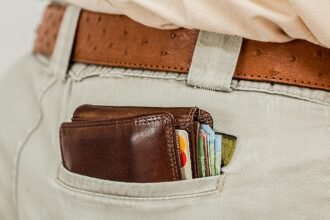
A rigid card case can press into the thigh, while a soft money clip may create a wider outline through lightweight pants. Advertised dimensions rarely reveal the loaded shape.
Before deciding, stack the exact cards and cash normally carried, then compare that bundle with the pocket opening and depth. Check comfort while sitting and climbing stairs, and note whether the preferred card can be reached without removing everything. Rounded edges and a narrow footprint often matter as much as thickness.


What counts as a front-pocket wallet?
Slim bifold
A reduced-size folding wallet can suit a front pocket when its loaded thickness, corners, and fold remain comfortable. “Slim” alone does not guarantee pocket-friendly proportions.
Card holder
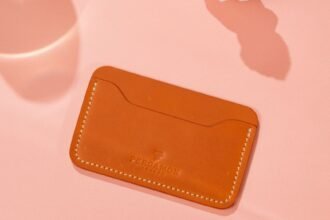
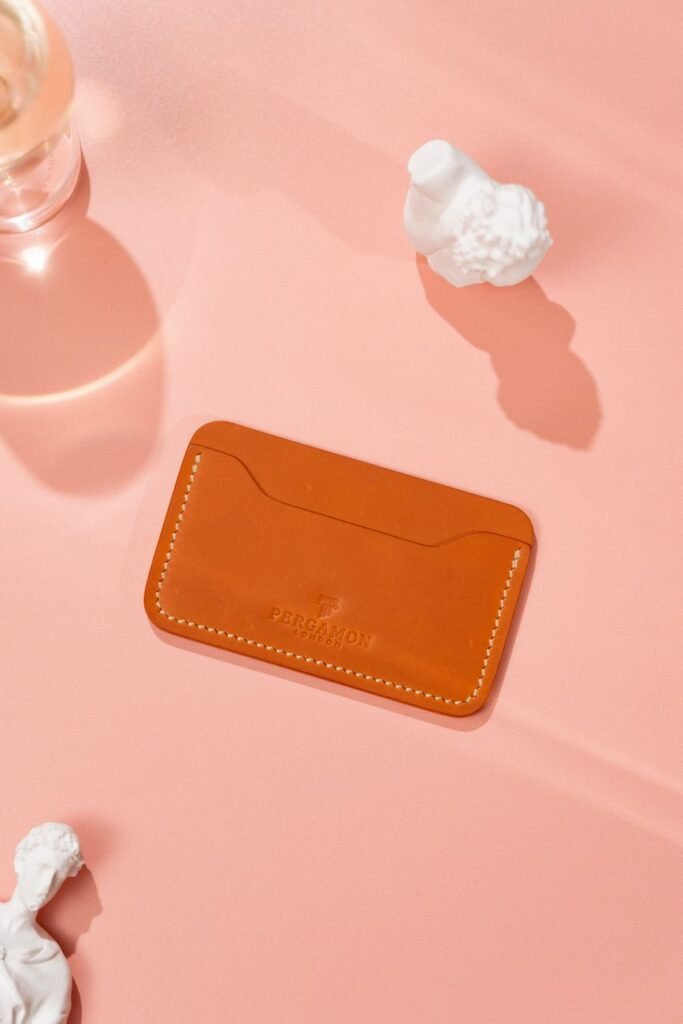
A flat sleeve or case keeps cards in one compact stack, sometimes with a center pocket for folded cash. Access may be through a thumb slot, pull tab, or open edge.
Plate or elastic wallet
Cards are held between rigid plates or within elastic material. These designs can be compact, but hard edges, tight retention, and extra attachments may affect comfort.
Money-clip hybrid
This format combines card storage with an external or integrated cash clip. The clip should be checked for snagging, pressure points, and added bulk when loaded.
Small zip wallet
A compact zippered pouch may qualify if it fits fully inside the pocket and does not become rounded with coins or loose objects. Minimalist branding is less important than its loaded shape.
-
List essential cards
Record every card used during a normal week: payment cards, identification, transit passes, access badges, and any required health or membership cards.
-
Separate occasional items
Move rarely used cards to secure storage or a phone-based option where accepted. Receipts, expired cards, duplicate payment cards, and old gift cards are common sources of avoidable bulk.
-
Set a practical card load
Use the method for choosing a slim-wallet card count, treating the stated maximum as a fit limit rather than a comfort target. Embossed cards and stacked sleeves can increase thickness.
-
Decide how cash will be carried
Count the bills normally kept and choose between folding them, using a clip, or selecting a dedicated cash sleeve. Coins generally require a separate compartment and can distort a slim wallet.
-
Test the complete load
Load the wallet with the actual cards and cash, then check access while standing and comfort while sitting or walking. If it creates pressure, prints heavily, or resists card removal, reduce the load or choose another format.
Evaluate capacity with the everyday load installed; an empty wallet reveals little about front-pocket comfort.
Fast access, few cards Rigid card case | Regular cash use Money-clip hybrid | |
|---|---|---|
|
|
| |
| Loaded thickness | Fixed shell, predictable | Low, then grows with bills |
| Card access | Button or thumb slot | Cards behind the cash |
| Cash handling | Usually secondary | Strong, magnetic closure |
| Retention | Mechanical shell | Clip pressure |
| Pocket feel | Hard and structured | Dense pressure at center |
| ID window | – | 1 |
| View | View |
Thickness is not distributed evenly
A stack of cards usually adds thickness across most of the wallet’s face. Embossed numbers, raised lettering, and cards stored in separate overlapping slots can make that stack less uniform. A stated maximum capacity is therefore less useful than a measurement taken with a clearly identified load.
An ID window adds material around one side: the transparent panel, stitched border, backing layer, and often a thumb cutout. In a bifold, that assembly may overlap card slots when closed, creating a thicker section rather than an evenly slim profile.
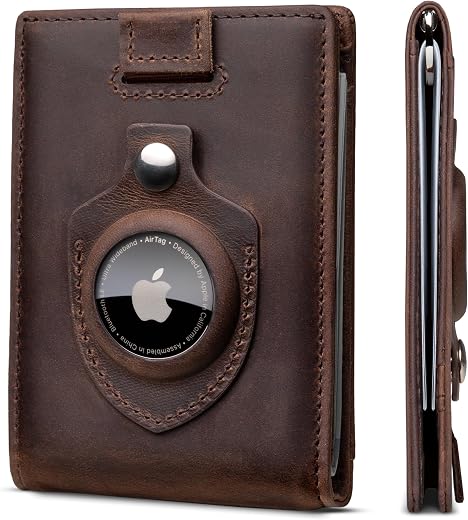
A tracker pocket concentrates bulk more sharply. Because the tracker sits in one fixed position, the resulting bump can press against the leg or make the wallet tilt inside a shallow pocket. External tracker mounts may also catch on a pocket opening, while internal mounts can push cards or folded bills outward.
When comparing models, look for:
- Loaded thickness, with the card and cash count disclosed
- Photos showing the wallet loaded from the side, not only empty product shots
- Capacity ranges rather than an optimistic maximum
- Notes explaining whether an ID, tracker, or cash compartment was included in measurements
A practical capacity should leave cards easy to remove and securely retained. If filling every slot causes bowed panels, difficult access, or uneven edges, the advertised maximum may not represent a comfortable daily load.
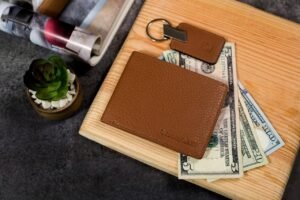

Choose a cash-carry method
Cash belongs in a format that matches how often it is handled—not merely how much the wallet can hold.
- Internal card-sized slot: Suits one or two emergency bills. It keeps cash concealed, but folded notes can catch behind cards and slow checkout.
- Bifold bill compartment: Makes frequent payments and change-making easier because denominations remain visible and separated. The tradeoff is a wider wallet and increasing thickness as bills, receipts, and cards accumulate.
- External elastic strap: Keeps a small folded stack accessible without adding hardware. Mixed denominations can be awkward to sort, and poorly tucked edges may work loose.
- Dedicated clip: Works well for regular cash use when bills need to be removed quickly. Notes should be aligned, folded consistently, and loaded within the clip’s intended range; proper money-clip loading and handling reduces the chance of dropping bills.
Loose notes placed directly in a pocket are easy to crumple, overlook, or pull out with another item. A simple routine helps: arrange bills by denomination, keep receipts elsewhere, and return change before walking away.
Avoid treating stated capacity as a target. If cards become difficult to extract, the closure strains, or the wallet forms a hard lump, remove unused cards and accumulated receipts. Frequent cash carriers may find a bifold or clip more practical; occasional carriers can often preserve a slimmer profile with an internal slot or strap.
How materials age in daily carry
Material matters less as a label than in how the wallet is constructed and loaded.
- Leather can soften, crease, and develop smoother edges. Card pockets may stretch when repeatedly overfilled, so retention should be checked again after removing cards.
- Metal plates resist stretching, but exposed edges can show finish wear. Screws, elastic bands, and cash straps are more likely than the plates to become service points.
- Molded polymer generally keeps its shape, though card-contact ridges and latches can polish or wear. Look for cracks near thin corners and closure points.
- Technical fabric flexes comfortably and may tolerate changing loads, but stitching, folded edges, hook-and-loop panels, and zipper tracks deserve close inspection.
- Elastic adapts well to a full stack, yet repeated tension can reduce recovery. A wallet that grips ten cards securely may hold two less confidently after prolonged use at capacity.
Test retention at both the usual load and the lightest expected load. With dummy or expendable cards, turn the wallet upside down over a soft surface, shake it gently, and operate every pull tab, snap, zipper, or clip. Check seams for opening, edges for sharp spots, closures for incomplete engagement, and card-contact surfaces for grit that could scratch cards.
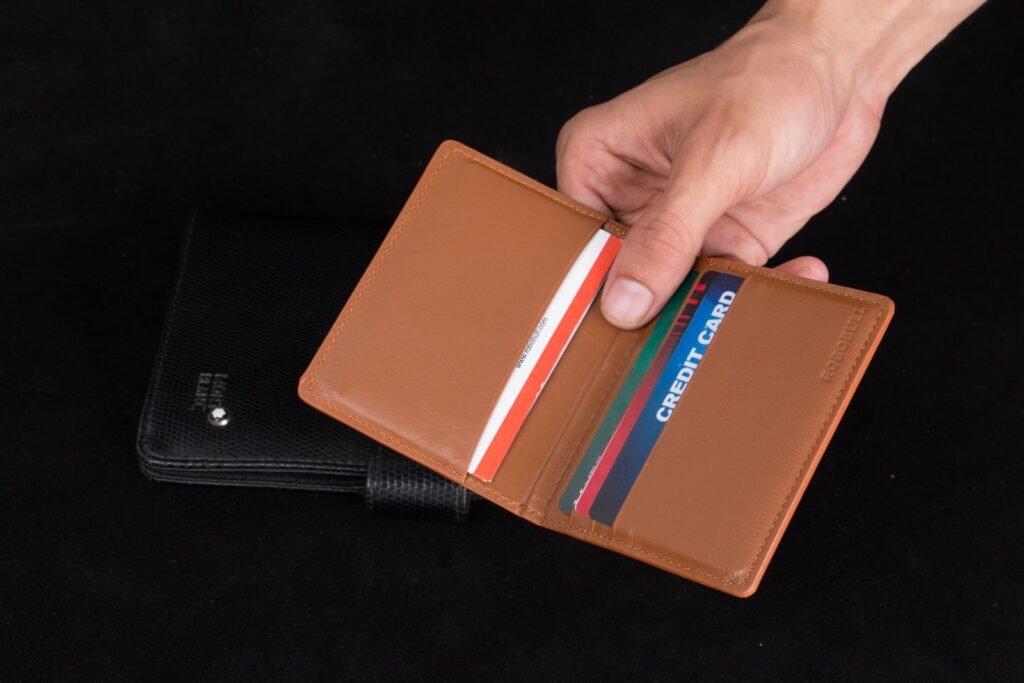
Test the wallet with a realistic load
- Pack the normal daily contents
Add the cards, folded cash, ID, keys, or tracker actually carried. An empty wallet hides bulk created by stacked cards and accessories.
- Try both orientations
Place the loaded wallet upright and sideways, if the pocket allows. Pocket depth and trouser cut often determine whether an edge presses into the hip or thigh.
- Walk and use stairs
Walk briskly, climb stairs, and take several long steps. Watch for bouncing, rotation, pinching, or a hard corner catching against the leg.
- Sit in different seats
Test a firm chair, a soft seat, and a car seat. If the wallet becomes uncomfortable while sitting, note whether pressure comes from its height, orientation, or one concentrated lump.
- Retrieve and replace a card
Remove the most-used card while standing and seated, then return it without looking. A wallet that fits but snags on the pocket opening may still be awkward in daily use.
Repeat the test with the pants worn most often; pocket dimensions and angles vary substantially between garments.
A single pressure point often indicates hard corners or stacked contents, while broad tightness more often suggests excessive overall thickness or a narrow pocket.
What RFID shielding does—and does not—protect
Choose RFID shielding only after checking fit, card retention, and access. Keep transaction alerts enabled, use strong account credentials, and lock or report a missing card promptly.
Start with the format and the number of cards normally carried—not the maximum advertised capacity. Then check how folded bills fit, whether an ID can be shown without dismantling the wallet, and whether cards remain secure when the wallet is inverted or jostled.
Next, verify dimensions from the manufacturer or a named test source, noting whether measurements describe an empty or loaded wallet. Compare that shape with the intended pocket and test it while sitting, walking, and retrieving cards. Review return terms before purchase so a realistic loaded trial is possible. RFID layers, trackers, magnets, premium materials, and decorative hardware should come later; none compensates for poor access, weak retention, or uncomfortable bulk.
SEMORID RFID Blocking Slim Card Holder Wallet for Men Wallet Minimalist
Features
| Additional Features | Easy Access, Expandable, Money Clip, Perfect Gift Idea, Pop-Up, RFID Protected, Slim & Minimalism, Spacious, Ultra Durable Materials |
| Wallet Compartment Type | Business Card, Credit Card, Paper Money |
| Closure Type | Button |
| Number of Compartments | 12 |
| Number Of Pockets | 2 |
| Number of Sections | 2 |
| Wallet Card Slot Count | 14 |
| Color | Black |
| Pattern | Expandable Backplate Extra Storage |
| Form Factor | RFID Blocking Slim Mens Wallet |
| Theme | Wallet Men |
| Subject Character | RFID Blocking Minimalist Mens Wallet |
| Style Name | Modern |
| Material Type | Aluminum |
| Lining Description | Aluminum |
| Product Care Instructions | Please put 4-6 cards in the aluminum box, 5-6 cards in the back plate |
| Brand Name | SEMORID |
| Included Components | Decent Pop Up Wallet, Elastic Cash Strap, Expandable Backplate, Replacement Trigger, User Manual |
| Model Name | Smzf001 Cardholder |
| Model Number | SMZF001 |
| Manufacturer | SEMORID |
| UPC | 791126168193 |
| Unit Count | 1 Count |
| Number of Packs | 1 |
| Manufacturer Warranty Description | Lifetime Warranty |
| Age Range Description | Adult |
| Item Type Name | Minimalism Wallet |
| Manufacturer Part Number | SMZF001 |
| ASIN | B0BNXHJJX3 |
| Item Dimensions D x W x H | 0.5"D x 2.5"W x 3.9"H |
| Item Weight | 2.6 ounces |
- 💳 QUICK ACCESS & LARGE CAPACITY HOLD UP 1-12 CARDS: This mens wallet designed with enhanced enjection mechanism button to pop up cards quickly. The aluminum card holder holds 4-6, depends on the number of embossed cards, and the expandable metal backplate holds 5-6 additional cards. The actual capacity depends on the card thickness.
- 💳 ULTRA THIN PROFILE (SLIM WALLET FOR MEN): The minimalist tactical wallet is very thin and can be carried comfortably in a pocket. The aluminum cardholder size is 3.9*2.5*0.5in,weight only 2.6oz. And expandable backplate designed for additional storage. Ditch the bulk, less is more.
- 🔒 RFID & NFC BLOCKING: This smart wallet use advanced aluminium technology to protect your cards from unauthorized and contactless scanning. Stop thieves from cloning your bank cards and prevent data theft.
- 💳 KEEP CARD TIGHTLY: Our pop up wallet with inside silicone strip that keeps your cards to be held tightly compared with normal felt. No worry cards will fall out.
- 🎁 PERFECT PRESENT IDEA: Our minimalist wallets packed with a pretty box. Aluminum wallet for men is a great present for boyfriend, brother, son, husband, dad, or your male friends on christmas, birthdays, anniversaries, and father's Day.
- 👍🏻 QUALITY SERVICE: If for any reason you're unsatisfied with the card holder wallet, please to contact us, we will get back to you within 24 hours and make things right for you.
Toughergun Slim Wallet for Men RFID Blocking Money Clip, Minimalist Front Pocket Credit Card Holder, Magnetic Thin Mens Wallets with ID Window
- RFID Blocking Security: Built-in RFID-blocking layer blocks 13.56 MHz signals , shields cards from scanners, unlike regular wallets.Protects your credit cards and ID from digital theft in crowds
- Safe Magnetic Closure: 4 Rare Earth Magnets (instead of 2) to hold on to your cash, but opens with one hand.Safer for cards than weak magnets; no demagnetization
- Ultra-Slim Front Pocket Fit: Just 0.3" thick, sizing 4" x 3" x 0.3".Much thinner than bulky bifold wallets, no more pocket bulge.Sit and move comfortably; Fits 6 cards plus folded 30 bills in a slim, low-profile design
- Perfect Gift for Him: Slim, minimalist design in gift.More useful and personal than generic gifts like socks or mugs.Show you care with a practical, everyday accessory
- Durable Build: Precision stitching, reinforced edges, built to last. Rigorous QC (vs. cheap fakes), no loose threads/peeling. Daily use-proof durability