
The commute rarely fails in one dramatic moment; it frays at the edges.
A soaked trouser hem after a puddle, a dead phone before a delayed train, coffee on a shirt minutes before a meeting: each problem is minor until several arrive at once. Carrying contingencies every day makes a bag heavy, yet arriving empty-handed turns ordinary friction into a scramble.
A workplace kit solves that trade-off by acting as a stationary reserve—a slim, personal cache in a desk drawer or locker. It is not a second commute bag: travel essentials remain portable, while rarely needed, work-specific backups stay put until the day calls for them.
- Aim for drawer-scale items that tolerate months of storage.
- Replace used items promptly so the reserve remains reliable.
Build a three-layer carry system
A commuter kit works better when it is divided by where it must be available, whether that’s an office emergency kit, a work emergency kit, or general office-prepper supplies.
- On-person essentials: phone, access card, keys, transit payment, and any item needed if the bag is separated.
- Daily bag: water, charger, weather protection, and items that support the trip. This is the mobile core of commuting carry planning.
- Desk reserve: duplicates only for predictable, low-stakes disruptions—such as a spare cable, stain wipe, snack, or basic grooming item.
The reserve is not a second suitcase. It reduces routine friction at work while the on-person layer protects continuity and the bag handles the journey.
Set the carry boundary
Treat the daily bag as an immediate-access layer, not a duplicate of the desk drawer. It travels with essentials needed before arrival or after departure: transit access, phone power, identification, keys, and any personal item that cannot be left behind.
The desk reserve can hold bulkier, slower-to-replace items—spare cables, hygiene supplies, a light layer, and nonperishable snacks. A commuter morning kit checklist makes the division easy to review. Each evening, return travel items to the bag; replenish the desk only when something is used.
Build the reserve around the actual commute
-
Trace the failure points
List the moments when the route regularly breaks down: a missed connection, rain between stations, a spilled lunch, an unplanned late meeting, or a dead phone before a digital ticket is needed. Frequency and consequence matter more than hypothetical disasters.
-
Use the timetable, not assumptions
A short rail commute with frequent service may call for little beyond charging backup and a transit-friendly layer. A long drive, infrequent bus route, or multi-leg journey can justify more comfort, navigation, and delay supplies at work.
-
Match workplace presentation standards
Keep substitutes that can restore the required appearance after weather, food, or transit mishaps: neutral socks, a lint tool, stain-removal wipes, or a simple layer. A client-facing office and a casual workplace produce different reserves.
-
Account for the building
A locked drawer supports bulkier items; a shared desk, hot-desking arrangement, or limited locker access favors compact, clearly labeled supplies. Consider whether after-hours access, refrigeration, and charging outlets are reliably available.
-
Plan for the local exposure
Coastal rain, winter slush, extreme heat, and pollen season create different recurring problems. Walking, cycling, driving, and rail commuting change which items need to stay dry, visible, rechargeable, or close at hand.
Review the reserve after a seasonal change, office move, or route change; those events often alter the real failure points.
Choose a container that stays out of the way
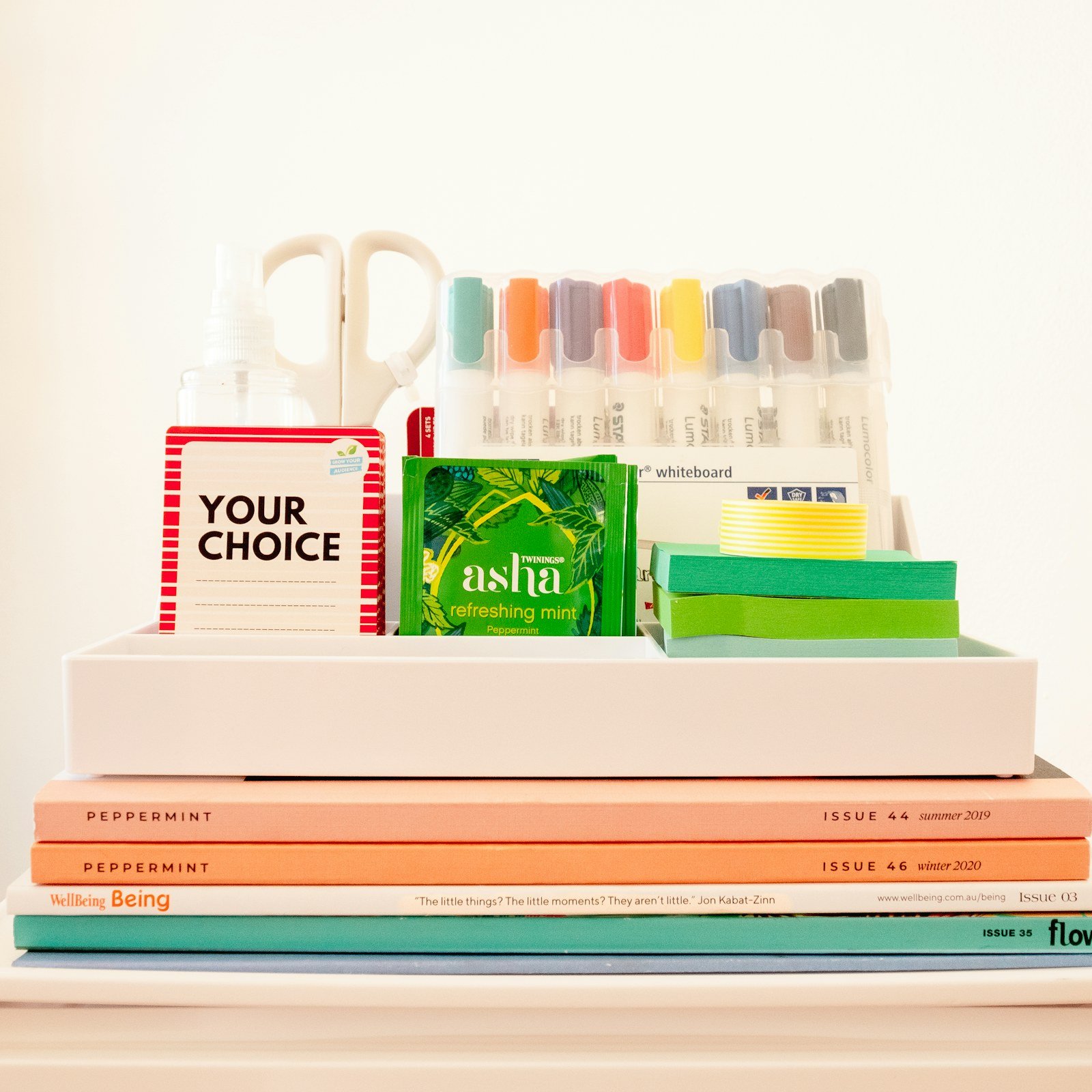
A commuter reserve works only if it can be retrieved without emptying a drawer or attracting unwanted attention. A small zip pouch suits an open shelf or locker; a lidded document box protects supplies in a shared pedestal drawer; and a slim, opaque bin fits beneath a desk where permitted. Clear containers make stock checks easy, but opaque ones can be more appropriate in public-facing or shared workspaces.
Choose a shape that uses the available space rather than maximizing volume. Rigid containers protect chargers, spare glasses cases, and snack packets; soft pouches compress around irregular items and travel easily if a desk move is needed. Avoid containers with noisy closures or bulky handles when the kit must remain discreet.
Make contents legible at a glance
Divide the reserve into a few repeatable zones:
- Power: cable, adapter, power bank
- Commute recovery: transit backup, compact rain cover, light layer
- Personal upkeep: permitted hygiene items and spare essentials
- Food and drink: sealed, shelf-stable items
A simple contents card taped inside the lid prevents duplicate purchases and makes missing items visible.
Place a dated checklist on the container lid or in a front sleeve. A blank line beside each item makes restocking faster than relying on memory.
Add a compact continuity layer
-
Keep power broadly compatible
Store a modest USB-C power bank with clear capacity and output markings, plus a short, strain-relieved cable. Durable housings, protected ports, and low self-discharge matter more than unusually high capacity in a desk reserve.
-
Preserve transit access
A spare transit card, building-access backup where permitted, or printed route reference can bridge a dead phone or service outage. Keep cards flat in a small sleeve and separate from loose keys that can scratch them.
-
Add a reusable carry option
A folded tote or packable bag handles an unexpected purchase, wet outer layer, or diverted trip without becoming daily bulk. Reinforced seams, washable fabric, and a closure are more useful than ultra-thin material that tears under load.
-
Include small comfort reserves
A sealed shelf-stable snack, tissues, unscented wipes, and personally relevant hygiene items can make a delayed commute more manageable. Choose individually wrapped items with straightforward expiry marking and packaging that tolerates desk heat.
-
Inspect for leaks and fatigue
Review the pouch periodically for swollen batteries, damaged cables, leaking packaging, and expired food. Replacing one compromised item keeps the reserve dependable without turning it into a large duplicate of the daily bag.
Office rules and local transit systems may limit which access backups can be stored.
Keep a small reset reserve
A desk reserve can quietly cover the gap between arriving soaked, overheated, or rumpled and having a workable day.
Additionally, the aim is a single-change capability, not a duplicate wardrobe, sized for a small office emergency kit rather than a home supply cabinet.
Pack for changing conditions
A compact pouch or zip bag can hold:
- a lightweight spare top or undershirt, plus socks or hosiery in a sealed bag;
- a fold-flat scarf, light layer, or compact rain cover for aggressive air-conditioning and temperature swings;
- a microfiber cloth for drying a bag, shoes, or outerwear before it reaches the workstation;
- a spare hair tie, small comb, lint roller, and stain-removal wipe for appearance fixes.
Keep any personal-care items travel-sized, tightly closed, and clearly separated from electronics and paper. Fragrance-free options are often less disruptive in shared spaces; skip aerosols and strongly scented products. A few individually wrapped tissues, hand wipes, and mints can add comfort without making the kit feel like a bathroom cabinet.
Review fabric items after a wet commute. Replace damp supplies promptly, and rotate seasonal layers so the reserve remains compact and relevant.
Keep a low-risk access fallback
A disruption may be informational rather than physical: a dead phone, unavailable corporate app, or changed transit plan can leave an employee unable to find the next contact or location. A slim paper card or note in the desk container can preserve the details that are hard to reconstruct under pressure.
Include only low-sensitivity reference material, such as:
- office address, floor, and reception number;
- IT service-desk and facilities contacts from approved directories;
- a manager or team escalation route, if workplace policy permits it;
- device asset tag and a short note on the approved support process;
- alternate commute routes, key station names, and a local taxi or rideshare pickup point.
Review the card when teams, devices, or office locations change. A dated note reduces the risk of relying on an obsolete extension or closed entrance.
Do not store passwords, recovery codes, badge copies, network keys, client information, identity documents, or unapproved removable media. Those items create a larger privacy and security problem than the fallback solves. Costly spare electronics are also better handled through approved workplace processes.
Keep the split discreet
A workplace reserve is more useful when it looks unremarkable. Use an opaque, plainly labeled pouch or small lidded container; avoid visible cash, loose medication, blades, or anything that invites questions in a shared drawer or locker. Keep personal documents and account-recovery details out of the office kit, and take portable electronics home when practical.
The body-carried layer is different: it protects the items that cannot be safely separated from the commuter. Keep a phone, primary wallet or transit credential, keys, and any necessary ID in a closed pocket, zipped interior compartment, or bag worn in front in dense crowds. A desk drawer is a reserve, not a substitute for immediate access.
On transit, reduce attention rather than relying on conspicuous “security” gear: settle bags before boarding, avoid displaying a wallet while standing near doors, and check closures after crowding. A compact backpack with lockable-looking zipper pulls or a close-fitting sling can make this routine easier, provided it remains comfortable and does not obstruct movement.
Treat the office container as replaceable continuity stock. If its loss would create an identity, access, or privacy problem, that item belongs on the commuter’s body or at home.



Keep the reserve ready without overstocking
-
Use the change of season as the trigger
A calendar reminder at each seasonal shift keeps checks infrequent enough to be realistic and regular enough to catch heat-, cold-, and rain-related gaps.
-
Replenish from actual use
Replace only what was consumed or proved useful during delayed trains, long meetings, wet commutes, or unexpected overnight work. Unused duplicates are a signal to reduce the kit.
-
Test, wash, and discard
Check power-bank charge and cable function; inspect spare batteries, closures, and packable bags. Launder spare clothing, remove expired or damaged items, and replace leaking or scented supplies.
-
Refresh the inventory note
Keep a short dated list inside the container: contents, replacement dates, and one line on what was used. Avoid recording passwords, account details, access codes, or identifying documents.
-
Preserve the boundary
The finished reserve remains small, discreet, and secure: enough to extend an ordinary workday, not a duplicate household supply cabinet.
- Seasonal checks reveal whether the kit matches the commute rather than an imagined emergency.
- A dated inventory note makes low-frequency maintenance faster and safer.
A useful office reserve stays current through brief quarterly attention, guided by seasons and real disruptions. Replenish what earned its place, remove what did not, and keep sensitive essentials outside the desk container.

General Medi Mini First Aid Kit, 110 Piece Small First Aid Kit - Includes Emergency Foil Blanket, Scissors for Travel, Home, Office, Vehicle, Camping,...

Mini First Aid Kit - 150 Piece Small Waterproof Hard Shell Medical Kit







9 Comments
The reminder to keep badges, keys, and core transit cards body-carried is important. A colleague put her whole backup wallet in a shared cabinet and then spent a very stressful morning sorting out who had access to it. Discreet does not have to mean putting everything in one place.
This worked! I added a USB-C cable and tiny wall charger to my desk drawer after reading a similar checklist, and it got me through a delayed train + dead-phone day last week. The packable tote is also weirdly useful for bringing home groceries without carrying one around every day. 🙌
I like the three-layer idea, but step 3 (the desk reserve) is tricky in a hot-desking office. We have tiny lockers that are shared between shifts, and anything larger than a pencil case is basically in the way. Has anyone found a genuinely compact container that still fits a spare shirt?
That is a real limitation, and it changes the goal from a full reserve to a very lean continuity kit. A compression packing cube or slim document pouch can hold a lightweight shirt, underwear/socks, a flat tote, cable, and a few sealed care items. If the locker is shared, keep the lid or outer pouch visually plain and carry anything identity- or access-related on your person.
I use one of those zippered laptop-accessory pouches for exactly this. A merino blend tee rolls down surprisingly small, and it handles office AC better than a heavy cotton shirt.
Maybe I’m overthinking it, but quarterly checks sound optimistic. The snacks in my old “emergency” drawer became a tiny museum exhibit, and I only noticed when I actually needed them.
For people who commute by bike, I’d put a small towel and a spare base layer above most of the tech stuff. A power bank is great, but it cannot make you less sweaty before a meeting, sadly.
Fair point—the schedule only works if it is tied to something you already do. Some readers may prefer a monthly calendar reminder for food, batteries, and any medication, while clothing and cables can be checked seasonally. For bike commuters, a towel, deodorant wipes or other low-scent supplies, and a breathable change layer are often higher-value than a larger power setup.
The lid checklist is the bit I needed. I tend to buy random “just in case” items, then later discover three dead pens, two expired pain-relief packets, and no socks. A short inventory without personal info seems like the right amount of organization.
The paper reference details recommendation is sensible, though I would be careful about what goes on that card. I keep my transit agency support number, my partner’s phone number, and my insurer’s roadside number—not account numbers, QR codes, or anything that would be useful if somebody found it.
I also write the number for the building reception because my phone died once while I was waiting outside after hours. Very boring item until it isn’t.