
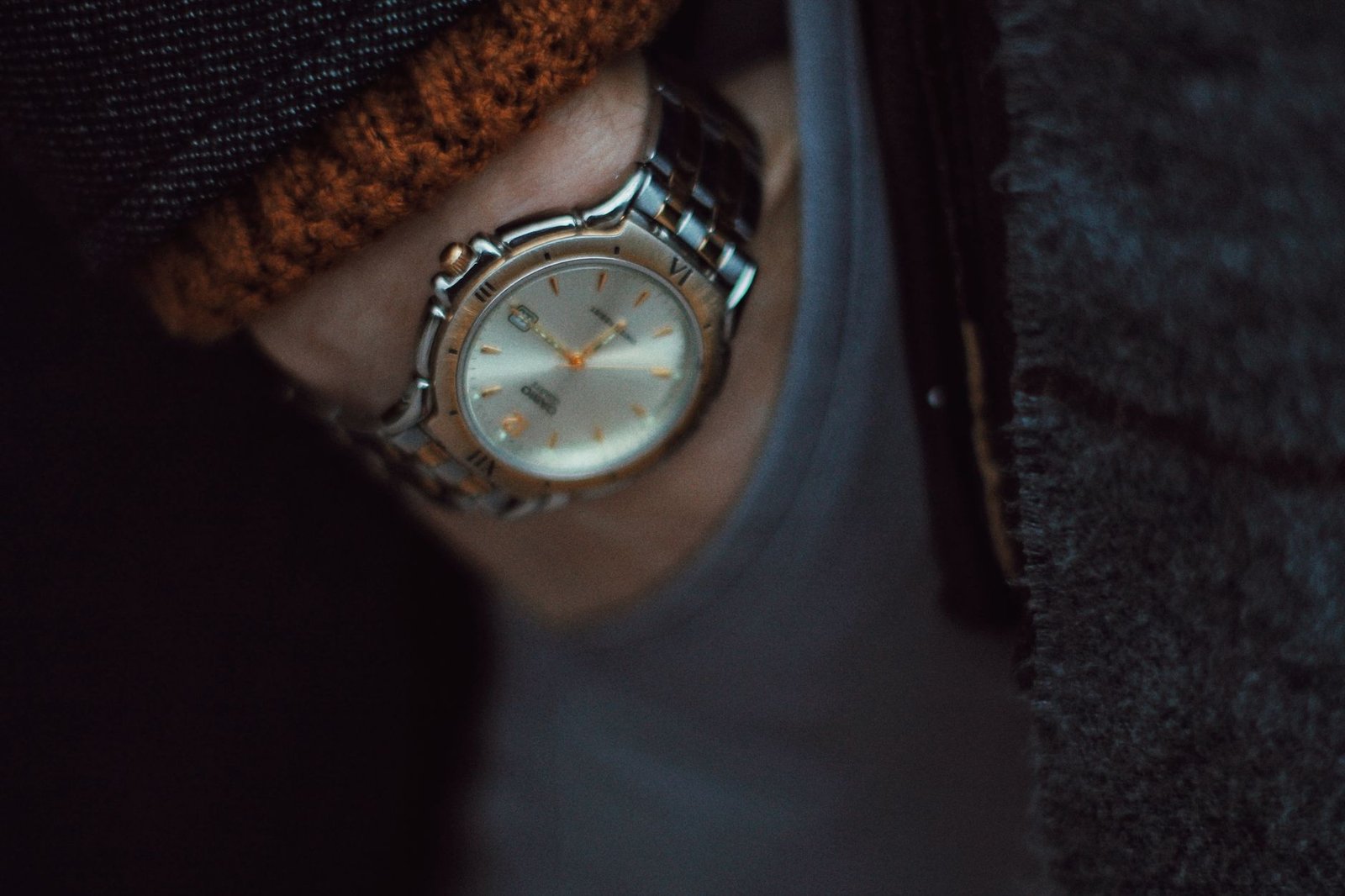
For most owners, the annoyance is not dramatic breakage but how quickly a crystal starts looking worn.
Desk edges, door frames, and sink taps do most of the damage. In ordinary wear, the crystal rarely faces a cinematic impact; it absorbs hundreds of tiny contacts that slowly make a watch look tired. That changes the real question from status to friction: is it more annoying to see fresh scratches appear, or to trust a crystal that stays clear until one awkward hit goes badly?
Sapphire usually wins the cosmetic battle, because grit, keys, and tabletops struggle to mark it. Mineral glass tends to show wear sooner, but its failure mode can feel more tolerable to some owners: gradual scuffing rather than a rarer, sharper chip or crack. On watches built for daily carry, that trade-off often matters more than any “premium” label.
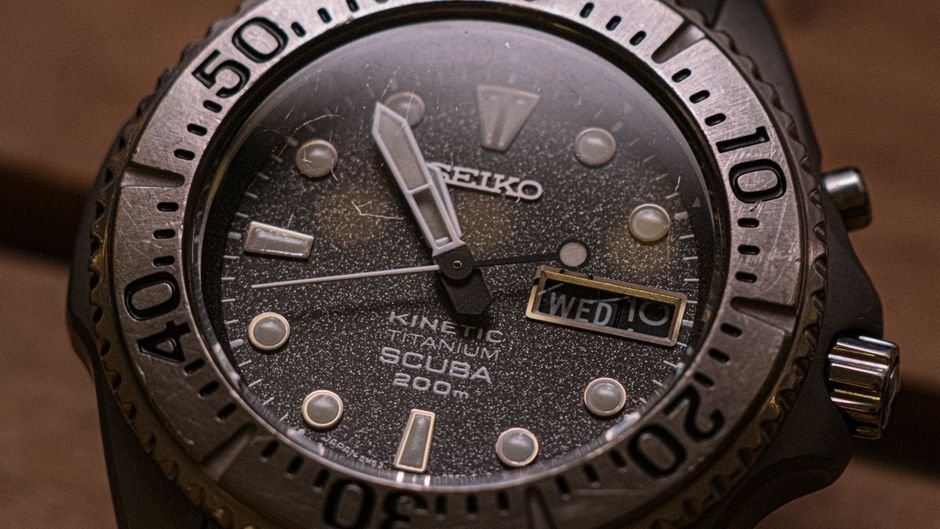
In the sapphire vs mineral glass decision, the deciding factor is rarely which material is objectively better. It's which failure mode is easier to live with: fine scratches that build up over months, or a rarer but sharper chip from one bad hit.
Survival means two different things
A watch crystal can “survive” in two very different ways. One is staying clear after months of grit, sleeves, keys, and dusty tabletops. The other is getting through a sharp knock or drop without chipping, cracking, or spiderwebbing.
Scratch survival
Hardness describes how well a material resists being cut by something harder and sharper. In plain wear terms, it answers: will that grain of sand or metal edge leave a visible line?
- Sapphire is extremely hard, so ordinary daily contact rarely marks it.
- Mineral glass is softer, so fine scratches accumulate more easily.
That is why sapphire often looks newer for longer. But hardness only measures resistance to surface damage. It does not say much about what happens when force arrives all at once.
Impact survival
A door-frame hit, a fall onto tile, or a blow concentrated on the crystal edge is a different problem. Here, brittleness and fracture behavior matter more than scratch hardness.
- A brittle material resists indentation but is less willing to deform when overloaded.
- A tougher material may mark more easily, yet sometimes handles a sudden shock with less dramatic failure.
In wear terms, sapphire can ignore the small abrasions that slowly haze mineral glass, but a concentrated impact—especially on an exposed edge or corner—can produce a chip or full crack. Mineral glass may scratch sooner, yet it sometimes fails more gradually under the same kind of blow.
So hardness alone does not predict “daily-bump survival.” It predicts how well the crystal avoids scratches, not how gracefully it handles a sharp impact.
What actually hits the crystal
A watch rarely meets danger in a laboratory-style straight-on test. In daily wear, contact type matters more: broad rubbing tends to create cosmetic wear, while concentrated side impacts are more likely to chip or crack a crystal.
| Contact source | Usual contact style | Likely result |
|---|---|---|
| Shirt cuffs, desk edges, jacket zippers | Face-on rubbing | Fine marks over time; sapphire usually stays clearer longer |
| Sand, grit, masonry dust | Face-on abrasion with hard particles | Visible scuffs on mineral; sapphire resists most, though coatings may still mark |
| Door frames, gym equipment, countertops | Glancing edge strike | Higher risk of chipping, especially if the crystal edge is exposed |
| Tile floors, metal corners, bicycle hardware | Sharp localized impact | Either material can fail; geometry often decides more than hardness |
Face contact and edge contact are different problems
A flat crystal sliding across fabric or a desk mostly faces abrasion. That favors sapphire. But many serious failures start at the crystal edge, where force concentrates into a small area and can exploit tiny flaws.
This is why the bezel deserves almost equal attention. A raised bezel, sloped chapter ring, or slightly recessed crystal can deflect everyday knocks before the glass takes the hit. An exposed edge on a flush crystal may leave even sapphire more vulnerable than the spec sheet suggests.
A harder crystal is not automatically the safer one if the watch leaves its edge unprotected. In real wear, bezel height, crystal recess, and edge exposure often predict damage better than the material name alone.
Why sapphire often ages better
Why sapphire keeps its look
For a daily watch, the strongest argument for sapphire is not lab hardness alone; it is how the crystal looks after months of sleeves, desks, door frames, and gritty dust. Fine abrasives that slowly haze mineral glass usually leave sapphire largely unchanged. A watch can remain fully functional yet still look older once micro-scuffs start diffusing light and softening the dial beneath.
That cosmetic advantage has a direct effect on legibility. A clearer surface preserves contrast, keeps hands and markers crisper, and helps the watch retain a “newer” appearance far longer. This is especially relevant on dark or glossy dials, where even light scuffing becomes obvious and can undermine nighttime visibility and crystal clarity.
The caveat is that coatings and geometry still matter.
- Untreated sapphire can reflect strongly, sometimes appearing mirror-like in sun or office lighting.
- Internal AR coating usually improves readability without exposing a sacrificial outer layer.
- External AR coating can look cleaner still, but hairline marks may appear in the coating itself and be mistaken for scratches in the sapphire.
- Sharp edge impacts remain the practical weakness: an exposed rim can chip or crack more abruptly than a softer mineral crystal might.
In real use, sapphire tends to win the long game against everyday abrasion. It simply benefits most when paired with restrained reflections, protected edges, and realistic expectations about impact.
A marked external AR layer can make a sapphire crystal look scratched even when the underlying crystal is still intact.
Why mineral still makes sense
Mineral’s practical upside
Mineral glass earns its place because daily wear is not only about staying pristine. In many ordinary knocks—a door frame, desk edge, or countertop lip—a mineral crystal can be slightly more forgiving, especially when the force is broad rather than needle-sharp. Instead of the brittle, high-consequence failure sapphire can show under an unlucky hit, mineral often accumulates damage more gradually: a mark here, a haze there, and only sometimes a crack.
That makes it a rational fit for watches meant to be used without ceremony, including many budget-friendly everyday-carry watches with mineral crystals. The trade is often cosmetic rather than catastrophic.
- Blunt contact: mineral can handle routine bumps without every bad hit becoming a worst-case event.
- Damage pattern: light scratches or small edge chips are often easier to accept than a dramatic single-impact failure.
- Use case: on casual or work watches, gradual wear can feel proportionate to the watch’s role.
The compromise is hardness. Pocket grit, quartz dust, sand, masonry residue, and metal filings can etch a dense web of fine scratches over time. Mineral may survive the knock, yet lose sharpness and clarity faster when hard particles keep brushing across the surface.
The crystal matters less than the watch around it
- Thickness and dome shape
A thicker crystal usually spreads load better, and a gentle dome can deflect glancing knocks instead of taking them square-on. Very tall domes, however, can become their own impact target.
Look forModerate thickness with a low, well-supported dome.AvoidThin, tall, highly exposed crystal profiles. - Bezel height and edge protection
The most vulnerable part is often the crystal edge, where chips and cracks start. A bezel that sits slightly proud can keep door frames, tools, and counters from contacting that edge first.
Look forA raised bezel or rehaut that shields the perimeter.AvoidFlush crystals with exposed edges. - Mounting and gasket support
How the crystal is seated matters almost as much as material. Good gasket compression and even support can reduce stress concentration during repeated shocks.
Look forSecure seating with uniform support around the crystal.AvoidLarge unsupported spans and minimal edge support. - Case geometry and routine impacts
A compact case with shorter lugs tends to snag and strike less often than a broad, slab-sided watch. In watches built for impact-heavy work, protective architecture often outweighs the sapphire-versus-mineral label.
Look forCompact cases that keep the crystal away from first contact.AvoidWide flat cases that present the crystal to every bump.
A recessed sapphire can outlast an exposed sapphire by a wide margin, even though both use the same material. The same logic can make a well-protected mineral crystal seem surprisingly durable in workshop, warehouse, or field use.
When impacts are frequent, the safer question is not simply what is the crystal made of? but what hits first: bezel, case flank, or crystal edge?
Which crystal suits each kind of daily wear?
For commuting and office wear, which crystal usually holds up better?
Sapphire often fits this pattern better. Train rails, desks, doorframes, and bag hardware create light abrasion far more often than hard edge strikes, so scratch resistance matters most and visible wear stays lower.
What about hands-on work with regular bumps and tool contact?
Mineral can make more sense when impacts are broad, frequent, and not always avoidable. It may pick up marks sooner, but some wearers prefer gradual cosmetic damage over the higher risk of a sharp chip from a concentrated hit.
In dusty outdoor use, which crystal ages better?
Sapphire usually has the advantage because dust often contains quartz and other hard particles. Repeated wiping with grit acts like fine sandpaper, and mineral tends to show haze and scuffs much earlier in that environment.
If the watch constantly clips doorframes, gym equipment, or countertops, which is safer?
The pattern matters more than the count. Habitual glancing knocks favor sapphire if they are mostly sliding contacts, while repeated edge-first blows into hard corners can tilt the tradeoff toward mineral, especially on watches with little bezel protection.
A crystal does not merely survive or fail. In daily use, the better choice is often the one whose likely damage pattern is easier to tolerate: faint scratches and dulling, or lower abrasion but a harsher outcome from a bad hit.
Service and replacement reality
Crystal work is not purely cosmetic. Removing and pressing a crystal can disturb the gasket, adhesive, or seating tension that helps the case remain sealed. After replacement, water resistance needs re-testing, because a watch may look unchanged while its moisture margin has shifted.
Service also changes the long-term tradeoff. Sapphire usually stays clearer for longer under rubbing, dust, and grit, while mineral can be simpler to replace after visible wear or a hard knock. A practical rule of thumb is straightforward: choose sapphire for abrasion-heavy use; choose mineral for blunt-impact use when some scratching is acceptable.
Material choice is only part of the story. Crystal service can alter sealing, so post-repair water-resistance testing matters. In daily wear, sapphire generally favors grit and scuff resistance, while mineral may better tolerate blunt knocks if cosmetic wear is acceptable.



10 Comments
The AR coating mention is underrated. I’ve seen people say their “sapphire scratched” and half the time it’s the coating looking beat up, not the crystal itself.
Would be interesting to see a whole post on that because it causes so much confusion in reviews/forums.
Maybe dumb question, but where does acrylic fit in here? I know this post is sapphire vs mineral, but for actual daily bumps I’ve had old acrylic crystals that looked terrible after a while yet somehow never gave me a heart attack from chipping or shattering.
Feels like “survival” gets even weirder once you include a material that scratches if you look at it wrong lol.
Would you still rank it behind mineral for rough use, or is it kind of its own category?
Not a dumb question at all. Acrylic is very much its own category: low scratch resistance, but generally very forgiving under impact and easy to polish back up.
So if “survival” means avoiding abrupt fracture, acrylic can actually do quite well. If it means staying clear and fresh-looking without maintenance, it usually falls behind both mineral and sapphire.
I’ve had the same experience. My beat-up field watch with acrylic looks like it went through a war, but it’s still alive somehow 😂
This was one of the better explanations I’ve seen of the “scratch resistant vs tougher” distinction.
What I’m still wondering is how much bezel design can realistically compensate for mineral glass. If a watch has a slightly raised bezel and the crystal sits a bit below it, does that usually matter more in daily life than whether the crystal is sapphire?
Yes, quite often it does. A protective bezel can prevent a lot of the contact that would otherwise reach the crystal, especially from glancing knocks on door frames, desks, tools, and similar surfaces.
That doesn’t make the crystal material irrelevant, but it can shift the outcome a lot. A well-protected mineral crystal may fare better in real daily wear than a more exposed sapphire on a flatter case design.
I’m a little skeptical of the “mineral for knocks, sapphire for abrasion” shortcut because people repeat that online like it’s a law of physics.
Doesn’t crystal thickness change the equation a LOT? A chunky mineral crystal on a tough case seems very different from a thin flat mineral crystal on a fashion watch, and same for sapphire.
Basically I liked the article because it pushed back on the label-worship, but I almost wanted even more emphasis on case design over material.
What about office wearers who also have kids? Serious question 😂
My watch is mostly around laptops and desks during the day, but then gets smacked by toy bins, stroller handles, random airborne objects, etc. That seems like a mix of abrasion and blunt nonsense.
Would you still lean sapphire there, or is that one of those middle cases where either is fine if the bezel/case is decent?
That’s exactly the kind of mixed-use case where there isn’t a single perfect answer. If the desk/contact side is frequent and you care about keeping the crystal looking clear over time, I’d still lean sapphire.
But if the watch also gets lots of chaotic blunt contact and the case offers decent protection, mineral can be a perfectly reasonable choice. In that scenario, overall watch design probably matters more than the crystal label alone.
I appreciated the part about replacement and water resistance testing.
A lot of people talk like crystal swaps are no big deal, but once seals get disturbed it’s not just “pop a new one in and done.” I learned that the annoying way after a cheap repair on a dive-style watch.
Do you think that service reality changes the recommendation for people who only keep watches 2–3 years anyway? In that case I could see mineral being perfectly fine if the likely scratches won’t even have time to bother them much.