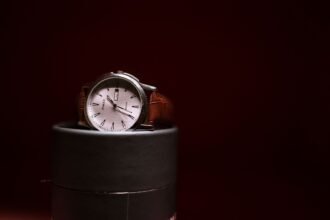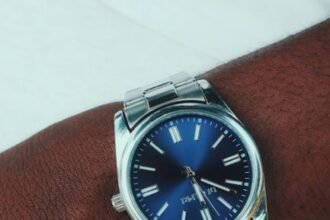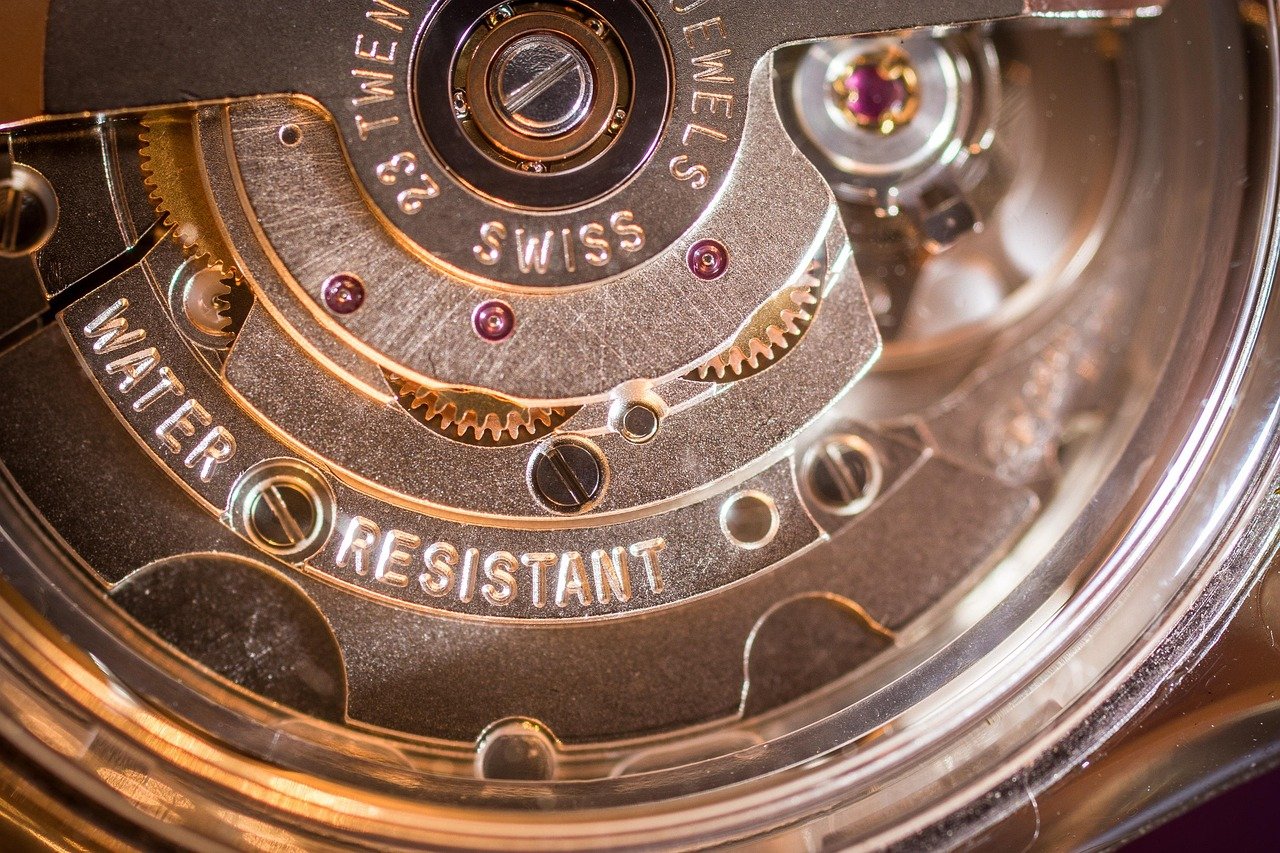
An overnight stop often points to depleted reserve—not immediate movement failure.
At 7 a.m., a watch that was accurate the previous evening may be stopped or several hours slow. A lightly active day can leave an automatic movement only partly wound, especially if it was already low when worn. This can affect otherwise suitable everyday carry watches and does not, by itself, confirm a defect.
First, fully wind the watch according to its manufacturer’s instructions, set the time, and leave it stationary overnight. Do not shake it vigorously. If it runs normally, insufficient wrist motion was the likely cause. If repeated tests produce much shorter runtime than the maker’s stated power reserve—or the watch loses hours while still running—the cause may be magnetism, impact damage, dried lubrication, or a winding-system fault. Those patterns justify professional inspection.
- A consistent stopping time can help a watchmaker distinguish power-reserve trouble from irregular timekeeping.
Confirm that the movement has actually stopped
-
Identify the running-seconds hand
On many chronographs, the large central hand remains at 12 until the chronograph starts. Normal seconds may appear on a small subdial; consult the watch manual if the display is unclear.
-
Record the apparent stopping time
Note the displayed hour and minute before touching the watch. A consistent stopping time on repeated nights can reveal a hand collision or another position-related fault.
-
Watch the seconds display
Observe the correct seconds hand for at least one minute. If it advances but the watch is far behind, the problem is substantial time loss rather than a complete stop.
-
Check for obstructed hands
View the dial from several angles. Hands that touch each other, an applied marker, or the crystal may stop only at a particular point; avoid forcing them past the obstruction.
-
Seat the crown fully
Ensure the crown is not left in the time-setting position. Movements with stop-seconds, or “hacking,” intentionally halt the seconds hand when the crown is pulled out; screw the crown down only as directed by the manufacturer.
Repeated stopping at the same displayed time is useful information for a watchmaker.
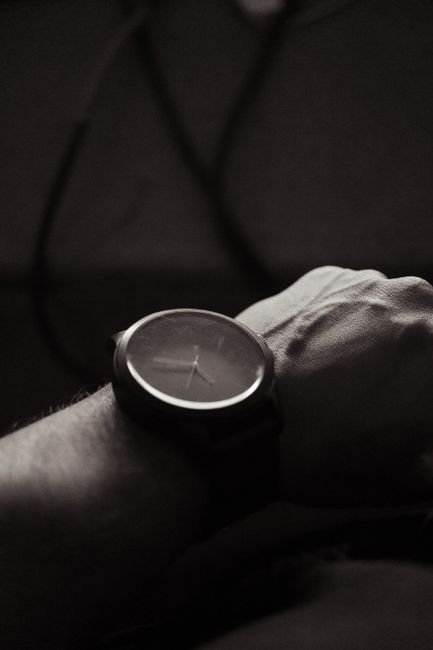
Daily wear may not replace enough power
Automatic movements gain energy from wrist motion, not simply from time spent on the wrist. Short wear periods, desk-based activity, frequent removal, or an inefficient winding rotor can leave the mainspring only partly charged. The watch may appear normal before stopping several hours after removal.
Recharge it according to the movement’s instructions:
- Hand-winding automatics: With the crown in the manufacturer-specified winding position, turn it in the stated direction and for the recommended number of turns. Unscrew a screw-down crown first, if fitted, and reseal it afterward.
- Automatics without hand winding: Follow the caliber manual’s starting procedure, then wear the watch through a normal active day. Some older movements, including Seiko’s 7S series, cannot be wound through the crown.
- Unknown movement: Check the case reference, caliber marking, or official manual before winding. Crown directions and procedures vary.
After a proper charge, set the time, place the watch dial-up overnight, and record when it stops. A repeatable test is more informative than judging reserve from an ordinary day’s wear.
A few vigorous shakes provide an unknown and inconsistent charge. They neither fully wind the mainspring nor diagnose the rotor, winding train, lubrication, or power reserve. Excessive shaking may also subject the movement to unnecessary impacts.
A day on the wrist may still leave it underwound
Automatic winding depends on wrist motion, fit, and the movement’s winding system—not simply the number of hours worn. Desk work, driving, or long periods of limited arm movement may produce little rotor travel. A loose bracelet or strap can also let the case shift rather than follow the wrist consistently, reducing useful motion.
Movements do not respond identically. Rotor mass, winding efficiency, and unidirectional or bidirectional operation vary by caliber. Consequently, one watch may gain adequate energy from a quiet workday while another does not. Generic power-reserve expectations should not be substituted for the figure published by the watch or movement manufacturer.
Run a controlled off-wrist test
- Follow the manufacturer’s instructions to bring the watch to a full wind. If no safe winding procedure is documented, consult the brand or a qualified watchmaker.
- Note the exact start time, then leave the watch undisturbed in a stable position away from magnets and temperature extremes.
- Record when it stops and calculate the elapsed runtime.
- Compare that result only with the manufacturer’s stated power reserve for the exact reference or caliber.
If off-wrist runtime is close to the published figure, but the watch stops after an ordinary day of wear, daily motion or fit is the likely limitation. A secure, comfortable strap adjustment and periodic manual winding—where the manufacturer permits it—may help. Runtime materially below the published reserve after a documented full wind points instead toward a possible movement, lubrication, or mainspring issue requiring inspection.
Position can affect rate without shortening reserve
Gravity changes balance performance, so an automatic watch may gain or lose a different number of seconds when left dial-up, crown-up, or in another orientation. Chronometer testing accounts for this: COSC evaluates mechanical movements in five positions. A modest rate change is not the same as losing several hours of running time.
For a clean comparison, start each trial from a confirmed full wind and use one stable, vibration-free location at a similar room temperature:
- Place the watch in exactly the same orientation each night.
- Record the start time, stop time, and orientation.
- Repeat at least twice before changing position.
If runtime remains consistent in one position but drops sharply in another, the cause is less likely to be ordinary rate variation. The movement may have low amplitude or a component that touches only under gravity.
A watch that repeatedly stops in one orientation, shows a large position-dependent rate shift, or has touching hands should be checked by a qualified watchmaker. Keep the test notes; they can help reproduce the fault.
Could magnetism, impact, or moisture be responsible?
Magnetism more commonly causes a large rate error, often making the watch run unusually fast.
A watchmaker can test for magnetism and demagnetize the movement safely. Smartphone apps may indicate a rate problem, but they cannot confirm its cause.
An impact can disturb movement components without leaving obvious exterior damage.
Even with good everyday watch crystal durability, hidden damage may cause intermittent stopping or poor winding efficiency.
Water resistance can decline as seals age or after the crown, crystal, or case is disturbed.
Fogging or droplets under the crystal indicate moisture ingress and warrant prompt professional attention to limit corrosion.
Do not open the case, apply heat, add lubricant, or use an improvised demagnetizer. These steps can damage seals, contaminate the movement, or worsen an existing fault. Keep a damp watch away from heat and arrange professional inspection promptly.
When short reserve points to service
A persistently short reserve after a correct full wind can have several mechanical causes. Possibilities include aged or displaced lubricant, a weakened or damaged mainspring, barrel wear, excess friction in the gear train, low balance amplitude, or faults in the rotor, reversers, or automatic-winding train. A watchmaker must inspect the movement to distinguish among them.
Service is reasonable when repeated full-wind tests end substantially earlier than the movement manufacturer’s published reserve, especially if runtime continues to decline. Prompt inspection is also warranted after water exposure, condensation, a hard impact, or the sudden appearance of scraping, rattling, or unusually free rotor movement. Continuing to wear a watch with suspected loose parts or moisture may increase damage.
Before requesting service, document:
- Movement or caliber number and its published reserve
- Winding method and approximate number of crown turns
- Start and stop times from at least two controlled tests
- Dial-up and other tested resting positions
- Whether the watch loses time rapidly before stopping
- Rotor scraping, clicking, grinding, or rattling sounds
- Recent drops, strong vibration, magnet exposure, or moisture
- Date and scope of the last service
- Visible debris, corrosion, hand contact, or rotor marks
These details help a watchmaker reproduce the fault without treating an isolated overnight stop as a diagnosis.
Turn the runtime test into a clear next step
- Document a full wind
Follow the movement maker’s winding instructions, then record the start time, date, and watch position.
- Measure the complete reserve
Leave the watch undisturbed until it stops. Calculate elapsed runtime rather than judging only whether it survived the night.
- Check the official figure
Compare the result with the manufacturer’s published power reserve and any stated testing conditions or tolerance. A nominal specification may not predict the exact minute of stopping.
- Repeat under identical conditions
Confirm an unexpected shortfall once using the same winding method, position, and complication settings. This reduces the chance that incomplete winding or an active chronograph distorted the result.
- Choose the appropriate response
Runtime near specification points back to wear time, activity, or fit. A repeated substantial shortfall supports professional inspection; if regular winding is impractical, compare quartz and automatic watches for daily wear.
A compatible winder, configured for the movement’s accepted direction and turns-per-day range, can maintain a healthy watch between wears. It cannot restore lost power reserve or correct an internal fault; persistent short runtime still warrants service.
Choose the least disruptive fix supported by the test. If a full wind lasts normally, increase wear time or follow the manufacturer’s manual-winding procedure. If runtime remains short, or stopping follows impact or moisture, document the symptoms and arrange professional service.
When regular winding does not suit the owner’s routine, a quartz alternative—such as a solar field watch that reduces routine battery changes—may be a more practical, lower-maintenance choice.