
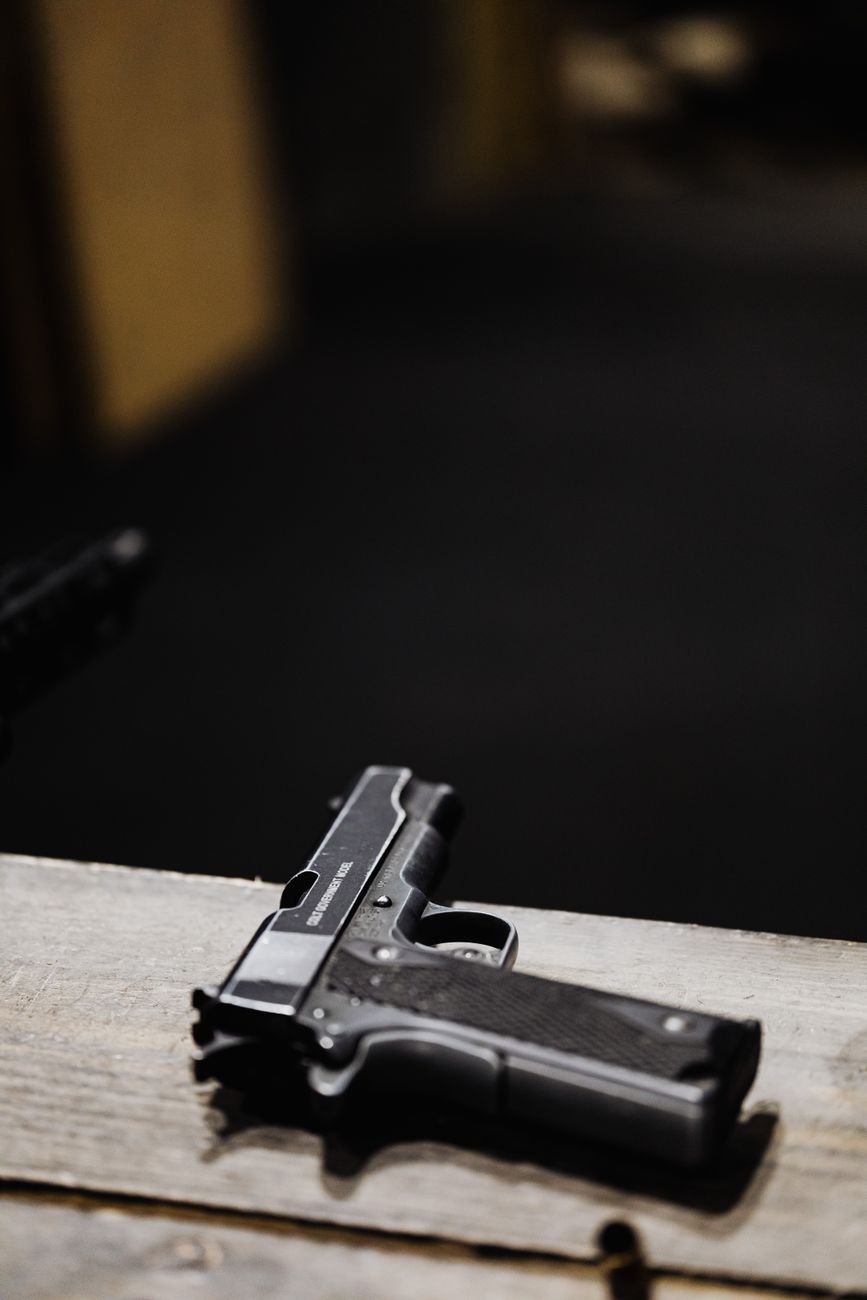
A restless dot usually reveals motion, not a defective optic.
On an AR, the dot often looks calm; on a pistol, it can seem to swim, bounce, and scribble across the window. That difference makes many new shooters blame their eyes or the sight itself. In most cases, the optic is simply being honest.
A red-dot sight projects a collimated aiming point, so the eye sees where the muzzle is actually pointed. On a pistol, the sight sits farther from the face, the gun has fewer contact points, and every tiny movement of wrists, grip pressure, and presentation gets magnified. The dot is not creating wobble—it is exposing it. On an AR, cheek weld and shoulder support hide much of that drama. Seen this way, a floating dot is less a flaw than a live diagnostic of alignment and control.
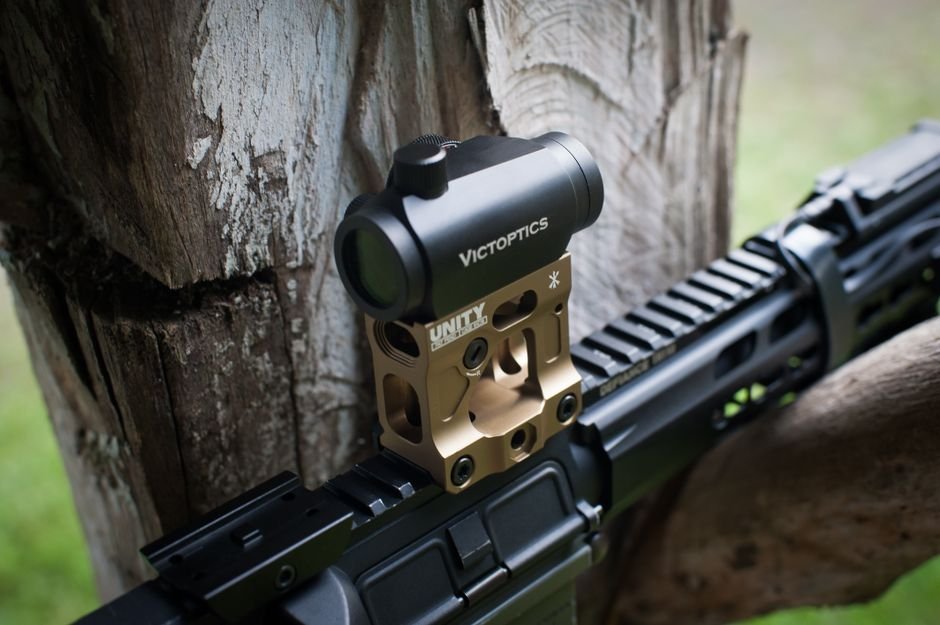
Understanding how red-dot sights work starts with the lens, not the target: a small LED emitter reflects a dot off a coated front lens into the shooter's eye, so nothing is ever projected onto what's downrange.
What the dot actually is
The projected-looking dot is not a laser
A pistol or AR red-dot sight does not shine a beam onto the target. Inside the housing, a tiny LED emitter sends colored light toward the front lens. That lens carries a special coating that reflects the dot’s wavelength back to the eye while still letting most outside light pass through.
The result is an internal aiming reference: the target remains visible through the window, and the reflected dot appears to sit in the same visual space. Because the eye looks through the lens at the distant scene, the dot seems to hover out in front rather than on the glass itself.
Why the dot seems to stay put
As the eye shifts slightly behind the optic, the reflected image moves with it, so the dot still appears over the target instead of stuck to one corner of the window. That is the floating-dot effect people notice immediately.
A simple way to picture it:
- Target image: passes through the lens from the real world
- Dot image: reflects off the coated lens from the LED
- Brain’s view: combines both into one sight picture
This is also why the front lens often looks faintly tinted: the coating is doing optical work, not merely coloring the glass.
What changes with a dot
With irons, the eye manages three planes: rear sight, front sight, and target. The front sight must stay sharp, so the target is accepted as slightly blurred. A red dot removes that juggling act. The shooter stays target-focused and uses a single aiming reference floating in the window.
That is the big advantage, but it only works when the firearm arrives in the same place every time. The optic window must present itself to the dominant eye without hunting for it. If presentation varies, the dot seems to vanish even though it is still in the sight body.
Two things change in practice:
- Visual processing gets easier: dot plus target replaces front-sight/rear-sight alignment.
- Indexing matters more: grip, draw stroke, or stock weld must repeat.
- Head movement matters less than consistency: the dot tolerates some eye position error, but not a sloppy presentation.
On pistols, this depends heavily on draw and grip angle. On ARs, cheek weld and optic height do more of the work.
Why the dot feels easier on an AR
Same optic, different job
The optical system does not change between platforms. An LED still reflects a virtual aiming point off a coated lens, and the eye still sees a single dot on the target plane.
What changes is the mounting system around the optic. On an AR, the stock helps lock in head position, the support hand controls the rifle from farther out, and shoulder contact adds stability. That geometry brings the window in front of the eye more predictably, so dot acquisition often feels almost effortless.
A pistol removes most of that built-in structure. There is no cheek weld, no shoulder index, and the gun must arrive at eye level with the same wrist angle and grip every time. Even small inconsistencies can move the optic window off axis, making the dot seem to vanish.
The slide adds one more challenge:
- the optic reciprocates during recoil
- grip inconsistency affects how it returns
- the dot makes those errors visible immediately
That is why pistol dots feel less forgiving: not because the sight works differently, but because the handgun exposes inconsistency.
Why the mount matters
The mount is part of the sight
A red dot does not work in isolation. On a pistol, the optic rides on a slide cut or an adapter plate, so the interface becomes part of the aiming system. Every extra layer adds stack-up: more surfaces, more tolerances, and more chance for tiny shifts under recoil. That is why matching the slide’s footprint correctly matters as much as window size.
On an AR, the sight usually bolts to a rail, but mount height still changes how the system behaves. A taller mount can speed a more upright head position, while a lower one can feel more locked in behind the stock. Screw tension and security matter on both platforms because the optic must return to the same position shot after shot.
- Rigidity keeps zero from wandering.
- Recoil lugs take shear load so screws mainly clamp.
- Less stack height means less leverage and fewer variables.
A dot can have a good emitter and clear glass yet still perform poorly if the host interface flexes, shifts, or stacks too high under recoil.
Zero, offset, and point of impact
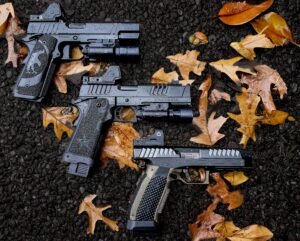
A red dot is only a reference line until the rifle or pistol is zeroed. The optic looks straight ahead, but the bore sits below it, so the bullet must travel upward into the line of sight and later drop away from it. That means the dot and impact match at chosen distances, not at all distances.
Pistol zero tradeoffs
On a pistol, sight height is relatively small, so the gap between dot and bore is modest. The real choice is how much near-distance versus farther-distance deviation is acceptable; common pistol zero distances simply shift where that crossover happens. A shorter zero can feel intuitive up close, while a longer zero often trims hold differences farther out.
AR offset and co-witness
On an AR, the optic usually sits much higher over the bore, so mechanical offset matters more. At close range, impacts land noticeably low even with a perfect zero, because the bullet has not yet climbed to the sight line. Co-witness does not change that; iron-sight window height on an AR dot affects cheek weld and where the irons appear in the optic, not the bullet path itself.
- Pistol: smaller offset, bigger zero-distance tradeoff.
- AR: larger offset, especially important inside typical room distances.
If impacts print low at very short range, the usual cause is sight height over bore, not a defective optic.
Which specs change performance in the field
- Dot size
Small dots preserve precision at distance, while larger dots are easier to catch during fast presentations. The tradeoff is target coverage and apparent bloom at high brightness.
Look forA crisp dot that stays round at normal daylight settingsAvoidA large or fuzzy dot that obscures small aiming points - Brightness control
A sight feels dependable when the dot can be made bright enough for sun yet dim enough for shade without flaring. Manual override matters because automatic systems can misread backlighting.
Look forWide adjustment range with predictable steps or a reliable overrideAvoidFew settings, aggressive auto-dimming, or a dot that smears when brightened - Battery placement
Top- or side-loading batteries simplify service because the optic can stay mounted. Bottom-loading designs can work well, but every removal adds a chance to disturb screws or zero confirmation.
Look forAccessible battery changes and controls that are easy to operate under recoilAvoidTiny buttons, weak caps, or battery access that forces frequent remounting - Housing, tint, and emitter design
Durability is felt as retained zero after recoil, drops, weather, and slide velocity. Some lens tint is normal, but heavy tint darkens the target; enclosed emitters resist debris better than open designs.
Look forRigid housing, moderate tint, and sealing that matches the gun’s environmentAvoidThin frames, overly dark glass, or exposed emitters in dirty carry use
Beginners often focus on MOA size first, but confidence usually comes from a stack of smaller details: brightness range, battery access, glass clarity, and how well the housing survives recoil.
On pistols, enclosed and open emitter designs diverge most in rain, lint, and debris management. On an AR, those same differences may matter less until weather or hard use enters the picture.
Common Red-Dot Frustrations, Explained
Good sights reduce parallax; they do not eliminate it.
An off-center dot can shift impact slightly, especially up close or with cheaper optics.
Zero, offset, shooter movement, and trigger input still matter.
The dot shows the aiming line; bullet path intersects that line only at selected distances.
Bloom often comes from brightness, astigmatism, or lens contamination.
An overly bright emitter looks smeared, and many eyes distort tiny points more than cameras do.
Dot loss usually comes from presentation angle, washout, auto-dimming, or a blocked emitter.
Minor window smudges often matter little; bright backlight, oil, rain, or debris over the emitter matter far more.
If a dot looks smeared, lowering brightness and checking it through a phone camera can help separate optic behavior from eye-related distortion.
A simple way to choose a red dot
-
Confirm fitment first
Match the pistol cut, plate, or AR mount before comparing brands. Interface mistakes cause more frustration than feature differences.
-
Define the job
Carry, duty, range use, and a general-purpose AR ask for different priorities in window size, durability, and brightness range.
-
Choose emitter and controls
Enclosed emitters handle debris better; open emitters stay lighter and slimmer. Manual controls suit predictable setups, while good auto modes can simplify use.
-
Zero for that role
Pistols benefit from a practical working distance; ARs also require awareness of close-range mechanical offset.
-
Build dot access and tracking
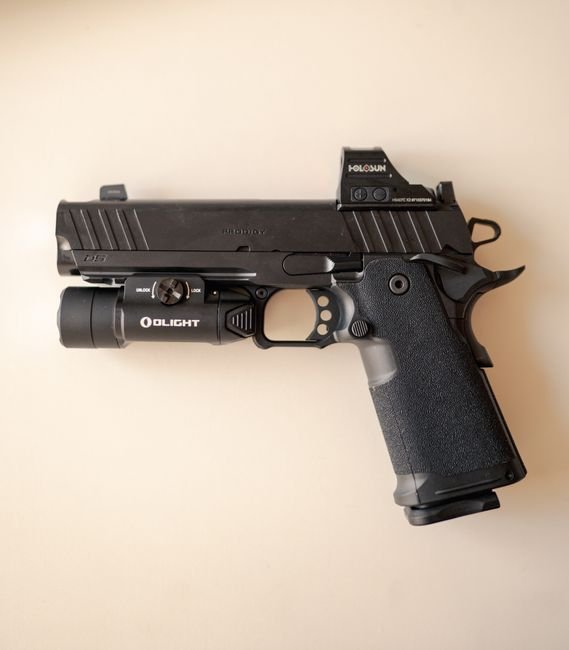
Consistent presentation and target focus matter more than chasing specs. For shopping, start with fitment-safe Glock 19 MOS options or budget pistol dots that still make sense.



Frequently Asked Questions
Does a red-dot sight project a laser onto the target?
No. An LED emitter reflects a dot off a coated front lens back to the eye; nothing is projected onto the target itself.
Why does the dot feel harder to find on a pistol than an AR?
A pistol has no cheek weld or shoulder index, so small differences in grip and presentation move the optic window more, making the dot seem to vanish. An AR stock and shoulder contact hold the sight more consistently in front of the eye.
Why do shots land low at very close range with a zeroed dot?
This is usually caused by sight height over bore, not a defective optic. The bullet has not yet risen to the sight line at very short distances.
Does a starburst or smeared dot mean the optic is broken?
Not necessarily. Bloom often comes from high brightness, astigmatism, or a dirty lens rather than a defective sight.
Most pistol-dot debates reduce to priority, not mystery. RMR and 507C trade durability, window behavior, controls, and feature density, while Acro P2 and EPS show the enclosed-sight split between maximum ruggedness and lower carry bulk.
Once optical principle, mounting geometry, and pistol-versus-AR behavior are clear, comparison stops being brand folklore. The shortlist becomes a structured fit between role, footprint, and tolerance for compromise.




6 Comments
This helped a lot, especially the part about the dot not actually projecting onto the target. I honestly thought it was kinda like a tiny laser before I started reading 😅
One thing I’m still fuzzy on: when you say the tint comes from the lens coating, is that basically unavoidable on all red dots, or are some optics noticeably clearer than others?
Good article overall, but I wish more people would stop saying “parallax free” like it’s magic. Glad you called out that it’s limited, not absent.
Also curious about the mounting part: is the big failure point usually screws backing out, or is it more that cheap plates/factory adapter stacks introduce movement over time? Seems like every other forum post is somebody blaming the optic when the mount is the real clown in the room.
The zero/offset section was useful but I still get tripped up on the practical part. If I zero an AR dot at one distance, am I basically just accepting that at very close range I’ll need to hold a bit high because of mechanical offset?
I know that’s probably obvious to experienced shooters, but it’s one of those things that sounds simple until I’m actually trying to picture the sight line vs bullet path in real life.
Beginner question here. On the pistol side, when people say the dot “shows your mistakes,” do they mostly mean grip problems, or is it more about the angle you present the gun to your eye?
I tried a friend’s dot-equipped handgun once and kept seeing… nothing. Then suddenly the dot would appear way up in the window. It was humbling lol.
Mostly both. A pistol dot is very good at revealing inconsistency in presentation angle, wrist position, and how repeatably the gun comes up to your dominant eye. If the dot keeps appearing high, low, or off to one side in the window, that’s usually a clue that the presentation isn’t landing in the same place each time.
That’s also why dots can feel “harder” at first on pistols than on ARs. The rifle gives you more built-in reference points from the stock and shoulder, while the pistol depends much more on a repeatable draw and grip.
Yep, that was exactly my issue. I thought the optic was the problem, but it was really my draw angle. Dry fire helped more than messing with the sight settings.