
A watch that flares brightly at shift start may still be unreadable when the night is at its quietest.
At 3:07 a.m., the useful watch is the one that yields the time in a half-second glance—not one that requires a wrist tilt, a second look, or a bright screen that resets dark adaptation. Reliability is a combination of initial charge, pigment output, and, crucially, fade rate over several hours.
A large, uncluttered dial gives lume room to work: broad hands, distinct hour markers, and strong contrast remain easier to parse than a busy face with tiny glowing details. Green-emitting compounds often appear especially efficient to the eye, but layout matters as much as raw glow. Real shifts add complications: sleeves can cover the dial, indoor light may not fully charge it, and gloves or frequent handwashing can make a slim, secure, easy-to-clean watch more practical than a bulky case.
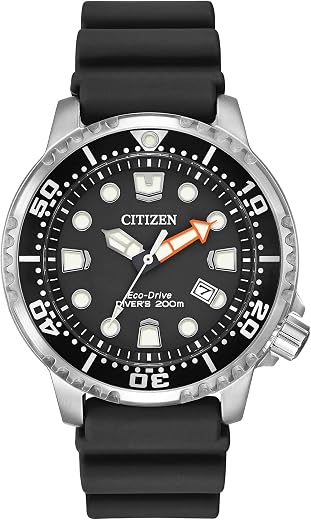
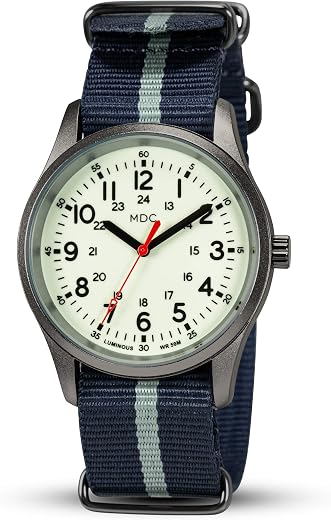


Comparing watch lume side by side makes the trade-offs concrete: a dive-rated analogue with broad luminous hands, a full-glow budget field watch, a compact nurse-friendly dial, and a low-cost trial option. Each approaches the same night-shift problem differently, and the right pick depends on how much darkness the watch actually needs to survive.
Match the glow to the shift
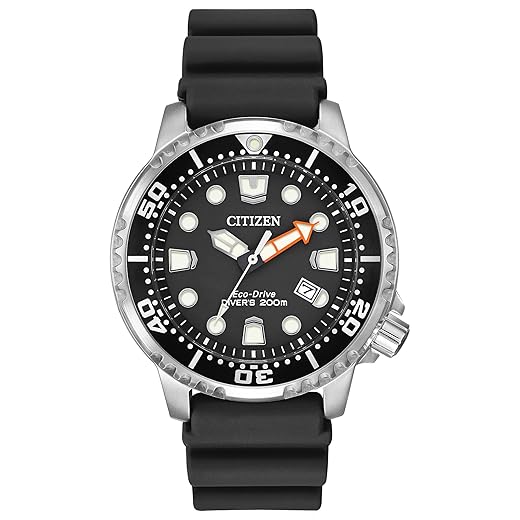
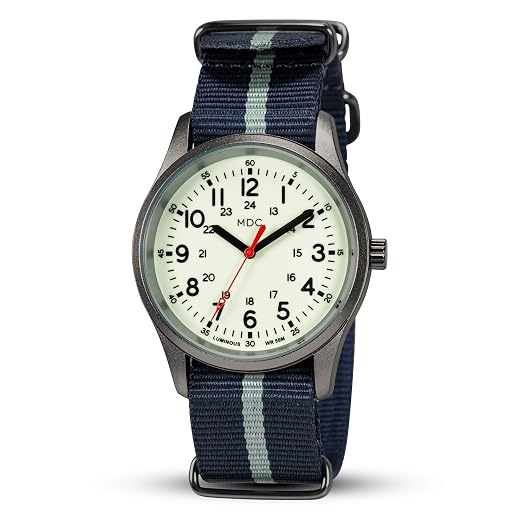


Photoluminescent pigment fades continuously after charging. For a shift spent in total darkness, prioritize large luminous plots and minimal dial clutter; for intermittent indoor light, a full-lume dial can be more compelling. Battery-free Eco-Drive addresses power replenishment, not lume fade. No single watch suits every shift length or lighting pattern.
What lume can—and cannot—do
Photoluminescent lume is a stored-light system, not a tiny lamp. Its pigment absorbs daylight or strong indoor light, then releases that energy after darkness arrives. Output is strongest immediately after charging and falls along a predictable curve; a watch that looks dramatic for five minutes may be less readable late in a shift.
Meaningful performance comes from usable luminous surface, not promotional claims alone. Broadly painted hands, large markers, and a fully lumed dial can retain a readable signal longer than thin handset strips. Contrast matters just as much: hands must remain distinct from the dial, especially when both glow. For more context on lume suited to on-the-job visibility, the same principle applies across work settings.
Hand design determines whether a glance yields the time. Differently shaped hour and minute hands, a clear minute track, and a non-luminous or differently colored seconds hand reduce confusion after the glow softens.
The practical reading test
Each watch is judged as a time-reading tool after the initial flash fades.
How readily the lume responds to ordinary room light, and how much usable brightness remains later.
Whether hands, indices, and numerals stay visually distinct rather than merging into one glowing field.
How quickly the hour and minute can be identified without rotating the wrist or staring.
A brief exposure to strong light can improve the starting glow, but no photoluminescent watch maintains peak intensity through an entire shift.
Citizen Promaster Dive: a familiar tool-watch dial for long shifts
01
Best for dependable visibility and long-term durability
The Citizen Promaster Dive Eco-Drive suits workers who prefer an analogue watch that can be read at a glance: oversized hour plots, broad hands and a unidirectional timing bezel follow the visual logic of a traditional dive instrument. Its light-powered movement removes routine battery changes, an appealing practical detail for a watch kept in regular rotation.
The bezel’s luminous reference point can support elapsed-time checks when the main dial is still visible. Its ISO-rated 200 m water resistance speaks to sealing and environmental durability, however—not to how brightly or how long the lume will glow. For a fuller comparison of water resistance versus lume performance, treat those as separate specifications.
- Large luminous hands and applied-looking markers support rapid orientation
- High-contrast dive layout keeps time display visually direct
- Luminous bezel pip adds a secondary low-light reference
- Eco-Drive charging avoids scheduled battery replacement
- ISO-rated 200 m water resistance supports a hard-use profile
- Substantial steel case can feel heavy through extended wear
- Busy bezel, minute scale and date window are less minimalist
- Mineral crystal is generally less scratch-resistant than sapphire
- Lume duration still depends on prior light exposure
Quick take A durable, familiar dive-watch format with unusually practical shift-work ownership. It trades the discreetness of a slim field watch for strong visual cues and a notably substantial presence.
For night-shift work that benefits from large, unmistakable analogue cues, this Promaster is a compelling all-rounder. The hands, markers and bezel reference are designed for fast parsing, while Eco-Drive reduces one routine ownership interruption.
Its water-resistance rating makes the case more reassuring around moisture and impact-prone environments, but it does not enhance lume output; charge history and pigment area still dictate late-shift glow. The trade-off is a weighty, visually assertive watch that will not disappear on the wrist.
Infantry Military Field Watch: whole-dial glow for fast orientation
Top choice for affordable, high-contrast night reading
The Infantry Military Field Watch takes a deliberately blunt approach to darkness: rather than asking the eye to locate a few glowing markers, its full luminous dial makes the entire watch face visible at a glance. Bold Arabic numerals and a 12/24-hour inner scale suit workers who need to orient themselves quickly, while the light nylon slip-through strap keeps the package uncomplicated.
That approach makes it a credible starting point among low-cost watches with dependable-looking lume, but a glowing background can make the hands feel less crisply separated than on a conventional dark dial with strongly lumed hands. Broadly applied budget lume may also deliver a shorter useful tail after its initial charge. Current listings merit a close check: confirm that the dial is genuinely full-luminous, inspect buyer photos for printing and hand finishing, and verify the stated 5 ATM rating and strap details.
- Full luminous dial supports immediate face orientation
- Large 12/24-hour layout is quick to parse
- Lightweight nylon strap suits long wear
- Japanese quartz keeps operation simple
- Hands may blend into the glowing dial
- Glow duration may trail stronger pigment systems
- Dial printing and finishing can vary by listing
- 5 ATM is not a dive-watch specification
Asan Ge Nurse Watch: a wearable alternative to pocket checks
Best for comfortable everyday nursing shifts
The Asan Ge is a 38 mm analog nurse watch aimed at shifts where a phone or pocket watch creates one more item to retrieve. Its 12/24-hour layout and seconds hand suit routine timing checks, while the adjustable strap makes consistent placement on the wrist straightforward. That matters when gloves, sleeves, and repeated hand hygiene make access awkward. The luminous dial is more useful as a brief low-light reference than as an all-night beacon. For lume considerations on smaller dials, dial geometry deserves as much attention as pigment output: this face is more compact than a dedicated dive watch.
- 38 mm case is less cumbersome than many tool watches
- Seconds hand supports quick interval checks
- 12/24-hour scale avoids mental conversion
- 3ATM rating suits splashes, sweat, and hand-washing exposure
- Breathable, adjustable strap can be set without tools
- Compact dial leaves less separation between minute marks and 24-hour numerals
- Lume needs prior light exposure and will fade through a long shift
- 3ATM water resistance does not establish compatibility with harsh disinfectants
- A wrist-mounted watch may be unsuitable where bare-wrist policies apply
LN LENQIN Military Watch: a low-commitment test of analogue night reading
A low-cost option for basic nighttime visibility
The LN LENQIN is a simple quartz field-style watch with a seconds hand, 12/24-hour markings, and a claimed glowing dial. It makes sense as a low-stakes way to learn whether an always-worn analogue watch is more convenient than checking a phone or workstation clock during rotating shifts.
Its appeal is the familiar, uncluttered format rather than specialist luminous performance. Before ordering, check the current listing photos for which elements glow, whether “backlight” refers to lume rather than an electronic light, the stated water-resistance wording, case dimensions, and recent buyer images. These details can vary more at this end of the market than the headline specification suggests.
- Clear 12/24-hour dial layout
- Seconds hand aids timed tasks
- Quartz format is uncomplicated
- Low-cost way to test the category
- Lume coverage and duration may vary
- “Backlight” language can be ambiguous
- Strap and case finishing are basic
- 30 m rating is not a dive rating
Choose for the work, not the blackout
A dial that looks dramatic in a dark room may be less useful under a scrub sleeve, beneath a hi-vis cuff, or after hours in a brightly lit station. Exposure, access, and recharge time matter as much as pigment.
Clinical rounds
Frequent corridor lighting can top up lume, but discreet checks and sleeves favor a compact, low-profile watch. The Asan Ge’s clear seconds hand and modest format suit short glance-reading; a fully glowing dial may be unnecessarily bright when preserving a patient’s darkened room.
Security and industrial work
Gloves, outerwear, and intermittent outdoor darkness reward large markers, separated hands, and a dial readable at arm’s length. The Citizen Promaster’s bold dive layout is a credible fit where durability and a bezel reference are useful, though its case can sit awkwardly under tight cuffs. The Infantry’s full-lume face favors immediate orientation after leaving a lit post.
Brief nighttime checks
For occasional checks from a vehicle, desk, or bedside, recharge opportunities are usually plentiful. A simpler field-style option such as the LN LENQIN can be adequate, provided its actual glowing elements are confirmed in buyer images.
-
Check sleeve clearance
A watch hidden beneath protective clothing cannot provide a quick time check, regardless of lume strength.
-
Map the light cycle
Regular indoor lighting supports conventional lume; long unlit stretches favor larger luminous areas.
-
Account for gloves
Prioritize oversized hands and uncluttered markers when rotating the wrist or focusing closely is difficult.
-
Prefer controlled brightness near sleepers
Readable hands and markers can be less disruptive than an expansive glowing dial during close, quiet rounds.
What separates a readable lume watch from a merely bright one
- Luminous area and contrast
Large pigment plots usually remain legible longer, but a full-glow dial needs dark, clearly separated hands. For broader context, see how EDC watches are explained.
Look forBright hands against a darker dial, or high-contrast hands over a glowing dial.AvoidUniform glow that makes the hands disappear. - Handset and numeral hierarchy
Minute and hour hands need different lengths, widths, or shapes; a seconds hand should not compete. Numerals help orientation only when they remain distinct after the initial charge fades.
Look forDissimilar hands and restrained, readable markers.AvoidThree similar hands or densely glowing numerals. - Case geometry and reflections
A moderate diameter, broad hands, low-glare crystal, and a dial that is not buried under a tall rehaut make quick angled checks easier. Polished indices can create distracting reflections under task lighting.
Look forLegibility at an oblique glance, not only face-on.AvoidMirror-like hardware and undersized luminous plots. - Retention and illumination system
Ask what glows after a realistic light charge and for how long; initial brilliance says little about late-shift retention. Conventional lume is passive, while a battery-powered backlight or electroluminescent display is an active system with a switch and power draw.
Look forStated luminous elements, charging conditions, and separate backlight controls.AvoidTreating lume and battery illumination as interchangeable.
Questions that settle the lume-versus-backlight decision
How long does passive lume remain useful on a night shift?
A strong modern pigment can remain detectable for many hours after a substantial charge, but clearly reading the time is a higher standard than seeing a faint glow. In a dim work area, the most useful window is often the first several hours; late-shift legibility depends heavily on large, contrasting hands and markers.
Can a flashlight recharge a luminous watch?
Yes. A brief, close exposure to a bright flashlight can restore phosphorescent lume, and a phone torch can work in a pinch. It is not an even substitute for daylight or a strong overhead light, however: charging varies with beam strength, distance, duration, and the pigment area.
Why does a watch look bright at first, then become hard to read so quickly?
Lume’s initial decay is steepest shortly after the light source is removed; the remaining glow may persist but lose enough intensity to blur hand edges. A full glowing dial can also reduce contrast once its hands and dial settle to similar brightness.
When is a digital backlight the more dependable choice?
A backlight is more dependable when checks occur near the end of a long dark interval, when the watch cannot be recharged discreetly, or when exact minutes matter. Its trade-off is an intentional light event, so a low-output display or brief activation is preferable around sleeping patients or coworkers.
- Treat a visible afterglow as a reserve cue, not proof of readable late-shift timing.
- Check current photos and specifications for luminous hand coverage, dial contrast, dimensions, and any actual backlight function.
For a durable analogue watch that can carry a long, light-charged shift, the Citizen Promaster Dive Eco-Drive is the strongest fit of this group when its larger dive-watch profile is acceptable. The Infantry Military Field Watch is the more economical choice for workers who value broad dial illumination and can confirm that the hands remain distinct in darkness.
The Asan Ge Nurse Watch suits lighter, close-to-hand clinical wear where comfort and seconds tracking matter more than all-night glow. The LN LENQIN Military Watch makes sense as a low-commitment trial, provided current listings verify what actually glows. If dependable late-shift reading outweighs an analogue dial’s appeal, a digital watch with a restrained backlight is the safer direction. In every case, prioritize interpretable hands and verified current details over promotional glow claims.
Infantry Mens Military Field Watch, Glow in the Dark Luminous, Nylon Band | Full Luminous Dial, 12/24H Tactical Time, 5ATM Waterproof, Easy Night Read,...
- INSTANT READ MILITARY TIME: Never struggle to convert time during a busy shift. Features a high-contrast dial with bold Arabic numerals and a dedicated 12/24-hour inner ring. Perfect for medical professionals, fire academy cadets, and military personnel who require split-second accuracy.
- SUPERIOR NIGHT VISIBILITY: Engineered for night-shift workers and outdoor enthusiasts. The specialized luminous dial provide a clear glow in low-light conditions. (Pro Tip: For maximum brightness, expose the dial to strong light for 15 minutes to "charge" the natural luminous material).
- ULTRA-BREATHABLE NYLON STRAP: Experience all-day comfort without the sweat. Our lightweight 20mm slip-thru nylon band is soft against the skin yet rugged enough for the field. Fits wrists from 6.5 to 9 inches—extra length can be neatly folded back for a professional, tactical look.
- DURABLE JAPANESE PRECISION: Powered by a high-grade Miyota 2035 Japanese Quartz movement for "set it and forget it" reliability. Housed in a matte-finish rugged case with a scratch-resistant mineral window, this watch is built to withstand the "abuse" of construction sites, hiking trails, and daily manual labor.
- HONEST WATER RESISTANCE: Rated 5ATM (165ft) for peace of mind. While it handles splashes, rain, and hand-washing with ease, we recommend keeping it dry during hot showers or diving to ensure long-term seal integrity. A practical, high-value gift for veterans, outdoorsmen, or yourself.
Citizen Promaster Dive Eco-Drive Watch, 3-Hand Date, ISO Certified, Luminous Hands and Markers, Rotating Bezel
- Iconic Promaster watches with advanced functions designed to venture to the deepest depths.
- 3 Hand, Date
- Silver-Tone Stainless Steel
- Luminous Hands and Markers and Anti-Reflective Mineral Crystal
- 200 Meters Water Resistant and 5 Year Limited Warranty, ISO Compliant
- Featuring our Eco-Drive technology – powered by light, any light. Never needs a battery
Asan Ge 38MM 3ATM Waterproof Wear Resistant Anti-Scratch Analog Nurse Watch 12/24 Hour Luminouse with Second Hand Military Time Big Face Easy to Read,Soft...
- 【Luminous Watch】 glows after 30 minutes of light absorption; no need to check time on phone at night while walking/driving—quick read via luminous dial reduces distractions and accident risks.pointers and markings are clear, making it easy to quickly and accurately view the time in any setting
- 【3ATM Daily Waterproofing】suitable for daily life scenarios, waterproof level reaches 3ATM (100ft), which can cope with daily activities such as hand washing, splashing, sweating, etc., with strong practicality 【Waterproofing Note】 Please don't wear it in shower, sauna or swimming, and please don't press any button in the water
- 【Instant Readability, Day & Night】 Experience effortless time-telling with the crisp dial featuring bold 12 & 24-hour markers and luminous hands and face. Case diameter: 38 mm (1.49 in).The vibrant red second hand stands out, ensuring you can accurately take pulse and respiration readings in any lighting condition, crucial for fast-paced shifts.
- 【Japanese Quartz Movement】 Powered by a precise Japanese quartz movement, this 3-hand watch is specifically designed for medical professionals. Providing the reliability and accuracy you need throughout your demanding workday. Built for nurses, doctors, and medical students alike.
LN LENQIN Mens Watches Analog Quartz Sports Unisex 30M Waterproof Nurse Watch for Men Women Medical Professionals Military Time with Second Hand Glowing Easy...
- 【mens wrist watches】 ⌚ our mens military watch is Imported Japanese quartz analog movement and battery. The classic analog design of this outdoors watch has been meticulously crafted, and comfort is its advantage. As a birthday present, Christmas gift, etc. to you or your lover. The total length of the men's watch: 10inch / 255mm. Band width: 0.78inch / 20mm , watch case diameter: 42*35mm. Wearing Range: 5.9-8.66inch / 150-220mm.
- 【 Easy to read time】⌚ Powerful Japan movement with analog display. Imported battery keep long-term operation. Provide precise time keeping.12/24 hours of military and bright time.Delivered with a light function, easy to read even in the dark,You can see the time clearly in darkness with backlight.
- 【3ATM waterproof watches for men】⌚ This tactical watches for men is 30M waterproof, sweat-proof, rain-proof and splash-proof for daily life, but not suitable for bathing, swimming or diving.very pefect waterproof watch for women
- 【Mens Analog Watch】⌚ Mens watch made with anti-scratch mineral dial window, exquisitely crafted. Ultra soft silicone strap, wear-resistant and scratch-resistant, breathable, easy to maintain. Men's wrist watch is an ideal gift for you and your loved ones.
- 【Purchase without Worry】⌚ This stylish and simple sport work watches surprising woemen watch casual watch is very suitable for active lifestyles, will suitable for personal use and as a gift for anniversary, graduation, business, birthday, Christmas, for father, boyfriend, or other male friend, classmates.


8 Comments
Why no G-Shock in this list? For actual overnight security work, an illuminated digital display seems more dependable than hoping lume still has enough charge at 4 a.m. I get that this is about analogue watches, but a basic DW-5600 with the backlight feels like the obvious budget answer.
That’s a fair call. The article focused on luminous analogue layouts because the products being compared were analogue models, but a G-Shock-style backlight is often the more repeatable choice for a long shift. A DW-5600 is especially compelling if impacts, rain, and reliable late-shift illumination matter more than having hands and a traditional dial.
Could have used one truly cheap recommendation under $30 that is NOT a mystery-brand military watch. The LENQIN “verify everything in the listing” section made me laugh, but also… why recommend it then? 😅
The sleeve/access point is underrated. I work nights in a quiet care setting, so I don’t want to press a light button near sleeping people, but I also can’t keep a big dive watch exposed all night. A smaller watch with decent contrast and a quick flashlight top-up makes more sense than chasing maximum lume.
Thanks for separating “bright at first” from readable later. Most watch reviews never do.
I appreciate that you didn’t pretend the full-lume Infantry dial is automatically better. Whole-dial glow sounds great until the hands disappear into the same glowing background. I had a cheap field watch like that years ago and reading the exact minute was weirdly harder than on my old diver.
Would you put the Promaster ahead of it for a warehouse shift with occasional bright loading-bay light? The Promaster is a lot more money, obviously, but Eco-Drive and the stronger markings may be worth it if it gets recharged naturally during the shift.
For that setup, probably yes. I wear a Promaster at a distribution center and the dock lights give it plenty of charge. It’s chunky under a cuff, though—something to try before spending the money.
The point about charging exposure is so real. I bought a “super bright” lume watch for hospital nights and it looked amazing for about an hour… then my sleeve covered it and it became decorative glow paint 🙃
The Asan Ge sounds closer to what I need, although I wish the article had said whether the seconds hand is actually easy to pick out in dim rooms. Pulse checks are the reason I wear a watch at all.
Exactly—the first few minutes after a bright charge can be misleading. On the Asan Ge, the practical advantage is its nursing-style scale and seconds hand rather than exceptional all-night lume. For pulse checks in consistently dim rooms, I’d prioritize clear hand-to-dial contrast and a small, discreet backlight if permitted; the limited luminous area should be treated as a helpful supplement, not a guarantee.