

A range bag stops being convenient when finding one item means emptying half of it.
After a session, loose magazines, ear protection, ammunition boxes, tools, paperwork, and spent-brass residue tend to converge in the same open cavity. That is not merely untidy: it weakens retrieval, obscures whether critical items made it home, and lets dirty range debris migrate onto glasses, gloves, documents, or fresh ammunition.
A simple one-pistol loadout can tolerate a basic duffel. Add multiple magazines, separate calibers, a timer, maintenance gear, or competition accessories, and the problem becomes one of controlled separation. The deciding question is not how much a bag holds, but whether its layout preserves a known location for each item while keeping clean, sensitive gear away from fouling-prone contents.
Choose the shape that matches the loadout


What makes a range bag resist clutter
- Dedicated, repeatable zones
Each essential—eye and ear protection, ammunition, magazines, tools, targets, and a spent-brass pouch—needs a predictable home.
Look forOne zone per item class, used the same way each trip.AvoidExtra pockets with no assigned role. - Visible access without a pile-up
A bag stays orderly when contents can be identified and removed without excavating the load.
Look forOpen-top access or upright compartments that expose gear.AvoidDeep cavities where small items disappear under ammunition. - Shift control and cleanup
Dividers, rigid walls, and removable liners limit migration and make debris easy to isolate or shake out.
Look forStructured containment and a clear dirty-gear area.AvoidLoose contents sharing one fabric-lined compartment. - A limit on capacity creep
Useful volume supports the planned loadout; unused volume often becomes a permanent home for duplicates and leftovers.
Look forSpace sized around regular range essentials.AvoidPacking every spare item simply because it fits.
A backpack’s compartments can enforce a packing sequence; a duffel’s open bay can remain equally disciplined with labeled pouches or a removable insert. The deciding question is whether gear returns to the same location after use.
Start with the gear that belongs in a range bag, then assign only as many zones as those items require. A pocket that is never checked becomes hidden storage, not organization.
A vertical system for repeatable range loads
Best for organized competition gear and pistol storage
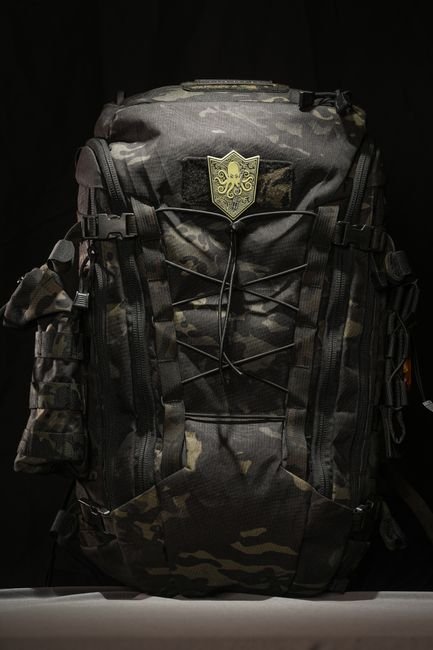
The Savior Equipment Pro SEMA Competition Backpack is built around a simple premise: equipment stays easier to find when it stands in assigned, visible zones rather than settling into one shared cavity. Its rigid, upright format, dedicated pistol sleeves, and high-visibility organizer pouches suit frequent practice and competition-style loads with magazines, ammunition, tools, eye and ear protection, scorekeeping items, and spare parts.
That layout rewards repetition. A pouch can remain the tool kit, a top compartment the immediate-access layer, and a sleeve a consistent storage position from one range day to the next. The bag becomes an inventory map, not merely a container.
The tradeoff is operational discipline. A structured backpack is bulkier than a soft duffel even when partially filled, and its many zippers create more opening-and-closing steps. Its advantage fades when loose items migrate between pockets; each zone needs a fixed job and occasional reset.
- Upright structure prevents a deep gear pile
- Dedicated sleeves and pouches create repeatable locations
- High-visibility organizers speed small-item checks
- Rigid format keeps packed gear from collapsing together
- Bulky footprint for a partly filled load
- Multiple compartments mean more zipper management
- Organization breaks down if pocket roles drift
- Less forgiving of irregular oversized items
Bottom line This is the stronger clutter-control format when the loadout repeats often and contains many small pieces. Its order comes from disciplined placement, not from the number of compartments alone.
REEBOW Tactical Deluxe Pistol Range Duffel: adaptable capacity on a budget
Affordable range bag with strong customer approval
A 25-liter soft-shell duffel suits range loads that refuse a fixed layout: boxed ammunition, ear and eye protection, a belt or bulky gloves, and other awkward pieces that do not sit neatly in vertical sleeves. Its wide zip opening makes the whole main compartment visible at once, so large items can be loaded without playing compartment Tetris.
That same openness needs a system. The central bay works best when two or three zip pouches establish firm groups—such as tools and spares, loose consumables, and dirty or spent-brass-related items—while the smaller exterior pockets hold frequently reached essentials. Without those boundaries, a duffel’s floor becomes a dump bin: boxes slide under gear, small parts migrate, and the last item packed is the only item accessible.
This format rewards a deliberately variable loadout. It is less about preserving a permanent arrangement than rebuilding a clean, contained kit after each outing.
- Wide-opening bay accommodates boxed ammunition and irregular gear
- Soft 25-liter format adapts to changing range loads
- Accessory pockets can keep small essentials out of the main bay
- Straightforward value-oriented alternative to structured packs
- Main compartment becomes disorderly without internal pouches
- Soft walls allow items to shift during transport
- Less immediate item visibility than a vertical, pocketed backpack
- Requires a reset routine after each range session
Quick take A capable low-cost duffel for large, changing range loads. Its clutter resistance comes from pouch discipline, not from the bag’s open central compartment.
| Organized backpack Savior Equipment Pro SEMA Competition Backpack | VS | Open-bay duffel REEBOW Tactical Deluxe Pistol Range Duffel |
|---|---|---|
Set down upright; zones stay distinct | At the bench |
Unzip wide; contents are immediately exposed |
Fast when pouch labels are consistent | Small-item retrieval |
Fast only if small gear is contained |
Dirty items can return to assigned zones | After cleanup |
Large bay accepts awkward items quickly |
Hands-free, better over distance | Parking-to-line carry |
Simple for short carries; load can swing |
Inventory by compartment | Unloading at home |
Everything is visible, but mixed loads spread out |
| Compare | Compare |
The layout helps; the loading habit decides
Choose for the trip, not the fantasy loadout
A compact one-pistol trip rarely needs a purpose-built range bag. A regular backpack with a padded pistol case, one ammunition pouch, eye-and-ear protection in a zip pouch, and a small cleaning sleeve keeps the load light without creating empty compartments to fill. The test is whether every item can be found without unpacking the whole bag.
When a backpack earns its structure
For recurring mixed practice—multiple magazines, belts, tools, timer, spare batteries, and notes—a structured backpack becomes more than convenience. Dedicated sleeves and upright pouches make omissions obvious during packing and prevent small items from migrating into a shared main compartment. The Savior Equipment Pro SEMA Competition Backpack suits this repeatable, accessory-heavy pattern particularly well.
When a duffle remains the better tool
Competition days and vehicle-to-bench transport often bring awkward extras: rain layers, food, a stapler, targets, or borrowed equipment. A duffle accepts that variable volume more gracefully, provided the main bay holds contained modules, not loose gear. The REEBOW Tactical Deluxe Pistol Range Duffle makes sense when capacity changes trip to trip; a backpack is stronger when the same inventory returns every time.
Dedicated storage earns its footprint when reset time, missed items, or loose small gear have become recurring problems—not merely because a larger bag looks more prepared.
-
Empty the debris zone
After each session, remove spent packaging, target scraps, loose fasteners, and anything that does not belong in the next loadout.
-
Return equipment to assigned homes
In a backpack, refill the same sleeves and pouches. In a duffel, rebuild the interior with the same labeled pouches or modules.
-
Inspect the open space
An empty central bay or pocket is useful capacity, not an invitation to store unassigned items.
-
Stage only the next outing’s essentials
Set aside consumables and trip-specific add-ons separately so the bag begins each outing as a known baseline.
Frequently Asked Questions
What's the main difference between a range backpack and a range duffel?
A structured backpack like the Savior Equipment Pro SEMA keeps gear in dedicated, upright zones such as pistol sleeves and labeled organizer pouches, while a duffel like the REEBOW Tactical offers one open 25-liter bay that adapts more easily to bulky or changing loads.
When does a structured backpack work better than a duffel?
For recurring mixed practice with multiple magazines, belts, tools, a timer, spare batteries, and notes, a structured backpack’s dedicated sleeves and upright pouches make omissions obvious during packing and prevent small items from migrating into a shared compartment.
When is an open duffel the better choice?
When the load changes trip to trip, such as rain layers, food, targets, or borrowed equipment, a duffel’s wide zip opening exposes the whole main bay at once for large or irregular items, provided the bay is divided with internal pouches rather than left as loose storage.
Does more bag capacity fix range-day clutter?
No. Unused volume often invites duplicate or “just in case” gear, and both formats become harder to search and heavier to carry once the loadout expands without limits.
How do you keep either bag from becoming disorganized?
Run a post-range reset: empty the debris zone, return equipment to its assigned home, treat empty space as useful capacity rather than an invitation to store unassigned items, and stage only the next outing’s essentials.
A layout that gets reset gets used well
- Backpacks win when fixed locations and rapid retrieval matter most.
- Duffels win when the load changes often and wide-open access matters more than built-in structure.
The Savior Equipment Pro SEMA Competition Backpack suits a repeatable, accessory-heavy setup because its upright compartments make missing items and misplaced gear easier to spot. The REEBOW Tactical Deluxe Pistol Range Duffel suits changing loads, provided its open bay is divided with internal containers rather than treated as storage without rules.
The deciding test is simple: choose the layout that makes packing and resetting easy enough to repeat after every outing. A brief empty-sort-return reset prevents session debris and loose items from becoming the next trip’s clutter.
Savior Equipment Pro SEMA タクティカル バックパック コンペティション シューター 3 ピストルスリーブ
- [最高の競技シューターのために設計・開発] - このPRO SEMA XL 3ピストルバックパックには、頑丈で軽量なポリマーフレーム、ロック可能なYKKジッパー、UTXバックル、オーガナイザーポーチなど、一日中自慢できる機能がたくさん含まれています。
- [耐候性生地] - 射撃競技に参加する際に最も貴重な銃を保護するように設計されています。1680Dバリスティックナイロンはバックパックを汚し、すすぐだけです(ピストルが入っていないことは明らかです)。 Duh)。
- [個別の拳銃ケース3個とIDパッチが付属] - オープンディビジョンのレースガンにフィットする特大ピストルケース。 必要なときにお気に入りのピストルを素早く見つけるために、必ずパッチを書き込んでタグを付けてください。
- [射撃や狩猟用のオールインワンバッグ] - 追加のポケット、オーガナイザー、無制限の部屋で、すべての弾薬、安全メガネ、イヤーマフ、ペーパーシューティングターゲット、クリーニングキットなどを入れることができます。
- 安心してお買い求めください。 気に入っても返品しても。
Tactical Gun Shooting Range Bag, Deluxe Pistol Range Duffle Bags Army Green
Features
| 留め具の種類 | ファスナー |
| 容量 | 25 L |
| シェルタイプ | ソフト |
| 商品の重量 | 2.7 ポンド |
| ブランド名 | REEBOW TACTICAL |
| UPC | 639853085683 |
| 型番 | RTRG0125AG |
| メーカー型番 | RTRG0125AG |
| ASIN | B07WSKR1TY |
| おすすめ度 | 4.8 5つ星のうち4.8 (340) 5つ星のうち4.8 |



8 Comments
The article is right to call out restrained capacity. People buy a giant bag, then act surprised when it becomes a portable junk drawer. A duffel isn’t inherently messy; an empty central bay with no pouches is messy.
For vehicle-to-bench trips, I prefer the REEBOW because my gear is irregular: folded mat, stapler, spare water, ammo boxes, and occasionally a borrowed item. I use one bright pouch for clean gear and a washable zip bag for spent brass/debris. That one rule has saved me from putting grimy gloves on my eye pro more than once.
I’d pick the Savior Equipment Pro SEMA Competition Backpack for a regular indoor-range routine. Carry comfort matters when you’re walking from parking to the line, and the upright layout keeps my eye/ear protection from getting crushed under ammo.
But I wouldn’t pretend it replaces a duffel for a bigger outdoor day. Different jobs, not really a knockout fight.
I switched from a basic duffel to the Savior Pro SEMA-style backpack setup for weekly pistol/carbine trips, and the vertical organization really does help. Mags, ear pro, tools, and batteries all have a home instead of migrating into the Mystery Bottom Pocket.
It only works if I reset it in the garage afterward, though. Leave two sessions’ worth of brass and targets in there and even a nice backpack becomes a trash compactor.
Slightly skeptical of calling the backpack “visible access.” Once it’s packed, half the pockets are still behind a zipper and I have to remember where Future Me put the chamber flag 😂
That said, a fixed spot for every little accessory is better than fishing around a duffel. The real test is whether you can reload the bag after a long day when you’re tired and everything is dusty.
Which one did you end up choosing for a match day with extra ammo and a rain jacket? I like the backpack idea, but 25L-ish duffel capacity sounds less annoying when the loadout changes every weekend.
For a variable match-day load, I’d lean toward the REEBOW duffel—provided you add a couple of distinct zip pouches or bins inside it. The Savior backpack makes more sense when your accessory list is nearly identical every trip and you value hands-free carrying. The duffel wins when the odd items change: jacket, food, extra ammo, borrowed gear, and so on.
That was my experience too. I use a backpack for local practice, but a duffel lives in the car for matches because it swallows the “oh, I might need this” stuff without a fight.
My REEBOW Tactical Deluxe Pistol Range Duffel started as a “budget solution” and immediately became a black hole for loose ammo, tape, and random allen keys. Totally my fault, but still… the center compartment invites it.
I added two small labeled pouches plus a plastic container for dirty stuff, and now it’s actually faster than my old backpack when I’m bringing unusual gear. If I shot the same setup every Saturday, I’d probably go Savior. For changing range days, duffel + containment has been the less fussy option.