
Keep the silhouette slim without sacrificing loose change.
A SLIM WALLET can balloon after a morning of loose change from coffee and transit. Coins cluster in one corner, stressing seams, warping closures, and ruining the profile. Prioritize designs that redistribute coin mass—edge zips, low-profile cups, or gussets—so capacity exists without a rounded silhouette. The right coin solution prevents pocket discomfort and extends wallet life.
- Gusseted pocket — spreads coins; about 6–10 coins before noticeable bulge.
- Edge zip — moves weight along the spine, keeping the wallet flat in pockets.
- Flat coin cup with soft lining — reduces seam wear and metal clink.


Engineering that keeps coin pockets flat
How features control bulk
Slim, coin-capable wallets mix geometry and materials to hold coins without a soft, rounded bulge.
For a slim wallet for coins, a gusset adds a controlled expansion zone.
When coins occupy the pocket, they slide into the gusset’s depth instead of distorting the bill or card compartments.
An edge or channel zipper placed at the pocket mouth keeps coins constrained to a single plane, reducing lateral spread.
Closures matter. Full-length zippers and tight retention lips (a short stiff strip at the pocket opening) limit coin migration and keep the load compact. Snaps and push‑buttons can compress coins into a lump and are more likely to produce a visible bulge; magnets are slim but may allow small, loose coins to shift unless paired with a stiff lip.
Materials and seams: where durability meets profile
Stiffer face materials help the wallet hold shape under load.
Options include thicker vegetable‑tanned leather, coated canvas, or composite laminates.
Internal linings of abrasion‑resistant nylon or TPU protect seams from coin edges.
Look for reinforced stitching (bartacks) or taped seams at stress points to avoid fraying in a slim wallet for coins.
Practical cues to predict fit
- Examine gusset depth: deeper gussets hide more coins but add measured thickness when full.
- Check zipper placement: a zipper set into the edge gives a flatter profile than one sewn on top.
- Feel material stiffness: flexible wallets cradle coins and look softer; stiffer shells stay flat.
- Inspect seams and reinforcement: dense stitching and bartacks at corners signal long‑term shape retention.
Combined, these elements let a well-designed slim wallet accept coins while preserving a trim silhouette.
Priorities when choosing a slim wallet that carries coins
- Realistic coin capacity & loaded profile
Accept that slim coin wallets trade absolute capacity for low bulk. Confirm manufacturer or tests for coin counts and inspect photos of half‑ and fully‑loaded profiles so the expected bulge is known before buying.
Look forstated coin capacity and photos of loaded profileAvoidvague "coin pocket" claims with no load images - Closure quality and retention
A tight, durable closure keeps coins secure and prevents the pocket from splaying. Zippers (metal teeth or dual sliders) and tight retention lips compress contents better than weak snaps or exposed pockets.
Look formetal/robust zipper or well‑engineered retention lipAvoidcheap coil zippers, loose snaps, or open pouches - Card capacity and layout
Cards and coins compete for the same volume; layout matters more than raw slot count. Prefer separated card sleeves or staggered slots that keep cards flat and isolated from the coin cavity.
Look forseparate card sleeve or staggered, low‑profile slotsAvoidcombined coin/card pocket with no partition - Construction, materials, RFID and trade‑offs
Materials, lining, and seam reinforcement determine longevity and thickness; RFID blocks or heavy leather add layers. Decide whether a few extra coins are worth the added depth—every plus two to four coins typically increases thickness noticeably.
Look forreinforced seams, abrasion‑resistant lining, transparent RFID solutionAvoidthin glued edges, unlined coin pockets, opaque RFID add‑ons that hide bulk
How wallets were tested
Testing used repeatable, instrumented protocols to quantify loaded profile, seam durability, closure life, daily carry behavior, and RFID performance. Objective data informs the product comparisons that follow.
-
Silhouette & coin capacity
A standardized coin set was loaded and the wallet’s 2-D and thickness profile recorded with calipers and flatbed photography to quantify bulge, spine thickness, and pocket displacement.
-
Closure and durability
Zippers were cycled on a bench rig to simulate long-term use; seams underwent visual-microscope inspection and tensile spot-pull checks to reveal stitch failure modes.
-
Carry drills and RFID verification
Pocket-wear drills (sit, walk, quick-draw) and repeated card swaps measured real-world comfort and retention; RFID shielding was checked against a reference reader to verify blocking.
All tests were repeated for consistency; results were averaged and cross-checked against photographic records.
Everyday commuter balance
01
Best value with secure coin slot
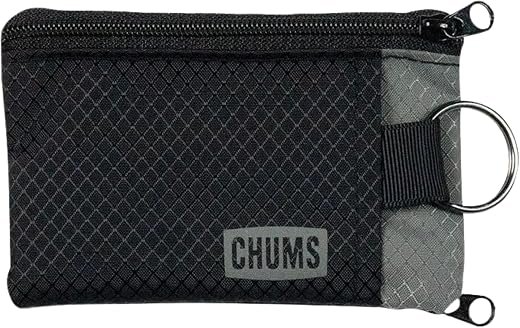
Chums Surfshorts is a compact, zip‑closure textile wallet aimed at commuters who carry modest amounts of change and prefer front‑pocket carry. Its zippered coin chamber, reinforced retention lip and simple card layout prioritize secure, organized carry without turning into a full coin purse.
- Zippered coin pocket keeps loose change contained during movement
- Reinforced lip reduces coin spill and spreads pressure away from seams
- Card organization splits cards and ID across zip compartments for tidy access
- Included RFID blocking element mitigates contactless skimming risk
- Water‑resistant ripstop nylon sheds light rain and resists abrasion
- Profile becomes noticeably thicker when coin pocket approaches capacity
- Zipper hardware and reinforcement add modest edge stiffness versus soft wallets
- Holds fewer coins than a dedicated coin purse or bulky coin pouch
This model strikes a solid balance for most commuters who carry modest change. The zipper coin chamber and reinforced lip work together to contain coins and protect seams, while the split zip compartments keep cards and ID organized. The built‑in RFID element adds a useful layer of security. The trade‑off is practical: expect a noticeable thickness increase when the coin pocket is near capacity and slightly firmer edges due to the reinforcement.
Clean‑profile alternative for front‑pocket carry
Casual daily carry without bulk
Chums Surfshorts Slim Wallet positions its zippered coin pocket inside the body so coins sit between card layers instead of bulging the outer seam. Made from rip‑stop nylon with dual zip compartments and a clear ID window, it favors a flat silhouette over raw capacity. Best for those who prioritize a neat front‑pocket profile and casual, adventure‑ready materials.
- Internal zip placement minimizes edge bulge when loaded
- Lightweight rip‑stop nylon keeps overall profile soft and slim
- Dual compartments plus ID window aid organization
- Includes RFID‑style protection and a key‑ring option
- Smaller coin payload compared with gusseted or dedicated coin pouches
- Fewer card slots than thicker multi‑section designs
- Zippered interior can be fiddlier to access in tight front pockets
A compact alternative when appearance and front‑pocket comfort matter more than maximum coin load. Its internal zipper strategy keeps the silhouette tidy and resists seam wear, making it well suited to daily commuters who carry light change and prioritize low visual bulk. Expect to trade off the top pick’s coin capacity and card count for a flatter, more streamlined carry.
Budget-Friendly Zip Wallet
- Very budget-friendly
- Lightweight ripstop nylon
- Dual zip compartments
- Clear ID window; RFID card included
- Less durable than leather options
- Zippers wear under heavy daily use
- Modest coin capacity
- Can bulge when fully loaded
A low‑profile edge zipper with a gusset usually adds only minimal closed thickness and localizes bulk to the seam.
Gussets redistribute coin mass inside the pocket so the perimeter stays flat; a well‑specified zipper profile contributes less to overall thickness than uncontrolled coin bulge.
Most RFID linings (foil, conductive ink, or thin fabric) add negligible thickness compared with stacked cards.
Thickness scales with the number of layers and card stack height; a single RFID layer is thin, whereas multi‑card layouts dominate bulk.
Segregated coin pockets, retention lips, or internal zips prevent direct coin‑to‑card contact and dampen noise.
Physical separation and soft linings absorb impact and stop metal edges from rubbing against card surfaces.
Front carry can remain subtle when coin count is limited, heavier coins are avoided, and coins are centered in a gusseted pocket.
Profile depends on volume and placement: a few coins centered in an internal zip create a smaller silhouette than a haphazard edge load.
Care and load limits to avoid seam failure
Seams and zippers wear from chronic overloading; modest load management prevents stretching and stitch failure. Small, repeatable habits extend a slim wallet’s life without sacrificing day‑to‑day usefulness.
Practical load limits
- Gusseted zip coin pocket: aim for 10–15 mixed coins maximum for occasional carry; fewer (6–10) for daily front‑pocket use.
- Flat internal coin slot or card-side pouch: keep to 4–6 coins to avoid bulging.
- External pockets: limit to 2–4 coins when carrying in a tight pocket.
Zipper and seam care
- Run the zipper full-length occasionally to clear grit; lubricate with a tiny graphite or beeswax rub.
- Avoid forcing a jammed zip; stop and remove coins rather than yanking.
- Inspect stitching monthly; address loose threads early to prevent seam failure.
Leather-specific tips and emptying schedule
For leather models, follow the guide to stop leather wallet stretching. Condition sparingly (light cream every few months), store flat when not in use, and empty or redistribute coins for long outings or whenever a visible bulge appears—move excess to a jacket pocket or coin pouch to relieve stress.
Reader questions: coins, RFID, pockets and theft
How many coins should a slim coin-capable wallet plan for?
Design for a realistic daily load: 4–8 mixed coins keeps profile slim; 10–15 will noticeably thicken the silhouette and stress seams over time.
Does adding RFID protection make a slim coin wallet bulkier?
Modern RFID liners add millimetres, not centimetres. Properly integrated shielding increases thickness only marginally compared with the gusseted coin compartment.
Front pocket versus back pocket — what about comfort and back pain?
Front-pocket carry reduces spinal torque and butt-pocket pressure; it favors internal zip layouts that keep coins flush. Back-pocket carry is fine for short periods but may aggravate sitting posture when heavily loaded.
Which anti-theft features matter for coin-carrying slim wallets?
Look for lockable or inward-facing zips, low-profile tether points and RFID barriers. For more options, consider designs from anti-theft slim wallets that handle coins.
Which Surfshorts to pick — quick flow
- Packing checklist: limit coins, place coins in zip pocket, stagger cards left/right, close zipper fully before sitting.
- Carry checklist: test front-pocket fit before full day; listen for zipper wear; offload excess coins at day's end.
- Security checklist: keep ID in window pocket for quick access; use RFID slot for passports/cards when travelling.
If daily commute needs a reliable, low‑profile coin solution pick Surfshorts Zippered Slim Wallet with RFID Coin Slot for balanced capacity and shielding. For minimal spenders or tight budgets choose Surfshorts Zip Wallet with Card Holder and ID Window. If occasional heavier coin loads are expected opt for Surfshorts Slim Wallet with Coin Pocket and Zipper for slightly higher capacity and reinforced seams.
Chums Surfshorts Wallet - Solid Colors Collection, Lightweight Slim Wallet with RFID Blocking Card & Clear ID Window - Zippered Minimalist Wallet w/Key Ring
Features
| Additional Features | Coin Slot, Photo & ID Holder, RFID Protected, Water Resistant |
| Wallet Compartment Type | ID Card |
| Closure Type | Zipper |
| Pocket Description | Zip Pocket |
| Number of Compartments | 3 |
| Number Of Pockets | 2 |
| Number of Sections | 2 |
| Wallet Card Slot Count | 1 |
| Color | Black/Gray |
| Style Name | Classic |
| Pattern | Solid |
| Form Factor | Slim |
| Subject Character | Sports |
| Material Type | Nylon |
| Lining Description | Nylon |
| Product Care Instructions | Wet Wipe Clean |
| Leather Type | Non-leather |
| Brand Name | Chums |
| Model Name | Chums Surfshorts Wallet |
| Model Number | 18401103 |
| Target Audience | Adult |
| Manufacturer | Chums |
| UPC | 093039818814 009303984420 093039184018 |
| Global Trade Identification Number | 00093039184018, 00093039818814 |
| Manufacturer Part Number | 18401103 |
| Unit Count | 1.0 Count |
| Age Range Description | Adult |
| Item Type Name | Travel Accessory- Travel Wallet |
| ASIN | B003CK2EFO |
| Item Dimensions D x W x H | 2.88"D x 4.38"W x 0.5"H |
| Item Weight | 0.8 Ounces |
- Textile
- Imported
- Compact with Tons of Space - Measuring at 4.5" x 3", the Surfshort Wallet is a compact style wallet sized to carry everything you need while fitting perfectly in your pocket or bag, even the front pocket
- RFID Blocking Wallet Protection - The intuitive design & security help this card holder stand out; the zipper pockets fit multiple cards, & cash as needed, and the included RFID Blocking card (posing as a fake ID from Utah) protects the wallet contents wherever you end up
- Made From Durable, Water-Resistant Nylon - Each wallet is crafted from water-repellent and heavy-duty rip-stop nylon, made to withstand the conditions wherever you wander
- Dual Zippered Compartments - It's easy to organize all your necessities with two zippered compartments that keep cards, cash and more safe and secure
- Lifetime Warranty - Since 1983, Chums has been trusted by millions to protect their gear. All Chums products are high-quality, designed with you in mind, and come with a lifetime warranty against manufacturer defects
- Sport type: Camping & Hiking
Chums Surfshorts Wallet - Solid Colors Collection, Lightweight Slim Wallet with RFID Blocking Card & Clear ID Window - Zippered Minimalist Wallet w/Key Ring
Features
| Additional Features | Card Holder, Compact, ID Window, Lightweight, RFID Protected |
| Wallet Compartment Type | Coin, ID Card |
| Closure Type | Zipper |
| Pocket Description | Zip Pocket |
| Number of Compartments | 2 |
| Number Of Pockets | 2 |
| Number of Sections | 2 |
| Wallet Card Slot Count | 2 |
| Color | Berry/Melon |
| Style Name | Casual |
| Pattern | Solid |
| Form Factor | Slim |
| Material Type | Nylon |
| Lining Description | Nylon |
| Brand Name | Chums |
| Model Name | Surf Shorts Wallet With Key Ring |
| Model Number | 18401 |
| Target Audience | Boys, Men |
| Manufacturer | Chums |
| UPC | 093039857165 |
| Manufacturer Part Number | 18401378 |
| Unit Count | 1 Count |
| Age Range Description | Adult |
| Item Type Name | Travel Accessory- Travel Wallet |
| ASIN | B0F1Z873WD |
| Item Dimensions D x W x H | 2.88"D x 4.38"W x 0.5"H |
| Item Weight | 0.06 Pounds |
- Compact Wallet with Tons of Space - Measuring at 4.5" x 3", the Surfshort Wallet is sized to carry everything you need while fitting perfectly in your pocket or bag, even the front pocket
- RFID Blocking Wallet Protection - The intuitive design & security help this card holder stand out; the zipper pockets fit multiple cards, & cash as needed, and the included RFID Blocking card (posing as a faux Drivers License from Utah) protects the wallet contents wherever you end up
- Made From Durable, Adventure-Ready Nylon - Each zipper wallet is crafted from heavy-duty rip-stop nylon, made to withstand the everyday wear and tear, to fun-filled outdoor activities wherever you wander
- Dual Zippered Compartments - It's easy to organize all your necessities with two zippered compartments that keep cards, cash and more safe and secure
- Lifetime Warranty - Since 1983, Chums has been trusted by millions to protect their gear. All Chums products are high-quality, designed with you in mind, and come with a lifetime warranty against manufacturer defects
Chums Surfshorts Wallet - Solid Colors Collection, Lightweight Slim Wallet with RFID Blocking Card & Clear ID Window - Zippered Minimalist Wallet w/Key Ring
Features
| Additional Features | Card Holder, Compact, ID Window, Lightweight, RFID Protected |
| Wallet Compartment Type | Coin, ID Card |
| Closure Type | Zipper |
| Pocket Description | Zip Pocket |
| Number of Compartments | 2 |
| Number Of Pockets | 2 |
| Number of Sections | 2 |
| Wallet Card Slot Count | 2 |
| Color | Black |
| Style Name | Casual |
| Pattern | Solid |
| Form Factor | Envelope |
| Material Type | Nylon |
| Lining Description | Nylon |
| Brand Name | Chums |
| Model Name | Surf Shorts Wallet With Key Ring |
| Model Number | 18401 |
| Target Audience | Boys, Men |
| Manufacturer | Chums |
| UPC | 093039859374 |
| Manufacturer Part Number | 18401100 |
| Unit Count | 1 Count |
| Age Range Description | Adult |
| Item Type Name | Travel Accessory- Travel Wallet |
| ASIN | B0F1Z83ZRG |
| Item Dimensions D x W x H | 2.88"D x 4.38"W x 0.5"H |
| Item Weight | 0.06 Pounds |
- Compact Wallet with Tons of Space - Measuring at 4.5" x 3", the Surfshort Wallet is sized to carry everything you need while fitting perfectly in your pocket or bag, even the front pocket
- RFID Blocking Wallet Protection - The intuitive design & security help this card holder stand out; the zipper pockets fit multiple cards, & cash as needed, and the included RFID Blocking card (posing as a faux Drivers License from Utah) protects the wallet contents wherever you end up
- Made From Durable, Adventure-Ready Nylon - Each zipper wallet is crafted from heavy-duty rip-stop nylon, made to withstand the everyday wear and tear, to fun-filled outdoor activities wherever you wander
- Dual Zippered Wallet Compartments - It's easy to organize all your necessities with two zippered compartments that keep cards, cash and more safe and secure
- Lifetime Warranty - Since 1983, Chums has been trusted by millions to protect their gear. All Chums products are high-quality, designed with you in mind, and come with a lifetime warranty against manufacturer defects




15 Comments
Nice to see the engineering detail—retention lips and lining really do matter. I wish more brands talked about gusset shape; the article nails how edge-zip redistributes bulk.
I appreciate the testing section—silhouette measurements and zipper-cycle stress sound solid. Any chance you can share the exact load limits you recommend per pocket? I worry about seam failure.
Short answer: keep to the limits we outline in ‘Care and load limits’—roughly 6-8 small coins or 3-4 larger ones per coin pocket for front-pocket carry, and no more than 10 total if you’re back-pocketing. We also recommend regular zipper lubrication and conditioning for leather wallets; excessive coin stacking near seams increases seam wear quickly.
Thanks for this—super helpful. How do the Surfshorts zipper variants compare in everyday commuter use vs the clean-profile internal zip one? I’m mostly front-pocket carrying.
Good question. For front-pocket daily commuting we recommend the Surfshorts Zippered Slim Wallet with RFID Coin Slot (the edge-zip/ gusset combo) because it keeps the bulk concentrated and resists bulging at the edges. The internal zip clean-profile alternative is flatter up front but you give up some coin/card capacity—better if you prioritize a slim silhouette over max coin load.
I’m skeptical of the ‘RFID adds little thickness’ claim. My RFID card feels bulkier in wallets that have liners and extra stitching.
Maybe depends brand-to-brand?
Why wasn’t any non-Surfshorts brand included? There are a few other makers doing slim coin wallets with gussets.
We focused the roundup on three Surfshorts variants because they illustrate the engineering trade-offs we wanted to highlight (zipper vs internal zip vs simple coin pocket) and allowed consistent testing across similar construction. We did test other brands in early stages, but results showed either much heavier profiles or weaker seam/zipper durability, so they didn’t fit the ‘slim-but-actually-carries-coins’ bar we set.
I like the ripstop nylon zip wallet mention—anyone tried it in winter? Curious about stiffness and card access when pockets stiffen in cold.
We carried the ripstop nylon through a couple of cold-weather tests. It does stiffen slightly, which can make card access a touch slower, but the dual zips still function reliably. Durability and coin capacity are modest—fine as a budget short-term option, but leather with reinforced lips held up better in repeated zipper-cycle stress testing.
Has anyone tried the Slim Wallet with Coin Pocket and Zipper on long trips? I’m worried about coin rattle and weight adding up.
Also does RFID protection actually add any thickness on these models?
I took the slim zipper one on a 2-week trip. Rattle was minimal because the wallet has separate pockets, but I still offloaded change a couple times. RFID layer was barely noticeable, maybe +0.5mm at most.
Thanks for the packing checklist flowchart idea in the reader questions. I actually used it to decide between the three picks.
One minor gripe: the daily vs occasional vs budget categories were helpful, but I’d like a quick visual showing loaded profile differences (thin/medium/thick).
Budget question: between the ripstop nylon zip wallet and the Surfshorts Slim Wallet with Coin Pocket and Zipper, which is the better cheap daily choice? I mainly need coin capacity and won’t baby it.
If you need durability with some budget constraints, go Surfshorts Slim Wallet with Coin Pocket and Zipper. The ripstop nylon is cheaper and fine short-to-medium term, but Surfshorts had better seam/zipper performance in our stress tests and a more forgiving gusset design for extra coins.