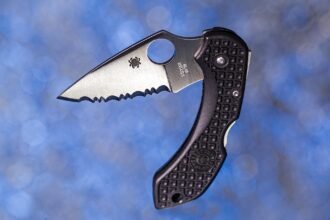
D2 resists corrosion better than many tool steels, but sweat can still leave a mark.
A folding knife comes out of a pocket after a hot day with tiny orange specks near the thumb ramp. The blade may also show dark staining, while the pivot feels gritty instead of smooth. These are early corrosion warnings—not merely cosmetic dirt.
D2 is often described as semi-stainless because of its relatively high chromium content. However, much of that chromium is tied up in hard carbides, leaving less available to form the protective surface layer associated with stainless steel. Salt-rich sweat and trapped humidity can therefore attack vulnerable areas quickly, particularly a sharpened edge, jimping, pivot hardware, recessed screws, and steel liners. Residue also collects where airflow and wiping are limited. A clean-looking blade face does not rule out corrosion developing inside the handle.
Tell active rust from surface staining
-
Use bright, angled light
Dry the blade, then inspect both faces and the edge. Reddish-orange specks, raised texture, or tiny dark cavities suggest active corrosion.
-
Wipe with a clean white cloth
Orange-brown residue on the cloth points toward loose rust. Stable discoloration or patina usually remains smooth and does not shed powder.
-
Rule out surface contaminants
Adhesive often feels tacky or smears; transferred metal commonly appears as a streak. Avoid assuming every dark mark is damage.
-
Check texture closely
Inspect suspicious areas under magnification. Roughness and pinpoint pits matter more than color alone because stains can mimic corrosion.
-
Inspect hidden moisture traps
Check around the pivot, washers, liners, scale edges, screws, and jimping. Corrosion may develop there before becoming obvious on the blade face.
If pits appear deep or corrosion extends beneath the scales, photograph the area before cleaning. Avoid abrasive removal or unnecessary disassembly until the maker’s warranty and service instructions have been checked.
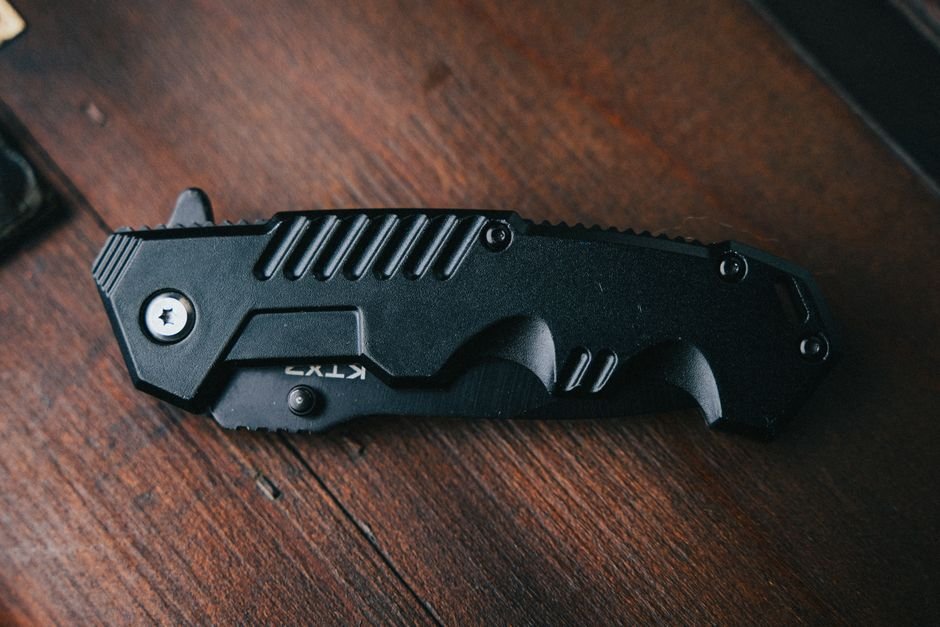
Yes—D2 can rust
D2 steel can rust when sweat, fingerprints, rainwater, or condensation remains on the surface. Sweat is especially troublesome because its chlorides can destabilize the thin oxide film that offers limited protection; repeated wet-dry cycles also concentrate salts.
Carpenter Technology describes D2 as a high-carbon, high-chromium cold-work tool steel—not a stainless steel. Much of its chromium is bound in hard carbides, leaving less available in the surrounding steel matrix to support corrosion resistance. This carbide-rich structure improves wear resistance but does not make the blade immune to staining or pitting.
Real-world behavior also varies with heat treatment and finishing. Heat treatment changes the matrix and carbide distribution, while coarse grinding marks, bead-blasted finishes, scratches, and laser markings can trap moisture longer than a smooth, polished surface. Comparisons with 9Cr18MoV corrosion resistance should therefore account for finish and maintenance, not alloy names alone.
After humid carry or skin contact, the practical response is simple:
- Wipe away moisture and fingerprints promptly.
- Rinse off salt residue when appropriate, then dry completely.
- Apply a thin corrosion inhibitor, including around pivots and fasteners.
- Avoid storing the blade wet in a sheath.
How D2 compares with other EDC steels
“Semi-stainless” is an informal label, not a promise that D2 will resist sweat indefinitely. In typical use, D2 is generally more corrosion-resistant than simple carbon steels, but less forgiving than many stainless knife steels.
| Steel category | Practical corrosion expectation |
|---|---|
| Simple carbon steel | Usually needs prompt drying and regular oiling |
| D2 tool steel | Tolerates moderate exposure, but sweat and humidity can cause staining or rust |
| Stainless EDC steel | Often offers a wider maintenance margin, though chloride exposure can still cause corrosion |
Comparisons such as 8Cr13MoV versus D2 for everyday carry should consider more than alloy names. Blade finish, heat treatment, existing scratches, pivot contamination, storage conditions, and maintenance frequency can change real-world results. A polished, clean D2 blade may fare better than neglected stainless steel; neither category eliminates the need to rinse, dry, inspect, and protect the knife after salty exposure.
Clean D2 promptly after sweat, rain, or salt exposure
- Make the knife safe
Work on a stable surface with the edge directed away from hands. Follow the manufacturer’s directions for opening, closing, or partially disassembling a folder.
- Remove surface residue
Wipe the blade with a clean, soft cloth. Pay particular attention to fingerprints, sweat lines, jimping, thumb studs, and the blade near the handle.
- Use mild soap where permitted
For stubborn sweat or salt, use a cloth dampened with fresh water and mild soap. Avoid immersing a folding knife unless its manufacturer specifically permits it.
- Remove soap and chlorides
Wipe again with a separate cloth dampened with fresh water. After saltwater exposure, repeat until no visible residue remains.
- Dry every accessible junction
Use a lint-free cloth and cotton swabs around the pivot, lock, liners, screws, and handle seams. Allow the knife to air-dry fully before closing or storing it.
- Apply protection and store dry
If recommended by the maker, apply a thin film of suitable corrosion inhibitor and pivot lubricant. Use a food-contact-safe product when the blade prepares food.
A wet sheath or pouch can return moisture and salt to a cleaned blade; dry it separately before storage.
Do not place the knife in a dishwasher or leave it soaking. Bleach and chlorine-based cleaners can accelerate corrosion and may damage coatings, handle materials, washers, or lubricants. Damp storage—especially inside leather or fabric—also keeps corrosive residue against the steel.
Apply a thin corrosion barrier
Once the knife is clean and fully dry, apply a light film of compatible corrosion inhibitor to the blade and accessible metal parts. Spread a drop or small spray evenly, then wipe until the surface looks nearly dry. A heavy, wet layer offers little practical advantage and tends to collect lint, grit, and pocket debris.
Product directions should control material compatibility, application, and reapplication intervals. Keep oil out of mechanisms where the manufacturer specifies a different lubricant.
Food preparation requires a separate choice. Use only a product explicitly labeled for the intended food-contact application; FDA-compliant white mineral oil under 21 CFR 172.878 is one established option when used as specified. An industrial rust preventive—or an NSF H1 lubricant intended only for incidental contact—should not automatically be treated as suitable for coating a food-preparation blade.
Cutting and handling can remove the film from edges, scratches, pivots, laser markings, and other high-friction areas. Moisture may also enter joints the applicator cannot reach. These locations still need inspection, drying, and periodic reapplication.
Set maintenance by exposure
Maintenance is more reliable when triggered by conditions rather than a fixed monthly date. A knife carried against damp clothing may need attention far sooner than one stored indoors.
- After sweaty carry, rain, or salt spray: Clean, dry, inspect, and renew the protective film before the knife returns to service.
- During coastal trips or humid seasons: Check frequently, including after days when the blade was not used; condensation and perspiration can reach the handle.
- Before long storage: Clean and dry the knife, apply a thin barrier, then record a reasonable inspection date.
Under bright light, examine both blade faces, the edge, choil, and jimping. On folding knives, also inspect the pivot, liners, screws, and areas beneath or beside the pocket clip, where moisture and lint can remain hidden.
Store the knife dry in a ventilated location, outside damp sheaths or closed containers that may trap moisture. Silica gel can reduce humidity inside a reasonably sealed box, but it cannot remove salt residue or replace cleaning. Replace or regenerate desiccant according to its manufacturer’s instructions; controlled cabinets may offer steadier protection for collections.
A case, sheath, or drawer is not protective if moisture remains inside. Confirm that the blade, handle gaps, clip area, and storage material are dry before putting the knife away.
Remove rust without sacrificing the blade
-
Start with cleaning, not abrasion
Wash away sweat and grit with the cleaner permitted by the manufacturer, then dry the blade and junctions completely. Check the care instructions before disassembling a folder; unauthorized disassembly may affect warranty coverage.
-
Loosen light rust with oil
Apply a small amount of manufacturer-approved oil and allow it time to penetrate. Wipe with a soft cloth, using light strokes rather than concentrated pressure near the edge, markings, or coating.
-
Use only an approved mild treatment
If staining remains, use the mild rust treatment specified by the knife maker. Test it on an inconspicuous area first, because even metal polishes can change satin, stonewashed, etched, or coated finishes.
-
Treat aggressive removal as a last resort
Steel wool can leave scratches or embedded particles; scraping can gouge the blade. Powered polishing may round the edge, erase markings, overheat a small area, or alter grind lines, while acidic removers can etch steel and attack adjacent hardware.
-
Escalate damage instead of grinding it away
Manufacturer or professional service is warranted for deep pitting, corrosion at the pivot or lock, rust beneath a coating, a damaged edge, seized hardware, or unclear structural damage. Stop if removal begins changing the finish or geometry.
Rust remover can migrate into pivots, bearings, washers, locks, or handle materials. Unless the manufacturer explicitly approves in-place use, avoid soaking an assembled knife and do not mix cleaners or acids.
Treat every exposure, not the calendar
No credible fixed “rust-free” period applies to D2. Sweat chemistry, humidity, finish, carry time, and storage conditions vary too much. After exposure, follow the same sequence: remove salts, dry completely, apply a light protective film, store dry, and inspect again—especially around pivots, liners, locks, fasteners, and sheath contact points.
Small surface spots are often manageable when addressed promptly and gently. Persistent rust, visible pitting, or corrosion on moving, locking, or load-bearing parts calls for closer assessment and, where function may be affected, professional service or replacement.
Corrosion is not a budget-steel problem alone. The same question asked of a premium alloy — whether S30V rusts — shows that stain resistance is a matter of degree at every price.