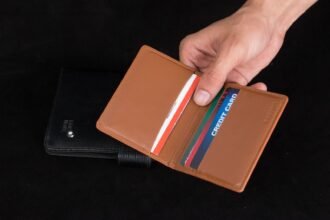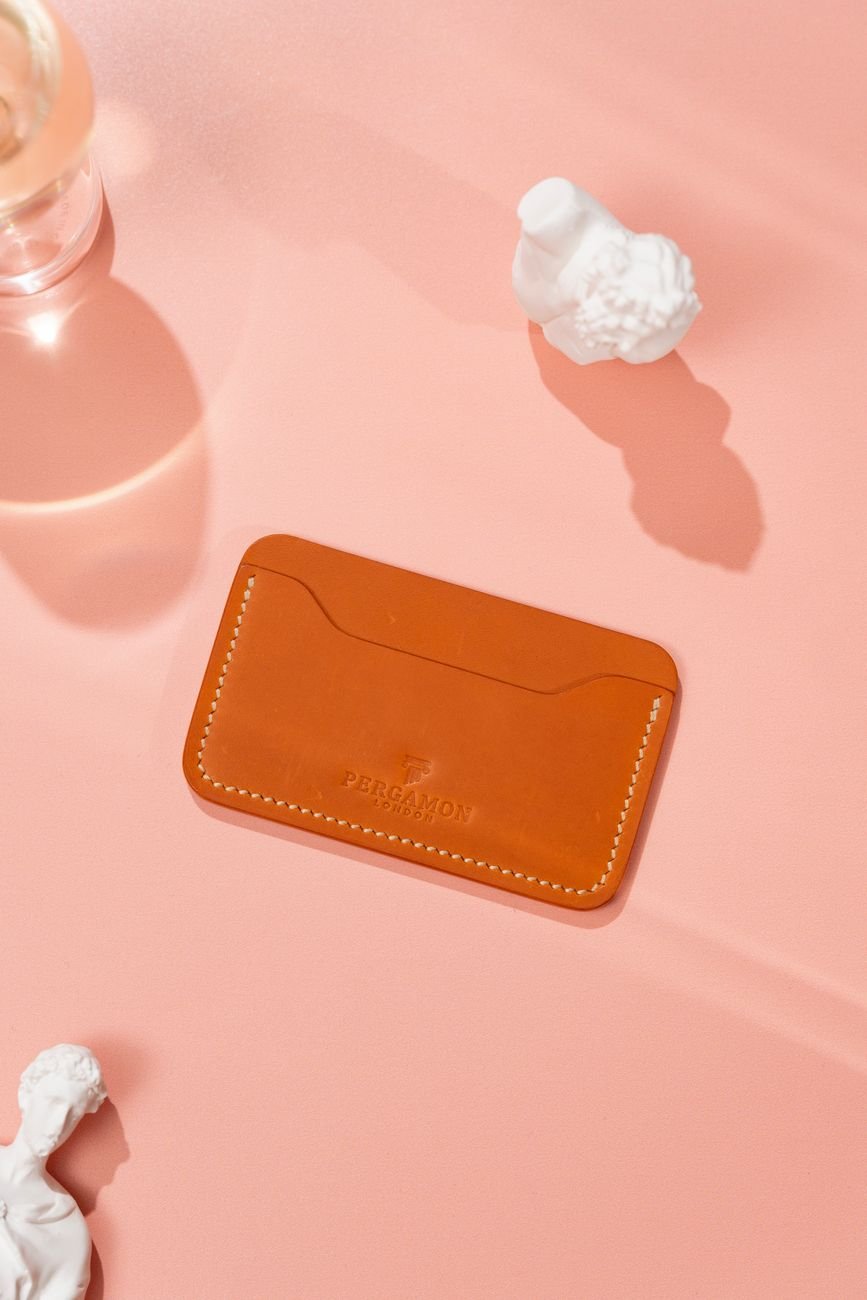
A loose slot is frustrating; a rushed fix can turn it into cracked, misshapen leather.
A holder that once secured four cards may begin dropping the same load when lifted or turned over. Gaping slot edges and easy card movement indicate that the leather or stitching has stretched beyond its former fit. Continued overpacking usually adds stress rather than restoring useful tension.
Start conservatively: remove every card, clear away grit, and let the holder rest flat at room temperature. Then reload only the minimum needed, following the carrying principles in this front-pocket wallet guide. Avoid soaking, boiling water, hair dryers, ovens, and forceful clamping. Heat and moisture can shrink leather unevenly, strip oils, distort finishes, or weaken adhesives. If resting does not improve retention, a leatherworker may be able to tighten stitching or rebuild a slot; aggressive home treatment risks making professional repair impossible.
Empty, clean, and inspect the holder
-
Remove every card gently
Ease cards out one at a time rather than pulling the stack. Note the usual card count and which pocket has become loose.
-
Let debris fall out
Hold the empty case opening-down and tap it lightly. Avoid shaking aggressively, which can strain a loose lining.
-
Dry-clean the surfaces
Use a clean, soft brush or lint-free cloth on the exterior, pockets, and seams. Skip water, solvents, alcohol wipes, and conditioner during inspection because they can conceal marks or alter the leather.
-
Inspect under angled light
Look for tears at pocket corners, separated layers, broken or frayed stitches, lifted lining, peeling finish, and hardened adhesive residue. Open each pocket only enough to see inside.
-
Test the empty pocket lightly
A smoothly widened opening with intact leather and seams usually indicates stretching. For next steps, see how to address cards slipping from a holder.
Stop reshaping attempts if a tear opens, stitching has failed, the lining detaches, bonded layers separate, or the finish cracks when lightly flexed. Shrinking cannot restore those components and may worsen the damage; a leather-repair professional is the safer route.
Will the leather shrink back?
An intact holder that is only mildly loose may tighten somewhat after being emptied and left flat at room temperature for several days. Expect partial contraction rather than a return to factory fit. Ettinger’s leather-care guidance cautions against overfilling because stretched leather may not regain its original shape.
Recovery becomes less likely when thick card stacks have remained in place for months, the pockets stay visibly bowed while empty, or cards have distorted the opening. Split stitches, elongated stitch holes, torn lining, separated adhesive, or a permanent ridge indicate structural change rather than temporary expansion.
Several variables affect the prognosis:
- Leather and tannage: Firm vegetable-tanned leather may hold its formed shape, while softer chrome-tanned leather can relax but also remain enlarged. Horween Leather notes that tannage, oils, waxes, and finish all influence leather’s feel and behavior.
- Construction: Linings, folded edges, reinforcement, and close stitching restrict movement. In leather wallets with an ID window, the window panel may prevent even contraction or become the limiting component.
- Age and finish: Older, dry, or heavily coated leather is less tolerant of reshaping and may crack before contracting.
- Moisture: Dampness can change dimensions unpredictably, especially in lined or glued holders. Soaking is not a controlled shrinking method.
- Duration and degree: A slight weekend overload has a better outlook than repeated, long-term overstuffing.
If cards still slip after a week of unloaded rest, the looseness should generally be treated as permanent.
Give the leather time to settle
- Return it to its natural profile
With clean, dry hands, gently align folded panels and pocket edges. Do not pull, roll, or repeatedly flex the leather in an attempt to speed recovery.
- Rest it at room temperature
Place the empty holder on a clean, dry, flat surface away from sunlight, radiators, vents, and humid rooms. Leave pockets open enough for air to circulate naturally.
- Add minimal pressure only if needed
If the holder remains bowed, place it between sheets of clean, unprinted paper and set a light, flat board on top. Pressure should be even and barely more than needed to keep the holder flat.
- Wait several days
Allow the leather to rest without frequent handling. Reassess the pocket tension and overall shape after several days rather than expecting an immediate change.
- Test with the normal card load
Insert only the number of cards normally carried, one at a time. If cards still slide out when the holder is gently turned downward, stop using that pocket for valuables and consider professional repair or replacement.
Remove pressure immediately if it creates an imprint, sharp crease, finish change, or distortion around stitching and hardware.
Let the holder recover slowly
Leather often responds better to rest and stable room conditions than to aggressive intervention. The goal is to encourage the holder’s original folds and panels to settle, not to force the fibers to contract. Keep it away from hair dryers, heaters, direct sun, steam, water, and heavy weights; these can harden the leather, alter the finish, weaken adhesives, or set unwanted creases.
A slightly loose pocket may improve as tension is removed, but recovery can be partial. The practical test is card retention after the resting period—not whether the holder looks perfectly flat. Continued looseness may indicate permanent fiber stretch or a construction problem that surface care cannot correct.
What conditioner can and cannot do
Conditioner may help dry leather remain flexible, but it is not a tightening treatment. Too much can soften pocket edges further, leave residue, darken the surface, or affect adhesives.
Product choice should follow the maker’s care instructions and the leather finish. A conditioner intended for smooth leather may be unsuitable for suede, nubuck, patent, coated, or delicate aniline leather. When conditioning is permitted, use a very small amount, test an inconspicuous area first, and allow the holder to dry fully before loading cards.
Do not soak, steam, iron, bake, or tightly clamp the holder. Any apparent tightening may come with warping, brittleness, discoloration, adhesive failure, or permanent creasing.
Rebuild the normal card load gradually
-
Start over a clear table
A soft cloth or mat can protect cards and the holder if anything slips. Keep the holder close to the surface throughout the test.
-
Insert one flat card per slot
Use standard, unembossed cards first. Push each card fully into its intended pocket without forcing the leather.
-
Check every slot separately
Turn the holder opening-down and give it one gentle shake. A card that slides or falls out indicates that the slot has not recovered enough for reliable use.
-
Add cards one at a time
Rebuild only to the maker’s stated capacity, repeating the retention check after each addition. Stop if seams strain, the pocket bows, or cards become difficult to remove.
-
Confirm the minimum daily load
Carry the smallest normal card set that remains secure. Recheck retention after several days, since a pocket may loosen again once it returns to regular use.
A thick stack may feel secure because the cards press against one another, not because the slot still grips properly. Embossed cards add uneven pressure, while doubling cards in a single-card slot can stretch the leather and stress stitching. Follow the capacity stated by the maker; cards beyond that limit may temporarily mask poor retention while making it worse.
Common “Shrink Fixes” Can Backfire
Finished leather may contract unpredictably or become stiff.
Soaking followed by a hair dryer, radiator, or sunlight can cause hardening, discoloration, curling, and uneven shrinkage.
Cleaners remove soil, not structural stretch.
Alcohol, solvents, and household detergents may strip finishes, dry the leather, alter color, or weaken nearby adhesive.
Forced compression may set creases or distort construction.
Pressure can warp panels, mark the finish, stress stitching, and push bonded linings apart—especially when moisture or heat is added.
Once leather has hardened, warped, changed color, or separated at a bonded edge, further wetting or heating may worsen it. Stop, let it dry naturally, and consult a leather repair specialist if the holder remains valuable.
Repair, replace, then prevent
When rebuilding is credible
Professional rebuilding may be reasonable when the outer leather remains sound and a specialist can restore retention by replacing pocket panels, stitching, or lining. Ask for an assessment of seam holes, edge splits, delamination, and the intended card load; cosmetic reshaping alone is insufficient. Each repaired slot should grip its card during normal handling without bending it or depending on overstuffing.
Replace or retire the holder if cards slip out, seams tear through weakened leather, the body is deeply cracked, or repair offers uncertain retention. The practical test for whether a stretched card holder should be replaced is secure card retention—not age, appearance, or sentimental value. An unreliable favorite can be kept as a memento instead of carrying payment or identity cards.
Prevent another stretch
- Carry only regularly needed cards.
- Follow the maker’s stated capacity for each slot.
- Pull cards out straight and gently rather than prying pockets sideways.
- Keep the holder dry; if dampened, empty it and let it air-dry away from heat.
- Empty and inspect it periodically for loose cards, opening seams, lifted lining, or edge cracks.
If any occupied slot releases its card during ordinary handling, stop using that slot. Seek a leather specialist only when structural rebuilding can restore dependable retention; otherwise, replace or retire the holder.