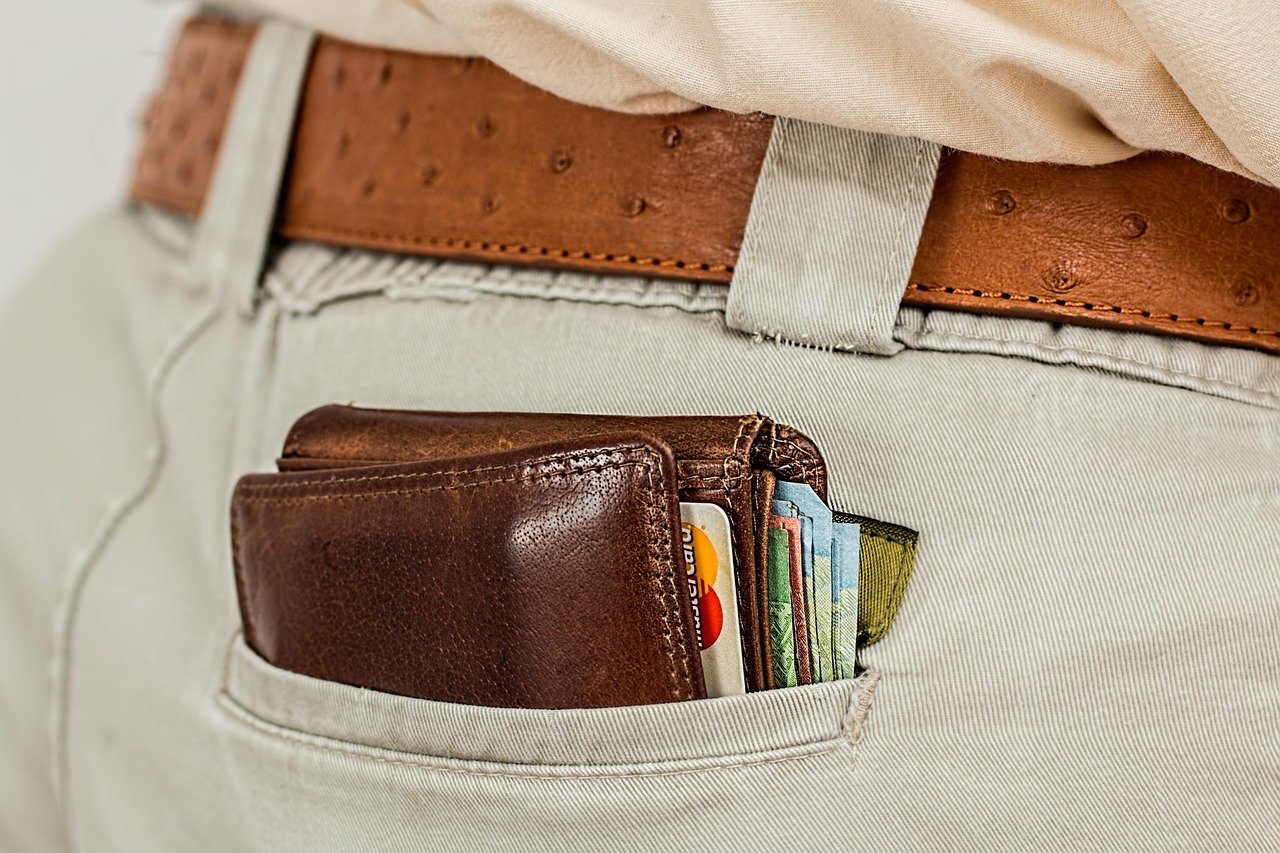
A wallet can feel invisible on the move and painfully obvious in a chair.
Standing leaves the front pocket relatively open. Sitting changes its shape: the hip bends, fabric tightens, and the wallet may be pressed into the upper thigh or hip crease. A setup that seemed fine moments earlier can suddenly pinch, create a hard pressure point, or push against the abdomen.
That does not automatically make front-pocket carry a bad choice. Discomfort more often points to a mismatch between the wallet’s thickness, its contents, pocket depth, trouser cut, and sitting posture. Even a slim wallet can become awkward when packed with unused cards or positioned sideways. The useful question is not simply front pocket or not? It is which part of the setup creates pressure once the body bends.
Pinpoint where the wallet presses
When the hip bends, the thigh moves toward the torso and the front pocket loses usable depth. At the same time, the waistband and trouser leg pull the pocket fabric taut, leaving less room for a wallet to settle or shift.
A wallet that lies flat while standing may therefore tilt or rotate while seated. One edge can turn toward the crease where the thigh meets the pelvis, concentrating force on a smaller, more sensitive area.
The discomfort location provides a useful diagnostic:
- Upper thigh: The wallet is likely too tall, thick, or low in the pocket. Its bottom edge may be pressing into the raised thigh.
- Groin crease: An inside corner may be rotating inward as the pocket tightens. Wallet width and pocket angle are common contributors.
- Outer hip: The wallet may be shifting sideways against a seam, reinforced pocket edge, or firm object stored beside it.
To check, sit in the usual posture, note the exact pressure point, then remove the wallet without changing position. If the pressure disappears, inspect which wallet edge had aligned with that spot. Persistent pain, tingling, or numbness warrants relocating the wallet rather than tolerating the pressure.
Reduce the lump, then soften its shape
A wallet can be thin on paper yet uncomfortable in practice. Cards stacked in one pocket form a dense ridge, while stiff backplates, metal clasps, raised snaps, and sharp corners focus pressure on a smaller area when the hip bends.
Start by removing expired IDs, duplicate payment cards, old receipts, loyalty cards available in an app, and keys or coins stored inside the wallet. Even one or two unnecessary rigid items can make the stack less flexible.
For necessary cards, distribute them across available slots rather than filling one compartment. Alternate card orientation if the wallet design allows it, and keep embossed cards away from other raised surfaces. The smoothest face should sit against the body; closures and protruding hardware should face outward.
Card-heavy carry may require a different approach. Anyone who regularly carries around 10 cards can reduce bulk when carrying 10 cards by splitting rarely used credentials into a separate bag organizer or selecting a wider wallet that spreads the stack instead of building a tall central lump.
After repacking, sit and walk briefly. Persistent pressure in one spot usually points to the wallet’s structure—not merely its total thickness.
The pocket may be the problem
The same wallet can feel unobtrusive in one garment and intrusive in another. Pocket depth determines whether it rests near the hip crease or farther down the thigh, while the opening angle can rotate its corners inward when the leg bends.
Lining matters as well. Slick fabric may allow a wallet to shift or tilt; coarse or tight lining may hold it against one pressure point. Trouser cut also changes the available space: slim thighs and low-rise waists generally create less room when seated than fuller cuts or higher rises.
Before replacing the wallet, compare it systematically:
- Place the same contents in left and right front pockets.
- Sit in the same chair for several minutes.
- Repeat with pants that differ in rise, thigh cut, and pocket style.
- Note whether the pressure moves, disappears, or stays fixed.
If discomfort changes substantially between garments, pocket geometry—not merely wallet thickness—is likely contributing.
Run a one-change-at-a-time pocket test
-
Recreate the pinch
Use the chair where discomfort occurs, or sit in the parked vehicle with the engine off. Settle into the usual posture and note the exact pressure point.
-
Establish a baseline
Keep the normal wallet load and clothing unchanged. Check whether sitting, reaching the pedals, standing, or entering and exiting feels restricted.
-
Reduce the contents
Remove receipts, spare cards, coins, keys, and other nonessential items, then repeat the same movements. If pressure eases, bulk or a hard internal edge is likely contributing.
-
Rotate or reposition the wallet
Turn it 180 degrees, shift rigid hardware away from the pressure point, or try the opposite front pocket. Change only one detail per trial.
-
Compare another garment
Repeat the baseline test in pants with a different rise, thigh cut, or pocket angle. A clear improvement points to pocket geometry rather than the wallet alone.
Record each change and result; several simultaneous adjustments make the cause difficult to identify.
End the test if sitting causes numbness, tingling, increasing pain, skin-color changes, or reduced leg movement. A wallet should not interfere with pedal control, normal walking, or getting out of the seat.
Choose the adjustment that fits
A thinner wallet may reduce bulk, but it will not necessarily correct a hard corner, poor pocket position, or shifting contents. Match the change to the sensation:
| Pressure pattern | More relevant adjustment |
|---|---|
| Edge digs into the groin crease | Lower placement in a sufficiently deep pocket can move the wallet below the bend point. |
| One corner creates a sharp hotspot | Rounded edges or a softer perimeter distribute contact more gradually. |
| A broad rigid panel presses across the thigh | A more flexible body can follow the leg’s contour, provided it still protects cards adequately. |
| Wallet slides or rotates while seated | Secure retention—from pocket geometry, a closure, or controlled card tension—helps preserve a comfortable orientation. |
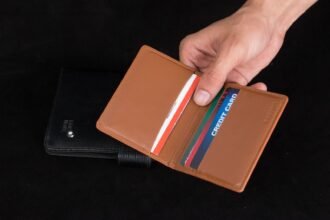
| Folded cash or stacked cards form a central ridge | A different format may help; compare card holder and bifold comfort differences rather than judging thickness alone. |
Any lower-riding or smaller wallet should remain fully contained during walking, standing, and getting out of a vehicle. If pressure persists across several garments, changing the wallet’s shape or format is more promising than repeatedly rearranging the same load.
When a money clip helps
A money clip may feel flatter than a wallet, but comfort depends on where its mass and hardware sit. Spreading cards and folded cash across a broad face creates gentler pressure than a tight stack with a raised clip against the thigh.
Place the clip near the pocket opening and away from the body, provided retention stays secure. Compare both orientations while seated in a parked car or firm chair.
For comfortable front-pocket money clip carry, retain only regularly used cards and routine cash. If the clip or stack still hits the sore spot, the format has not removed the cause; a softer holder or another pocket may help.
When discomfort becomes a warning
A shallow red impression that fades soon after removal, without pain or altered sensation, is different from an ongoing symptom. Even so, repeated marks indicate concentrated pressure and justify changing the pocket, garment, or wallet setup.
Pain, numbness, tingling, burning, unusual coolness, discoloration, or weakness should not be treated as a normal consequence of front-pocket carry. Stop using that location rather than testing through the symptom. Note when it began, how long it lasts after removal, and whether posture, walking, or clothing changes it; those details can help a qualified clinician assess the problem.
Seek medical guidance when symptoms persist, recur, worsen, or continue after removing the wallet. Sudden weakness, marked color change, severe pain, or a cold limb warrants urgent medical assessment.
A thinner wallet may reduce pressure, but it is not a remedy for persistent pain or altered sensation. Stop carrying there and obtain qualified medical guidance.
Fit the wallet to the routine, not the label
- Capacity for the actual load
A practical way to choose the right front-pocket wallet is to test it with every card, key, and bill normally carried—not an empty showroom sample.
Look forComfort and secure retention at the normal carrying capacity.Avoid“Minimalist” claims based on carrying fewer essentials than daily life requires. - Compatibility with usual clothing
Test the filled wallet in the pants worn most often. Pocket depth, opening angle, fabric tension, and thigh fit can make the same wallet feel very different.
Look forA shape that stays below the hip crease without shifting or protruding.AvoidJudging fit in loose clothing that does not represent the normal wardrobe. - A realistic desk trial
Keep the return packaging intact and sit at a desk for a normal work interval. Check for a hard edge, concentrated pressure, creeping movement, or repeated repositioning.
Look forComfort that remains stable without conscious adjustment.AvoidAssuming persistent pressure will become tolerable after a break-in period. - A parked driving check
While parked, sit with the seat and belt in their usual positions and operate the pedals normally. Any wallet that pinches, distracts, or affects leg movement is a poor match.
Look forUnrestricted movement and no concentrated pressure in the driving position.AvoidTesting while the vehicle is moving or keeping an uncomfortable wallet past its return window.
- Load it exactly as carried each day.
- Return or exchange it if seated pressure persists.
Marketing terms describe an intended style, not a guaranteed fit. The useful standard is straightforward: the loaded wallet should remain unobtrusive in usual clothes, at a desk, and in a parked driving position.
Ongoing discomfort is a failed fit test, not an adaptation requirement.