

When cash leads the carry, “slim” stops being a fixed measurement.
By noon, a pocket that felt flat at breakfast can be carrying mixed bills, a receipt, and a few coins from change. That is where the real difference shows up: cash does not stay the same thickness all day. It slides, fans out, and creates pressure points in a way cards rarely do.
For a cash-first carry, the question is less about looks and more about how the load behaves under movement. A money clip often feels cleaner with a small, tidy stack, but it can become lopsided once change from the day builds and bill edges start to wander. A slim wallet begins with more structure and slightly more material, yet it usually keeps notes aligned and pocket feel more consistent. That matters because card-first minimalism is built around fixed dimensions; cash-heavy carry is a moving target.
Two simple answers


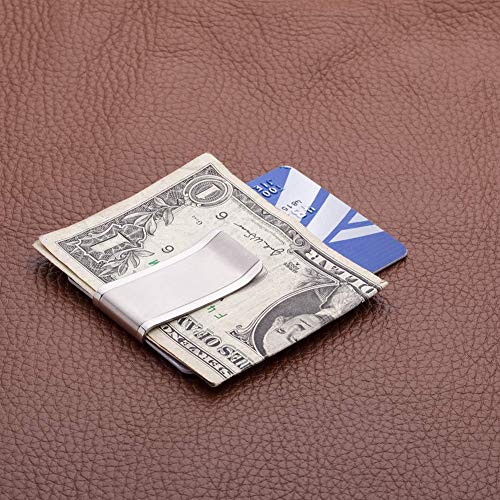

If you're torn between a bare clip vs slim wallet for cash-heavy everyday carry, the short answer comes down to stack size: a clip wins with a thin, disciplined bundle of notes, while a slim wallet holds up better once bills, cards, and receipts start to vary through the day.
What mostly cash carry actually means
- Daily load
In this comparison, mostly cash carry means bills are the main payload, with roughly two to five cards and no bulky extras. Once the note stack regularly grows thick, the choice shifts from minimalism to containment.
Look forClip if the cash stack stays thin most of the day; wallet if thickness rises and falls.AvoidJudging by morning carry alone when afternoon cash volume is very different. - Sorting friction
Some carriers only need one folded stack. Others separate large and small notes, keep transit cards handy, or park one or two receipts until day’s end.
Look forWallet when quick note sorting or receipt capture matters more than raw slimness.AvoidA bare clip if mixed bills and loose slips create constant reshuffling. - Pocket location
Front-pocket carry rewards low bulk, but pressure points matter once sitting time increases. Back-pocket carry exposes both formats to bending, though a structured wallet spreads stress more evenly.
Look forClip for light front-pocket carry; wallet for longer seated wear or mixed pocket use.AvoidIgnoring how often the carry spends hours under body weight or leg bend. - Edge tolerance
Money clips leave bill edges and card corners more exposed to abrasion, moisture, and casual visibility. Slim wallets trade a little thickness for cleaner shielding and a softer contact surface.
Look forClip if exposed edges do not bother the carrier; wallet if coverage improves comfort.AvoidAssuming identical comfort when one format leaves more hard edges against fabric and skin.
| Minimalist cash carry Titanium Slim Money Clip Card Holder | VS | Organized everyday carry Slim Nappa Leather Bifold Wallet with RFID |
|---|---|---|
Load-sensitive grip | Retention |
Enclosed, steadier hold |
Fastest single stack | Access speed |
Fast once sorted |
Thin, then abrupt swell | Bulk behavior |
Gradual expansion |
One bundle | Organization |
Slots and folds |
| View | View |
A money clip tends to win the first reach: one pinch, one fold of notes, no flap or pocket to clear. That advantage is strongest with a small, consistent stack. As bills, receipts, or mixed denominations build up, clip tension changes, edges fan out, and retrieval can become less predictable.
A slim wallet gives away a little raw speed up front, but enclosed compartments keep the stack aligned as volume changes. That usually means fewer surprises in a front pocket and more repeatable access when cash needs separating from cards. The same mechanics explain why some money clips slip in the pocket more easily: low-friction materials and a partially exposed bundle move differently than a grippier leather shell with defined pockets.
Titanium clip for disciplined cash carry
Best minimalist titanium cash solution
The NUBARKO Titanium Slim Money Clip Card Holder makes the strongest case when the carry is mostly folded notes plus one or two essential cards. Its tiny footprint and rigid titanium frame keep the pocket profile exceptionally flat, so it suits people who treat everyday carry as a deliberately edited load rather than a mobile filing system.
In that narrow use case, the format feels clean and efficient. Once receipts, multiple card types, coins, or frequent note sorting enter the picture, the same minimalism starts to demand more pocket management than a slim wallet usually does.
- Extremely low pocket bulk
- Titanium body stays light and rigid
- Fast access for small cash stack
- Works well with 1-2 cards
- Limited tolerance for stack growth
- Poor for receipt or note sorting
- Pocket clutter reduces convenience
- Less enclosed than slim wallets
Quick take A strong match for cash-first minimalists carrying a controlled note stack. It feels less graceful once the load needs categories, overflow space, or day-to-day expansion.
For mostly cash carry with very few extras, this is the cleanest fit in the group. Its appeal depends on restraint: a small note stack, minimal card count, and little need to sort contents. When pockets get busier or cash thickness varies through the day, a slim wallet generally remains easier to live with.
Slim bifold for steadier cash carry
Best for carrying multiple cards and ID
This leather slim bifold fits cash-heavy carry that still includes an ID, several cards, and the usual stray receipt. Its value is less about raw minimalism and more about keeping bills, cards, and paper separated so the pocket feels consistent instead of shifting around as the day changes.
- More stable pocket shape than a clip
- Separate spaces for bills, cards, receipts
- Handles changing cash volume gracefully
- ID window helps frequent access
- Slower than a simple clip
- Slightly thicker even when lightly loaded
- Can invite overpacking
Quick take For cash carriers who dislike pocket clutter, a slim bifold usually feels more settled and easier to manage than a clip. Its advantage widens once daily carry stops being perfectly uniform.
This style makes the stronger case when cash is only part of the load. As bills thicken, receipts appear, and card count varies, the bifold keeps everything flatter, more sorted, and less fussy in-pocket than a bare clip usually can.
The tradeoff is clear: it gives up some speed and a little thinness. Still, for carry that changes through the day, that extra structure often feels like a practical upgrade rather than bulk for its own sake.
When context flips the choice
Only with a very thin cash stack; during long seated stretches, a slim wallet often prints less and feels flatter.
Tailored trousers punish pressure points. A clip concentrates bulk in one ridge, while a wallet spreads it.
In trains, queues, and crowded sidewalks, a slim wallet can be the calmer choice because notes and cards stay covered.
Pocket checks happen while moving. Covered edges are less visible, less likely to snag, and harder to fan accidentally.
Tickets, receipts, room keys, and mixed notes usually push the advantage toward a slim wallet; a clip works better with a separate, nearly empty pocket.
Extra items twist a loose stack, obscure denomination sorting, and can lever a clip out of position.
Frequently Asked Questions
What counts as mostly cash carry?
Bills are the main payload, with roughly two to five cards and no bulky extras. Once the note stack regularly grows thick, the choice shifts from minimalism toward containment.
Is a money clip good for sorting receipts?
Not really. A bare clip is poor for receipt or note sorting, and pocket clutter reduces its convenience once mixed bills and loose slips start to build up.
Which option works better for formal or dress trousers?
It depends on stack thickness. A very thin cash stack can favor a clip, but during long seated stretches a slim wallet often prints less and feels flatter since it spreads bulk instead of concentrating it in one ridge.
How does bulk behavior differ between the two formats?
A money clip stays thin and then swells abruptly once cash volume rises, while a slim wallet expands more gradually thanks to its enclosed compartments.
What is a practical way to decide between them?
Load a normal day peak cash amount plus the usual card count and incidental paper, then walk, sit, and retrieve it one-handed a few times. If the stack twists or fans out, a clip is past its comfortable limit; if a wallet still closes cleanly, it remains the safer all-day tool.
Choose by peak load
Appearance at the counter matters less than behavior at 6 p.m. after change, receipts, and a few extra notes have accumulated. A money clip still suits tightly disciplined carry, but the more reliable choice for mostly cash is usually the format that keeps bills aligned, cards separated, and pockets stable as volume rises: a slim wallet.
Immediate rule: load a normal day’s peak cash, add the card count and incidental paper usually collected, then walk, sit, and retrieve it one-handed several times. If the stack twists, fans out, or needs re-clamping, the clip is already past its comfortable limit; if the wallet still closes cleanly, it remains the safer all-day tool.
Real Leather Mens Bifold Wallet RFID Blocking Slim Minimalist Front Pocket - Thin & Stylish with ID Window in Gift Box (Nappa, Black)
Features
| Additional Features | Bifold,Rfid Blocking,Slim |
| Wallet Compartment Type | Business Card, Credit Card, ID Card |
| Closure Type | Bifold |
| Number of Compartments | 1 |
| Number Of Pockets | 8 |
| Number of Sections | 9 |
| Wallet Card Slot Count | 7 |
| Color | Black Nappa |
| Style Name | Minimalist |
| Pattern | Solid |
| Form Factor | Bi-Fold |
| Material Type | Leather |
| Lining Description | Leather |
| Product Care Instructions | Dry Cloth Clean |
| Leather Type | Nappa |
| Brand Name | Wise Owl Accessories |
| Model Name | Prw1457 |
| Model Number | PRW-1457 |
| Target Audience | Men |
| Manufacturer Part Number | PRW-1457 |
| Unit Count | 1 Count |
| Age Range Description | Adult |
| Item Type Name | Travel Accessory- Bi-Fold Wallet |
| ASIN | B08XY1247N |
| Item Dimensions D x W x H | 0.75"D x 3.25"W x 4"H |
| Item Weight | 0.13 Pounds |
- ★REAL LEATHER: This wallet is MADE IN INDIA and comes in 2 leather qualities, namely Nappa and Crazy Horse. Nappa leather is conventional drum dyed leather which is finished with natural pigments to attain a smooth and buttery touch, while Crazy Horse is vegetable tanned and sprayed with oils and waxes to give a distressed look with warm and soft touch.
- ★ELITE FEATURES: ID windows allow for quick access when traveling or at the store /working place. With 5 card slots and 2 more slots behind them, it’s easy to carry all your important cards, meet all your daily needs.
- ★RFID BLOCKING ANTI THEFT SECURITY: Our wallets are anti theft, equipped with advanced RFID SECURE Technology, a unique metal composite, engineered specifically to block 13.56 MHz or higher RFID signals and protect the valuable information stored on RFID chips from unauthorised scans and make them anti theft.
- ★COMPACT DESIGN: Making this bifold superb for travel, and everyday use, keeping cards safe and organized! It holds 8+ cards, and lots of cash!
- ★GIFT BOX PACKING: It is one of the most special gifts for Groomsmen, Birthdays, Anniversaries, Father's Day, Christmas and other Special Occasions.
NUBARKO Solid Titanium Money Clip Wallet Credit Card Holder for Men Women Christmas Gifts Stocking Stuffers for Women Adults Him Slim Minimalist Cash Holder...
Features
| Additional Features | Lightweight |
| Wallet Compartment Type | Credit Card |
| Closure Type | Magnetic |
| Number of Compartments | 1 |
| Number Of Pockets | 1 |
| Number of Sections | 1 |
| Wallet Card Slot Count | 1 |
| Color | titanium |
| Style Name | Minimalist |
| Pattern | Solid |
| Form Factor | Slim |
| Material Type | Metal, Titanium |
| Lining Description | Metal |
| Product Care Instructions | Wet Wipe Clean |
| Brand Name | NUBARKO |
| Model Name | Ti-01 |
| Model Number | ti-01 |
| Manufacturer | NUBARKO |
| UPC | 680490917257 |
| Manufacturer Part Number | TMC |
| Unit Count | 1 Count |
| Age Range Description | Adult |
| ASIN | B07KYHRKVB |
- TITANIUM: Crafted from lightweight and high strength Titanium Alloy.Resistant to corrosion, hypoallergenic and non-magnetic. money clip, money clip for men, money clips, mens money clip, money clips for men, magnetic money clip, cash clip, stainless steel money clip, men's money clips, money clips for cash, personalized money clips for men, titanium edc, money clip wallet, wallet clip, christmas money holder, money clip for women, edc wallet, mens money clip wallet, large capacity silver money
- LIGHTWEIGHT :Length: 2.1 in (54mm), Width: 0.88 in (23mm), Weight: 0.32 oz (9g). Come with a cute dark blue gift box for easy gift giving. stainless steel money clips, magnetic money clips, slim money clips, slim money clips for men, high end money clip for men, titanium money clip, titanium wallet, coach money clip, metal money, clips for men, metal money clip, jgfinds money clips, large money clip, money clip for wallet, slim money clip, personalized money clip, clip para billetes
- NON-MAGNETIC: Say goodbye to magnetic money clip and safely hold your credit cards and debit cards without damaging the magnetic stripe or chip. m clip money clip, credit card clip, cash clip men, money clip for men cash, silver money clip, money clip -wallet, small money clip, stainless steel money clips for men, womens money clip, fossil money clip, men's money clip, money clip card holder, titanium clip, moneyclip, magnetic money clip for men, men money clip, money clip for men, money clip
- PERFECT FOR EDC:a great alternative to wallets, they take up less space,Perfect Christmas,Birthday, anniversary gifts for man or woman - Great For Travel, Card Holder, Wallet Substitute for holidays season or daily use. Gifts for husband christmas, stocking stuffers for adults, wife christmas gift ideas, boyfriend stocking stuffers for wife, girlfriend christmas gifts, christmas gifts for girlfriend, boyfriend christmas gifts, valentines day gifts for girlfriend, valentines day gifts for wife
- NO HASSLE MONEY BACK GUARANTEE: One full year warranty and we will provide you with a free replacement or refund if you aren’t 100% satisfied. western money clip, vintage money clips, titanium money clip for men, titanium mens money clip, tiffany money clip, slim money clip for men, silver simple money clip large, silver money clips for men, silver money clips for men, serman brands carbon fiber money clip, , money clips titanium, money clip holder for big stock, money clip for men personalized


10 Comments
Maybe I’m the odd one out, but I think the article was a little too generous to the clip. Once you say “mostly cash carry,” that usually means thickness changes all day, and that’s where clips start losing the plot.
The bifold just seems more realistic unless your whole personality is “I carry exactly 7 bills and no receipts ever.”
Fair pushback. The clip case really is narrow: light load, low variation, and a user who actively manages the stack. The article wasn’t meant to say the clip is better overall for cash-heavy use, more that it stays attractive for a specific disciplined style of carry while the bifold is the safer choice for changing daily bulk.
This matched my experience almost exactly. A money clip feels awesome at 8am when I’ve got a few bills and one card, then by lunch it turns into a weird little metal sandwich once receipts and change from broken bills start happening.
The point about choosing by peak load was the part I needed tbh. Minimal setups always sound great until real life shows up.
Travel is where this flips for me 100%. Around town I can get away with a clip, but airports, taxis, hotel key cards, foreign cash, receipts… nope.
Structure beats minimalism real quick when you’re tired and digging through your pocket in line.
I bought a slim wallet after trying a clip because everyone online acts like clips are the final form of adulthood lol. For me the wallet won because I’m always breaking larger bills, so my cash stack gets fatter and messier through the day.
Also, cards plus cash plus one rogue receipt is apparently enough to ruin the “clean minimal carry” fantasy.
So if anybody here has used both: did the Titanium Slim Money Clip Card Holder ever get better with time, or is it just a “you either live that way or you don’t” kind of thing?
I tried the titanium clip style for about six months because I liked the idea of keeping things ultra-light. It was great right up until it wasn’t.
If I had clean, sorted bills and basically no extras, it was faster than any wallet I’ve owned. But on commuting days, with train tickets, folded receipts, and cash getting thicker after an ATM stop, the stack got annoying fast. The exposed bill edges also bothered me more than I expected.
So yeah, for disciplined carry the clip wins. For normal messy-human carry, the slim bifold makes more sense.
Same here. The clip made me feel organized for like 2 days, then I remembered I’m not that organized 😂
I keep bouncing between these two products. For someone carrying mostly cash, 2 cards, and random parking receipts, which one did you end up choosing in your own daily use?
If your carry regularly includes receipts on top of cash and 2 cards, I’d lean toward the Slim Nappa Leather Bifold Wallet with RFID. The Titanium Slim Money Clip Card Holder works best when the stack stays tightly controlled, but receipts and changing bill thickness usually push the bifold ahead for day-to-day consistency.
The “tolerance for exposed edges” line made me laugh because that’s weirdly the exact thing I hate about clips. I know some people love seeing the cash right there, but to me it always feels one bump away from looking sloppy.
I still think clips look cooler though, not gonna lie.