

Stop chasing a single spec—match the lamp to the mission.
In the aisle, a shopper juggles groceries, bike repairs, a late commute, and an impromptu trail—spec paralysis sets in. The right headlamp starts with a prioritized MISSION PROFILE: which tasks will dominate and which trade‑offs are acceptable.
Focus on predictable trade‑offs: higher lumens usually bring heat, heavier batteries, and shorter runtime; tight, high‑candela beams reach farther but sacrifice spill for close work; simple interfaces save frustration. Let typical tasks dictate beam pattern and runtime first, then optimize for battery type, controls, durability, and weight.
- 200–400 lumens: good for commutes, errands, and close repairs; long runtime expected.
- 800–1,500 lumens with >5,000 cd: suited to technical trails and long‑throw needs.
- Expect thermal throttling: hours on low modes, minutes to an hour on maximum output.

Pick a primary mission
When choosing a headlamp, deciding which role the headlamp will perform most often makes the rest of the selection straightforward. Moreover, a single dominant mission—everyday carry, running, repairs, or emergencies—changes which specs matter most and which trade-offs are acceptable.
- Everyday carry (EDC). Prioritize compactness, low‑to‑moderate output for close work (roughly 50–300 lumens), long low‑mode runtime, simple controls, and a secure pocket clip or low‑profile strap. Rechargeable USB and user‑replaceable batteries add convenience and flexibility.
- Running. Emphasize low weight, stable headband, good heat management, and a beam that balances spill and throw for trail use. Look for sweat/water resistance and lockable controls to avoid accidental activation. For focused buying guidance, review lightweight trail running headlamps.
Repairs and close work. Choose a wide, even flood beam with high CRI for color accuracy, strong low‑level control, an adjustable angle or pivot, and options like a magnetic base or clip for hands-free positioning.- Emergencies and outdoor survival. Value high peak output and throw, long runtime or multiple battery options, rugged waterproofing, and dedicated low/red modes plus an SOS beacon.
Quick checklist: pick the mission, then prioritize beam pattern, runtime, fit, and durability in that order.
Lumens, throw, and beam profile
Headlamp specs often list lumens and a throw figure (candela or meters).
However, these two numbers describe different things.
Lumens measure total light output, while throw indicates hotspot concentration.
Beam profile ties them together, showing how much light goes into the hotspot versus spill.
Flood (wide) beam
- Characteristics: low-to-moderate throw, broad spill, comfortable near-field illumination.
- Specs to watch: higher usable lux at 1–2 meters matters more than max lumens; wide reflector or multiple LEDs.
- Typical task: reading maps, campsite chores, close repairs.
Spot / long‑throw beam
- Characteristics: narrow hotspot, high candela, long visible distance but small spill.
- Specs to watch: candela and reported beam distance; runtime at high-output modes.
- Typical task: route finding on distant trails or signaling across a field.
Combo / adjustable beam
- Characteristics: mixes a hotspot with wide spill or offers tunable focus.
- Specs to watch: how the manufacturer balances lumen allocation and available modes.
- Typical task: multi-use EDC where both nearby work and occasional long sightlines are needed.
For a deeper technical comparison of candela, lumens, and when each metric matters, read the full explainer on lumens versus throw. For shoppers focused on distance or marine use, consult long‑throw and waterproof roundups linked below.
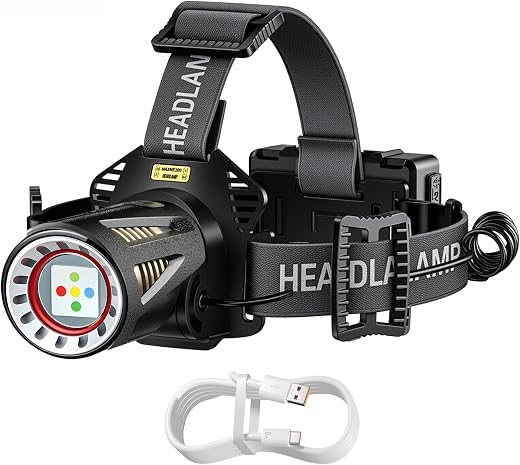


Integrated rechargeable vs replaceable AAs/AAAs
Power system trade-offs
Headlamp power choices, when choosing a headlamp, usually fall into two camps: integrated lithium rechargeable cells and replaceable AA/AAA batteries.
Additionally, each has clear strengths and practical limits.
- Runtime and energy density. Integrated lithium cells typically offer higher energy density and lighter weight for a given runtime. AAs—especially high‑capacity NiMH rechargeables—can deliver comparable runtimes but often weigh more.
- Field serviceability. Replaceable cells win for on‑the‑trail swaps: spare AAs/AAAs are widely available and easy to carry. Integrated packs are convenient for daily charging but are harder to service during extended remote use.
- Shelf life and storage. Alkaline AAs hold charge long in storage; NiMH have higher self‑discharge unless low‑self‑discharge types are used. Lithium rechargeables gradually lose capacity over many charge cycles and benefit from proper storage practices.
USB‑C and charging trends. USB‑C adoption brings faster, reversible charging and broader compatibility with power banks. Some models support USB‑C PD for rapid top‑ups, but reliance on built-in charging reduces redundancy unless external charging options exist.
Redundancy strategies: carry spare cells, choose hybrid models that accept both internal and external batteries, or pair an integrated headlamp with a small power bank. For an in‑depth comparison, consult the rechargeable vs AA headlamps guide.


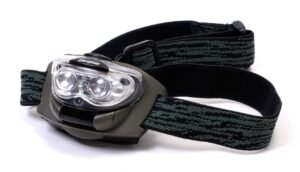
Preventing bounce and slippage
A headlamp that moves is more disruptive than one that’s slightly dimmer: a stable mount often matters more than raw brightness. Focus on materials, tension, and the lamp’s center of mass to stop bounce and slippage.
Headband fabrics influence tension. Additionally, woven elastic with silicone grippers grips hair and fabric better than smooth webbing. Aim for a snug fit that doesn’t cause pressure points. If the band slips, add silicone tape or a thin liner. For running-specific problems, consult the running anti-bounce techniques. They help adjust tension and strap setup.
Weight distribution and low-profile bodies. A forward-heavy lamp produces torque; placing battery mass toward the rear or using a slim, low-profile bezel reduces leverage. Many helmet-mount setups use a rear strap or counterweight to balance the unit.
Mounting differences and small heads. Helmets accept adhesive or clip mounts and tolerate bulk better, while hats favor low-profile or clip-on lights. Heads with smaller circumferences benefit from compact models and extra adjustment range—see guidance for [nodelink id="62992250-609f-413c-b087-956279a62c0d"]smaller head sizes.
Quick fixes:
- Add a silicone grip strip to the band.
- Move batteries rearward or use a rear pack.
- Double the strap or tuck excess webbing to prevent slip.
Minor tweaks to strap tension or moving battery weight often reduce bounce more effectively than choosing a lamp with more lumens.
Control myths and practical UI features
A simple, limited mode set is faster and less error‑prone.
Multiple hidden levels confuse operation and shorten useful runtime; stepped outputs and memory modes make common brightness settings accessible quickly.
Predictable single‑button logic, momentary on, and clear memory are more practical.
Physical cues and lockout stop accidental activation; compare interface trade‑offs in the Petzl Actik Core vs Black Diamond Spot to see how vendors balance simplicity and function.
A quality red mode and a wide, secure tilt are essential for close tasks and night compatibility.
Red preserves night vision and signals; reliable tilt lets the beam target hands‑on work without awkward head angles; lockout keeps these available and prevents accidental draining.
Durability, IP Ratings, Impact Tests, and Hard‑Hat Mounting
What do IP ratings mean for splash versus submersion?
IP ratings use two digits: the first (dust) and the second (water). IPX4 protects against splashes from any direction; IPX7 or IPX8 indicate tested submersion (usually specified depth/time by the maker), so choose based on whether incidental rain or actual immersion is expected.
How are impact ratings expressed and which matter for EDC?
Manufacturers often state a tested drop height (e.g., 1–2 m) or an IK score; higher numbers mean stronger resistance. For everyday carry, look for explicit drop-height claims and robust housing materials rather than marketing terms alone.
Does mounting a headlamp to a hard hat affect safety certifications?
Attaching clips, adhesives, or drilling can alter helmet performance and may void certifications; many helmet makers require approved mounts or use built‑in accessory slots. Follow helmet and lamp manufacturer guidance and consult the hard‑hat mounting guide in the hub for compliant options.
Any travel or battery packing cautions?
Regulations vary by country and airline; integrated rechargeable batteries are commonly allowed in carry‑on but spare lithium cells often must be carried, not checked. Check the travel/packing hub page and airline rules before transit, and protect exposed terminals.

5‑step buying checklist
-
1. Confirm the primary mission
Decide main use (EDC, running, repairs, emergency). Pick beam type and lumen range that match typical tasks rather than headline numbers.
-
2. Match power to runtime needs
Choose integrated rechargeables for frequent daily use; prefer replaceable cells where long storage or field serviceability matters. Check realistic runtime at the output level needed.
-
3. Test fit and controls
Try the strap tension, balance, and tilt. Verify the UI has a lockout, easy red mode, and repeatable brightness steps.
-
4. Verify durability and mounts
Confirm IP rating, stated impact resistance, and whether a hard‑hat clip or dedicated mount is official. Heavier lamps may need strap adjustments to avoid bounce.
-
5. Read the fine print before buying
Look for candela/throw and measured runtime graphs, battery type, warranty/return policy, and credible user tests. If specs are vague, consider a different model.
In‑store testing complements spec checks; keep a shortlist and compare measured throw and runtime data online if unclear.
Red flags: vague lumen claims, no candela/throw or runtime curves, flimsy strap, missing lockout, unclear battery serviceability, absent warranty. Avoid models with performance only claimed at unrealistic test conditions.
Choose a specialized roundup when: the mission is technical (trail ultrarunning, caving, industrial rescue or hard‑hat use). Roundups compare measured throw, thermal regulation, and long‑term reliability — essential for task‑critical choices.
Match mission, beam, and battery — then lock in fit and controls
- Prioritize a beam profile and battery chemistry that meet the primary mission.
- Then choose a headlamp with secure fit and a simple, reliable UI (lockout, red mode).
- Test the lamp on the head in representative conditions and run the five‑step checklist to catch trade‑offs.
Match beam and battery to the mission, then lock in fit and simple controls. Selecting lumens or throw without considering runtime and battery serviceability leads to compromises that matter most in real use. After the spec screen, insist on a secure, low‑bounce fit and a straightforward UI with essential features (lockout, red/CW modes, tilt). Before buying, try the candidate on the head during typical motion and lighting and run the five‑step checklist from earlier. If questions remain, consult the linked deep dives on beam profiles, battery types, and UI for edge cases like running, rescue, or extended runtimes.




8 Comments
Thanks for the clear sections. I’m confused about candela vs lumens — the article explains both but I still don’t know how to pick.
For example: if I want a headlamp for hiking at dusk and occasional campsite tasks, should I aim for higher throw (candela) or a wider spill? Also does picking a rechargeable model usually sacrifice serviceability (like in the integrated vs AAs section)?
Great questions, Mike — two separate decisions but they work together.
– Candela/throw vs lumens: Think of candela as how far a beam reaches (good for spotting trail markers or seeing a long path). Lumens is total light output — higher lumens can be useful for close-up tasks but won’t guarantee distance if the beam is floody.
– For dusk hiking + campsite use: pick a balanced beam — a headlamp with a moderate throw (enough candela to see 30–60 meters) plus a smooth flood/spill for camp chores. Many modern headlamps are tuned that way.
– Rechargeable vs AAs: Integrated lithium gives better runtime-to-weight and USB‑C convenience, but replaceable AAs/AAAs win on serviceability and redundancy (you can grab spare disposables if batteries die). If you travel a lot or need guaranteed replaceability in remote areas, prefer AA/AAA or a model that supports both.
Try to test the beam profile on your head (the checklist step) — pictures and specs help, but a real-world fit/beam test seals the decision.
I had the same dilemma. Went with a hybrid model (internal rechargeable plus ability to run on an AA in a pinch). It’s heavier but worth it for travel. Also, the tilt and strap quality made a huge difference for me — less bounce than a lighter lamp with loose straps.
Useful checklist but one nit: the article suggests hard‑hat mounting can be risky. Could you give a concrete example of when that matters? I do some home remodeling and occasionally mount lights on a hard hat — wondering what to watch for (impact tests? heat?).
Good overview — quick question: for EDC around the city, is it better to prioritize lumen count or throw? I mostly need to find my keys and walk at night.
Minor nitpick: the UI myths section had me laughing — I’ve bought a headlamp that boasted 12 modes and it was impossible to find the red light quickly.
So two quick followups: how important is a lockout for travel (airport battery rules mentioned) and what makes a red mode “reliable” in practice? I don’t want to mash through a bunch of modes in the dark.
Totally valid — mode creep is real.
– Lockout for travel: A physical or electronic lockout prevents accidental activation in luggage (which can drain battery or, for integrated lithium units, trigger airline issues if they power up). If you fly, a simple lockout is very helpful.
– Reliable red mode: look for a dedicated red LED or a dedicated mode that remembers last used setting. Quick access (one‑press or hold) and a low, usable output level (not just a blink) define reliability. The article’s UI checklist covers how to test this on the store floor or when you unbox.
As a rule: simpler UI with memory + lockout beats many modes you’ll never use.
Agree with Admin — my tip: test the lamp with gloves on before buying. If you can’t get red quickly while wearing gloves, it’s a fail for night tasks.