
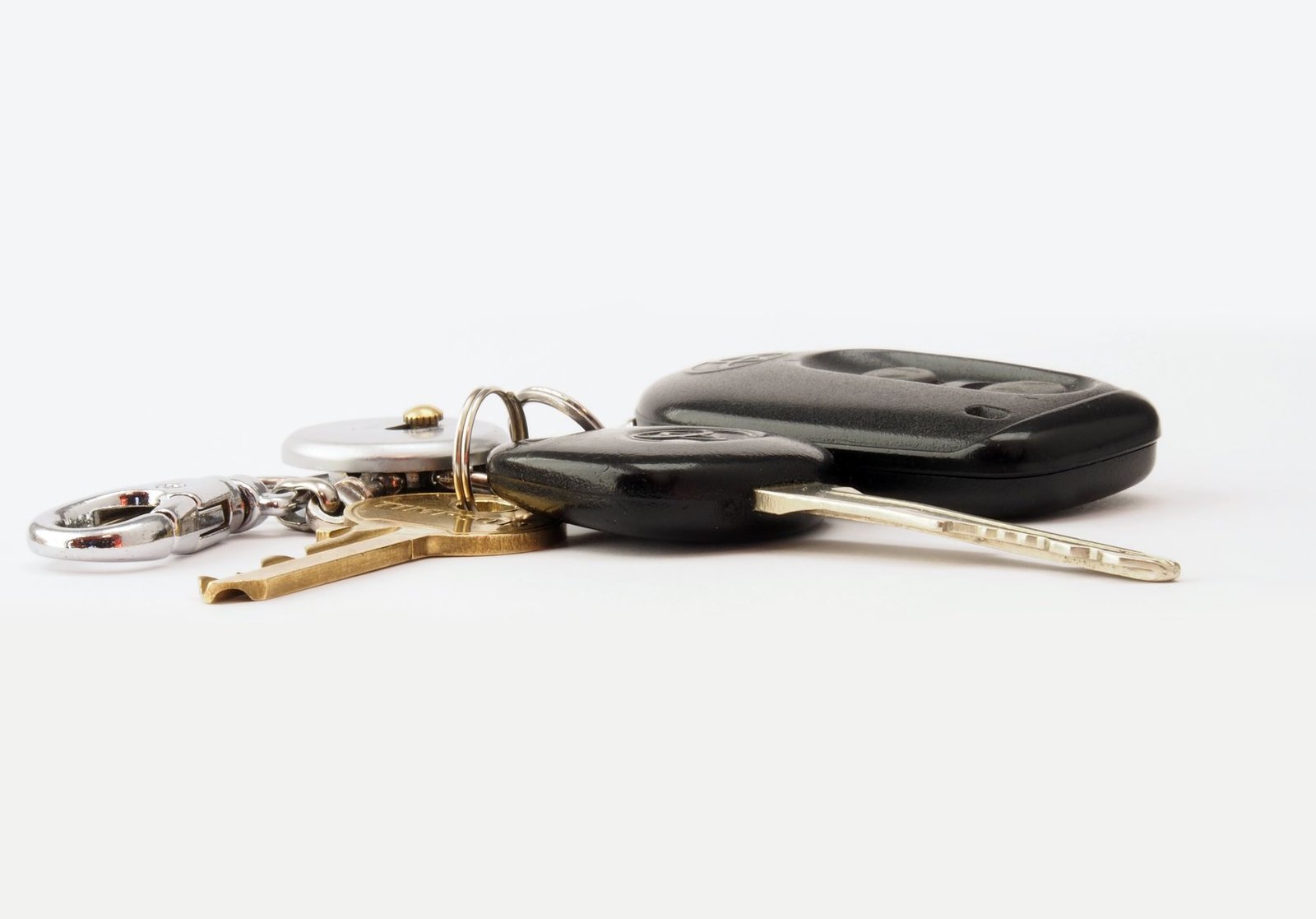
A new key organizer is often blamed for a problem that was already close to the surface.
The pattern is familiar: a fob worked reliably on a loose ring, then seems temperamental after being folded into an organizer. That timing is frustrating, but it does not by itself show that the organizer has disabled anything. Most organizers contain leather, fabric, plastic, or thin metal hardware—materials that do not erase pairing data or switch off a transmitter.
What they can do is change the radio environment. A metal-bodied organizer, tightly stacked keys, coins in the same pocket, or a body-held position can attenuate the fob’s low-power signal. The added loss is usually small, yet it may expose a marginal battery, a damaged antenna trace, moisture ingress, or an already-limited receiver range. A useful clue is consistency: failure only while the fob is enclosed or pressed against metal suggests shielding; erratic failure in every carrying arrangement points more toward the fob, its battery, or the vehicle’s receiver.
- A passive organizer cannot normally alter a fob’s programming or immobilizer authorization.
- Remote-lock buttons and passive-entry antennas may respond differently because they use different signal paths and frequencies.

A Fob Can Fail in One Mode and Work in Another
Button-operated remote locking
Pressing Lock or Unlock sends a deliberate radio command, usually over UHF. If only this function becomes unreliable, range, the fob battery, radio interference, or the vehicle’s remote receiver are more relevant than passive-entry hardware.
Passive entry at the door
A touch sensor or handle request wakes the fob with a low-frequency field; the fob then replies by radio. Button locking may still work perfectly when a door-handle antenna, sensor, local wiring, or weak fob battery affects this exchange.
Push-button starting
Starting uses in-cabin antennas to locate the authorized key and complete an immobilizer security check. A vehicle that starts normally but will not unlock passively points away from a total fob failure; the reverse pattern can occur as well.
The location of the failure
One unresponsive door handle suggests a local handle sensor or antenna issue. Failure at every door, especially with a fob carried close to the vehicle, makes the fob battery, its orientation inside an organizer, or a broader vehicle-side fault more plausible.
A useful symptom record
The meaningful question is not simply whether the key works, but which action fails: button command, touch-to-unlock, lock-on-walk-away, or engine authorization. Noting distance, pocket versus hand, and whether a second fob behaves the same narrows the cause quickly.
A Key Organizer Cannot Reprogram or Disable a Fob
A passive organizer has no route to rewrite fob memory, alter pairing, or send a disable command to the vehicle.
Programming changes require a vehicle-specific authenticated procedure, diagnostic equipment, or deliberate button sequences supported by the car—not proximity to leather, plastic, or metal hardware.
Removal often restores a small amount of radio margin rather than reversing damage.
Metal plates, stacked keys, coins, and the body can absorb, reflect, or detune the fob antenna. For a fuller comparison of whether organizers block car-key signals, the relevant question is how much range remains in that particular position.
Even a purpose-built Faraday pouch blocks communication only while the fob remains enclosed.
Once removed, the fob transmits normally unless a separate issue—such as a weak battery, damaged buttons, or vehicle receiver fault—exists.
A fob that works from some angles or only outside the organizer is usually operating near its range limit. A genuinely lost pairing or failed fob typically remains unavailable after the organizer is removed.
Why everyday organizer materials are usually harmless
Key organizer block fob signal
Leather, fabric, plastic, rubber, and wood are generally electrically non-conductive.
At short distances, a sleeve or wrap made from these materials does not block the low-power radio transmission.
They hold and arrange keys rather than create a radio shield.
Fitment can matter more. A tightly folded organizer may press the fob near metal blade, steel screw, magnetic closure, or a metal badge. Additionally, nearby metal parts can disrupt the key organizer block fob signal, detuning the antenna and reducing range.
Enclosure shape also changes conditions. A fob buried deep in a compact, metal-reinforced wallet faces more obstruction than one carried in an open leather loop. The body can further attenuate the signal when the organizer sits in a rear pocket or is held with the hand wrapped around it.
A simple comparison is informative: test the fob outside the organizer, then inside it, at the same distance and orientation. Consistent loss points to the organizer’s layout—not its leather, plastic, or fabric label.
Setups that can shrink usable range
A fob does not need to sit inside a flawless Faraday cage to become less reliable. Its antenna is compact and its transmitter has limited power, so nearby conductive material can absorb, reflect, or detune enough energy to reduce an already marginal signal.
The arrangements most likely to matter
A close-fitting metal shell is the clearest concern, especially when it wraps several sides of the fob with only narrow openings. A dense stack of conventional keys, a large steel or aluminum back plate, or a fob pressed flat against a metal key organizer can have a similar, though usually smaller, effect. The result is more often a shorter operating distance than a total loss of function.
Magnets deserve a distinction. A permanent magnet is not, by itself, an RF shield. But a magnet mounted in a substantial steel cup, plate, clasp, or folding organizer adds conductive material very close to the fob. It may also affect certain low-frequency passive-entry antenna arrangements when geometry is unusually tight.
Partial enclosures can be deceptive. A fob clipped inside a metal-sided wallet, tucked behind coins, or surrounded by keys on most sides may still transmit through an opening—but its effective orientation becomes more important. Turning the bundle, opening the organizer, or holding the fob clear of the metal can restore practical range.
The environment completes the enclosure
A trouser pocket positions the fob next to the body, absorbing radio energy more readily than air. Additionally, the packed bag can affect key organizer block fob signal when it surrounds the device. Phone proximity is not a permanent problem, but a handset, its battery, and metal case can alter the fob’s surroundings.
The same applies when using a carabiner organizer with a fob. A large metal carabiner or belt clip can become part of the local RF geometry; clipping it against the body compounds the effect. These factors are most visible at the edge of the vehicle’s normal range, not beside the door.
If performance seems inconsistent, compare the fob loose in open air with the same fob closed in its organizer, from the same location and orientation. A repeatable difference points to placement or nearby hardware; no difference makes a weak battery, vehicle receiver issue, or mode-specific fault more plausible.
Other faults can look like organizer interference
A key organizer is often blamed because it is the newest visible change, but intermittent fob behavior has several more common causes. A weak coin-cell battery may still operate locks at close range yet fail through a pocket, near metal, or at the edge of normal range. Cold weather can make that reduced voltage more noticeable.
A worn button, cracked circuit board, contaminated battery contact, or corrosion after moisture exposure can produce similarly inconsistent results. Replacement shells deserve scrutiny too: a misplaced rubber button pad can hold a switch partly down, while a poorly seated board or battery can interrupt power when the fob is squeezed or moved. If a fob has been wet, symptoms can emerge later as residue corrodes contacts.
Compare the keys, then the locations
Testing every available fob under the same conditions is especially informative:
- If one fob is unreliable and another works normally at the same spot, the suspect fob, its battery, or its shell is the likely issue.
- If both fobs fail only in one car park, near a building, or at a particular charging or industrial site, local radio-frequency interference is plausible.
- If both fobs have poor range everywhere, the vehicle’s receiver, antenna, wiring, or 12-volt electrical condition may warrant inspection.
Trying the fob outside the organizer, then repeating the test with a fresh correctly specified battery, creates a useful baseline. It also helps to distinguish travel handling questions—such as TSA rules that can affect key fobs—from an actual radio or hardware fault.
Test the organizer without mistaking coincidence for interference
-
Establish a same-location baseline
At a familiar spot with the vehicle unlocked and no unusual radio equipment nearby, test each affected function with the fob removed from the organizer. Record the approximate working distance and whether lock/unlock, passive entry, or starting is affected.
-
Repeat with the complete setup
Put the fob in its normal organizer position, then repeat at the same vehicle location and from the same side of the car. A result that changes only when the setup is present is more meaningful than a one-off failure elsewhere.
-
Change orientation before changing parts
Turn the organizer, move the fob from the inside to the outside of a hand or pocket, and test with the buttons facing different directions. Large orientation-dependent changes point to shielding, body absorption, or antenna geometry rather than a disabled fob.
-
Remove metal items one at a time
Detach keys, split rings, clips, tags, and metal plates incrementally, retesting after each removal. This identifies whether a particular conductive item or tight cluster—not the organizer material itself—is reducing the radio margin.
-
Keep a short symptom record
Note location, weather exposure, battery age if known, working distance, mode affected, and results with a spare fob. Consistent failures with both fobs can indicate a vehicle-side or environmental issue; failures limited to one fob can narrow attention to that unit.
-
Use the vehicle’s documented backup-start method
If passive starting becomes unreliable, the owner’s manual typically specifies a recognized backup position or procedure, such as holding the fob near a marked receiver area. That procedure can distinguish a low remote-radio margin from a fob that is not being recognized for starting.
Avoid testing while driving or in a traffic lane; stationary comparisons produce clearer results.
Keep the fob accessible, not wrapped in hardware
- An open or lightly covered fob position
A sleeve, clip, or compartment with broad exposed sides leaves more radio margin than a tightly folded, fully enclosed wallet-style layout.
FavorsOpen-sided retention or a thin nonmetallic cover.Watch forA snug enclosure that surrounds the fob on every side. - Distance from the metal key and hardware
A small gap between the fob and its key blade, split ring, tools, or stacked keys reduces the chance that a dense bundle becomes the dominant factor.
FavorsSeparate slots, a short tether, or a dedicated fob pocket.Watch forThe fob pressed flat against several metal items. - Buttons and battery access
Visible or easily reached buttons make it less likely that the organizer causes accidental presses, while simple removal makes battery checks and testing straightforward.
FavorsSecure retention without obscuring controls or service access.Watch forA design requiring disassembly for ordinary fob use. - A purpose matched to everyday carry
An intentional RF-blocking pouch is designed to attenuate signals; it is not evidence that ordinary organizers do the same. For most people, convenience and a modest signal margin matter more than maximum shielding when considering whether a key organizer suits everyday carry.
FavorsA conventional organizer made mainly from leather, fabric, polymer, or sparse hardware.Watch forA shielding-lined pouch unless signal isolation is specifically wanted.
An organizer is rarely the real culprit
- Repeatable loss of range deserves a battery, fob, and vehicle-side check—not an assumption that the organizer disabled anything.
- A true blocking pouch works by design; an everyday organizer merely may expose a weak signal margin in an unusually dense setup.
A practical organizer holds the fob securely while leaving its controls usable and limiting close contact with keys and other metal. Open, nonmetallic designs are generally low-risk, particularly when the fob already has normal range.
If performance changes only in a packed pocket or with a metal-heavy key bundle, the effect is usually temporary attenuation rather than lost programming. Removing the fob from the bundle restores a useful comparison point.
Key Organizers and Fob Signal: Common Questions
Can a key organizer actually disable my key fob?
No. A passive organizer made of leather, fabric, plastic, or thin metal hardware has no route to rewrite fob memory, alter pairing, or send a disable command to the vehicle. Programming changes require a vehicle-specific authenticated procedure or diagnostic equipment, not proximity to an organizer.
Why does my fob work outside the organizer but not inside?
That pattern usually means the fob is operating near its range limit rather than being disabled. A genuinely lost pairing or failed fob typically stays unavailable even after the organizer is removed, so a fob that recovers outside the organizer points to signal attenuation, not a hardware failure.
Do magnets in an organizer block the fob's signal?
A permanent magnet by itself is not an RF shield. But a magnet mounted in a substantial steel cup, plate, clasp, or folding organizer adds conductive material very close to the fob, which can detune the antenna or affect certain low-frequency passive-entry setups when the geometry is unusually tight.
How can I tell if it's the organizer or a failing fob?
Test every available fob under the same conditions. If one fob is unreliable while another works normally at the same spot, the suspect fob, its battery, or its shell is the likely issue rather than the organizer. If every fob struggles only in the organizer, compare the same fob loose in open air versus enclosed at the same location and orientation.





6 Comments
My fob locks/unlocks from 20–30 feet away, but passive entry only notices it when I’m basically touching the door handle. Could a metal key organizer explain that, or does that point more toward the car’s passive-entry antenna/receiver? The same fob starts the car normally.
That pattern is less likely to be the organizer alone. Remote lock/unlock and passive entry use different vehicle-side antennas and detection logic, so normal button range plus very short passive-entry range can point to the passive-entry system, the fob battery, or the fob’s low-power passive signal path. Try the fob completely outside the organizer in the same spot first; if nothing changes, compare with a second fob if you have one.
Does a thick leather organizer with a zipper count as an enclosure? Mine has a little metal snap and the fob sits against my house keys. It hasn’t quit working, but range seems worse when it’s in my jeans pocket.
I appreciate the distinction between “reduced margin” and “disabled.” People in my car forum keep saying a key holder “deprogrammed” their key, which never made much sense.
One thing I’m still unsure about: what if the range is bad only in one parking garage? Would that be likely interference rather than the organizer, especially if removing the fob from the organizer makes no consistent difference?
Yep, I had exactly that at a hospital garage. Both fobs were flaky on the same level, then worked normally outside. I blamed my keychain for a week before realizing the location was the common factor. 😅
What about those RFID-blocking key wallets that are marketed as “secure”? Sounds like they really can block a fob on purpose, unlike a normal organizer. Is opening the flap enough, or do you usually need to take the fob all the way out?