

A compact key organizer is rarely the item that draws attention; its attachments are.
On the X-ray belt, a neat key stack can read as a dense cluster of metal—especially when it includes a car fob, mini flashlight, multitool, or unusually long keys. The organizer’s plates, elastic, screws, and pivot mechanism are ordinarily just personal accessories, not a separate prohibited category.
The practical question is what is attached. Keys and key organizers are generally permitted in carry-on bags, but a blade, sharp tool, or other restricted implement can change the outcome. Screening officers make the final determination at the checkpoint, and an item that cannot travel in the cabin may need to be removed, surrendered, or placed in checked baggage if time and circumstances allow.
- Separate any keychain multitool before packing; the organizer itself may be unremarkable, while one tool can trigger closer inspection.
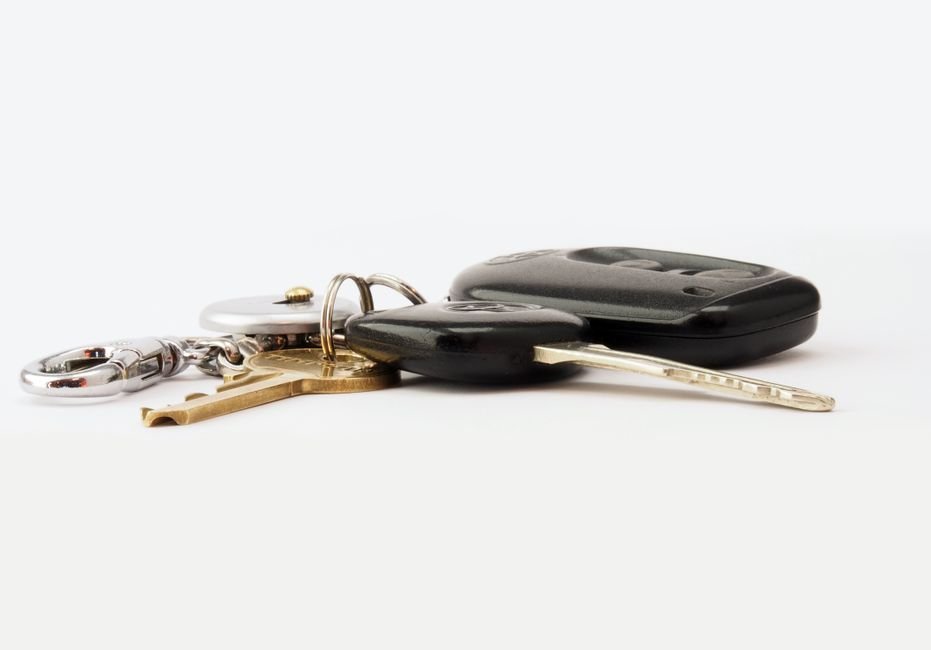
Are standard key organizers allowed?
Can a key organizer go through TSA screening?
Generally, yes. A conventional organizer holding ordinary house, car, or office keys is commonly a routine item in carry-on or checked baggage, although the screening officer makes the final decision at the checkpoint.
What counts as a key organizer?
The term covers compact holders that keep keys aligned and quiet: pivoting key stacks, elastic key sleeves, folding cases, and clip-based carriers. For a closer look at the way key organizers function, the key point is that the holder itself mainly contains and arranges keys rather than serving as a tool.
Why might an organizer receive extra screening?
Dense metal layers, unusual shapes, or items attached to the holder can make the X-ray image less clear. An officer may request a closer look to identify the contents; that inspection does not by itself mean the organizer is prohibited.
Does checked baggage change the answer?
Ordinary key organizers are generally unremarkable in checked baggage as well. Carry-on screening tends to receive closer attention because the contents are examined at the checkpoint, while all baggage remains subject to security review.
A slim leather wrap, polymer sleeve, or metal pivot holder is rarely the central issue. Screening outcomes can change when the key set includes an unfamiliar accessory or a feature that cannot be readily identified on the X-ray image.
A key organizer is only as carry-on friendly as what is attached to it
Do ordinary keys and electronic fobs cause a problem?
Standard house, vehicle, office, and mailbox keys are generally routine carry-on items. Electronic fobs, access cards, and small passive trackers are also typically unremarkable, although an officer can inspect any dense or unfamiliar-looking object.
Are flashlights and carabiners treated like tools?
A small ordinary flashlight or plain carabiner is usually evaluated as an accessory, not as a prohibited tool. Design still matters: an unusually heavy, pointed, or aggressively styled item can draw closer scrutiny; compare practical carabiner choices for travel before attaching one.
What happens when a keychain includes a tool or blade?
The attachment—not the organizer—normally drives the screening result. A knife, cutting edge, multi-tool, or other restricted component can make the complete key setup unsuitable for carry-on screening, even when the keys themselves are permissible.
Do weapon-like accessories receive different attention?
Accessories marketed or shaped for striking, self-defense, or concealment can be treated more cautiously than ordinary hardware. Screening officers may assess the item’s actual construction and apparent use rather than accepting a benign product label.
A key organizer is not screened in isolation. When an attached item has a cutting edge, tool function, or weapon-like design, it can control how the entire bundle is handled; separating the non-routine item leaves the ordinary keys and organizer easier to evaluate.
Are car fobs and smart keys allowed?
Does TSA prohibit a car key fob because it contains electronics?
No. A conventional remote fob, proximity smart key, or remote-start key is ordinarily treated as a personal electronic item, not as prohibited equipment. The installed battery and radio transmitter do not, by themselves, make it a checkpoint problem.
What battery is normally inside a fob?
Most fobs use a small coin or button cell, often lithium metal. A battery installed inside a normal fob is generally far different from carrying loose cells or a high-capacity battery pack; see TSA guidance on car fobs and related concerns for the wider context.
When do battery rules become more relevant?
Extra loose batteries, rechargeable jump packs, and USB power banks attached to an organizer deserve separate attention. Airline policies can be more specific than checkpoint screening rules, particularly for lithium-ion batteries and whether they must stay in the cabin.
What about a keychain alarm or tracking device?
A small personal alarm or tracker is not generally an issue merely because it emits a sound or signal. Screening can change if the device is unusually bulky, has exposed wiring, resembles restricted equipment, or incorporates a larger battery pack.
A normal smart key is a self-contained device with a tiny installed cell. Loose lithium batteries, power banks, and jump starters are separate items and may face airline cabin-placement rules even when the fob itself is routine.
What Happens if an Attachment Draws Attention?
Does extra screening mean the key organizer will be taken away?
No. A closer look is a screening step, not an automatic seizure. An officer may inspect the attachment, ask what it is, and decide whether it meets carry-on rules based on its actual design and function.
What can happen if a blade or tool is not allowed in carry-on baggage?
Depending on airport procedures and time available, the traveler may be able to return it to a vehicle, place it in checked baggage, or use another permitted disposition option. If none is available, the prohibited item can be surrendered; the organizer itself may not be an issue.
Can an item that is allowed by TSA still cause a problem?
Yes. Airlines can impose their own conditions, particularly for checked baggage, batteries, or items with sharp or hazardous components. Airport security procedures can also affect what options are practical after an item is identified.
Why do destination-country rules matter?
A knife, tool, or self-defense attachment may be acceptable for departure screening yet restricted at the destination or during transit. Local rules can distinguish by blade type, locking mechanism, length, intended use, or method of carry.
Rules that apply at the outbound checkpoint are not necessarily the same ones that apply at a connection or destination airport. A tool or attachment accepted on departure can still be restricted elsewhere, so confirm the rules for every leg of the trip, not just the first one.
A quick key-ring audit
-
Empty the ring onto a flat surface
Separate the organizer, each key, fob, light, tool, and clip. Small attachments are easy to overlook when they remain folded into the stack.
-
Remove anything with a cutting edge or tool function
Knife blades, multitools, pointed implements, and similarly ambiguous gadgets can change an otherwise routine item into a screening issue.
-
Treat unusual electronics separately
A conventional car fob is generally straightforward, but battery packs, loose lithium batteries, alarm devices, or tracking hardware may have separate TSA or airline handling requirements.
-
Check current guidance for the odd item
For a specialized attachment, consult TSA’s current item guidance and the airline’s battery rules before departure; officer assessment at the checkpoint still controls.
-
Carry the simplest working setup
Keep only the keys needed for the trip and one standard fob. Put optional attachments in checked baggage only when their transport rules permit it.
Keep the ring ordinary
- Screening concern usually comes from an attachment, not the organizer body.
- Current TSA and airline guidance matters most for batteries and uncommon devices.
The lowest-friction configuration is only necessary ordinary keys and a conventional fob. Removing tools, blades, and novelty hardware before travel leaves less for an X-ray image to invite questions.




7 Comments
I keep a Tile tracker on my keys. It has the little coin battery sealed inside—any concern with that, especially on an international flight? I assume it’s fine, but airline battery wording is never exactly relaxing.
What about one of those tiny Swiss Army Classic-style tools on the keyring? Mine has a little blade, scissors, and file. I know the blade is the obvious issue, but are the scissors treated differently or does the whole thing need to go in checked luggage?
For a multi-tool like that, the built-in blade is usually the deciding factor, so the safest plan is to put the entire item in checked baggage or leave it at home. Scissors can have their own size-based rules, but they do not make a keychain tool acceptable if it also contains a prohibited blade. The final call still belongs to the screening officer, so separating it from your everyday ring before the trip avoids a stressful checkpoint decision.
I flew last month with a plain Orbitkey, house keys, and my car fob and nobody even glanced at it. The article’s “audit the ring” advice is solid though—my husband had forgotten a little screwdriver attachment on his. 😅
Does TSA care if the organizer itself is metal and fairly chunky? Mine is brass, holds six keys, and looks a bit like a folded pocketknife on the X-ray. There is no blade or tool in it, just keys, but I can see why it might get a second look.
Not complaining, just trying to decide whether to toss it in the tray separately instead of wearing it in my pocket.
I have a chunky aluminum one and have taken it through several times. I usually put it in the bin with my phone/coins so it is visible rather than leaving it in a pocket. It has never been an issue, although a closer look is always possible.
Helpful distinction between secondary screening and confiscation. People online make it sound like an officer sees a questionable attachment and instantly takes your whole key ring forever, which is a little dramatic. Still, “check the destination rules too” is easy to say when you’re already halfway to the airport… better reminder would be to check before packing, obviously.