
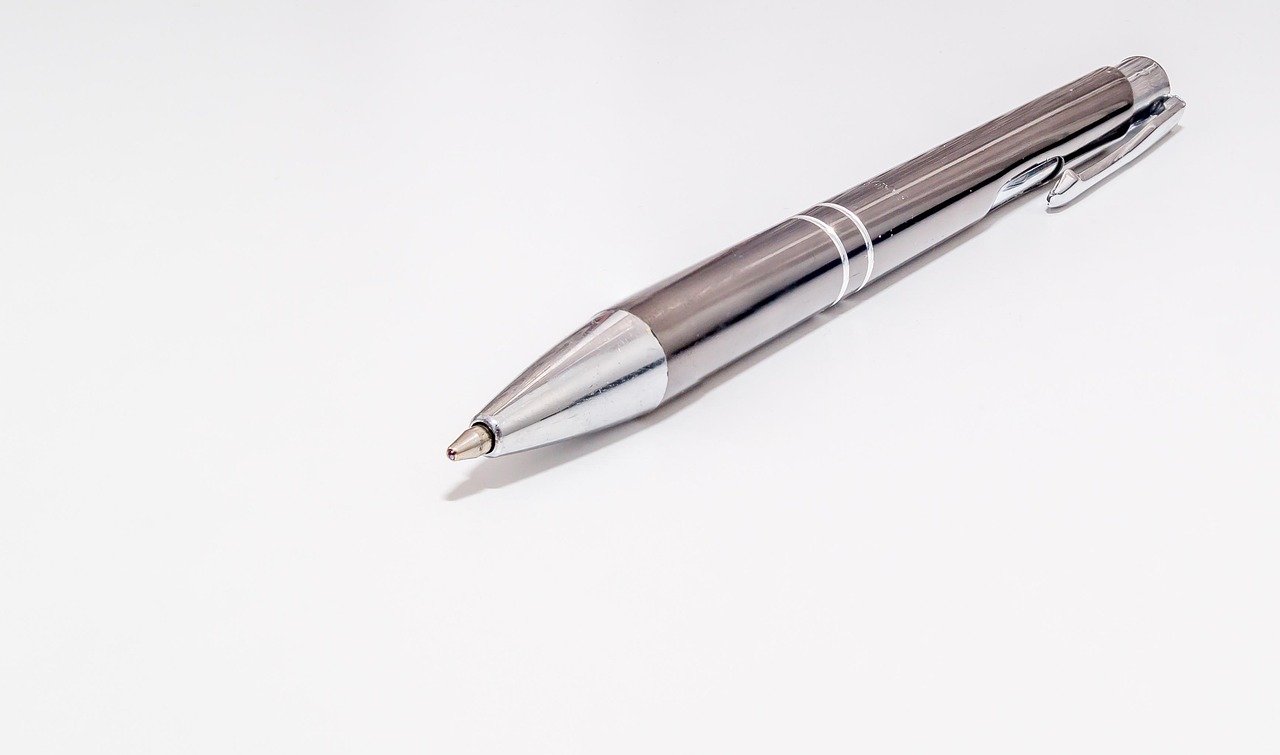
A full-looking pen can still fail at the exact moment a signature or phone number is needed.
The ink level is a poor predictor of whether a pen will write. What matters is the tiny route from reservoir to tip: a ball must turn freely, a felt feed must stay wet, and the ink at the outlet must remain fluid enough to move.
A pen that starts, fades, or skips usually has a local blockage or air interruption, not an empty cartridge. Dried residue at the ball, paper fibres lodged in the tip, a trapped air bubble, or ink thickened by cold can break the flow while plenty remains behind it. The encouraging part: the fault is often confined to the writing end, where it can be identified without dismantling the pen.
- A line that improves after a few strokes often points to intermittent tip wetting rather than a depleted refill.

Read the failure pattern first
Obstructions reveal themselves faster by the shape of the failure than by repeated scribbling. For pen skipping not writing, test on clean, uncoated paper with normal hand pressure, then note when the line fails.
- Skips only at startup: Ink has retreated slightly from the writing point, or the tip has dried between uses. A short, gentle scribble or a brief rinse appropriate to the pen type can restore the initial wetting. If it returns after every cap-off interval, suspect a poor cap seal or a cartridge/converter that is admitting air.
- Skips after a pause during writing: This usually points to marginal flow: a partially blocked feed channel, dried residue near the tip, or an air exchange problem. Cleaning the nib/feed or roller area is more relevant than adding pressure.
- Fails in one direction or on curves: The writing surface of a ballpoint or gel refill may be contaminated, worn unevenly, or damaged. With fountain pens, misaligned tines or a slightly bent nib can open and close the ink slit depending on direction. Rotate the pen gently while making lines; a direction-specific dead spot supports a tip problem.
- Writes only under heavy pressure: Pressure may force a reluctant ball to turn or temporarily widen a fountain-pen slit, but it does not fix the cause. Heavy pressure can worsen nib misalignment and damage paper. Clean first; replace a disposable refill if the pattern persists.
- Produces no line at all: Check the simple mechanical causes before disassembly: refill seated correctly, tip retracted fully, cartridge pierced, converter connected, and any shipping seal removed. If these are correct, the ink path is likely fully blocked, airlocked, or the refill has failed.
A consistent pattern is more informative than the amount of ink seen through a barrel or cartridge window.
Rule out paper and handling
A pen can appear faulty when the writing surface is the real obstruction. Test it on a fresh sheet of smooth, uncoated copier paper, using a short series of slow lines, loops, and quick strokes in several directions. If the line becomes continuous there, the pen’s ink supply is probably adequate.
However, many papers complicate transfer at the tip.
This relates to pen skipping not writing in practical tests.
- Coated or glossy stock can resist wet ink, causing beading, railroading, or delayed starts.
- Highly textured, recycled, or fibrous paper can lift the ball or nib off the surface between high points.
- Skin oil, lotion, adhesive residue, and moisture can create small non-wetting patches, especially where a hand rests.
Technique also changes contact.
A ballpoint generally writes most reliably at a moderate angle.
If held very shallowly, its ball may not rotate and feed ink consistently.
Fountain and gel pens can similarly skip when the tip is dragged sideways.
They may skip if the tip is rotated away from its intended contact point.
Moving too quickly can cause the surface texture to interrupt the stroke.
A consistent failure on clean copier paper is stronger evidence of a genuine pen problem.
This relates to pen skipping not writing.
Inspect the tip before the reservoir
The writing point is the narrowest part of the ink path, so a full barrel does not rule out a local obstruction. Dried ink, paper dust, pocket lint, skin oils, and abrasive grit can collect around the ball or needle tip and produce a pale, scratchy, or intermittent line.
First, examine the tip under bright light. Look for a fuzzy ring of fibers, a crust at the opening, or a visibly bent metal tube. On ballpoints and many gel pens, the tiny ball should appear centered and turn freely during normal writing; a ball that is flattened, displaced, or gouges paper usually indicates physical damage rather than a simple clog.
Clean without forcing the mechanism
Wipe the point gently with a clean, lint-free cloth or paper towel. A brief scribble on clean scrap paper can dislodge loose residue. If fibers remain, lift them away with tweezers rather than pushing anything into the opening.
Avoid needles, pins, blades, sanding, and hard tapping. These can score the ball seat, widen a needle-tip opening, or dislodge the ball—damage that often makes flow less consistent. Solvents are also a poor first response: they may affect plastic parts, seals, coatings, or the ink formulation.
If cleaning changes the line only briefly, residue may be returning from inside the tip or the ball assembly may be worn. That pattern points beyond surface debris.
Match the remedy to the ink system
-
Identify the ink architecture before adding moisture or heat
Oil-based ballpoints use a thick paste moved through a ball-and-socket tip. Gel pens and most rollerballs use water-based ink that can dry at the point; fountain pens and similar feed systems rely on open channels and an air-return path. These mechanisms fail differently.
-
Revive an oil-based ballpoint with gentle warmth and motion
After wiping the tip, a few firm loops on clean paper can re-seat ink at the ball. Warming the refill in the hand or with brief, distant warm air may lower viscosity enough to restart flow. Avoid flames, hot water, and soaking: heat can distort plastic parts, while liquids can enter the tip and contaminate the paste.
-
Treat gel and rollerball tips as water-sensitive
A dried surface film can sometimes lift with a lightly damp lint-free cloth followed by writing on scrap paper. Do not immerse the tip or force solvent into it; excess water can dilute the ink, and alcohol can upset some gel formulations or damage nearby plastics. A refill that remains intermittent is often more reliably replaced than rescued.
-
Flush only serviceable liquid-ink feed systems
For a fountain pen or another pen designed to be cleaned, remove the cartridge or converter and flush the feed with cool water until it runs mostly clear, then allow it to dry before refilling. Use a maker-compatible pen-cleaning solution only when water is insufficient, especially after dried dye or pigment ink.
-
Stop when the fault is mechanical
A bent ballpoint tip, a cracked reservoir, persistent leaking, or a feed that will not draw ink indicates damage rather than a simple blockage. Further pressure, drilling, or disassembly can turn a recoverable skip into a leak or a ruined pen.
Keep cleaning fluids away from glued joints, printed labels, and non-removable cartridges.
A ballpoint may respond to modest warmth because its ink is designed to shear and thin at the moving ball. That same heat can accelerate evaporation or separation in some gel and rollerball inks.
Likewise, water flushing is appropriate only for pens with a serviceable feed. It is not a general cure for sealed ballpoint, gel, or rollerball refills; trapped liquid can cause dilution, corrosion, or later leakage.
A full refill can still fail
A visible column of ink only proves that some ink remains. A bubble at the writing end can interrupt the continuous ink path, especially after a pen has been stored tip-up or exposed to temperature changes. In a ballpoint, the trapped air may move only when the refill is warmed in the hand or held tip-down for a few minutes.
Check the cartridge itself
Remove the refill and inspect it under good light. A hairline crack, loose end plug, or dented tube can admit air or prevent the spring-loaded tip from receiving consistent pressure. Gel and rollerball ink can also harden at the nose while the reservoir still looks nearly full; a dark, dry-looking plug behind the tip is a stronger clue than the remaining ink level.
Reinstall the refill fully. A cartridge that is slightly short, poorly seated, or blocked by a misplaced spring may write intermittently because the mechanism cannot hold the tip in its working position. If the pen was assembled from parts, confirm that the refill format matches the pen: length, tube diameter, shoulder shape, tip style, and rear-end profile all affect fit.
Age matters as well. Ink may thicken through slow solvent loss, and old stock can fail without any obvious leak. When compatibility is uncertain, identify the refill by its markings and measurements rather than relying on a similar-looking replacement.
When the environment interrupts flow
A pen that skipped after a cold car ride may not have a failed refill. However, temperature changes ink viscosity and pressure inside the reservoir. Cold thickens ballpoint inks; pen skipping not writing can result when heat expands air, or alter a gel’s flow balance.
Let the capped pen rest at room temperature for an hour or two—away from radiators, sunlight, or improvised heating. Then make several slow strokes on plain paper. Warming a tip with a flame, hot water, or a microwave can damage plastic parts, seals, and ink.
Altitude changes can force air through a refill or feed, leaving a gap that causes brief starvation or a blob. After travel, keep the pen tip-down briefly on protected paper, then test normally. Long tip-up storage can similarly pull ink away from the writing point, especially in low-fill refills.
Environmental effects usually improve after acclimation and a short restart. Skipping that remains unchanged at room temperature, recurs on fresh paper, or accompanies hardened deposits, leaking, or an immovable ball more strongly suggests permanent refill or tip failure. Store capped pens horizontally when practical; tip-down storage is useful for short-term readiness, provided leakage is not already present.
Know when to replace it
After testing on clean copier paper at room temperature, replacement is usually more sensible than further troubleshooting when the tip is rough, bent, loose, visibly chipped, or still skips in several stroke directions. A ball that catches or leaves intermittent pale lines can have a damaged seat; forcing it against paper may worsen the fault.
Replace the refill when it fails controlled starts, pauses, and continuous lines despite correct seating and a clean tip. Keep the removed refill only if the pen body needs comparison for length, diameter, and rear-end shape.
Choose a spare for the job
- Ordinary notes: a compatible conventional ballpoint refill is generally a dependable choice for varied paper, pauses, and pocket carry.
- Fast-drying writing: a compatible low-viscosity hybrid ballpoint or quick-drying gel refill can reduce smearing. Gel usually gives a darker, smoother line, but may be less tolerant of absorbent or rough paper.
Match the refill’s exact format, tip size, and spring interface to the pen—not merely its overall length. Testing a new spare with a few starts and fast strokes establishes a useful baseline.
Use the Same First-Check Sequence Every Time
-
Test on plain, clean paper
Make several slow lines, then faster lines and small curves. This removes coated or contaminated paper from the first diagnosis.
-
Record the failure shape
Note whether skips occur at startup, after pauses, on curves, or in one direction. The pattern matters more than the amount of visible ink.
-
Wipe and inspect the writing tip
A clean lint-free wipe can remove dried residue; a rough, dented, or loose tip points toward hardware damage instead.
-
Check refill seating and storage history
Confirm the refill is fully seated, then note recent heat, cold, tip-up storage, or long inactivity.
-
Retest under the same conditions
Use the same paper and stroke pattern after each change. One variable at a time makes the result interpretable.
Pen Skipping: Common Questions
Why does my pen skip only at the start of writing?
Ink has usually retreated slightly from the writing point, or the tip has dried between uses. A short, gentle scribble or a brief rinse appropriate to the pen type can restore the initial wetting. If it returns after every cap-off interval, suspect a poor cap seal or a cartridge/converter that’s admitting air.
How do I know if it's the pen or the paper?
Test on a fresh sheet of smooth, uncoated copier paper with slow lines, loops, and quick strokes in several directions. If the line becomes continuous there, the pen’s ink supply is probably adequate and the original paper, such as coated, glossy, or highly textured stock, was likely interfering with transfer.
Can cold weather really stop a pen from writing?
Yes. Temperature changes ink viscosity and pressure inside the reservoir. Cold thickens many ballpoint inks, while heat can expand air or alter a gel’s flow balance. Let the capped pen rest at room temperature for an hour or two away from radiators or direct sun, then retest with several slow strokes.
When should I stop troubleshooting and just replace the refill?
Replace it when the tip is rough, bent, loose, or visibly chipped, or when it still skips in several stroke directions after testing on clean paper at room temperature. A ball that catches or leaves intermittent pale lines can have a damaged seat, and forcing it against paper may worsen the fault.
- Keep a short mental record of which pen, refill, paper, and storage conditions occur together.
- A failure that repeats in the same combination is evidence, not random variation.
Skipping becomes easier to solve when each test is controlled and repeatable. Recurring combinations often expose a mismatch—such as a particular refill on coated paper, or a cold-stored pen after pauses—rather than a mysteriously bad pen.



17 Comments
The “visible ink isn’t proof” point was exactly my issue. My ballpoint had plenty in the tube but would only write after a bunch of circles. A wipe of the tip on a clean tissue and a few slow strokes on plain copier paper got it going again.
I appreciate the distinction between warming a ballpoint and doing anything similar to a gel pen. People online say “heat it up” for every pen problem, which seems like a great way to ruin a gel refill or make a mess.
Exactly. Mild warmth can sometimes restore a thickened ballpoint ink temporarily, but gel and water-based systems are much less forgiving. For a gel pen, room-temperature retesting, a clean tip, and proper storage are safer first checks than direct heat.
I have a refill that skips only on downward strokes, almost like the ball catches in one direction. It still leaves a decent line when I scribble sideways.
Is that more likely a damaged ball than an air gap? The refill is new, which is annoying.
A strongly directional failure points more toward the tip/ball interface than an air-path problem. Try gentle figure-eights and strokes in several directions on clean copier paper after wiping the tip. If the same direction repeatedly fails, especially with a new refill, replacement is usually more sensible than trying to force it.
I had that with a new refill once. There was a tiny dent or rough spot near the ball—could barely see it under a phone light. Swapping it was the only real fix.
I tried flushing the feed on an old fountain pen after it began starting dry every morning. The first rinse looked surprisingly cloudy, and after several water changes it started much more reliably.
I still get a hard start if it sits nib-up for a week, but now it is a line or two instead of several minutes of scribbling. That seems like a fair result for a pen that had been in a drawer for years.
That is a good outcome. The cloudy rinse suggests old ink residue was restricting flow. For the remaining nib-up hard starts, storing it more level or nib-down when practical—and keeping the cap seal clean—may reduce evaporation at the tip.
Seconding the cap check. One of mine was “mysteriously” drying out until I realized the inner cap had a crack.
Cold weather is real. My pen worked indoors, then skipped horribly while I was filling out forms in my car at about 20°F. After I brought it inside and let it sit, it was fine again.
That pattern is very consistent with temperature-related thickening rather than a permanently failed refill. Letting it return to room temperature before testing is a good way to avoid discarding a working pen.
The startup/pause pattern is a handy way to think about it. My pen writes at first, skips after I stop to think for ten seconds, then starts again after a little loop. I had been pressing harder, which probably made the tip worse.
Tip-up storage was the culprit for me. I leave a pen in my backpack pocket upright all day, then wonder why it won’t start during class 🙃 Turning it tip-down for a little while fixed it.
Good checklist, although I wish pen makers would stop acting like every “full” refill is automatically functional. I bought a multipack where two had little bubbles and one never wrote consistently from day one. Full of ink, zero useful notes.
I kept blaming cheap notebooks for my gel pen skipping, but testing on copier paper made the difference obvious. It wrote perfectly there and immediately started railroading again on my coated planner pages.
Not the answer I wanted, since I like that planner, but at least I stopped buying refills for no reason.
That is a useful isolation test. Coated pages can reduce traction at the tip and may also carry enough surface treatment to interfere with some gels. A faster-drying or more robust gel formula may behave better in that planner, but keeping one pen dedicated to ordinary paper is often the simplest solution.
Same here with glossy recipe cards. My favorite dark gel looks amazing for about two words, then it acts offended by the paper.