
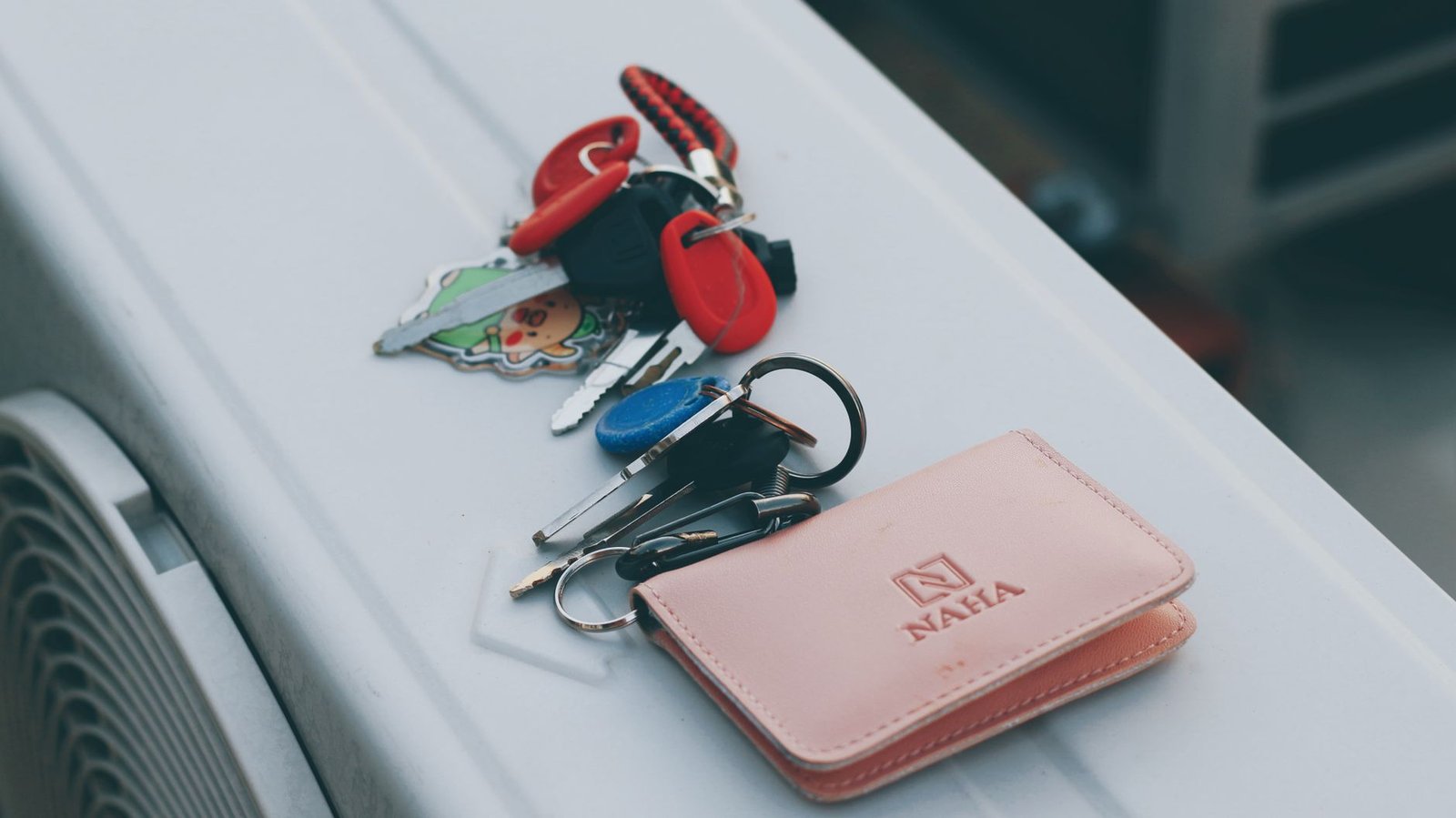
A key organizer can tame loose keys—until a vehicle fob turns the pocket into a hard, rattling lump.
The familiar failure point is a neatly folded key stack paired with a remote fob that still dangles from the end: it swings, knocks against a phone, and makes the whole setup awkward to grip. Treating the fob as merely another key can create more serious annoyances than bulk. A pressed button in a pocket may trigger an alarm or unlock the vehicle, while an inaccessible mechanical backup key defeats its purpose when the fob battery is flat.
A workable arrangement keeps three functions separate and dependable: normal remote operation, protected buttons, and immediate access to the emergency key. Some fobs have a detachable metal insert that can live in an organizer; the electronic shell then needs a small protective case or a dedicated attachment. Others contain a fixed blade or depend on the entire fob for entry, making a full organizer conversion less practical. The goal is not the thinnest possible bundle, but a setup that does not obstruct buttons, strain the fob’s key-ring eyelet, or turn a dead-battery moment into a search.
- Inspect the fob for a release latch: a removable emergency blade often makes a split setup possible.
- Avoid forcing thick fob hardware between organizer plates; excessive clamping can damage plastic housings or impair button travel.
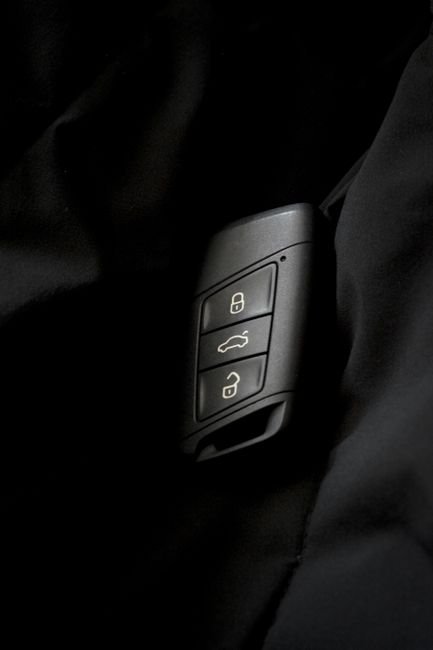
Can a key organizer hold a car fob?
A conventional pivot organizer is built for thin, flat keys with a mounting hole. An electronic car fob is a molded housing containing a circuit board, battery, antenna, and button membrane; it is too thick, too wide, and lacks the correct pivot hole. It therefore nearly never belongs inside the stacked-key mechanism.
That limitation is structural, not merely cosmetic. Compressing a fob between pivot plates can stress its case, obstruct button travel, create awkward bulk in a pocket, and reduce radio performance if metal hardware sits close to the antenna. The basic mechanics behind how compact key organizers work make clear why a flat stack and a remote module need separate jobs.
The exceptions are narrow
A few vehicles use a removable mechanical blade that slides out of the fob. If that blade has a standard hole and is thin enough, it may fit an organizer—but only as the backup key. The electronic remote still remains outside the stack. Some organizer systems also offer a dedicated fob loop, adhesive-backed carrier, or tethered sleeve; these carry the fob externally rather than folding it among keys.
It helps to identify the parts before choosing hardware:
- Flat keys: house, office, padlock, and similar keys that can pivot in the stack.
- Detachable blade: the metal emergency key removed from certain fobs; potentially organizer-compatible after checking thickness and hole position.
- Electronic module: the plastic remote/fob body; normally carried on an external attachment.
A setup that keeps the module on a short, protected tether while placing only compatible flat keys in the organizer usually preserves the fob’s buttons and the emergency blade’s access.
- Pivot stack
Two plates and a central screw that hold flat keys so each can swing out independently.
- Emergency blade
A mechanical key hidden in or attached to some electronic fobs for manual entry.
- Fob tether
An external loop or short connector that keeps a remote with the organizer without forcing it into the stack.
- Antenna clearance
Space around a fob that can help avoid metal hardware interfering with its radio signal.
Measure the attachment, not the fob’s overall size
-
Identify the actual mounting feature
Look for a through-hole in the fob shell, a molded loop, or a removable emergency blade with its own hole. A recess, decorative opening, or narrow slot may look usable while leaving no clearance for an organizer’s pivot post or screw head.
-
Check usable hole geometry
Measure the opening’s narrowest width and its material around the edge, not merely its visible length. A round split-ring hole can accept a small ring yet be too tight for a flat organizer tab; an oval hole may work only in one orientation.
-
Compare thickness at the pivot
The relevant dimension is the thickness of the blade or attachment tab where it sits between organizer plates. A thick plastic-headed key, a stepped metal shank, or a fob with a raised collar can prevent the stack from closing or make the pivot bind.
-
Inspect the fob loop closely
Molded loops commonly carry the entire fob load. Check for whitening, cracks, soft rubber, stretched openings, and thin bridges of plastic. A loop that has survived a light key ring may not tolerate the twisting leverage of a compact organizer.
-
Account for moving load, not just static weight
A fob swings, catches on pockets, and is pulled at angles; the attachment point sees torque as well as weight. Adding house keys, metal tools, or several blades increases that leverage and can turn a marginal loop into the failure point.
-
Stop before any forced trial fit
If the part needs prying, widening, cross-threading, or heavy compression to enter the organizer, the geometry is incompatible. Forcing it can crack a sealed fob housing, distort a blade, or weaken the loop without meaningfully reducing pocket bulk.
A paper or cardboard template matching the organizer tab can reveal clearance problems before any hardware touches the fob.
Remote fobs are typically sealed plastic assemblies with circuit boards, battery contacts, and sometimes an emergency-key release close to the attachment area. Stress marks or a loop that rotates under pressure are reasons to keep the fob on a light ring or separate tether instead.
An organizer works most reliably with a removable metal emergency blade designed for a pivot. Keeping the electronic fob external usually preserves button access and avoids concentrating the whole key bundle’s force on a small plastic loop.
Keep the fob close, secure, and untwisted
- Micro split ring for a permanent pairing
A small, heavy-gauge split ring is a strong option when the fob is meant to remain with one key set. Its closed form resists accidental release, but it adds little bulk only when its diameter closely matches the fob’s attachment eye.
Look forA small ring with smooth wire and no excess diameter beyond the fob loop.AvoidOversized rings that let the fob swing, twist, and strike other keys. - Locking quick-release for deliberate separation
A compact locking quick-release can separate a fob from house or work keys without opening the fob loop repeatedly. The lock matters: ordinary push-button releases can be vulnerable to an incidental squeeze in a pocket, bag, or crowded key tray.
Look forA short release with a positive lock and a swiveling joint only where rotation is needed.AvoidLong barrel releases or exposed buttons that create leverage and accidental detachment. - Low-profile clip for occasional transfer
For keys that move between bags, vehicles, or caregivers, a small gated clip can be practical. The range of carabiner and clip workarounds is broad, but a clip is usually less secure than a closed ring unless its gate has a locking feature.
Look forA compact, rounded clip whose gate cannot press directly against the fob body.AvoidLarge carabiners, sharp-edged gates, or decorative clips that snag and torque the loop. - Short flexible link for quiet carry
A very short cord loop or coated cable link can prevent metal-on-plastic contact and reduce rattling. It needs a protected crimp or stitched termination; thin exposed wire and loosely knotted cord wear quickly under repeated swinging loads.
Look forA short, abrasion-resistant link that holds the fob close to the key bundle.AvoidLong lanyards and dangling extensions that turn the attachment eye into a lever.
Three assumptions that can cause trouble
Metal plates, densely packed keys, and body position can shorten usable remote range or alter passive-entry behavior.
The effect depends on the fob antenna and how the bundle sits in a pocket, not merely on the organizer’s material.
Many molded loops are intended for light retention, not repeated twisting and leverage from a swinging key stack.
A rigid organizer can concentrate load at one edge of the loop, especially when caught on a pocket or bag.
A tight sleeve or organizer edge can hold a button down when the fob is compressed in a pocket.
Panic buttons are especially worth checking because their shape and placement differ widely between fobs.
Before relying on it, carry the assembled fob in its usual pocket, bag, or console. Check remote lock/unlock range, then confirm car-fob interference and safety by testing passive entry and start behavior where applicable.
Also press around the organizer to check panic-button exposure, open the fob enough to confirm battery access, and remove and reinstall the emergency key. Repeat after walking, sitting, and bending: those movements reveal twisting, snagging, and button pressure that a bench test misses.
Choose the carry method, not just the organizer
A slim remote fob—flat, light, and fitted with a sound attachment hole—can often live beside a compact organizer on a very short tether. This suits drivers who regularly carry several conventional keys and want one quiet, pocket-friendly bundle. A soft loop or short webbing tab can reduce metal-on-plastic contact while keeping the remote easy to press.
When a larger fob needs its own place
A proximity fob is usually better kept separate. Its thick body makes an organizer bulky, and many keyless-entry remotes need to remain easy to grab rather than buried among folding keys. Pairing the organizer with a small independent fob sleeve, pocket, or bag clip keeps the mechanical keys consolidated without turning every entry into a two-handed task.
For drivers weighing ways to carry odd-shaped or oversized fobs, the key question is routine: does the fob come out at every door, stay in a work bag, or share a pocket with a phone? A standalone fob is often cleaner when it is used constantly, has recessed buttons, or carries a delicate molded loop.
Let the weak point set the limit
Avoid loading a fragile loop with the swing weight of multiple keys. A light split ring, breakaway connector, or separate tether can work when the attachment is sound but small. If the loop is cracked, rubbery, integral to the shell, or absent altogether, an organizer is not the problem to solve; a protective case with a dedicated attachment point is the more sensible workaround.
A simple rule: organize removable metal keys; carry the electronic fob in the format that preserves quick access and avoids strain.
Frequently Asked Questions
Can a car fob fit inside a standard key organizer?
Usually not. A conventional pivot organizer is built for thin, flat keys with a mounting hole, while an electronic fob is a molded housing that is too thick, too wide, and lacks the correct pivot hole, so it nearly never belongs inside the stacked-key mechanism.
Are there any exceptions where part of a fob can go in an organizer?
Yes. Some vehicles use a removable mechanical blade that slides out of the fob. If that blade has a standard hole and is thin enough, it may fit an organizer as the backup key, while the electronic remote itself stays outside the stack.
What's the safest way to attach a fob to a key organizer?
A small, heavy-gauge split ring works well for a permanent pairing, a locking quick-release allows deliberate separation from other keys, and a short, abrasion-resistant link keeps the fob close without metal-on-plastic contact. Oversized rings, long lanyards, and unlocked push-button releases are best avoided.
Can a metal key organizer interfere with a fob's signal?
It can. Metal plates, densely packed keys, and body position may shorten the fob’s usable remote range or alter passive-entry behavior, depending on the fob’s antenna and how the bundle sits in a pocket.
Can an organizer accidentally press a fob's buttons?
Yes. A tight sleeve or organizer edge can hold a button down when the fob is compressed in a pocket, so it’s worth pressing around the assembled setup to check for panic-button exposure before relying on it.
How should I test a fob-and-organizer setup before relying on it?
Carry the assembled setup in its usual pocket or bag, check remote lock/unlock range, confirm passive entry and start behavior, press around the organizer for button exposure, and confirm the emergency blade can still be removed and reinstalled — repeating the check after walking, sitting, and bending.
Keep the convenience, not the compromise
- A short real-world trial reveals button presses, signal issues, snags, and awkward access that a tabletop fit check misses.
A key organizer earns its place when it consolidates several flat mechanical keys while the car fob remains secure, easy to operate, and free to hang at a damaging angle. If the fob makes the bundle bulky, hides controls, or stresses its loop, separate carry is the cleaner solution.
Before making the setup permanent, carry it through ordinary pockets and use it at the vehicle for a few days. Test locking, unlocking, starting, emergency-blade access, and pocket comfort in the assembled configuration.




5 Comments
A small caution on the “metal proximity” issue: it may not bother every car, but I had intermittent passive-entry detection with my fob pressed against a stack of keys. Separating it by even a short fabric tab seemed to fix it.
Could have been coincidence, but I’d definitely test lock/unlock and starting the car before declaring a setup finished.
Same here with my old Mazda. Buttons still worked, but the walk-up unlock got inconsistent when the fob was buried against the organizer. A little gap made a bigger difference than I expected.
The point about measuring the attachment instead of the whole fob is spot on. I tried to force my Honda fob’s little loop onto a thick organizer bolt and cracked the plastic around it. Expensive lesson for something that was supposed to make my pocket less annoying.
That’s exactly the failure mode people don’t expect—the loop takes the leverage, not the fob body. A short connector with a smaller attachment point is usually safer than enlarging or forcing the original loop.
I keep the emergency blade in my pivot organizer, but the remote itself rides on a very short locking tether beside it. Works nicely because I can still hit unlock without unfolding a pile of keys. The first tether I used was too long and the fob kept twisting sideways in my pocket, though.