
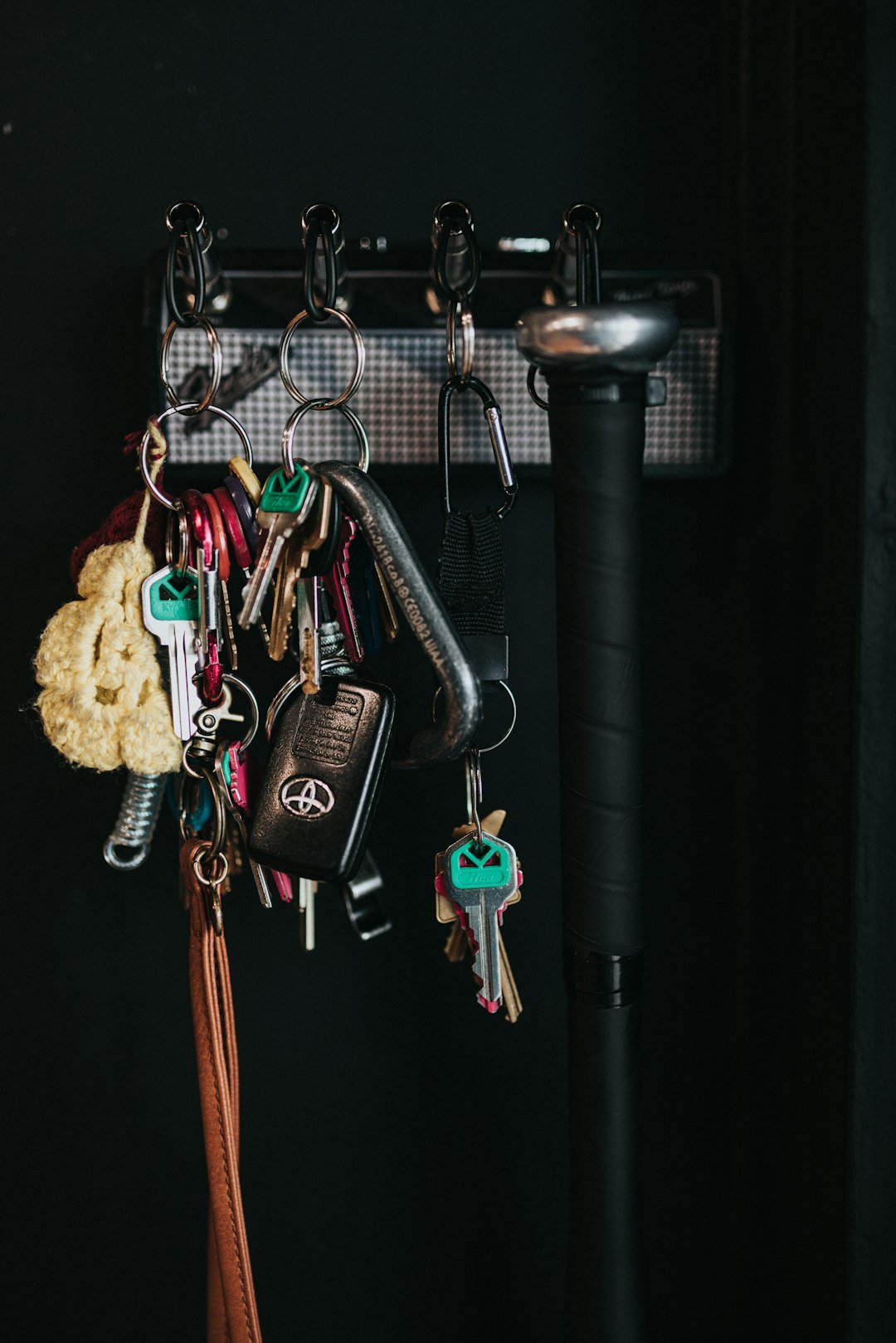
A stated key count is a starting point, not a pocket-carry promise.
A compact organizer advertised for eight keys can feel crowded with five: one chunky car key, a plastic access fob, and a thick mailbox key may consume the space of several thin house keys. The number usually assumes flat, standard metal keys arranged on a single pivot.
Usable capacity is governed by the whole stack: key thickness and shoulder shape, the organizer’s bolt length, washers or spacers, and any add-ons sharing the hardware. Cards and fobs often do not pivot neatly; they add width, snag on pockets, or require a separate attachment. A realistic load leaves enough clearance for keys to swing out individually without loosening the pivot or turning the organizer into a rigid, awkward block.
- Count thickness, not merely keys: thin stamped keys and bulky transponder keys occupy very different amounts of pivot space.
- Reserve room for locking hardware, spacers, and seasonal or rarely used keys before treating the stated maximum as everyday capacity.
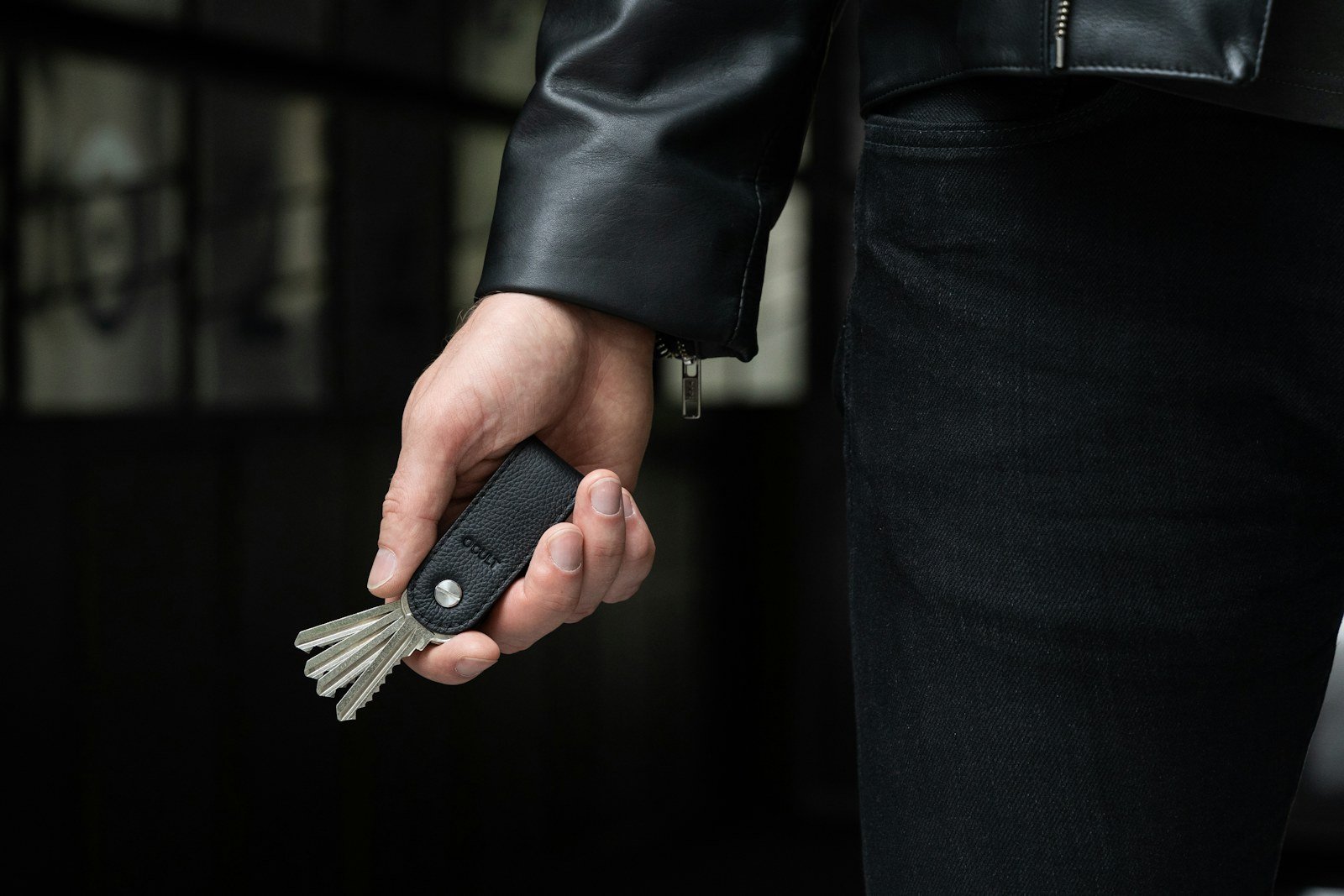
What Count Works in Daily Use?
How many keys fit comfortably?
For most people, four to eight ordinary house or office keys is the comfortable range. Larger stacks may assemble on the pivot, but their bulk and uneven edges quickly change the experience.
Why is the published maximum rarely the useful maximum?
A stated limit normally treats every item as a thin, flat metal key. Thick vehicle keys, plastic-headed keys, access fobs, washers, and any required spacer consume more width; the mechanics behind key organizers explain why the pivot needs clearance as well as room.
What makes a stack deploy smoothly?
The keys need enough pivot tension to stay folded in a pocket, yet little enough resistance to swing out with one hand. At high counts, friction rises across each contact surface, and a key in the middle can become awkward to select.
Does a full organizer remain pocket-friendly?
Not necessarily. A dense stack can be quieter than a loose keyring, but it becomes a short, thick block that prints in slim pockets and can press against a phone or wallet. Removing rarely used keys often improves comfort more than forcing them into the stated capacity.
Which Items Belong on the Pivot?
Do all items consume organizer capacity in the same way?
No. A standard flat house key primarily uses pivot width; a thick plastic-headed key uses width and changes the stack’s balance. A key with a long shoulder or irregular blade can also need extra clearance to rotate independently.
Why can a small keyring accessory make folding awkward?
The limiting factor is often its swing radius, not thickness. Car fob loops, bottle openers, large tags, and keychain tools can strike adjacent keys or the organizer body before they reach a useful folded position.
Can electronic fobs count as fold-in keys?
Usually not. A remote fob, proximity tag, tracker, or garage-door transmitter is bulky, rigid, and more vulnerable to impact when trapped in a moving stack. Carrying it on an external loop, clip, or detachable ring preserves pivot space and avoids misleading capacity counts.
What about oversized or unusual keys?
Mailbox, utility, padlock, and vintage keys may be thin yet still create interference through unusual head shapes or long blades. Check how odd-shaped and oversized keys affect capacity before assuming a nominal slot count applies.
When Does a Key Organizer Become Too Full?
What counts as a lean everyday carry?
Three to five conventional keys usually make a lean stack: it opens quickly, sits relatively flat, and places little side load on the pivot. This range leaves enough clearance for keys to fan out without scraping the organizer body or each other.
When is a mid-range stack still workable?
Six to nine thin, similarly shaped keys can remain practical when the pivot is long enough and the hardware is tightened correctly. At this point, selecting one key often takes more deliberate fanning, and pocket bulk becomes noticeably more dependent on the key heads than the count alone.
Why do large stacks become compromised?
Ten or more keys can fit in some models, but capacity is no longer the same as convenient use. The stack becomes wider, pivot friction rises, and long or irregular keys can collide during rotation; a longer pivot adds room, but also creates a thicker bundle.
Do organizer styles change the useful limit?
Sandwich-style organizers contain a stack neatly between plates, while open-frame and clip-based designs may tolerate odd shapes more gracefully. Neither format defeats geometry: the number of keys typical organizers hold varies most with key thickness, head width, and the space needed for each key to swing clear.
A closed organizer can still be overloaded
Closure only proves that the stack can be compressed; it does not confirm clean pivot travel or clearance.
A thick key head, offset hole, or protruding fob can force adjacent keys sideways. The result may be rubbing edges, keys that stop short of full rotation, or a stack that opens unevenly.
The pivot needs controlled friction, not maximum clamping force.
Overtightening can make individual keys hard to select and can flatten softer spacers. Undertightening allows the stack to fan out, rattle, and work the screw loose through repeated motion.
Recurring loosening often points to stack settling, uneven thickness, or an overloaded pivot.
As coatings compress and parts bed in, clamping load can change. If retightening does not last, mismatched hardware or excess pivot load is more likely than a simple adjustment issue.
An organizer can rotate acceptably on a table yet carry poorly. Watch for a sharp key corner pressing through fabric, a stack that spreads open in the pocket, or a key that catches during removal. These symptoms usually signal poor clearance or excessive thickness, not merely an inconvenience.
A reliable stack stays compact, selects without forcing neighboring keys aside, and keeps its pivot tension over ordinary use.
How can another key be tested before it joins the stack?
-
Fit it in the closed position
Place the proposed key where it would sit when folded. It should remain within the organizer’s profile, without forcing the plates apart or leaving its tip exposed.
-
Cycle every key through its full arc
Open each key one at a time, including the new one. No key should scrape a neighboring head, catch on a fob, or require two hands to separate.
-
Recheck pivot tension after several cycles
A workable stack holds selected keys in place yet lets them deploy deliberately. If adding one key makes the pivot loosen, bind, or shift unevenly, capacity has been exceeded.
-
Test the actual carry position
Pocket, bag, belt, and car-console carry reveal different problems. Pressure points, snagging, sharp corners, and accidental unfolding matter more than the organizer’s nominal count.
-
Keep a margin rather than filling every millimeter
A small amount of unused pivot width accommodates seasonal keys, wear, and minor alignment changes without turning routine access into a fiddly task.
Re-test after replacing a key: nominally similar blanks can differ substantially in head thickness and shoulder shape.
- Practical capacity is determined by movement and carry comfort, not the number of holes on the pivot.
- A stack that works only when carefully arranged has little tolerance for daily use.
Another key belongs only when the organizer still closes cleanly, every key deploys predictably, pivot hardware stays secure, and the intended carry method remains comfortable. The useful limit is the last key added without creating a new compromise.





10 Comments
Worth mentioning for people with newer car keys: don’t force a remote fob into a pivot just because there’s an empty slot. I did that for about a week and it made the whole organizer feel lopsided and weird in a pocket.
Now the fob stays on a small external loop, with five actual keys inside. Not as minimalist-looking, perhaps, but way more usable.
The point about a closed organizer being overloaded is spot on. Mine looked nice and tidy closed, but individual keys would catch halfway out because the edges were colliding.
A closed case is not a capacity test, apparently. Who knew? 😅
Does key shape matter as much as thickness? My apartment key has a big plastic bow, while the other five are pretty flat. I’m wondering whether that one awkward key should sit at an outside position rather than in the middle.
Yes—bow size and shape can matter a lot. A wide plastic head in the middle often pushes neighboring keys apart and creates rubbing as they rotate. Putting it toward an outside position usually gives it more room, though it is still worth checking that it can swing out without hitting the organizer body or the next key.
I keep a tiny flashlight on a separate split ring attached to the organizer rather than putting it on the pivot. It adds some dangly noise, but it’s much less frustrating than trying to fold a fob-shaped accessory into the stack.
The 4–8 range feels right. I tried cramming 11 keys into mine because the listing said it held 14, and it became a little metal brick in my jeans pocket.
The annoying part was that it still closed, so I assumed it was fine until the pivot screw kept loosening.
A bit skeptical of advertised counts in general. Even “standard” house keys vary wildly in head width, and nobody seems to count the spacer needed to stop keys scraping each other.
Still, the practical 3–5 lean / 6–9 workable categories here are more useful than a giant number on a product page.
My rule now is: if I can’t pull out the car key one-handed without looking, one key has to go. Eight flat keys was manageable; adding a chunky mailbox key was where it went downhill fast.
I have six keys plus one of those thin building-entry cards. The card technically fits, but I’m worried the constant pressure around the pivot will eventually crack it. Has anyone found a decent way to carry a card with the organizer without putting it in the folding stack?
I stopped putting my access card on the pivot and use a slim adhesive card sleeve on my phone instead. If you need it with your keys, a small external ring or short clip works better—my old card got noticeably bent in the stack.