
An AirTag is reassuring only when its alert logic matches the way an item gets lost.
The familiar jolt comes halfway through a rushed train change or airport exit: keys are absent from the pocket, the sling feels suspiciously light, or the small pouch is no longer clipped inside the bag. An AirTag can reduce that uncertainty, but it does not behave like a live leash that announces every few metres of separation.
A Lost Alert is tied to Apple’s Find My system deciding that the tagged item has been left behind relative to the owner’s devices and configured locations. Timing is deliberately contextual rather than instant; it can vary with Bluetooth contact, movement, nearby Apple devices, network conditions, and whether the current place is treated as familiar. For everyday-carry items, that distinction matters: an alert may arrive after the owner has moved on, not at the exact doorway or platform where the separation occurred. The useful question is therefore not simply “Is there an AirTag?” but which departure scenario is meant to trigger attention, and how quickly?
Leaving an item behind is not the same as finding it later
“Notify When Left Behind” is an owner-configured separation alert. It can be delayed while Find My assesses distance, movement, connectivity, and saved trusted locations.
It is designed to flag a likely departure, not every brief gap in Bluetooth range.
An AirTag has neither cellular data nor GPS. Its location is updated when a nearby Apple device detects its Bluetooth signal and relays an encrypted sighting through the Find My network.
A recovery notification may arrive much later, when the item is encountered by another participating device.
The map pin shows the most recent Find My-network sighting, not a continuously transmitted route. A recovery update can therefore follow a left-behind alert by minutes, hours, or longer—especially indoors, in sparse areas, or when the item remains stationary.
What actually triggers a left-behind alert
Notify When Left Behind is a rule running on the Apple device signed in to the same Apple Account as the AirTag. The tag does not independently recognize that its owner has departed, connect to the internet, or send a push notification.
The paired device first observes that the AirTag is no longer nearby through Bluetooth. But a broken Bluetooth connection alone is not enough: radio range changes constantly with walls, pockets, vehicles, and interference. The system considers the separation in context, including whether the phone is moving away and whether the AirTag remains at a location treated as an exception.
The decision chain
In practical terms, the sequence is:
- The iPhone, iPad, or supported Apple Watch loses close-range contact with the AirTag.
- Find My evaluates the loss against the item’s Notify When Left Behind setting and any saved Trusted Locations.
- If the separation appears meaningful rather than temporary, the device sends a notification through its normal alert system.
This also explains uneven results across everyday-carry setups. An AirTag in a bag can be perfectly functional while alerts fail to arrive because notifications are disabled. Find My is not permitted to use location. The device is offline, or the relevant Apple device was not carried away. A tag’s later appearance on the Find My network can help locate it, but it does not retroactively create the departure alert.
Why the distance never looks fixed
Bluetooth is short-range radio, and its effective reach changes dramatically with the environment. A phone in a rear pocket and an AirTag inside a metal tool case may lose contact much sooner than two devices with a clear line of sight. Concrete, elevators, vehicle bodies, dense shelving, water, and even a person’s body can weaken or block the signal.
Movement adds another variable. While walking, brief signal drops can occur as the body turns or a bag swings; iOS can wait for a more convincing pattern of separation rather than treating every dropout as a departure. Conversely, a moving vehicle can create a rapid, sustained break in contact.
The connection can also recover temporarily at a doorway, parking spot, or through a thin wall. That reconnection may postpone an alert, even when the item remains inconveniently far away. A left-behind alert is therefore a practical separation cue, not a precision distance boundary or a GPS geofence.
An AirTag buried among keys, tools, batteries, or metal equipment can appear to have a shorter alert range than the same tag carried loosely in a fabric bag.
Configure alerts, then prove they work
-
Confirm the account relationship
In Find My, the iPhone and AirTag must appear under the same Apple Account. If the tag remains linked to a former owner or appears as an unknown accessory, resolve that before testing alerts.
-
Enable the phone-side requirements
Keep Bluetooth and Location Services on, and allow Find My notifications in iOS Settings. Find My iPhone and the Find My network should also be enabled under Apple Account > Find My; Precise Location makes location exceptions less ambiguous.
-
Turn on the item alert
In Find My > Items > [AirTag], enable Notify When Left Behind. This control applies to each item separately, rather than acting as a global AirTag preference.
-
Keep trusted locations narrow
Under Notify Me Except At, add only places where an alert would be unwanted. A broad trusted-location boundary can suppress an alert after departure from the building itself.
-
Run a normal separation test
At a place outside the exception list, leave a nonessential tagged object stationary and depart with the iPhone normally. Confirm the alert, its time, and its map entry, then repeat at one deliberate exception to verify that silence is confined to that location.
Left-behind notifications and crowd-sourced location updates use different paths. A passing Find My device can help a lost AirTag refresh its map position, but separation is assessed primarily by the paired iPhone. An alert can therefore arrive even when the tag has no recent network location.
Put alerts on the items that matter
Left-behind alerts earn their place on carry items whose absence derails the next hour: house keys, a work badge, a daily bag, or a compact tool pouch. They are less useful on objects that routinely stay in another room, are often lent out, or travel in a parked vehicle; repeated notifications can train an owner to dismiss the alert.
Attachment affects more than convenience
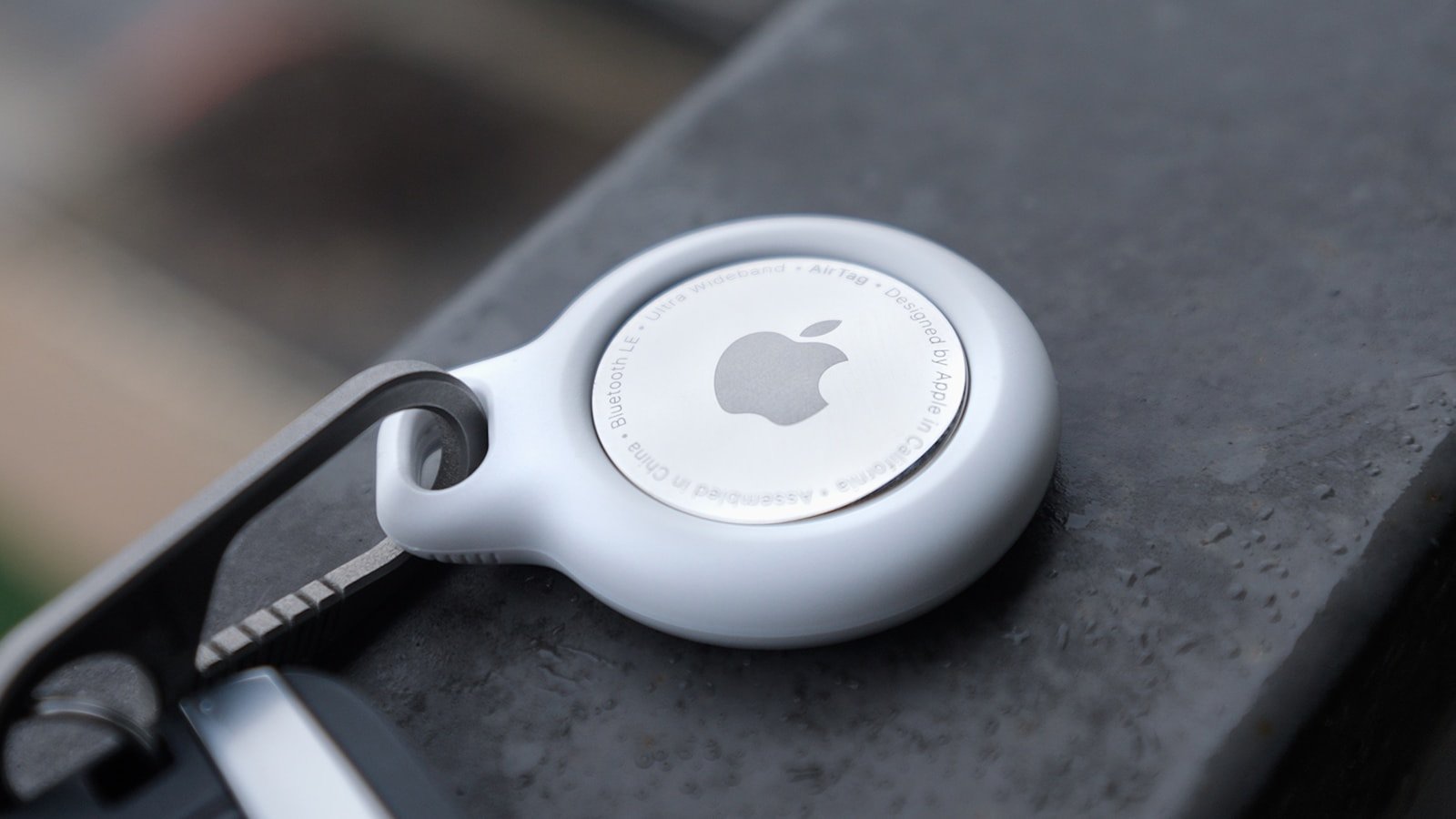
An AirTag needs a retention method matched to the item. A thin adhesive mount may suit a case, while attaching AirTags to keychain dongles works better when keys are the actual failure point. Choose a closed loop, screw-secured holder, or other attachment that cannot quietly separate from the item being protected.
Placement also affects Bluetooth behavior. Keep the tag near an outer bag wall rather than buried behind dense tools, metal hardware, or a laptop; those materials and body shielding can reduce or interrupt the short-range signal. On a compact keychain, avoid stacking the tag between metal keys, and leave enough clearance for battery access.
When an item is truly missing
Once an item is missing, Lost Mode changes the AirTag from a reminder device into a recovery beacon. It can display a contact message to someone who finds it and taps it with an NFC-capable phone. It also notifies the owner when the Find My network reports a new location.
That report is not a live GPS trace. The AirTag broadcasts a Bluetooth identifier; passing Apple devices relay an encrypted, approximate sighting through Find My. In a busy terminal, city block, or office, sightings may arrive often. On an empty trail, in a rural car park, or inside a signal-shielding container, the location may remain stale until another compatible device passes nearby.
Close-range tools narrow the search
When the searcher reaches the reported area, Play Sound can help locate an AirTag within Bluetooth range, particularly under furniture or inside a bag. Precision Finding adds direction and distance on supported iPhones with Ultra Wideband, but only after the phone is close enough to establish that local link. Walls, metal, and compartments can still distort the route.
A cellular tracker has a different recovery model: it can upload its own position wherever it has cellular service, rather than waiting for a nearby participating phone. That can produce more independent updates in sparse foot traffic, but not in coverage dead zones, underground spaces, or when its battery is exhausted. An AirTag is therefore strongest where people—and their Apple devices—regularly pass.
A Find My pin indicates where an AirTag was detected, not necessarily where the item remains. Check the timestamp before assuming the item is still at that location.
Can a tag left in a parked car trigger an alert?
Yes. The phone may decide it has separated, even while the car remains nearby.
Why are car results inconsistent?
Metal bodywork, glass coatings, cargo, and the phone’s position can weaken or redirect Bluetooth. Signal paths change quickly.
Can a nearby car avoid an alert?
Possibly. Brief reconnections can postpone the alert; a garage, street position, or walking route can change the outcome.
Do key organizers matter?
Materials and placement matter; see whether key organizers block car-key signals. That effect adds uncertainty rather than a dependable distance rule.
Compare conditions; no route establishes a fixed trigger distance.
Shared gear needs a clean handoff
A tracker on loaned gear can create confusion long after the gear changes hands. Sharing an AirTag is not a transfer of ownership: the original owner’s Apple Account remains associated with it, while shared users receive access rather than control of the tracker.
Before selling, gifting, or permanently reassigning a tagged item, the current owner needs to transfer AirTag ownership safely. Removing the AirTag from Find My detaches its account association; resetting the physical AirTag then prepares it for a new pairing. Merely taking the tag out of a bag, replacing its battery, or ending a sharing invitation does not complete that hand-off.
For temporary loans, naming the item clearly and documenting who owns the tracker helps prevent mistaken alerts and awkward recovery attempts.
Travel with the phone in the loop
For traveling light with an AirTag, the paired iPhone is part of the system: keeping it powered, Bluetooth-enabled, and connected when practical preserves the conditions for left-behind alerts. A compact charging cable or battery can matter more than adding trackers to every pouch.
Airport, rail, cruise, and event venues may restrict where tagged items can go or how bags are handled. Carrier rules can also differ for checked baggage and battery-powered accessories. AirTag anti-stalking safeguards and local privacy policies remain relevant in shared rooms, rental vehicles, and borrowed luggage; tracking should be disclosed to people carrying the item.
Unknown-tracker warnings are different
An unknown AirTag moving with a person is a safety signal, not a lost-item reminder. Apple’s unwanted-tracking protections look for a tag separated from its owner that appears to travel with someone; compatible phones can surface an unknown-tracker alert, and the tag may later play a sound. Timing and available actions vary with the phone, software, and the tag’s recent contact with its owner.
By contrast, a left-behind notification goes to the owner’s configured Apple account when its own item is judged separated. It does not indicate that another person is being tracked. Neither type of alert proves intent or supplies continuous location history.
A practical carry check
Awareness, Not Autopilot
An AirTag is an awareness and recovery layer, not a guarantee. Alerts matter most after they have been configured, tested in ordinary routines, and paired with an attachment that stays with the item. They can expose a missed handoff or abandoned bag early, but cannot ensure a timely sighting or replace accountability for essential carry.
A resilient EDC system also uses deliberate pockets, clean handoff habits, backup access, and periodic checks of power and permissions.




8 Comments
I’m a little skeptical of the “test it” advice only because the results seem so fuzzy. If it doesn’t alert on one walk to the mailbox, how is a normal person supposed to know whether the setup is bad or the movement filtering just decided to be clever? 😅
Really useful distinction between “I left it behind” and “Find My showed it somewhere later.” People blend those together constantly. The latter is only as good as nearby Apple devices, right?
For an everyday backpack, do you put the tag near the outside pocket for better signal, or deeper inside so it’s harder to steal? Seems like one of those security vs. reliability tradeoffs.
The parked-car example is exactly what I was wondering about. If my keys with an AirTag are in the garage but my phone is inside the house, would a “safe location” for home basically prevent useful alerts when I drive away later? Or does it reevaluate once I leave the home area?
It reevaluates after you leave the exception area. A home safe location can suppress alerts while both you and the item are there, but it is not meant to permanently exempt the item from left-behind checks once you travel away. The practical catch is that the transition is contextual, so it is worth testing your own driveway/garage route rather than assuming a particular boundary or timing.
I loan camera gear to friends fairly often, and shared access always sounded like the clean answer. But if ownership stays with my Apple account, what happens if they travel with the bag for a week? Are they likely to get unknown-tracker warnings even though I shared the AirTag with them?
Also, the reset/removal process for a permanent sale sounds annoyingly easy to forget. I can already picture someone selling a bag and leaving an AirTag associated with their account by accident.
Shared access is useful for a temporary loan because the other person can see the item in Find My, but it does not transfer ownership. Apple’s behavior around unwanted-tracking notifications has evolved, so the recipient should have a current iPhone, current software, and the item properly shared before an extended handoff; they should not rely on sharing as a blanket guarantee for every travel situation.
For a sale or permanent gift, remove the AirTag from your Find My account first, then physically reset it before the new owner pairs it. Treat those as two separate steps. Removing it only from the bag is not enough.
This bit matters. I bought a used luggage tag last year and it was still tied to the previous owner. It made the setup feel broken until they removed it remotely. Definitely reset before handing stuff over.