
A Glock 19’s reputation for reliability is earned—but no cartridge gets a free pass.
A pistol that has run flawlessly for years can still hesitate on a particular hollow point: a nose profile may catch differently on the feed ramp, a weak magazine spring may reveal itself, or a tired recoil spring can alter the cycle. Even grip resistance matters; a marginal load can expose inconsistent recoil control that full-metal-jacket practice ammo never did.
CARRY CONFIDENCE comes from observed function, not a label on the box. In the individual Glock 19, the chosen load needs to chamber cleanly, fire, extract, eject, and lock the slide open from every intended magazine. Testing also shows whether the load shoots to a usable point of impact and whether its recoil impulse remains controllable. Keep magazines identified during evaluation: one troublesome magazine is not necessarily an ammunition problem.
- A repeatable malfunction tied to one magazine often points to its spring, follower, or feed lips.
- Different bullet weights can shift practical point of impact, even at ordinary defensive distances.
Five loads, five clear roles
Choosing the right glock 19 defense ammo comes down to balancing barrier penetration, expansion, and reliable feeding in a full-size 9mm platform, which is exactly what the loads above were tested against.
A Glock 19 must complete the entire cycle
Chambering
The cartridge must rise cleanly from each magazine, slip under the extractor, and seat fully without a nose-up stoppage or a failure to return to battery.
Extraction and ejection
The fired case must clear the chamber and exit consistently. Weak ejection, stovepipes, or cases striking the optic can point to a load-and-pistol mismatch.
Lockback
After the final round, the slide should lock open with every magazine. This checks slide velocity, magazine follower function, and shooter-induced variables.
Cartridge condition
Repeated chambering can mark bullets or push them deeper into the case. Inspect carry cartridges for setback, damaged hollow-point cavities, and rim damage.
Terminal claims
Expansion, penetration, and barrier results describe projectile behavior in a test medium; they do not prove that a particular Glock will cycle that load reliably.
The Glock 19’s feed geometry, generous operating window, and common 9mm chamber make it accommodating across bullet weights and profiles. That is mechanical compatibility—not a guarantee.
A given pistol still benefits from confirmation with its actual magazines, recoil system, optic configuration, and intended ammunition. A clean range session matters, but reliable operation is demonstrated only when every stage of the cycle remains uneventful.
Recoil weight matters more than headline velocity
A 115-grain load such as Winchester Silvertip or Blazer Brass generally produces a brisk, sharper recoil pulse. Its higher velocity can make the Glock 19’s slide feel quick, but light-bullet practice ammunition does not automatically duplicate the sight movement of a carry load.
A 124-grain load is often the practical middle ground: enough bullet mass for a steadier impulse without the long push commonly associated with heavier loads. It is also available in both standard-pressure and +P forms, so a 124-grain label alone says little about recoil. Compare how +P ammunition behaves in a pistol by its actual loading, not its box weight.
A 147-grain HST typically runs at lower velocity and gives a slower, rolling impulse. Many shooters find it easier to track through recoil, though subjective feel depends on grip, spring condition, and firing cadence.
Pressure labels in context
Standard pressure follows the normal 9mm specification. +P is an established higher-pressure category; it usually adds slide velocity, blast, and wear. +P+ has no universal SAAMI pressure limit, so one maker’s load cannot be assumed equivalent to another’s. A load that feeds, locks back, and permits repeatable hits is more valuable than extra velocity alone.
Evaluate the chosen load with the intended magazines and a clean, properly maintained Glock 19. Reliable cycling and controllable follow-up shots are the meaningful benchmarks.
The 147-grain duty-load baseline
01
Best for barrier-focused defensive performance
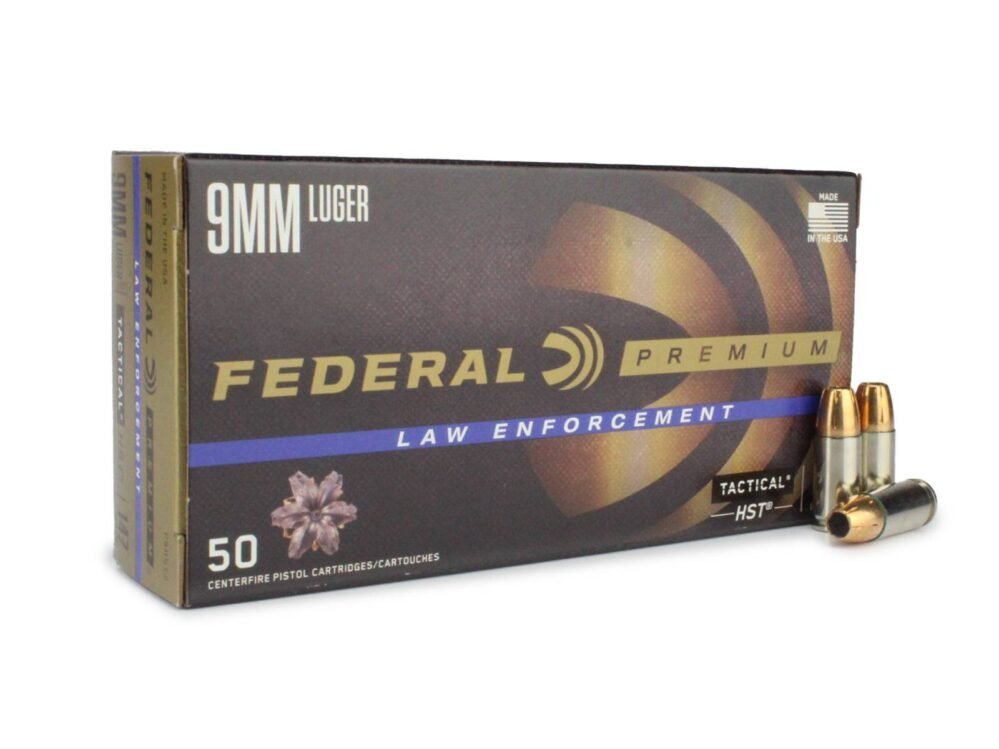
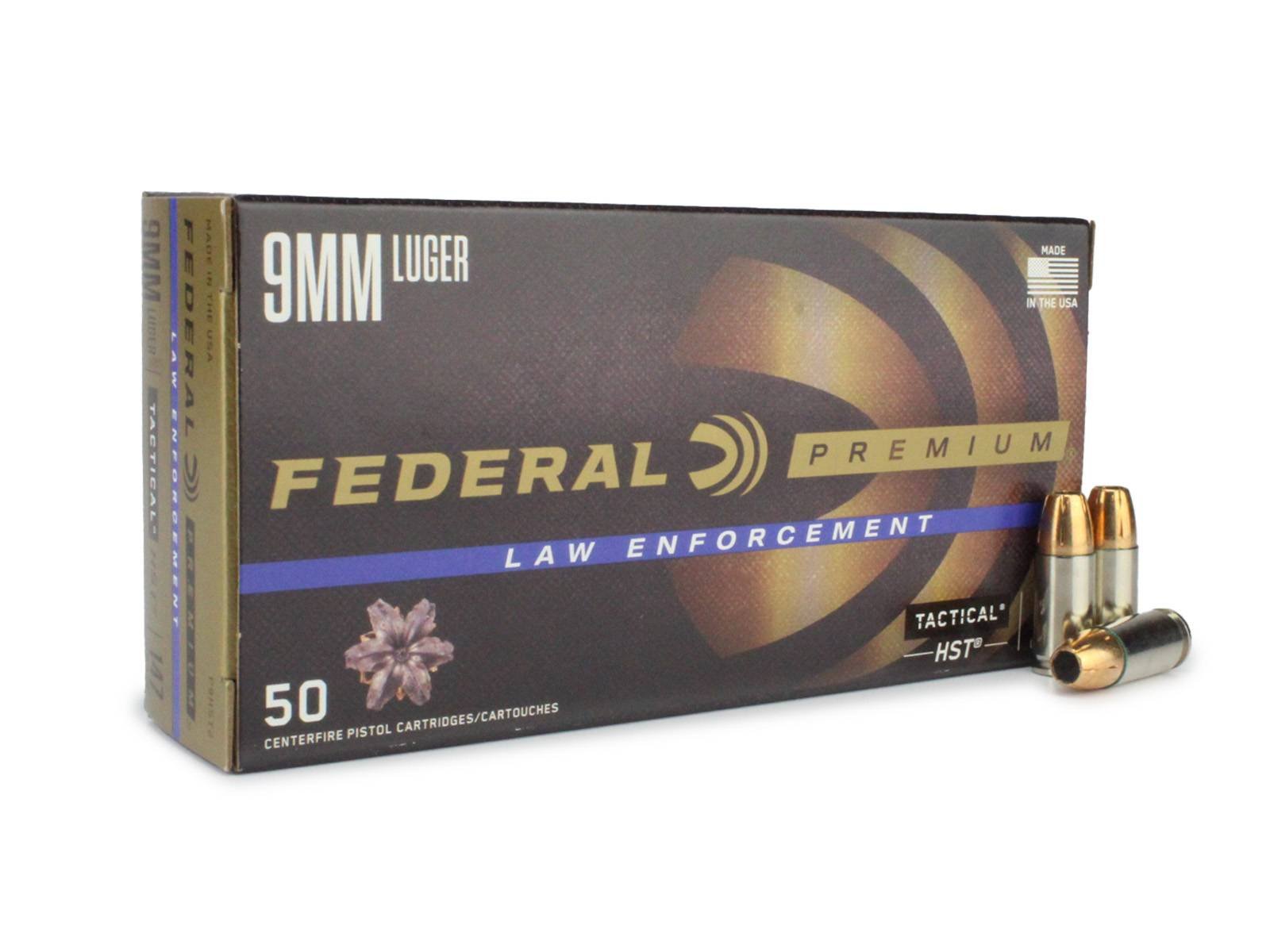
Federal Premium HST 147-grain JHP is the established reference point for a Glock 19 set up around a conventional, service-proven defensive load. Its heavier projectile typically produces a more rolling recoil pulse than light, fast 9mm loads, which can make deliberate follow-up shots easier to track.
The HST design is widely represented in published calibrated-gelatin comparisons, including tests through common intermediate barriers. Those results make it a credible all-around candidate for shooters prioritizing expansion and penetration consistency rather than velocity headlines. They remain comparative evidence, however—not proof that a particular Glock 19, magazine, and lot of ammunition will function together flawlessly.
- Long-established duty-oriented JHP design
- Heavier bullet gives a calmer recoil character
- Strong published barrier-test record
- Common benchmark in 9mm comparisons
- Lower velocity than lighter HST variants
- Can print differently from training ammunition
- Published gel results cannot confirm pistol reliability
Short take HST 147 is the sensible default when proven projectile behavior and manageable recoil matter more than chasing the fastest 9mm load. A Glock 19 still needs its own function check with the exact magazines and ammunition intended for use.
Federal HST 147-grain is the round to start with for a Glock 19 seeking a mature, duty-oriented defensive load. The projectile’s extensive presence in credible gelatin and barrier testing gives it a better evidence base than most marketing-led alternatives. Its heavier recoil impulse is often easier to manage than a snappy lightweight load, though point of impact and reliable cycling remain pistol-specific questions.
Hornady Critical Duty 124-Grain +P: built for hard-use consistency
Top choice for demanding barrier penetration
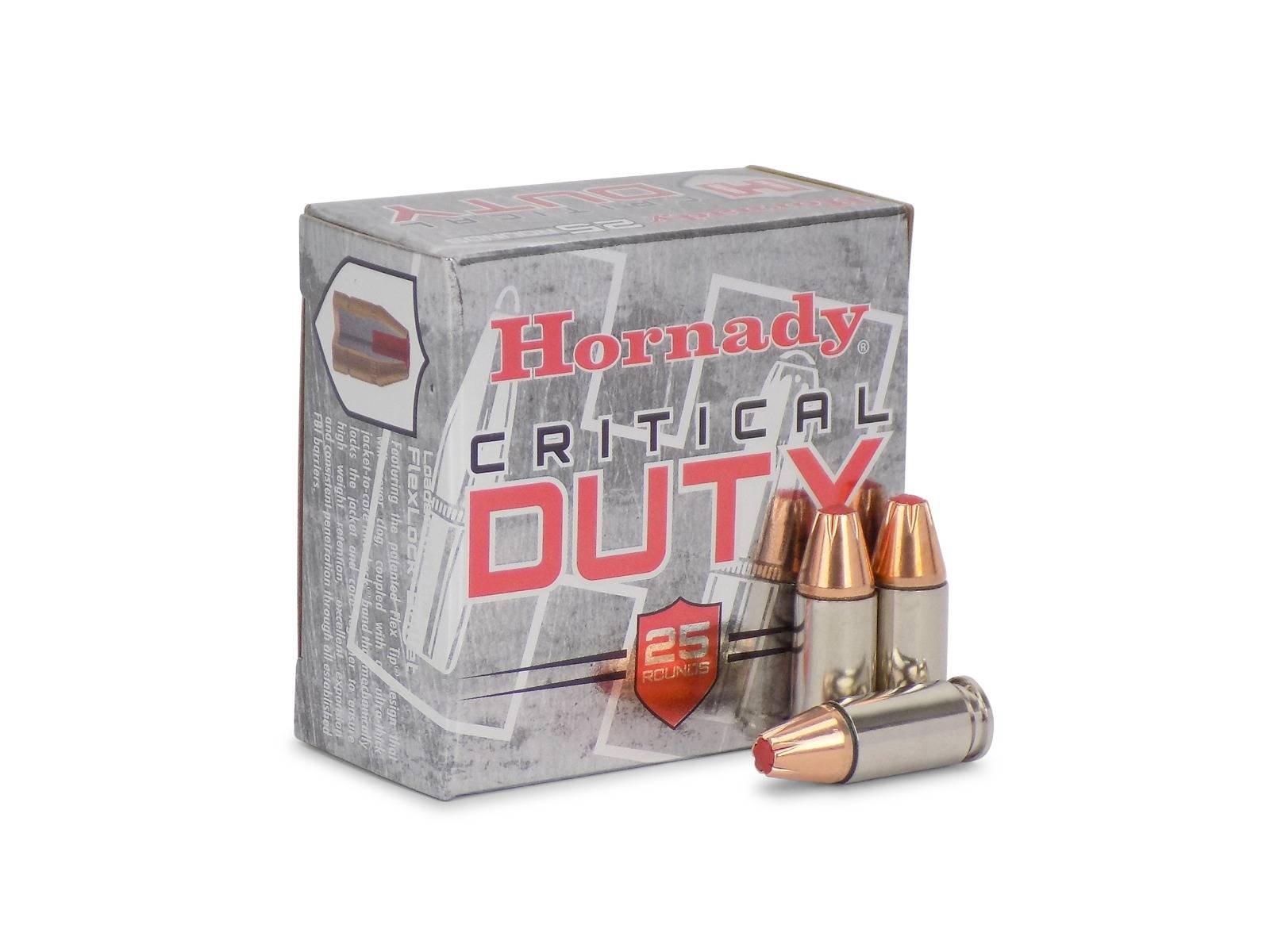
Critical Duty 124-grain +P occupies a different lane from softer-shooting carry loads: it is tuned around duty-style performance after heavy clothing and intermediate barriers. Its FlexLock bullet uses a polymer insert in the hollow-point cavity, intended to resist clogging and help the bullet retain a controlled expansion profile after passing through material such as denim, auto glass, or sheet metal.
That emphasis makes sense for pistols expected to cover a broader range of conditions, rather than for a load selected solely for bare-gel expansion. In a Glock 19, the +P loading brings a more forceful recoil impulse and noticeably greater blast than standard-pressure 124-grain ammunition. Nickel-plated cases also make chamber checks easier in poor light. As with any defensive load, dependable feeding, extraction, ejection, and practical point of impact merit confirmation in the individual pistol.
- FlexLock design addresses cavity clogging through heavy clothing
- Strong fit for barrier-conscious, duty-oriented use
- Nickel-plated cases aid low-light chamber checks
- +P recoil and muzzle blast are firmer than standard pressure
- Barrier bias may be unnecessary for uncomplicated carry conditions
- Individual Glock 19 function and point of impact still vary
A proven personal-defense option at moderate cost
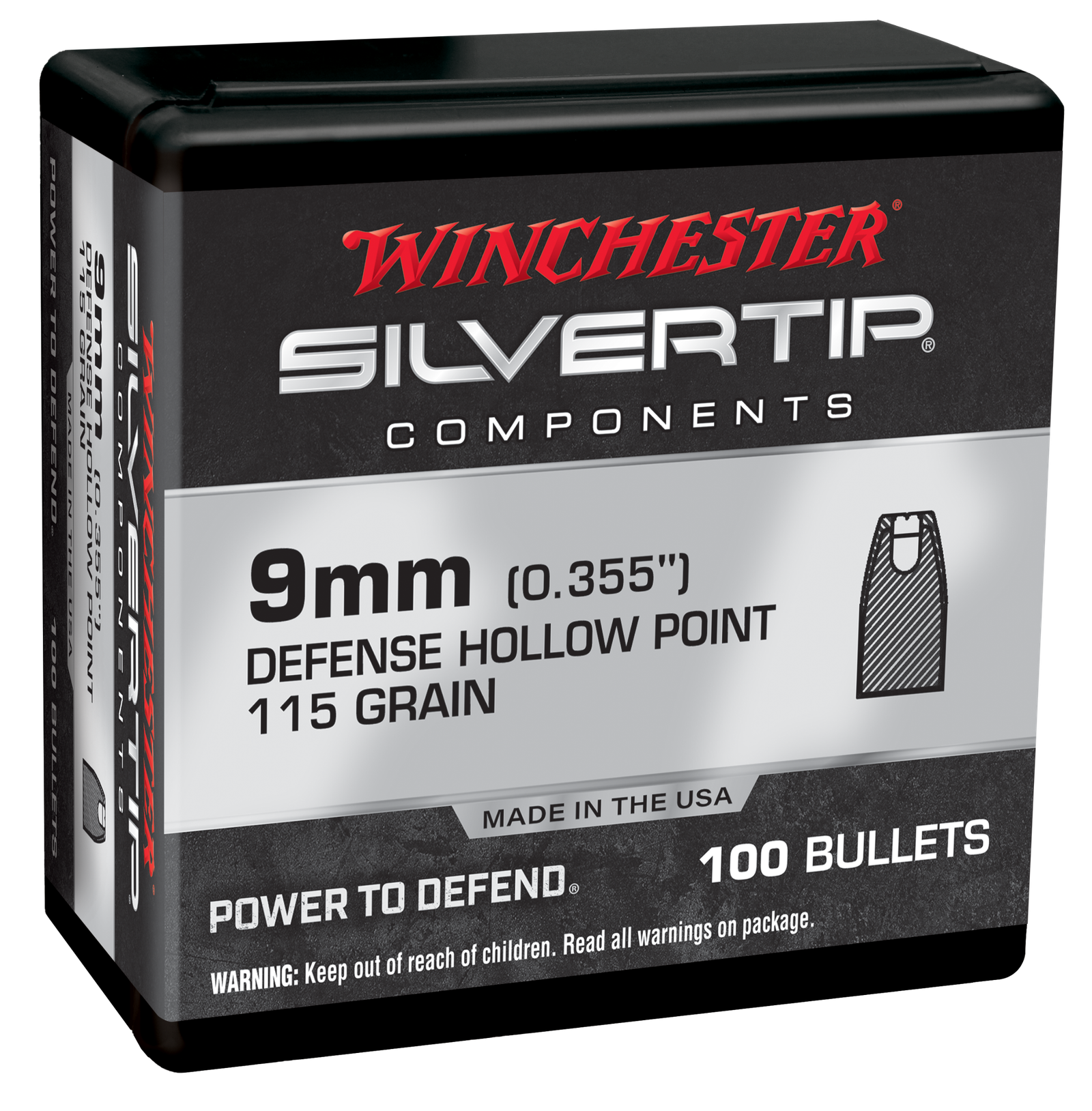
Winchester’s 115-grain Silvertip is a classic light-for-caliber jacketed hollow point for Glock 19 owners who favor a quicker, more abrupt recoil pulse over the slower push common to 147-grain loads. Its longstanding aluminum-colored jacket and conventional hollow-point architecture make it a recognizable alternative to newer bonded and mechanically locked designs. Results deserve context: velocity changes with barrel length, while denim, other clothing barriers, and the test medium can substantially alter expansion and penetration.
- Light 115-grain loading
- Long-established JHP design
- Brisk recoil character
- Less modern barrier focus
- Performance varies by medium
- Short barrels reduce velocity
Designed for reliable feeding in semi-automatic handguns
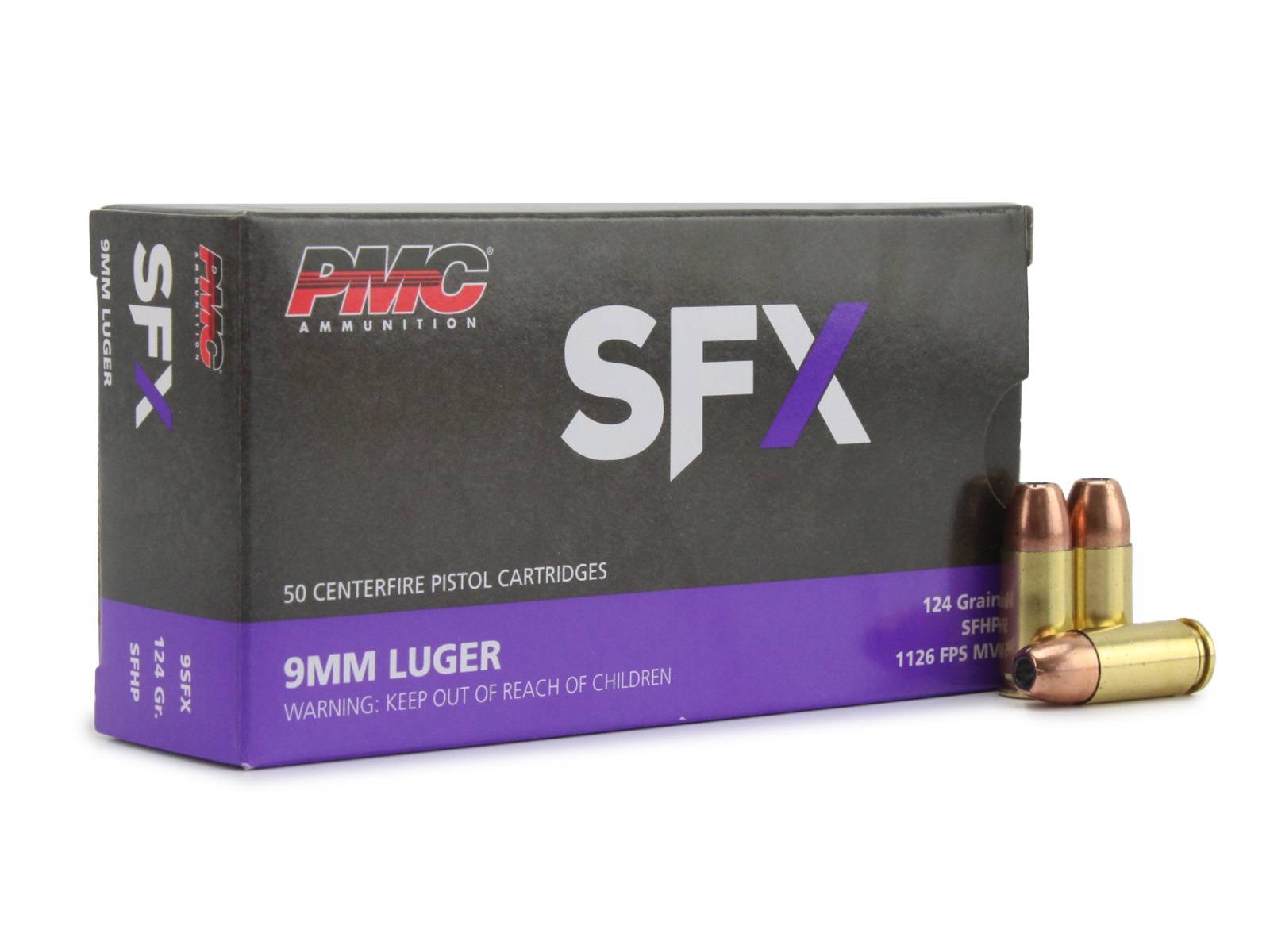
PMC SFX pairs a 124-grain StarFire hollow point with cartridge geometry intended for semiautomatic pistols. In a Glock 19, it occupies the space between the lighter, snappier Silvertip and the heavier 147-grain HST baseline: a conventional midweight recoil impulse with an ogive designed to present smoothly from magazine to chamber.
That makes it a sensible candidate where a particular pistol has shown a preference for rounded, conventional bullet profiles. It is not a substitute for the deeper duty-load record behind HST or Critical Duty; its appeal is a potentially cleaner fit between cartridge shape, feed path, and ordinary-weight handling.
- 124-grain recoil balance
- Ogive tailored for semiautos
- 50-round box format
- Less established duty record
- Glock-specific function varies
- Not a barrier-focused load
Prove the load in the pistol that will use it
-
Inspect the ammunition before loading
Check each cartridge for dents, corrosion, high or recessed primers, bullet setback, and damaged case mouths. Keep boxes and lot numbers together; a different production lot is a different test variable.
-
Start with known-good magazines
Number the magazines and inspect feed lips, followers, springs, and baseplates. A stoppage that follows one magazine is more informative than a vague conclusion about the ammunition.
-
Run the intended hollow point through ordinary handling
Fire the selected load from every carry magazine, including normal reloads from a full magazine and chambering from slide lock. Confirm consistent feeding, extraction, ejection, and slide lockback on the final round; avoid treating a single clean magazine as proof.
-
Separate patterns from one-off events
Record round count, magazine number, lot number, malfunction type, position in the magazine, and conditions. Repeated failures to feed on the first round, for example, point in a different direction than an isolated weak ejection.
-
Compare results against the practice baseline
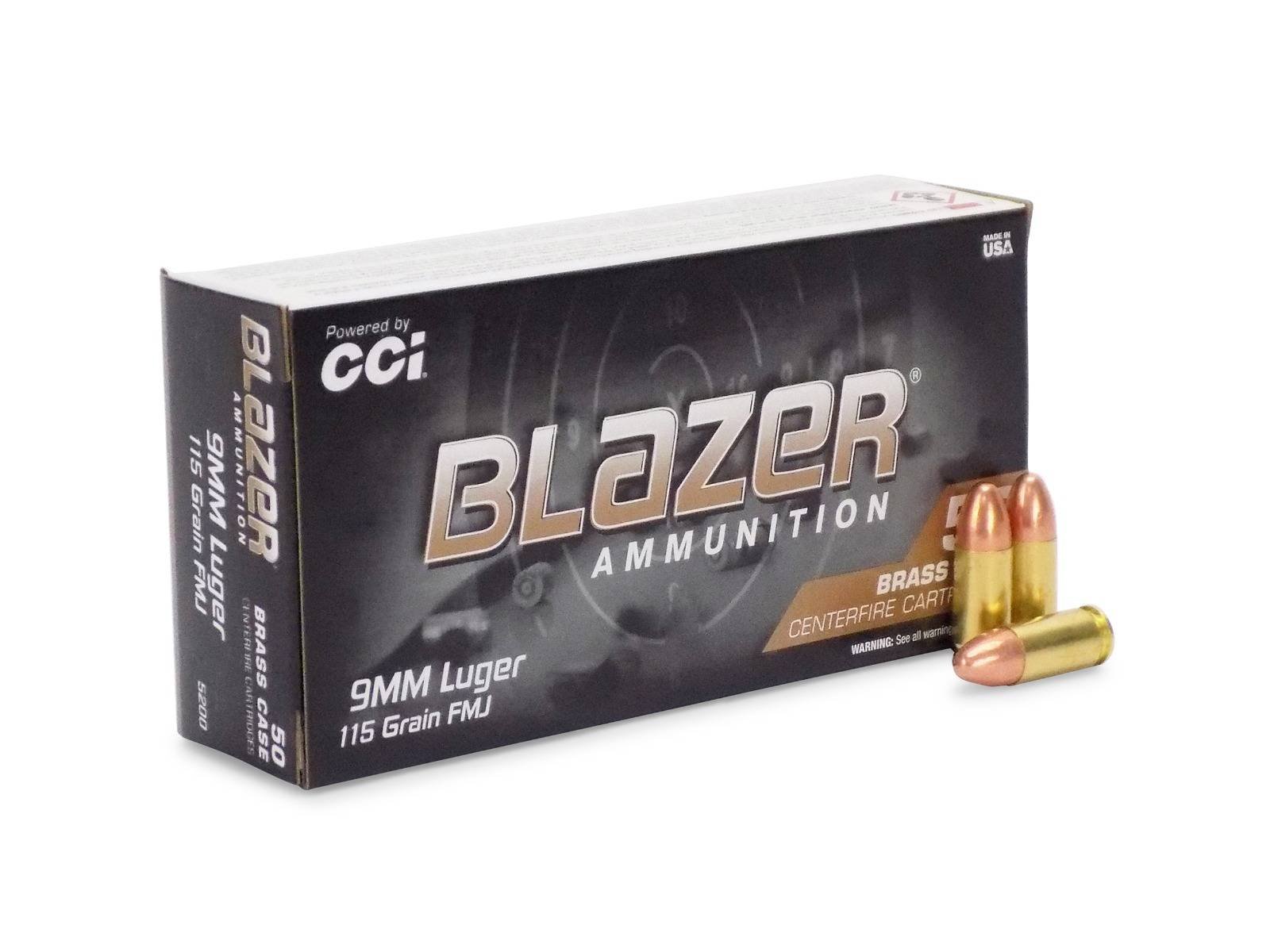
CCI Blazer Brass can establish how the Glock 19 behaves with routine FMJ, but it cannot validate HST, Critical Duty, Silvertip, or PMC SFX function. Written notes make recoil, point of impact, and reliability comparisons defensible when choosing among loads.
Any ammunition, magazine, recoil-spring, or grip change can alter the result; document the configuration tested.
Why a reliable load can fail in a particular Glock 19
Published gel results, velocity figures, and barrier tests describe what a projectile can do under controlled conditions. They cannot establish whether a specific Glock 19 will feed, chamber, extract, eject, and lock open with that cartridge.
Magazine condition is often the hidden variable. Worn feed lips, weak springs, damaged followers, or mixed magazine generations can imitate an ammunition problem. Recoil-spring age, a dry or excessively dirty slide, nonfactory connectors, compensators, and altered barrels can also change timing—particularly with 147-grain loads or 124-grain +P ammunition.
Storage matters after the purchase. Heat, moisture, oil contamination, and repeated chambering can affect cartridges; the last practice can push a bullet deeper into its case, changing pressure and point of impact. Comparing the chambered round with an unfired example can reveal visible setback.
A meaningful range check holds the setup steady: known-good magazines, normal lubrication, the actual carry configuration, and notes on every stoppage. That same configuration matters when evaluating a Glock 19 weapon light, since added weight and grip changes can alter handling even when cycling remains sound.
Ballistic data helps compare expansion, penetration, and velocity. A documented live-fire check establishes compatibility with one pistol, its magazines, and its condition.
What the Easy Tests Miss
Feeding is only one part of suitability.
A defensive JHP also needs dependable expansion and penetration behavior, stable construction, and a recoil pulse that permits consistent control in the Glock 19.
Velocity is an input, not a verdict.
Higher speed can aid expansion, but bullet mass, cavity design, jacket retention, barrel length, and +P recoil determine the useful result. A 147-grain HST may be easier to keep consistent than a sharper 115-grain load.
Each bullet profile needs separate testing.
Round-nose FMJ and hollow points present different noses, lengths, and feeding angles. The FMJ-versus-hollow-point carry question is therefore about more than practice-ammo function.
Choose by priority, then let the pistol decide
Frequently Asked Questions
What is the best 9mm defensive load for a Glock 19?
Federal Premium HST 147-grain JHP is the strongest all-around starting point, combining a proven duty-load design with a manageable, rolling recoil impulse and a strong published barrier-test record.
When should I choose Hornady Critical Duty over HST?
Critical Duty 124-grain +P is the better choice when intermediate-barrier performance is the priority, since its FlexLock bullet is designed to resist clogging after passing through heavy clothing or materials like auto glass or sheet metal.
Does reliable FMJ practice ammo prove a hollow point will feed?
No. Round-nose FMJ and hollow points present different noses, lengths, and feeding angles, so a clean run with practice ammunition like CCI Blazer Brass cannot validate a defensive JHP’s function in the same pistol.
Does +P ammunition always perform better in a Glock 19?
Not automatically. +P adds slide velocity, blast, and recoil, and while it can aid expansion, bullet mass, cavity design, and barrel length matter as much as pressure class in determining the useful result.
What should I check before trusting a defensive load in my Glock 19?
Confirm chambering, extraction, ejection, and slide lockback from every intended magazine, inspect cartridges for setback or damage, and keep notes by magazine and lot number so a pattern can be distinguished from a one-off event.
- A defensive JHP and economical FMJ serve different jobs; reliable Blazer Brass practice does not validate hollow-point function.
Start with Federal HST 147-grain JHP: it is the strongest all-around Glock 19 defensive baseline, combining a proven duty-load design with a manageable recoil impulse. Compare Hornady Critical Duty 124-grain +P when barrier performance is the priority; consider PMC SFX 124-grain where feeding confidence is the deciding factor.
For context on self-defense ammunition choices, retain only the JHP that cycles, feeds, ejects, and locks back cleanly through the actual Glock 19 and every intended magazine. Keep CCI Blazer Brass 115-grain FMJ for training rather than treating FMJ reliability as proof of defensive-load reliability.
A clean record with the chosen JHP—not a favorable reputation or a successful FMJ session—is the final filter.
Federal Premium HST 9mm 147 Gr JHP (Box)
Hornady Critical Duty 9mm 124 Gr +P FlexLock (Box)
Winchester 9mm 115gr Silvertip Hollow Point Ammo
PMC SFX 9mm 124 Gr StarFire Hollow Point (Box)





12 Comments
PMC SFX is the one I almost never see discussed. Has anybody actually found it to feed differently than HST in a Glock 19? The “semiautomatic-oriented” wording sounds a little marketing-ish to me, but maybe the StarFire profile matters with certain mags or older guns.
Interesting that Silvertip made the cut but not something like Winchester Defender or Ranger-T. Is the Silvertip included mostly as a classic/lightweight comparison, rather than a recommendation over newer bonded designs?
Exactly—the Silvertip is included as a recognizable 115-grain JHP format with a long history, not as a claim that it surpasses modern duty-oriented loads in every situation. Its lighter weight, potential barrel-length effects, and more limited barrier expectations make it useful for comparison. A newer bonded or barrier-focused design may better fit someone whose priority is hard-use consistency.
I appreciate the caution, but “prove it in your pistol” can get expensive fast with premium ammo. What would you call a realistic minimum test for someone with a stock G19, three magazines, and no desire to burn 300 rounds of HST?
Also, does occasional bullet setback from chambering the same round repeatedly count as a reason to rotate that top round? I’ve seen people online act like it can never matter, which sounds questionable.
There isn’t a magic round count that guarantees future reliability, but I would test enough carry ammunition to run every magazine repeatedly, include reloads and slide-lock reloads, and watch for failures, lockback, and damaged cartridges. For many owners, 50–100 rounds spread across all carry magazines is a practical starting point; more confidence requires more testing.
And yes, repeated chambering can cause bullet setback. Inspect the cartridge against an unfired round, rotate the chambered round out of service if it has been chambered repeatedly, and do not shoot visibly set-back ammunition. Setback can raise pressure, so it is not just an internet nitpick.
The point about +P+ not having one universal pressure standard needs to be shouted a little louder. People see “more velocity” and assume it is automatically better, then buy a mystery +P+ load and call it a day.
For a compact Glock, I’d rather have controllable recoil, repeatable hits, and a documented test with my carry mags than a tiny velocity advantage. Barrier performance is useful, sure, but I’m not planning my grocery run around shooting through auto glass.
The magazine-ID suggestion is underrated. I chased what I thought was an ammo issue for two range trips before realizing one older mag had weak spring tension. Ammo gets blamed for everything, like it personally offended the pistol.
Why no Speer Gold Dot 124 +P or 147 on this list? It seems like the other obvious duty-ammo benchmark alongside HST, especially for people who can actually find it locally.
That’s a fair omission to ask about. Gold Dot is absolutely a proven option and would be a sensible addition to a broader comparison; this article was built around five representative loads rather than an attempt to list every good defensive load. The HST/Gold Dot choice often comes down to availability, price, recoil preference, and—most importantly—what runs cleanly through the individual pistol and magazines.
I’m on a pretty tight practice budget. Is Blazer Brass still your pick for most range sessions if I carry 147 HST, or should I try to match bullet weight with 147-grain FMJ? I understand it isn’t a substitute for testing the HST, just wondering about practice feel.
Blazer Brass is a perfectly reasonable economical practice choice, particularly if it functions reliably in your Glock 19. If your budget allows, adding some 147-grain FMJ can help you get used to the slower, heavier recoil pulse of the 147 HST. But the priority is still regular practice plus a separate, meaningful test of the actual carry load—don’t assume either FMJ weight validates the JHP.
I do mostly 115 Blazer and shoot a box or two of 147 FMJ before I renew my carry ammo. Not identical, but it helps remind me the sight return feels different. The HST is the expensive part… sadly 😅