The round in your carry gun is the one component you cannot upgrade under stress.
Choosing 9mm self-defense ammo is not about finding the most powerful load. It is about finding one that expands reliably from your barrel length, feeds every time in your pistol, and that you have actually fired enough of to trust. Those three constraints eliminate most of the shelf.
The loads below are the ones that clear the FBI protocol consistently and are stocked reliably enough to buy twice.
- Barrel length: a 3-inch carry gun strips 100-150 fps off published velocity, and expansion depends on it.
- Feed reliability in your specific pistol beats any ballistic gelatin number.
- Buy the same lot twice: carry ammo you cannot re-order is a one-time decision.
Why 9mm self-defense ammo choice comes down to barrel length
Any comparison of 9mm self-defense ammo has to start at the barrel, so this one does too. Ammunition makers publish velocity from test barrels, usually 4 inches or longer, but a subcompact carry pistol runs 3 to 3.1 inches. That gap costs roughly 100 to 150 fps.
Velocity is what drives hollow-point expansion, so dropping below a load’s design window changes what the bullet does. It then behaves like ball ammo, because the cavity never opens: deep penetration, no expansion. That is the most common failure in carry ammo, and it is entirely predictable from the spec sheet.
So the first question is not which brand wins. Instead it is which loads still expand at your muzzle velocity, since short-barrel lines exist for exactly this reason. For the underlying standard these loads are measured against, see what the FBI penetration standard actually requires.
How much a short barrel actually costs you, and which 9mm self-defense ammo still opens after paying it, is worked through in how much barrel length changes your carry ammo.
Five loads, five clear jobs
Grain weight, decided
Three weights dominate defensive 9mm, but the differences are smaller than forum arguments suggest.
115 grain is the lightest and fastest. Recoil is mildest, which matters for follow-up shots and for shooters with hand-strength limits. Expansion is reliable in full-size guns.
124 grain is the working default for 9mm self-defense ammo, because it is what most agencies issue. It balances velocity against momentum well enough that it still expands from short barrels, yet without punishing recoil.
147 grain is heavy and subsonic. It carries momentum through barriers such as heavy clothing and auto glass, and it recoils as a push rather than a snap. It gives up the least velocity to a short barrel, because it started slow.
So if you have no strong reason to choose otherwise, carry 124 grain. The distinction between these and practice ammo is covered in FMJ versus hollow point for carry and home defense.
HST appears twice on this list, which makes it the natural benchmark for any other 9mm self-defense ammo you are weighing. HST versus Gold Dot versus Critical Duty puts the three most widely issued duty loads side by side on bullet construction and barrier performance.
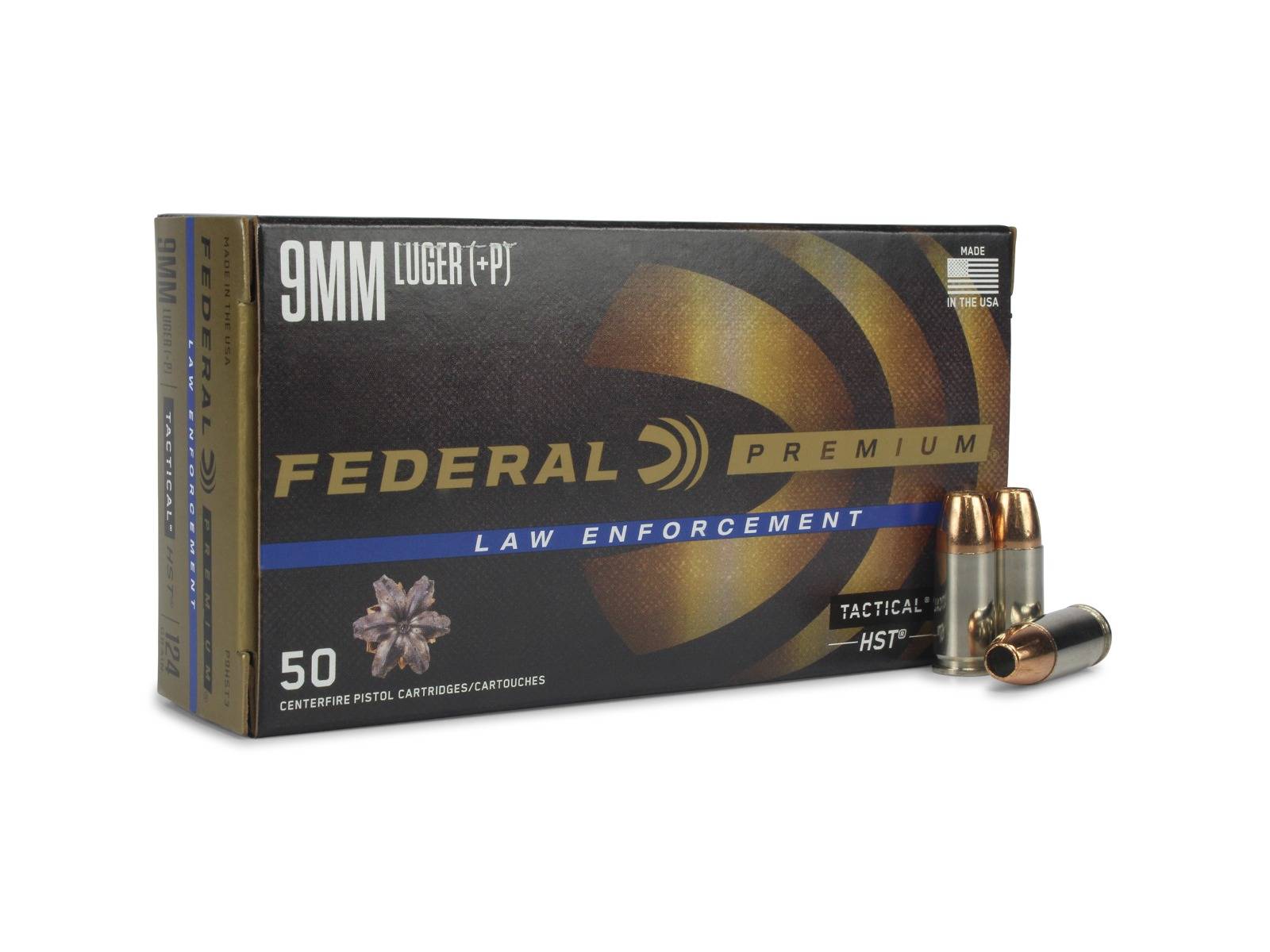


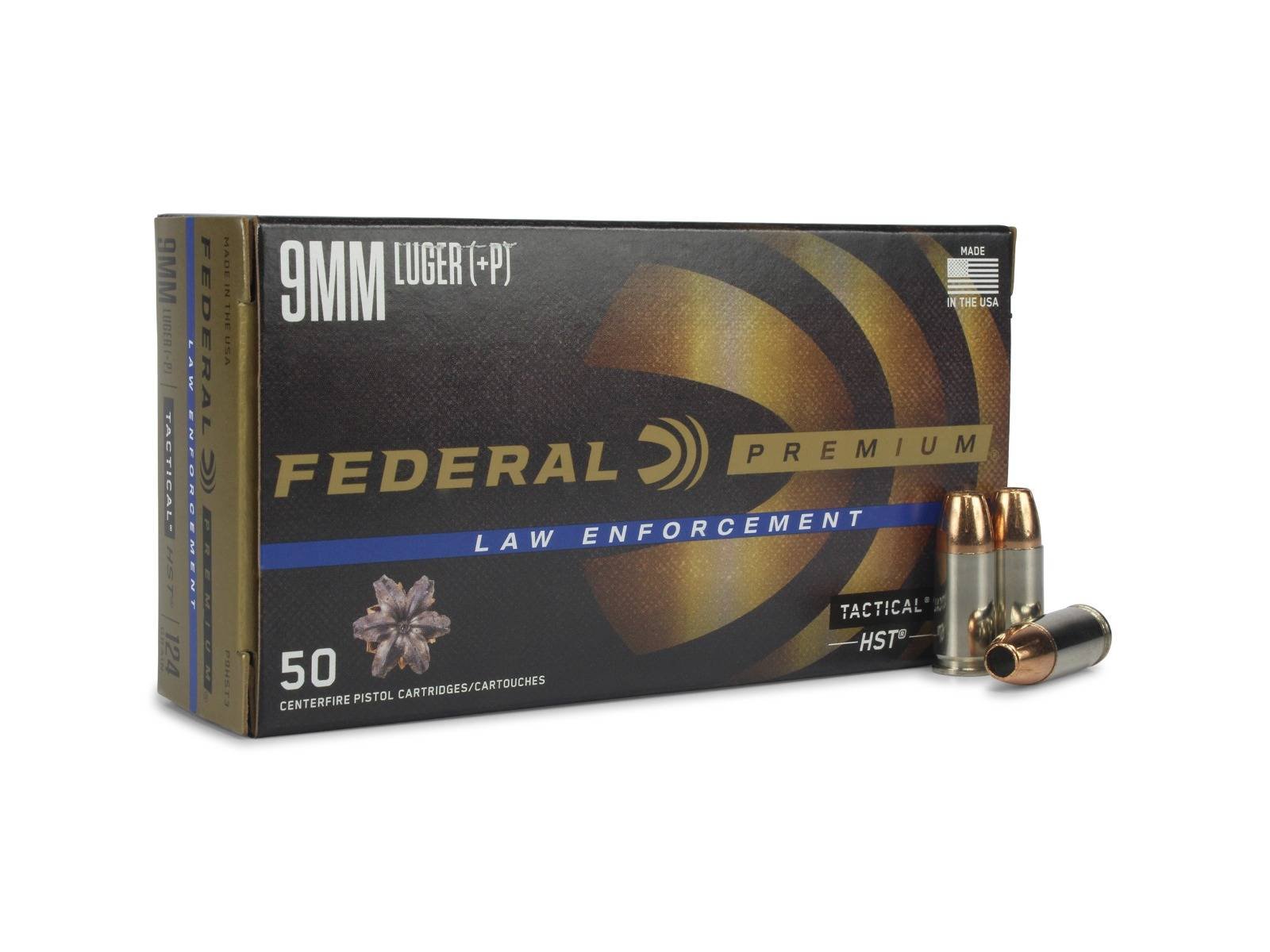
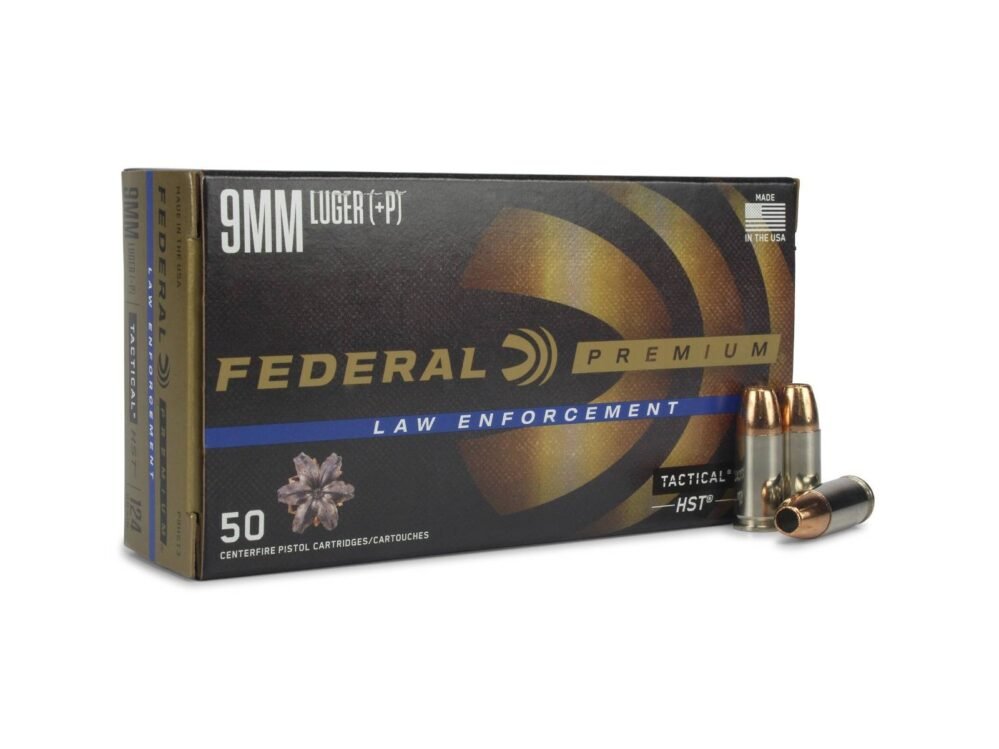
Federal HST 124 grain +P: the load to beat
01
The default answer for a short-barrel carry pistol
HST earned its reputation by doing two things consistently: opening across a wide velocity band, and holding its jacket to the core while doing it. The 124 grain +P version is the one worth carrying in a compact pistol, because the extra pressure offsets what a short barrel takes away.
The practical case for it is boring and strong. It is issued widely, which means it has been function-tested in more pistols than any boutique load will ever see, and it is stocked in both box and case quantities so you can re-order the same thing next year.
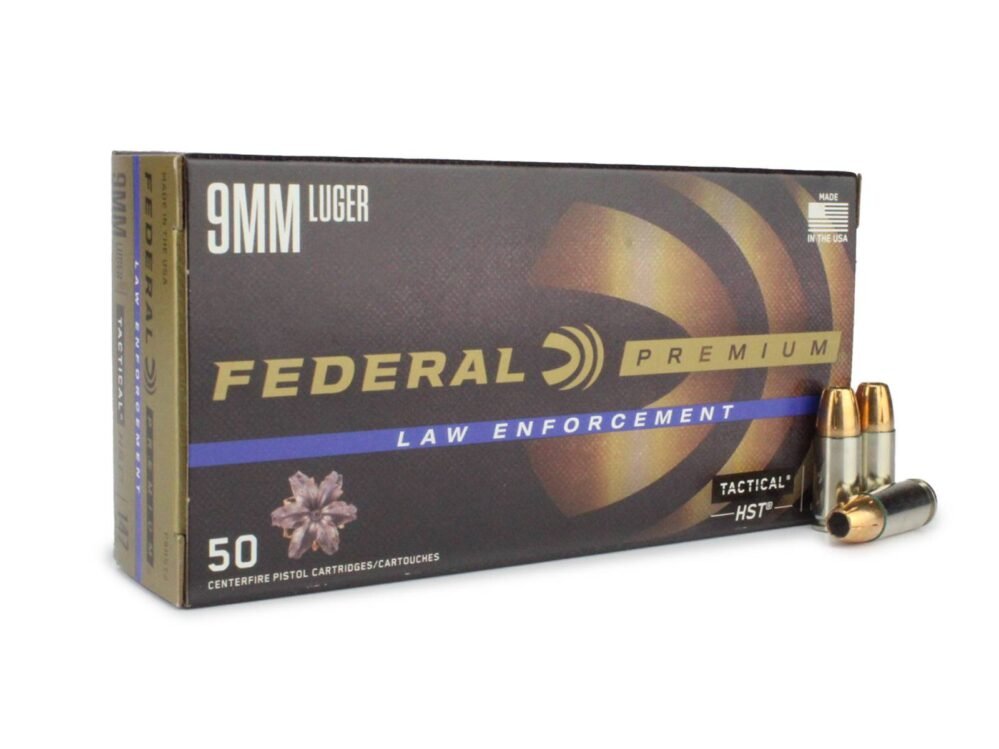
Federal HST 147 grain: the heavy option
Subsonic weight for barriers and heavy clothing
The 147 grain HST is the answer to a specific question: what happens when the bullet has to get through something first. Heavier projectiles carry momentum better and are harder to plug with clothing.
It also has a quiet advantage in short guns. A load that starts subsonic gives up less to a three-inch barrel than a fast one does, because there was less velocity to lose. Recoil arrives as a push rather than a snap, which some shooters track faster.
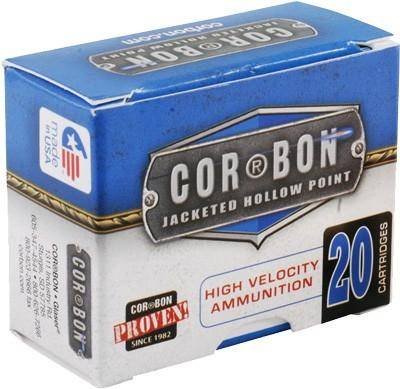
HST 124 +P | HST 147 | PUNCH 124 | Silvertip 115 | Corbon 125 +P | |
|---|---|---|---|---|---|
|
|
|
|
|
| |
| Grain weight | 124 gr | 147 gr | 124 gr | 115 gr | 125 gr |
| Pressure | +P | Standard | Standard | Standard | +P |
| Bullet design | HST hollow point | HST hollow point | PUNCH JHP | Silvertip HP | JHP |
| Best for | Short-barrel carry | Barriers and heavy clothing | Budget carry | Lightest recoil | Highest velocity |
| Check price | Check price | Check price | Check price | Check price |
- Expansion at your actual velocity
Published figures come from 4-inch test barrels. Check whether the load has a documented short-barrel window before trusting it in a subcompact.
Look forLoads marketed for short barrels, or bonded designs that open at lower speeds.AvoidLight, very fast loads fired from 3-inch guns without checking the expansion floor. - Feed reliability in your pistol
Hollow-point profiles vary enough that some pistols favor one shape over another. This is gun-specific and cannot be inferred from reviews.
Look forAt least 100 rounds through your carry gun without a single stoppage.AvoidCarrying a load you have fired fewer than 50 rounds of. - Availability you can repeat
Carry ammo needs replacing after chambering cycles and range checks. A load you cannot re-order forces you to re-validate a new one.
Look forLoads stocked in both box and bulk, from a manufacturer with steady supply.AvoidBoutique loads bought once on sale.
How to choose 9mm self-defense ammo without over-thinking it
First, pick a load that meets the FBI penetration window from a barrel your length. Then buy two boxes, fire one through your carry pistol, and count stoppages. If the count is zero, that is your carry ammo, so load the second box and keep the rest for re-validation.
That process costs about sixty dollars and one range trip, but it is more predictive than any amount of reading, including this page.
Ammunition Depot publishes per-load specifications on each product page, and Federal’s own Personal Defense HST line lists expansion and penetration figures by barrel length.
Frequently asked questions
How often should carry ammo be replaced?
Replace the chambered round every time you unload and reload, and rotate the full magazine at least annually. Repeated chambering sets the bullet deeper into the case, which raises pressure. Mark the chambered round and retire it after a few cycles rather than counting.
Is +P ammunition worth the extra recoil for carry?
Sometimes. +P raises velocity, which helps expansion from short barrels, and it costs muzzle rise and wear. If your pistol is rated for it and you shoot it as accurately as standard pressure, it is a reasonable trade. If your split times open up noticeably, it is not.
Can I carry the same ammo I practice with?
Cost usually says no. Defensive hollow points run three to five times the price of range FMJ. The workable compromise is practicing with FMJ of the same grain weight, so point of impact and recoil stay close to your carry load.
Does 147 grain really do better through heavy clothing?
Heavier bullets carry more momentum and are less prone to having their hollow cavity plugged by fabric. The effect is real but modest, and a well-designed 124 grain load handles clothing acceptably. Barrier performance matters most if you expect intermediate barriers.
Proving your 9mm self-defense ammo in your own gun
Every recommendation here is a starting point rather than a verdict on your pistol, because function testing is the part nobody can do for you.
Fire at least 100 rounds of your chosen 9mm self-defense ammo through the exact gun and magazines you carry. Use the same grip you would use under stress, including one-handed strings. Then count every stoppage, even ones you clear without thinking, since one failure in 100 is one too many.
So if your carry setup is still coming together, the appendix carry holster guide and the gun belt stiffness guide cover the two parts that fail more often than the ammunition does.
Two decisions sit either side of this one. If you are still choosing a cartridge rather than a load, 9mm versus .380 for concealed carry settles that first. And once you have picked, carry ammo rotation covers how often the chambered round has to be retired.
Buy two boxes of HST 124 grain +P, run one through your carry pistol, and if the stoppage count is zero you are done choosing. Move to the 147 grain only if you expect barriers, or to the Silvertip if recoil is your limiting factor. The load matters less than having actually fired it.
Pick one, then prove it
- Carry 124 grain unless you have a specific reason not to.
- Fire 100 rounds of your chosen load through your carry gun before trusting it.
- Replace the chambered round on a schedule, not when you remember.
Any of these five will do the job if it feeds in your pistol and expands at your barrel length. The failure mode is never that someone picked the second-best load. It is that nobody function-tested the one they picked, or carried a hollow point too slow to open. Both are solved with one range trip and about sixty dollars of ammunition.
Federal Premium HST 9mm 124 Gr +P JHP (Box)
Federal Premium HST 9mm 147 Gr JHP (Box)
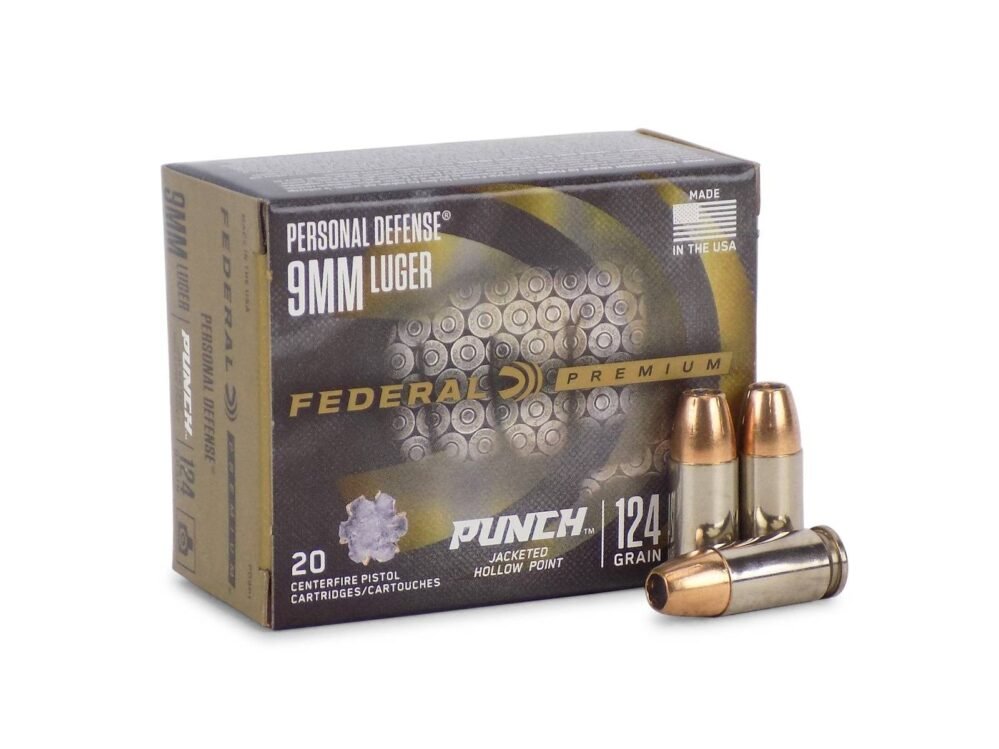
Federal Premium PUNCH 9mm 124 Gr JHP (Box)
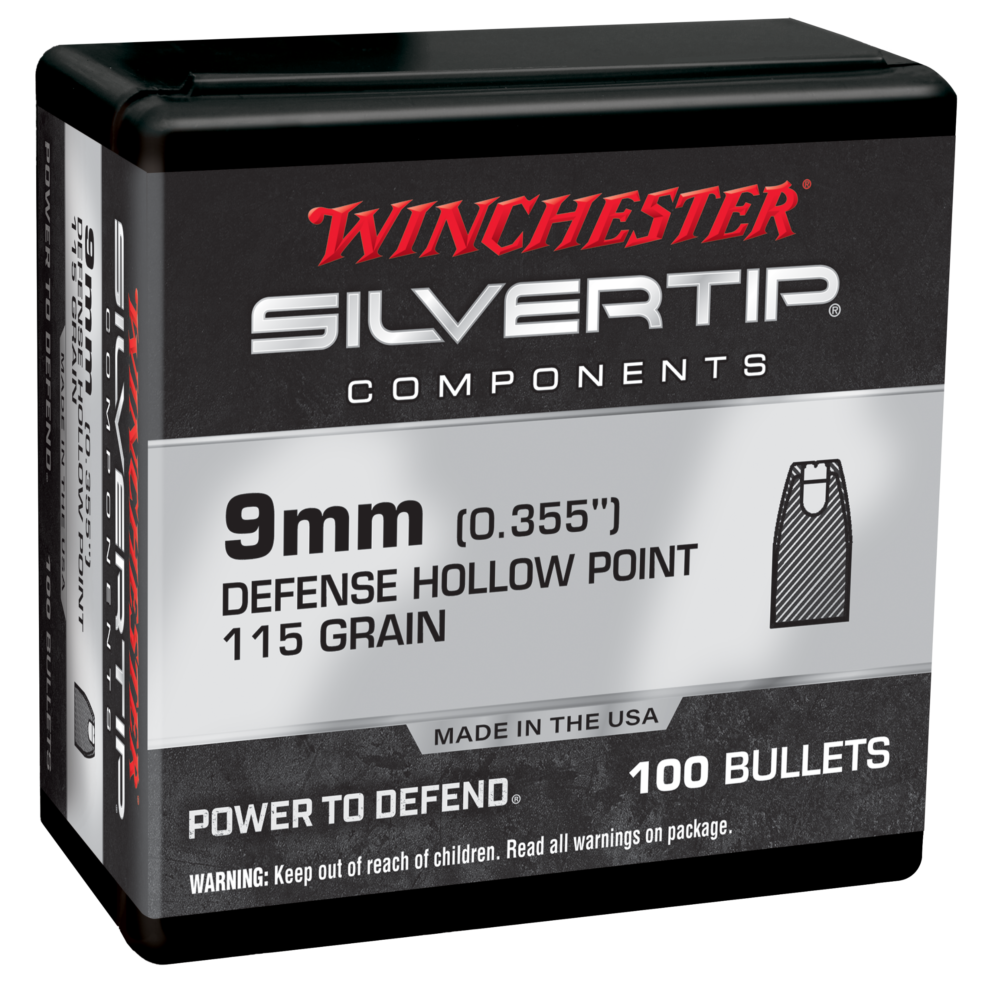
Winchester 9mm 115gr Silvertip Hollow Point Ammo