
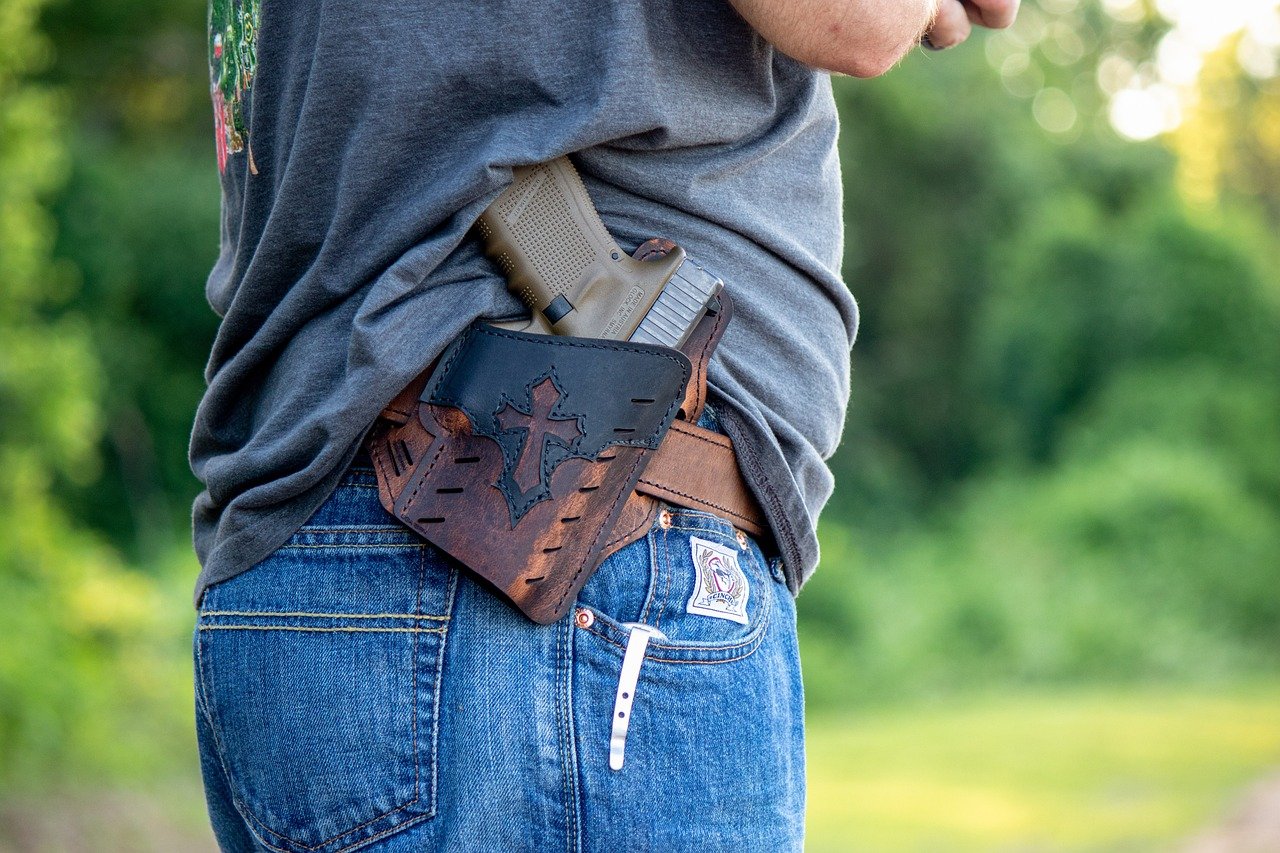
A belt can fail in two opposite directions, and both feel bad fast.
By the first drive of the day, the problem usually announces itself: one belt lets the holster side droop and twist, while another feels like a plank across the hips as soon as the wearer sits. Both are comfort failures. Sagging forces the handgun to shift, tip outward, and tug at the waistband; overbuilt rigidity resists the body’s natural bend and turns pressure into hot spots at the buckle, loops, and holster mount.
Comfort is controlled support, not MAXIMUM stiffness. A gun belt works inside a system that includes handgun weight, holster attachment, belt-loop spacing, and body position. Too soft, and the belt loses shape under torsion. Too stiff, and it stops conforming where the pelvis rotates and the torso compresses. The sweet spot is enough structure to keep the holster upright during movement, with enough flex to move with the body instead of bracing against it.
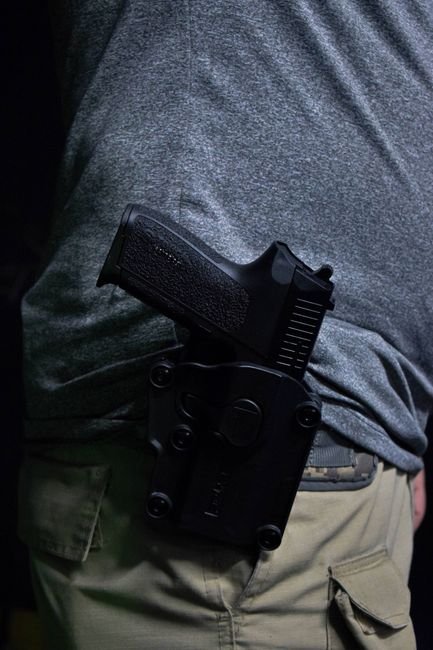
Why one “stiff” belt can feel comfortable and another cannot
Gun belt stiffness isn’t simply stiff or soft. It can resist vertical sag under the weight of a holster. It can still bend enough to follow the waist and hips. Moreover, that distinction explains why some belts feel secure without drama. Others feel like a plank even when they hold the load well.
In practical terms, comfort comes from balancing support with conformability. When a belt only excels at staying straight, it may dig at the iliac crest. A belt that wraps beautifully but lacks structure may look comfortable at first. Then it might twist, roll, or let the holster tip outward.
What construction changes the feel
- Width: More width spreads weight and helps resist roll, but it also reduces the belt’s willingness to curve through belt loops and around sharper body contours.
- Thickness: Added thickness usually increases support, yet thick edges can create localized pressure long before the belt actually feels “too tight.”
- Material density: Dense leather, scuba webbing, and tightly woven synthetics stay crisp longer; lower-density materials tend to mold faster but can collapse under concentrated load.
- Reinforcement: Polymer or spring-steel inserts can dramatically improve anti-sag performance. The trade-off is reduced wrap, especially if the reinforcement runs nearly the full length.
- Stitching: Multiple rows of stitching lock layers together and raise torsional rigidity. That helps prevent curling, but it also makes the belt less forgiving around the hips.
- Hardware: A large buckle or heavy attachment point adds front-end mass and creates a stiff zone. Low-profile hardware usually flexes with the belt more naturally.
Labels like EDC belt or reinforced belt reveal very little on their own. Real-world comfort comes from how these parts work together, not from the marketing term stamped on the listing.
Thickness alone is a poor predictor of comfort.
A thinner belt made from dense material with edge stitching and a rigid insert may feel firmer than a thicker belt made from softer leather. What matters is the combination of structure, wrap, and hardware—not a single spec.
What the belt is actually telling
Localized hotspots often mean the belt is already too rigid.
A belt that resists body curvature keeps the holster upright by concentrating force into bony areas, especially when sitting, bending, or driving.
Grip flop, side sag, and bounce usually mean too little support.
The holster is twisting the belt instead of being anchored by it. Common clues are carry-side droop, repeated re-tightening, and movement during walking.
How comfort changes with one notch can expose the real issue.
Soft belts often need extra tension to control movement. Rigid belts may stay stable yet create pressure quickly as tension rises, even with little sag.
Seat-only discomfort often points to excess rigidity, not weak support.
Standing load is mostly vertical. Sitting adds torso bend and pelvic rotation, which exposes belts that cannot flex around the abdomen and iliac crest.
Support has to match the real load
A gun belt is not supporting a pistol in isolation. It is managing a system: handgun weight, holster leverage, spare magazine, flashlight, clip spacing, pant structure, and where that mass sits around the waist. A setup that feels controlled with a compact pistol at 3 o’clock can feel very different once a weapon light, steel magazine, or a second pouch is added.
Static comfort can be misleading because the belt is rarely under a purely vertical load. During normal movement, the load rotates, shifts, and tries to fold the belt at specific points. Consequently, a belt can seem excellent while standing. However, it becomes annoying the moment the wearer sits down, leans forward, or spends an hour driving.
What changes under real use
- Sitting: the pelvis tilts and the belt line compresses, so a very rigid belt may dig at the buckle, hip, or muzzle end of the holster.
- Driving: long periods of hip flexion reward belts with good support but better local flex, especially near the front.
- Bending and reaching: the holster twists outward, testing torsional control more than simple vertical sag resistance.
- Walking fast or climbing stairs: repeated motion exposes belts that let the gun bounce or migrate notch by notch.
Load distribution matters as much as total weight.
A broad, heavy all-steel pistol can require more anti-sag structure than a lighter handgun.
Additionally, a compact pistol carried in a narrow, high-leverage holster can still demand a surprisingly stable belt.
A useful way to judge gun belt stiffness is to think in zones.
Additionally, many comfortable belts are firmer where the holster hangs.
In practice, the right belt keeps the load planted as posture changes.
The belt does not work alone
A belt can be mechanically appropriate yet feel poor because the pants are doing part of the load management. Belt loop spacing is a major variable. Wide gaps let the belt bridge unsupported sections, which concentrates force near the holster and creates localized digging. Thus, closer loops spread that force and make the same belt feel calmer.
Waistband structure matters. A firm waistband shares the load with the belt. A soft, rolling waistband asks the belt to do everything. Thus, a setup that feels stable in heavy denim can feel twitchy in lightweight chinos. The ideal belt for dress pants carry often differs from the one suited to jeans.
Body geometry changes the equation again.
Additionally, Rise affects where the belt line crosses the pelvis and soft tissue.
Higher-rise pants usually give the belt a more stable shelf.
Lower-rise cuts can increase tipping, pinch when seated, or make a stiff belt feel harsher than it really is.
Additionally, fabric changes perceived stiffness.
- Dense fabrics damp movement and reduce printing.
- Stretch fabrics can amplify bounce and roll.
- Thin waistbands reveal edge pressure sooner.
- Slippery materials allow more shifting around the waist.
However, in practice, apparent belt problems are often clothing-system mismatches.
They are not simply over- or under-stiffness.
When a belt feels harsh in one pair of pants and nearly ideal in another, the belt may not be the primary variable. Loop layout and waistband firmness often explain the difference.
How the main belt types actually differ
No belt category is automatically more comfortable.
However, the useful differences are simpler.
They show how evenly the belt spreads pressure.
They indicate how well it keeps its shape under a moving load.
Additionally, they show how precisely it can be set as posture changes.
- Traditional leather usually offers the most natural wrap. It follows the body more easily, so edge pressure can feel lower when sitting or bending. Its trade-off is gradual stretch and less consistent shape retention under heavier carry.
- Double-layer or reinforced leather resists sag and outward roll better. That added structure can stabilize the holster side, but if the reinforcement is too continuous or too thick, pressure often concentrates at the front points of contact instead of dispersing around the waist.
- Nylon webbing and ratchet systems tend to hold shape well and change size in smaller increments. That fine adjustment can matter more than raw stiffness, especially across long periods of standing, sitting, and driving. A close look at ratchet and leather belt differences often comes down to this trade: easier tuning versus a softer wrap.
- Hybrid belts try to split the difference, using a stiff core with a more compliant outer layer. When done well, they limit droop without feeling like a rigid ring; when done poorly, they inherit both problems at once.
Additionally, a practical pattern appears quickly.
Moreover, belts with micro-adjustment often feel better.
They accommodate changes in waist tension throughout the day.
Additionally, belts with more natural conformability often feel better.
They help when the main complaint is pinching, hotspotting, or a hard front edge.
Thus, the most comfortable option is not the stiffest one.
Instead, it’s the belt whose support and adjustment range match the body’s movement cycle.
A five-minute stiffness test
-
Load the belt normally
Use the actual holster, pistol, spare magazine, and pants. Empty-belt impressions often misread real support.
-
Stand and inspect the holster line
If the belt edge creases sharply at the holster or the grip tips outward, stiffness is likely too low for that load.
-
Walk, sit, and bend
Watch for belt roll at the holster and pressure ridges at the hips. Excess stiffness often shows up as pinching before support improves.
-
Change tension one notch
A belt that only behaves when cinched hard is usually under-supported or mismatched in shape.
-
Keep the minimum that works
The best result is a belt that stays upright, resists collapse, and still follows the waist during movement.
Rule of thumb: use the least stiffness that still prevents collapse and holster roll under the intended loadout.
Frequently Asked Questions
What happens if a gun belt is too soft?
A belt that lacks structure loses shape under torsion, letting the holster side sag, twist, and tip outward as the pistol shifts and tugs at the waistband.
What happens if a gun belt is too stiff?
An overly rigid belt resists the body natural bend, creating pressure and hot spots at the buckle, loops, and holster mount, especially when sitting or bending.
Does belt loop spacing affect comfort?
Yes. Wide gaps let the belt bridge unsupported sections, concentrating force near the holster, while closer loop spacing spreads that force and makes the same belt feel calmer.
Are ratchet belts more comfortable than leather belts?
Ratchet and nylon webbing belts hold their shape and allow fine, small-increment adjustment, while traditional leather offers a more natural wrap but stretches gradually and holds shape less consistently over time.
How can I test if my gun belt stiffness is right?
Load the belt with the actual holster and pistol, then stand, sit, bend, and walk. Watch for belt roll at the holster or pressure ridges at the hips, and keep the minimum stiffness that still prevents collapse and holster roll.
The right amount of stiff
Comfort rarely comes from the belt that resists every bend. It comes from the one that stays upright under the actual load, then yields enough to follow the hips, waistband, and daily movement without creating hard edges or constant readjustment.
That makes stiffness a matching problem, not a status marker. A practical check—walking, sitting, bending, and noting sag versus hotspots—usually reveals the answer faster than specifications do. The best belt is simply stiff enough for that carry setup and clothing.

16 Comments
The part about “sag resistance” vs “conformability” was actually super helpful. I always treated stiffness like it was one single thing.
Question though: if a belt feels fine standing but starts pinching only when driving, is that usually a conformability problem first, or can it still mean the belt is just too soft and I’m over-tightening to compensate?
Usually seated pinching points more toward conformability, especially if the belt feels acceptable while standing. A belt can be supportive enough to hold the load upright yet still resist bending around the pelvis when you sit, which creates a concentrated pressure point.
That said, your second possibility is real too. If the belt is too soft, people often crank it tighter to stop droop, and that extra tension can make a decent seated position feel bad fast. The giveaway is whether loosening slightly causes obvious sag or tipping—if it does, you may be compensating for missing support rather than poor conformability alone.
That was exactly my issue in the truck. Softer belt felt “comfortable” for 10 min, then I’d tighten it, then regret all my life choices lol.
How does body shape play into this? I’m lean and kind of bony around the hips, and a lot of belts people call comfortable give me hotspots fast.
Sometimes I can’t tell whether I need *less* stiffness so it wraps better, or *more* stiffness so the load doesn’t concentrate in one area. Feels weirdly counterintuitive.
The notch sensitivity thing is REAL. I’ve had belts where one hole is too loose and the next one feels like I’m getting cut in half.
Is that mostly why people like ratchet belts, or do those introduce their own pressure issues because the hardware is bulkier/stiffer in one spot?
That fine adjustment is a big reason people like ratchet systems. When the belt’s support depends heavily on tension, smaller increments can help you land in a usable middle ground instead of bouncing between saggy and overly tight.
But yes, they can introduce their own tradeoffs. The track, buckle geometry, and local stiffness near the hardware can create a more rigid zone or a pressure concentration, especially when seated or if that area lines up with a bony point.
The line about the belt not working alone should be printed on the packaging of half the stuff sold online lol.
I’ve noticed heavier fabric pants can make the same belt feel more stable, but also somehow stiffer overall? Like the whole system stops flexing naturally. Is that just because the waistband is helping spread load, or am I imagining things?
You’re not imagining it. A heavier or more rigid waistband can absolutely make the whole system feel more stable by sharing some of the load, reducing local collapse, and helping resist outward tipping.
At the same time, that added structure can make the setup feel stiffer overall because there’s less freedom for the belt-and-pants combination to flex independently with your body. That’s why the same belt can feel supportive in one pair of pants and oddly restrictive in another.
Yep, same here. My canvas work pants make every belt feel more “locked in” than my softer jeans do.
One thing I still don’t get: if leather “wraps naturally,” is that because it breaks in and changes shape, or because the material itself flexes differently under load from the start?
People talk about leather like it has magical properties, which… maybe? Or maybe we’re all just romanticizing cow products 😂
Maybe I’m the odd one out, but some reinforced belts seem massively overhyped. They hold shape great on a table, sure, but on an actual human body they can feel like strapping a ruler around your waist.
Your point about the ideal belt being the *minimally* stiff option for the real loadout makes more sense than the usual internet advice of “stiffer = better.” Curious whether you think people carrying lighter setups are routinely buying belts built for way more load than they need.
Yes, I think that happens a lot. Many people shop by reputation or by the most extreme use case they’ve seen discussed, so they end up with a belt optimized for heavier gear, longer wear, or a stricter need for shape retention than their own setup actually demands.
That can work, but it often shifts the compromise toward pressure and reduced conformity. For lighter carry, the sweet spot is often a belt that still resists roll and droop but bends more willingly with the body during sitting, bending, and daily movement.
100% agree. I bought a mega-stiff one because forums said it was “serious.” Turns out I am apparently not serious enough 😂
I wish more people talked about the pants/loops side of this. I swapped belts and thought one was garbage, but it turned out the problem was cheap jeans with weird loop spacing.
Do you think waistband stiffness matters almost as much as the belt in some setups? Because that has honestly been my experience.
This might be a dumb question, but how much does belt width change the feel compared to just thickness? A 1.75 always feels more annoying on me than 1.5 even before adding anything to it.
I did a janky version of your five-minute test at home after reading this 😅 walking around, sitting on the stairs, bending to pick up a laundry basket, etc.
What surprised me was that the belt that felt “strongest” standing still was not the one that stayed most comfortable through movement. So now I’m wondering if a lot of reviews are basically useless because people judge belts while just standing in front of a mirror for 30 seconds.