
Comfort, concealment and a safe, reliable draw must be balanced for daily AIWB carry.
Sitting through an eight-hour meeting with a firearm pressed into the stomach makes the trade-offs obvious: pressure points, printing and restricted movement show up fast. AIWB magnifies all of it, because the muzzle sits forward and changes both ride height and the draw path.
One rule comes before comfort. An appendix carry holster must be a rigid shell molded to your specific pistol, with the trigger guard fully covered. At this position the muzzle points at your own femoral artery, so a soft universal pouch that fits fifteen guns is the wrong tool no matter how comfortable it feels.
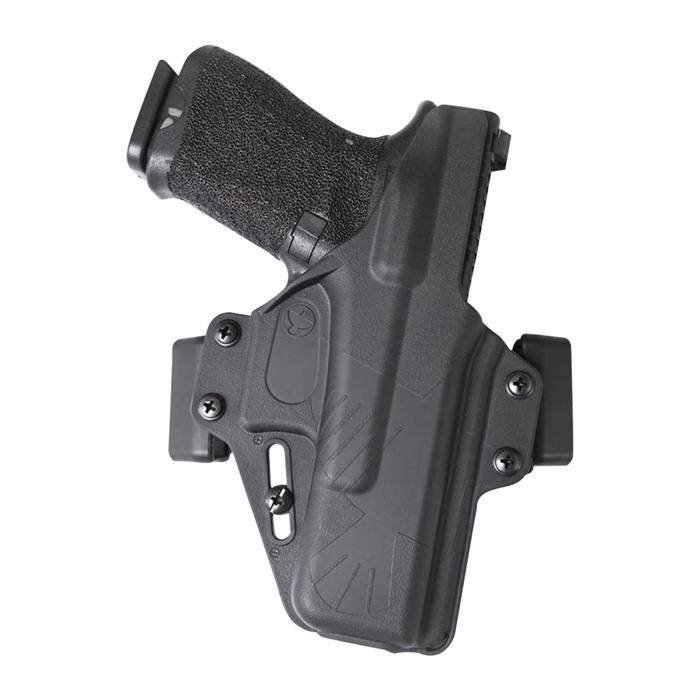
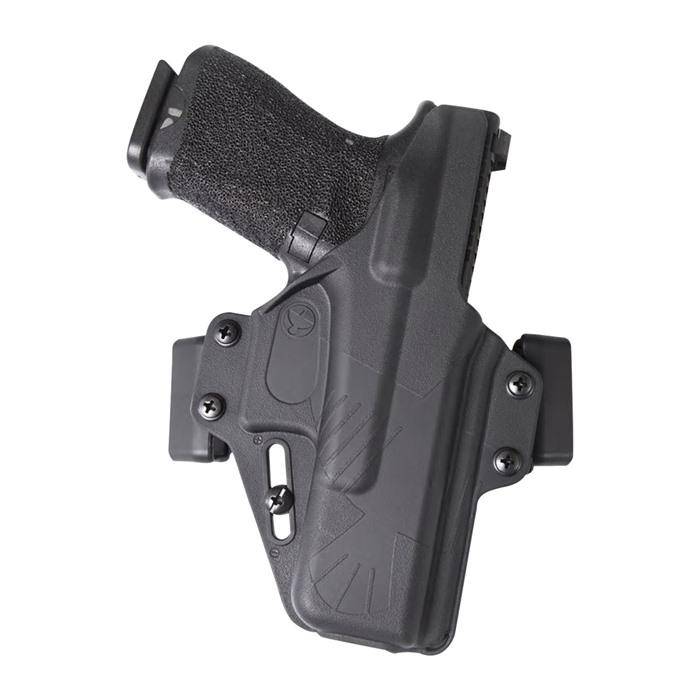
- Raven Perun — rigid polymer, best overall
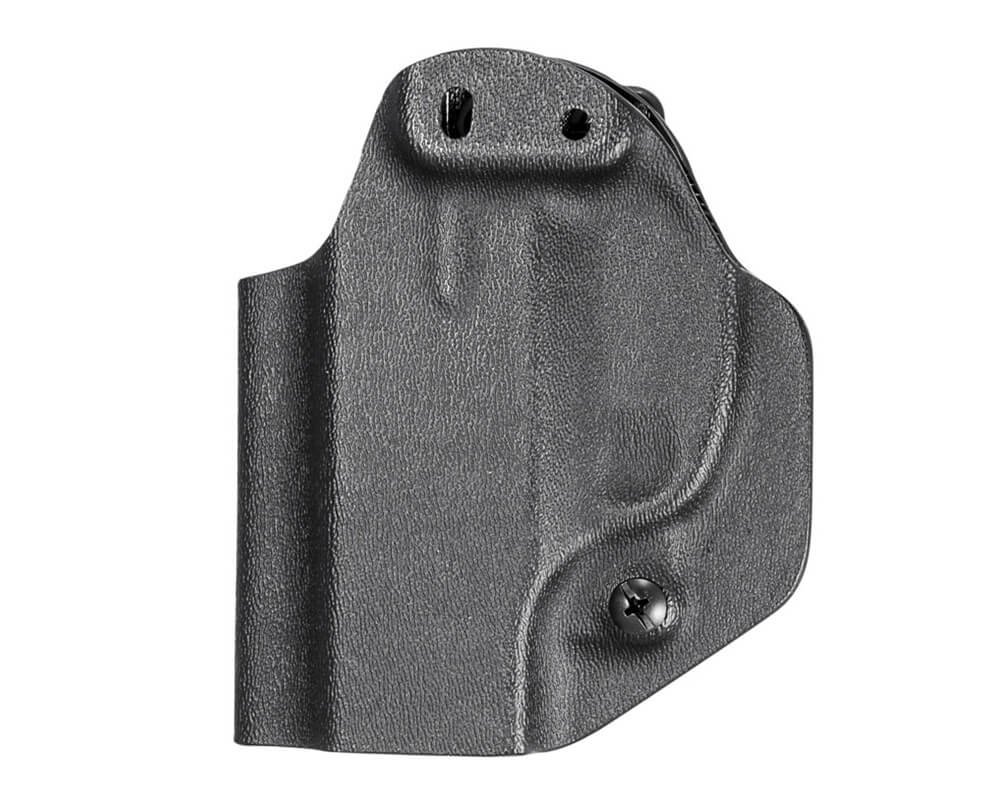
- Raven Vanguard 2 — trigger-guard only, most concealable
- Mission First Tactical Minimalist — appendix-specific, best value
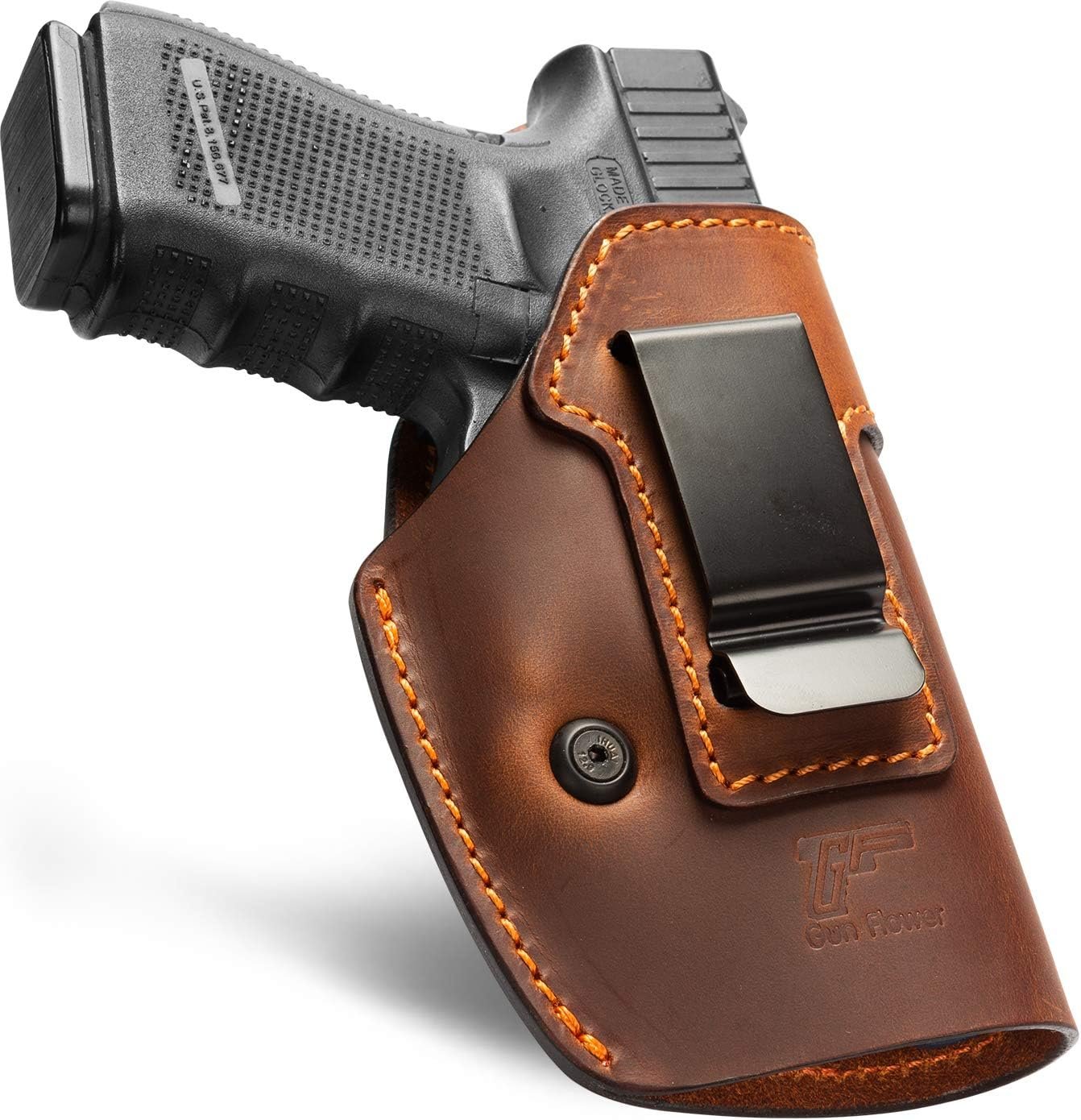
Five AIWB holsters, five different bets



AIWB geometry and biomechanics
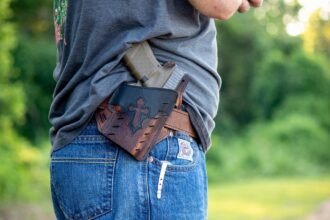
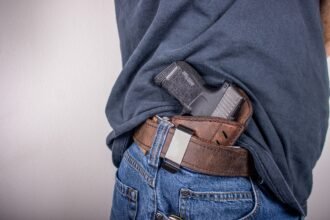
An appendix carry holster sits at the front of the waistband, roughly between the navel and the hip bone. That position shortens the draw. It also hides the grip better than strong-side carry under most shirts. The trade-off arrives the moment you sit down, because the muzzle end presses into the lower abdomen.
Because the muzzle rests forward and slightly upward, the draw arc is steeper and shorter than hip carry. So access genuinely improves. But pressure concentrates in one spot instead of spreading across the hip. Shirt drape changes too, as soon as you bend or reach overhead.
Almost every complaint traces to three settings rather than the brand. Ride height, cant, and how firmly the belt holds it. Get those wrong and an expensive appendix carry holster feels awful. Get them right and a cheap one becomes tolerable. Our concealed carry accessories checklist covers the belt side.
What ride height and cant actually change
- Retention: A steeper draw angle favors holsters with positive retention and consistent mouth rigidity. Molded polymer (rigid) holsters keep the muzzle orientation predictable; softer leathers will deform and alter retention over time.
- Printing: Forward/up muzzle orientation lifts the slide toward the shirtline. Higher ride heights and more forward cant increase visibility; lowering ride height or neutralizing cant reduces printing but can increase pressure when seated.
- Sitting comfort: Point pressure on the waistband and lower abdomen is common. Increased ride height reduces ride-in when standing but may dig while sitting; modest forward cant redistributes bulk away from the beltline.
Small adjustments beat buying again. First drop the ride height a few millimeters. Then back off any extreme cant. Also favor a shell that holds the muzzle steady under load. A stiff belt matters as much as the appendix carry holster itself, because a belt that flexes lets the whole rig rotate.
Quick AIWB Buying Checklist
- Ride height & tuckability
Controls printing and seated comfort; lower rides reduce printing but increase pressure at the appendix, while higher rides ease sitting but can slow re-holstering. Adjustable height or multiple carry positions is ideal for fine-tuning balance.
Look forModerate, adjustable ride that clears the waistband and permits seated comfort.AvoidFixed rides that sit too low or too high without adjustment. - Cant and draw path
Cant determines muzzle angle and the length of the draw stroke; forward cant shortens the draw for AIWB but may complicate re-holstering. The right cant balances a short, direct path with safe, repeatable re-holstering.
Look forA forward cant that lines the muzzle toward the thigh for a direct draw while allowing safe re-holstering.AvoidExcessive cant that directs the muzzle across the torso or prevents consistent re-holstering. - Belt stability and attachment
Stable mounting prevents rotation and keeps ride geometry consistent; a solid backer, wide/tuckable clips, or dual-clip designs make a big difference during movement and sitting.
Look forWide, robust clips or tuckable hardware and a stiff backer or wedge to resist rotation.AvoidSingle thin clips or loose attachment hardware that allow shifting. - Retention, fit and materials
Passive retention, full trigger-guard coverage, adjustable tension, breathable backing and material choice affect safety, sweat management and comfort for all-day carry.
Look forSecure trigger-guard coverage, adjustable retention, and materials that manage sweat (leather/Kydex hybrids or ventilated backers).AvoidExposed trigger, non-adjustable retention, or non-breathable backing that traps moisture.
At‑Home AIWB Try‑On Protocol
-
Dress and baseline walk
Wear the holster with the belt and daily clothing intended for carry. Walk at a normal pace for 10 minutes, noting ride height, pressure points, and any immediate tendency to rotate or print.
-
Dynamic movement cycle
Perform a short routine of bends, overhead reaches, stair climbs, and repeated sit‑to‑stand movements. Watch for shifting, cant change, or belt slippage that alters the muzzle angle.
-
Sitting and seated posture
Sit in both a firm dining chair and a soft couch for several minutes; lean forward and recline. Check for digging into the abdomen, shirt printing, and restricted breathing while seated.
-
Vehicle ingress/egress and seated driving
Simulate getting into and out of a car and sitting in a driver’s position while fastening a seatbelt. Note ride‑up, holster interference with hips, and any need to adjust body position to avoid contact.
-
Dry draw and reholster sequence
Using a training replica or a confirmed‑unloaded firearm, perform multiple slow draws and reholsters from standing and seated positions. Observe for snags, inconsistent retention release, and changes in muzzle alignment.
Pass/fail targets to watch for:
Sitting: No sharp pressure points or acute printing after five minutes. Driving: Holster remains stable entering/exiting a vehicle; belt doesn’t loosen or slide. Draw/reholster: First‑motion draw is smooth; retention releases cleanly and reholstering is consistent. Comfort markers: No persistent numbness, hot spots, or skin abrasions after a short wear period.Tip: small failures often trace to ride height or cant; adjust those before changing holster platforms.
Appendix‑Carry Myth Corrections
It can be more concealable, but concealment depends on body shape, clothing, holster cant and ride height.
Printing often appears when sitting, bending, or driving; real‑world clothing and position tests reveal true concealment.
Many find AIWB comfortable once ride height, cant, and holster profile are tuned to anatomy and activity.
Discomfort usually signals fit issues—small adjustments or softer backings often resolve pressure points.
Safety depends on holster trigger coverage, retention, and practiced technique, not carry position by itself.
A quality holster that fully covers the trigger plus regular draw practice reduces risks regardless of mounting location.
Raven Perun: the shell that holds its shape
01
A rigid shell that holds muzzle angle under load
Injection-molded polymer is the right material for this position, because it keeps the mouth open and the muzzle angle fixed when you sit on it. A shell that deforms changes your draw, and at appendix that matters more than at the hip.
One shell covers the Glock 19, 23 and 32, and it runs ambidextrous out of the box. Raven has been making this pattern long enough that the retention and the reholster feel are known quantities rather than a gamble.
- Rigid shell keeps muzzle angle and mouth shape under load
- Ambidextrous without buying a second holster
- Covers three Glock models from one shell
- Reholstering stays consistent after a full day
- Glock-pattern only
- Costs more than the value picks
- No claw included, so concealment tuning is extra
Buy this one if your pistol is Glock-pattern and you carry every day. The rigid shell is what makes reholstering repeatable, which is the safety-critical half of appendix carry. Budget for a claw and a stiff belt on top of the holster price, because those two accessories move concealment further than trading up to a more expensive shell would.
Vanguard 2: nothing but the trigger guard
The smallest thing that still covers the trigger
This is the minimalist extreme, and it works. There is no body panel at all, just a kydex shell over the trigger guard with a soft loop, so the only bulk at your waistband is the pistol itself.
The trade is that it demands a genuinely stiff belt and a deliberate reholster. Take the gun out of the waistband to reholster, seat it on the shell, then put both back. Done that way it is safe, and it hides better than anything else in this comparison.
- Conceals better than any full-shell holster here
- Almost no added bulk at the waistband
- Kydex shell keeps full trigger coverage
- Very light, and easy to move between belts
- Requires a genuinely stiff belt to stay put
- Reholstering is a two-step process, not one
- Glock 42/43 fit only
- No adjustable retention
The right answer when concealment is the binding constraint. Removing the body panel removes the bulk, and the kydex still covers the trigger completely. It is not a beginner holster, because the reholster is deliberate rather than automatic, and it fails badly on a soft belt. Get the belt right first, then this hides a Glock 43 under a t-shirt.
Mission First Tactical: built for this position
Built for the appendix position, with a claw in the box
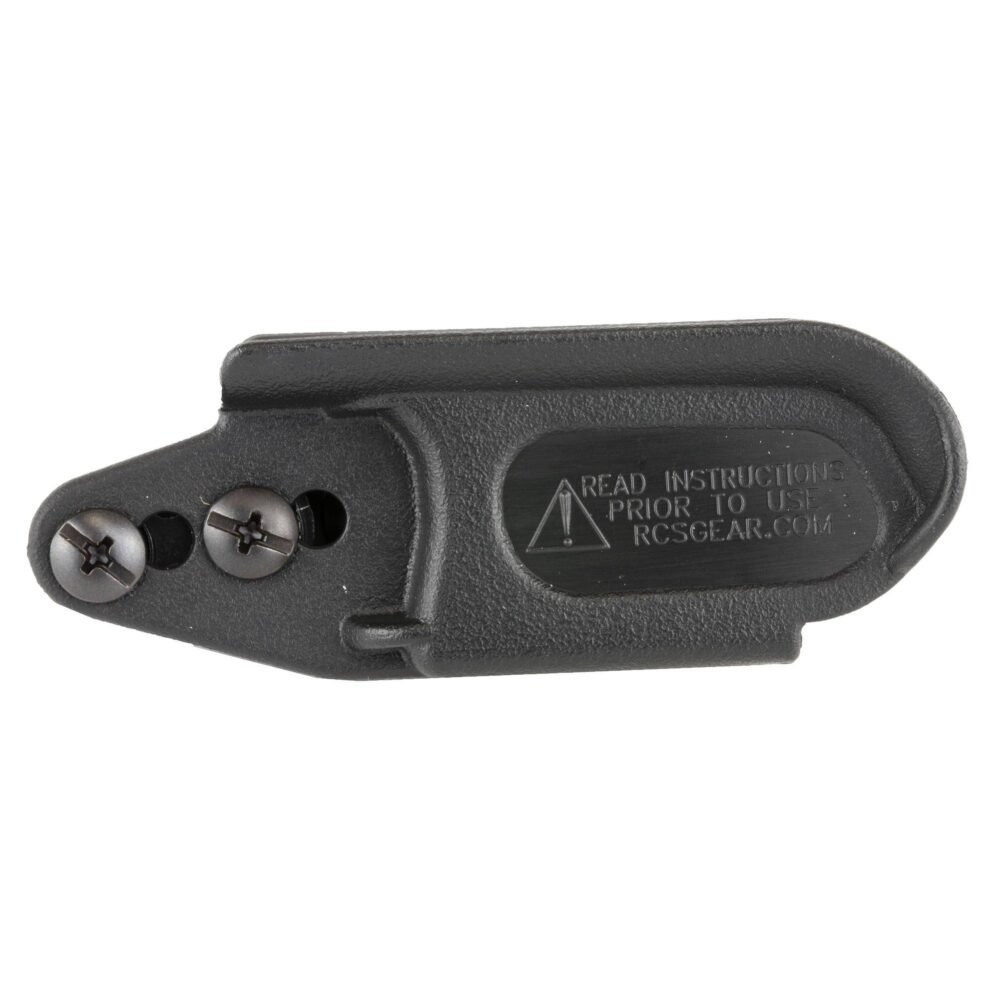
Most holsters are adapted to appendix carry. This one was designed for it, and the claw that pushes the grip into your body ships in the box rather than as a forty-dollar upgrade.
Removing the claw and repositioning it converts the rig for left-hand carry, so one part number covers both. At this price the molding is not as crisp as the Raven shells, but it is rigid, gun-specific and fully covers the trigger, which are the three things that actually matter here.
Matching an appendix carry holster to your build
Body shape decides more here than any spec sheet. A slimmer torso tolerates a lower ride and tighter cant. However, a fuller midsection usually needs the holster higher, plus a looser shirt to avoid printing. Sitting posture matters as well, since a desk job loads the muzzle end far more than a day on your feet.
The cheapest holster here that is still the right kind of holster. Rigid, molded to one gun, trigger fully covered, and it arrives with the claw already in the box. Start here if you are new to appendix carry, spend the difference on a proper belt, and upgrade the shell later if the molding ever bothers you.
Carrying an appendix carry holster on active days
For running, hiking or repeated bending, prioritize a low ride and a wide stabilizing belt. Leather softens with sweat and loses retention over a long day, while a molded synthetic shell keeps its shape. So check the draw again at the end of a hot day, not just at the start. An appendix carry holster that passed at breakfast can feel different by evening.
Practical carry profiles
- Raven Perun (best overall) — Best for daily, all-day Glock carry. The rigid polymer holds its shape through a workday of sitting, so the reholster feels the same at 6pm as it did at 8am. Add a claw separately to tune concealment.
- Raven Vanguard 2 (most concealable) — Suited to slim builds, warm weather and light shirts. With no body panel there is nothing to print except the pistol, but it needs a stiff belt and a deliberate two-step reholster.
- Mission First Tactical Minimalist (best value) — The starting point for a first appendix carry holster. Appendix-specific geometry, claw in the box, and ambidextrous by moving one part.
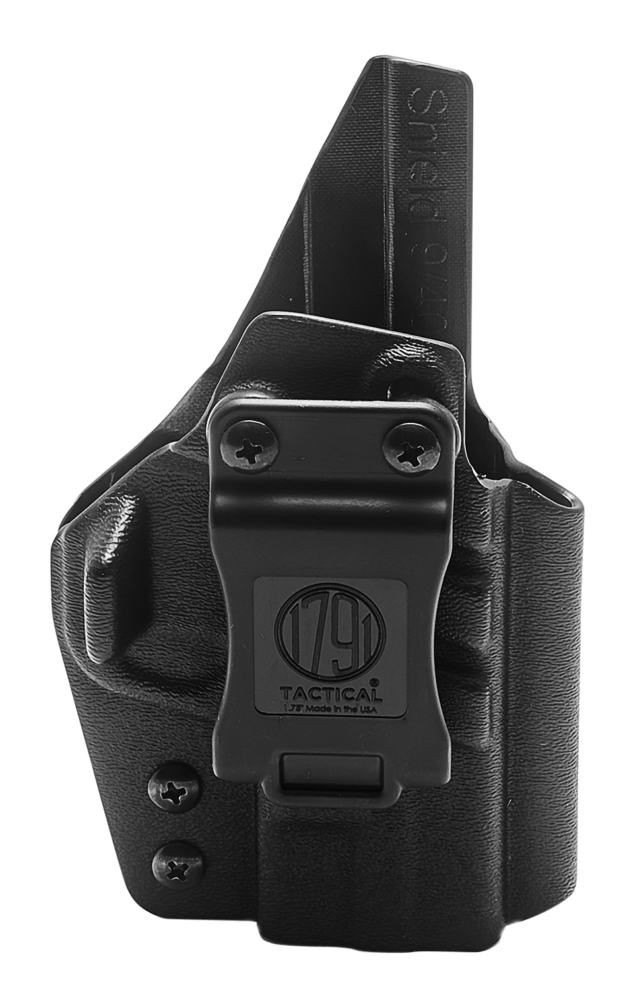
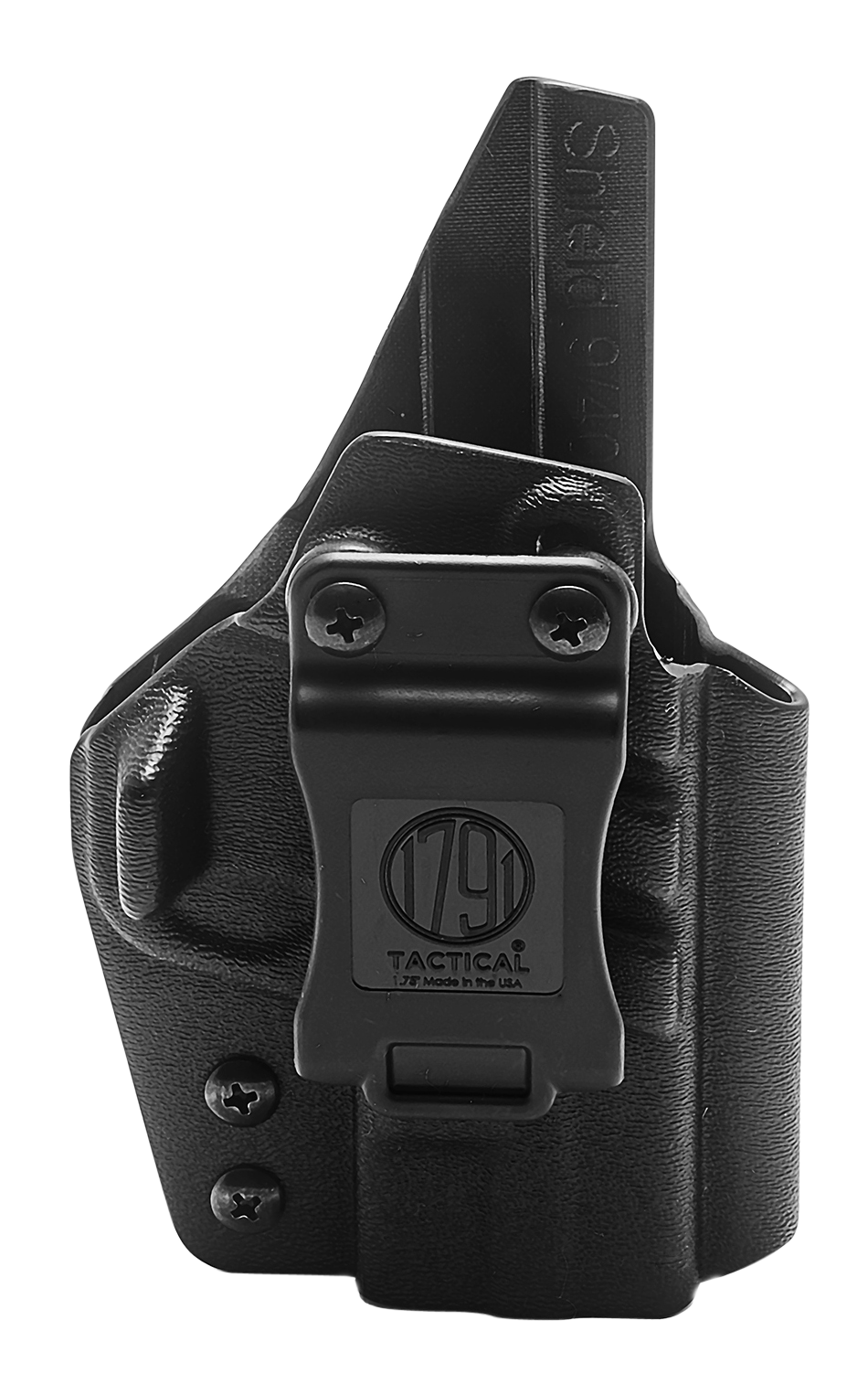
- 1791 Tactical Kydex (best for optics) — Choose this if your pistol wears a red dot or a threaded barrel. Adjustable cant lets you tune the draw angle rather than live with a fixed one.
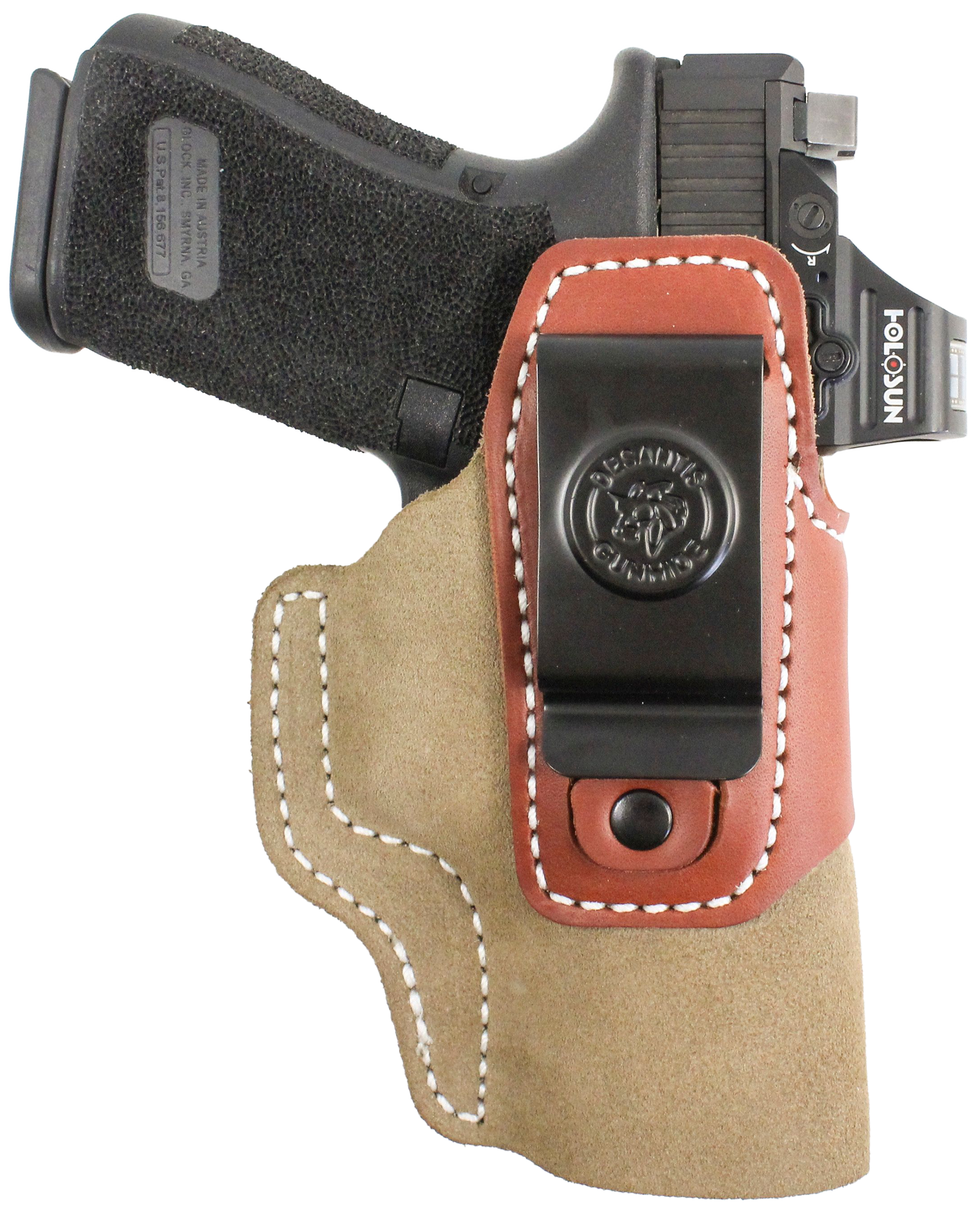
- DeSantis Transit (leather hybrid) — For carriers who want leather against the skin without giving up a reholstering mouth. The kydex reinforcement keeps it open where all-leather holsters collapse.
Practical tips
- For heavy activity (running, hiking), prioritize low ride height and a wide stabilizing belt; leather may loosen with sweat, synthetic shells retain shape better. Consult model-specific holster fit guides and the appendix-carry with a weapon-mounted light guide when evaluating light-bearing configurations.
Two decisions sit alongside the shell itself and matter as much. The belt is covered in the concealed carry accessories checklist, and it moves concealment further than trading up a holster tier does. If you are still choosing the gun rather than the rig, 9mm versus .380 for concealed carry settles the cartridge question first.
How these holsters were evaluated
Assessment blended a concise checklist, a repeatable try‑on protocol and hands‑on performance measurements to reveal real‑world AIWB trade‑offs.
-
Checklist
Confirmed ride height, cant range, belt‑stability, retention adjustability, muzzle coverage and compatibility with common duty belts and weapon lights.
-
Try‑on protocol
Standard sequence: secure holster on a belt, walk and change posture, sit and rise, enter/exit a vehicle mockup, then perform controlled dry draws and reholstering to surface printing and snag issues.
-
Hands‑on criteria
Scored comfort under pressure, concealment while moving, draw smoothness and retention behavior after repeated don/doff and simulated sweat exposure.
Frequently Asked Questions
How is AIWB carry different from strong-side IWB?
Appendix carry positions the muzzle forward and slightly upward at rest, creating a steeper draw angle than strong-side IWB. That geometry speeds access but concentrates pressure against the lower abdomen and changes how clothing drapes.
Can I use a universal-fit holster for appendix carry?
No. A soft pouch that fits a dozen different pistols cannot hold the trigger guard rigidly or keep its mouth open for reholstering, and at this position the muzzle covers your femoral artery. Appendix carry needs a rigid shell molded to your specific gun. This is the one place where the cheap universal option is not a reasonable compromise.
How does ride height affect comfort and printing?
Lower ride heights reduce printing but increase pressure at the appendix when seated, while higher rides ease sitting but can slow re-holstering. An adjustable ride, or a holster with multiple carry positions, lets you fine-tune the balance.
Is appendix carry safe for everyday use?
Safety comes down to the holster and the carrier, not the position itself. A rigid holster with full trigger-guard coverage and consistent retention, combined with regular practiced draws, keeps AIWB carry no less safe than other carry positions.
What does a claw actually do?
A claw is a small wing that presses against the inside of your belt, levering the grip of the pistol in toward your body. It is the single cheapest change that reduces printing, and it usually does more than moving up a holster price tier would.
Why does belt choice matter for appendix carry?
A stiff, stable belt keeps the holster from rotating and holds ride height and cant consistent through the day, which directly affects both comfort and concealment. A minimalist holster like the Vanguard 2 is unusable on a soft belt.
Practical next steps
- Confirm the holster is molded to your exact pistol and covers the trigger guard completely.
- Buy the belt at the same time, because it decides whether any of this works.
- Run the try-on protocol above for several days before committing.
For daily Glock-pattern carry the Raven Perun is the default answer, because a rigid shell keeps the reholster predictable after a full day of sitting. Take the Vanguard 2 if concealment is the binding constraint and your belt is genuinely stiff, or the Mission First Tactical Minimalist if you are starting out and want the claw included. Whichever you choose, ride height, cant and belt stability will decide comfort far more than the badge on the shell.
Whatever you choose, practise the draw and the reholster until both are boring. Full trigger-guard coverage is not optional at this position, because the muzzle points at your own leg. The NSSF rules of safe gun handling are the baseline. Then add repetition until an appendix carry holster draw needs no thought at all.
Raven Concealment Vanguard 2 IWB Holster - Glock 42/43, Kydex, Black
Raven Concealment Systems G19 Perun Holster Black
1791 Gunleather Tactical Kydex Black Kydex Right Hand Belt Clip Pistol Holster TACIWBSHIELDBLKR
Mission First Tactical IWB Appendix Holster, Ambi Fits Glock 19 (Black)

11 Comments
You didn’t mention weapon‑mounted light compatibility in the top ‘Full Grain Leather’ blurb — are leather AIWB options typically incompatible with lighted pistols, or did you leave that out for brevity?
From my experience, most full-grain leather AIWB holsters are not cut to accept lights — you either need a custom cut or go with a nylon/Kydex hybrid. The article’s later ‘match holsters to bodies, clothes and activities’ section touched on this but worth calling out: don’t assume leather = light-friendly.
A little skeptical about recommending a ‘cheap ambidextrous universal 9mm’ for rotation tests. Those things often don’t sit the same as a molded holster, so you might get false positives/negatives on printing and retention.
Would’ve liked a short caveat in the ‘Low-cost experimenter pack’ about how different chassis can affect perceived draw angle.
Question: the Value‑Friendly Universal 9mm is listed as useful for rotation/testing but lacking retention. Has anyone here used it as a temporary trainer while waiting for a custom leather? Seems like a cheap path to figure out printing and carry angles.
Good write-up on biomechanics. Can you expand on how cant interacts with ride-height for taller vs shorter users? I get the basics but want a practical rule of thumb before I buy the Full Grain Leather for my compact Glock.
Short practical rule: shorter users generally benefit from a slightly higher ride and a bit more forward cant to clear the torso when sitting, while taller users can run a lower ride with neutral cant for faster draw and less printing. During the at-home try-on protocol, test both a half-inch higher and lower ride and adjust cant in small steps — the checklist section shows which movements (sit/vehicle) will reveal each fault. If you’re considering the Full Grain Leather, plan for a short break-in period where you might tweak ride-height after a few days.
Thanks for the clear trade-offs chart — leather for comfort, ELVO for budget, nylon hybrid for versatility is exactly the kind of simple mapping I needed.
Quick follow-up: for someone who sits a lot at work, is the leather pick the safest bet, or should I still consider the hybrid because of retention while seated? I wear business casual and don’t want obvious printing.
For heavy sitting, full-grain leather is often the most comfortable and can reduce pressure points, but it requires careful on-belt testing for reholster and sweat-related retention shifts. If you’re concerned about retention while seated (and want a bit more consistent retention without break-in), the nylon hybrid offers better retention and often better compatibility with lights. The ‘match holsters to bodies, clothes and activities’ section maps these scenarios — lean leather for comfort+discreet casual wear, hybrid if you need consistent retention during active/seated days.
Nice roundup. I’m surprised the ELVO made the top 3 for budget — any reason it beats other cheap Kydex clones?
I appreciate the myth corrections section — finally some testable statements rather than ‘AIWB is always uncomfortable.’ Short, clear, and actually useful.
Love the at-home try-on protocol. I did the vehicle maneuvers test and found my elbow kept brushing the muzzle at exit — adjusted cant and that fixed it. The step-by-step made that really easy.