This post contains affiliate links. If you buy through one, we may earn a commission at no extra cost to you. It never changes what we recommend.
A calm first match starts with knowing what belongs in the bag—and what can stay home.
At 7 a.m., when squads are forming and every experienced competitor seems to own a rolling cart, a modest bag can feel conspicuously small. It is not. A first USPSA bag only needs to keep the day’s essentials organized: match-appropriate firearm and holster setup, magazines, ammunition, eye and hearing protection, belt equipment, a magazine loader, water, and the match’s required identification or paperwork.
The useful distinction is between items that prevent delays and items that merely look competitive. A timer, elaborate maintenance kit, spare optics, and piles of tools can wait. Bring a basic multitool or the specific hex key for the mounted gear, plus a small cloth for dust or rain. Keep ammunition separate from loose hardware, and use dedicated pockets so safety gear is found immediately. Range and match procedures always control how equipment is transported, handled, and staged.
- A permanent marker helps label magazines and record equipment notes after a stage.
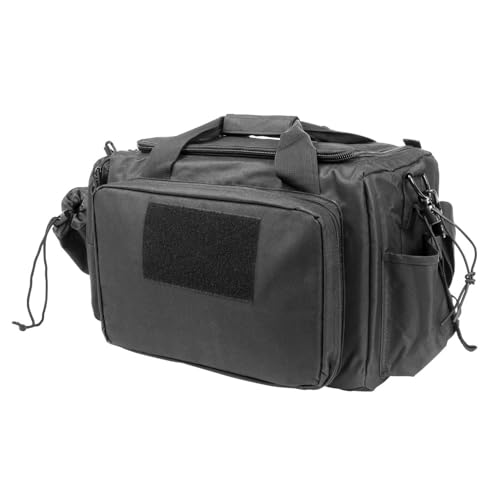
Packing a USPSA range bag for a first match is less about matching an experienced shooter's gear pile and more about keeping the essentials easy to reach. A well-organized bag holds eye and ear protection, a holster and belt setup, magazines, ammunition, and a few basic tools without turning every stage into a search. Newer competitors do better focusing on access zones: an outer pocket for protective gear and paperwork, a protected middle section for magazines and ammunition, and a separate pouch for personal items like keys and identification. A compact, well-organized bag beats an overstuffed cart, and its contents can be refined gradually as match experience grows.

Let the match notice pack the bag
A first-match range bag begins with the PractiScore listing, not a photograph of an experienced competitor’s cart. Read the match description, round count, start time, and address. Then check every club email, social post, and registration update. A small local rule—such as a cold range procedure, designated parking area, or mandatory waiver—can matter more than another accessory.
Confirm the declared division
The selected division determines what equipment is relevant. Production typically requires compliant magazines, a belt setup, holster, and magazine pouches. Carry Optics adds the need to verify the optic and its mounting. PCC introduces its own firearm, magazine, chamber-flag, and transport considerations. When in doubt, the match notice and current USPSA rules remain the authority.
Before leaving, confirm these match-specific details:
- Required round count, then bring a sensible margin for misses, re-shoots, and chronograph.
- Whether the club requires a chamber flag, chamber indicator, or particular transport condition.
- Magazine capacity restrictions, special classifier procedures, or equipment checks.
- Water availability, shade, terrain, weather exposure, and whether a cart is practical.
A veteran’s elaborate setup may reflect years of preference, a different division, or another club’s norms. Confirmed requirements beat copied gear: a compact bag holding the correct equipment is more useful than a full cart built for someone else’s match.
Protect the shooter before chasing speed
Eye protection and hearing protection are non-negotiable range equipment. Clear lenses suit changing light; amber or smoke lenses can improve contrast in the right conditions, but must not make targets, footing, or berms harder to see. Wraparound, impact-rated glasses limit side exposure, while electronic earmuffs preserve range-officer commands and squad communication better than passive muffs alone. Many competitors carry foam plugs as a compact backup or wear them beneath muffs on loud bays.
Clothing should tolerate movement, kneeling, dust, and brass.
Closed-toe shoes with stable traction beat athletic footwear with soft, tall soles.
Clothing and footwear choices matter just as much as bag contents.
This includes footwear and clothing suited to wet grass, uneven gravel, and quick starts.
A brimmed hat reduces glare and helps keep ejected brass away from the face.
Weather layers belong in the bag when conditions call for them.
Sunscreen and rain protection can help, but loose ends must not interfere with drawing or re-holstering.
A holster is safety equipment
A suitable holster fully covers the trigger guard, remains attached to a rigid belt, and holds the handgun securely through running and bending while allowing a deliberate, repeatable draw. Retention does not necessarily mean a locking strap: for most USPSA use, a well-fitted open-top holster with adjustable tension is preferable to an unfamiliar retention release. The holster must also meet the division and local match requirements.
The handgun stays holstered except when a range officer directs otherwise or when it is handled in a designated safe area. No ammunition is handled in a safe area, including loading magazines or manipulating dummy rounds. Loading, unloading, and making ready occur only under range-officer direction.
Safe areas exist for unbagging, holstering, inspection, and dry handling under posted rules. Keep magazines, loose cartridges, and ammunition-loading tasks outside that space; use the designated loading process when called to the line.
Keep the handgun setup boring
A familiar pistol that has run reliably in practice is the strongest first-match choice. Last-minute trigger work, a new optic, altered recoil springs, extended controls, or unfamiliar magazines add variables when attention is already divided between stage plans, commands, and range etiquette. The practical standard is simple: the pistol, magazines, ammunition, and modifications must fit the declared USPSA division and operate dependably as a complete system.
Division rules matter beyond the gun itself. An optic, magazine length, compensator, grip alteration, or holster position can change eligibility; the current USPSA rules and match notice are the useful references when anything is uncertain. A borrowed pistol can work well if it is already familiar and its supporting gear has been checked, including magazine fit and holster retention.
Carry gear that stays put
The holster’s job is secure, repeatable access—not maximum draw speed. It must fully cover the trigger guard, retain the unloaded handgun during normal movement, and hold it in a consistent position without collapsing when empty. A dedicated competition holster is useful only when it complies with the division and safely fits that exact pistol configuration.
A stiff inner/outer belt system keeps the holster and magazine pouches from rotating or sagging. Magazine pouches should retain magazines through walking and bending while still allowing a clean grip; excessive retention is as disruptive as loose gear. Bringing one or two spare magazines beyond the expected stage requirement provides margin for a dropped magazine or an unexpected reload.
Transport without assumptions
A zippered case or range bag protects the unloaded pistol during transport and keeps magazines, tools, and ammunition contained. Chamber flags, empty-chamber indicators, or other storage practices may be requested locally, but club instructions control. At the range, the handgun remains cased or holstered except where the club’s safe-area and range-officer procedures permit otherwise; ammunition handling belongs outside designated safe areas.
Pack capacity, not a magic number
A first-match bag needs enough feed capacity to absorb normal match friction, not an internet-approved magazine count. A long field course, a missed steel target, a magazine dropped in mud, or a stoppage that requires unloading can change the plan quickly. Questions such as how many pistol magazines do I need have no single answer because division, magazine capacity, stage design, and local round count all matter.
For each stage, the practical calculation begins with its published or briefed round count, then adds room for reloads and errors. A shooter using lower-capacity magazines needs more magazines immediately available than one in a high-capacity division, but both benefit from at least one clearly identified spare that is not part of the intended reload sequence. A rare re-shoot directed by match staff is another reason not to arrive with only the theoretical minimum.
Keep magazines usable
Magazine pouches should retain magazines during running, kneeling, and movement while still allowing a consistent draw. Put them on the belt in the same orientation every time, and check screws, retention, and base pads before leaving home. Numbering magazines with paint pen or durable tape makes it easier to identify a recurring problem magazine after a failure.
A compact loader is valuable between stages, particularly with stiff springs or high round counts. It is not a substitute for loading enough magazines before the “make ready” command; the loader belongs in the bag or a designated staging pocket, not loose under other gear.
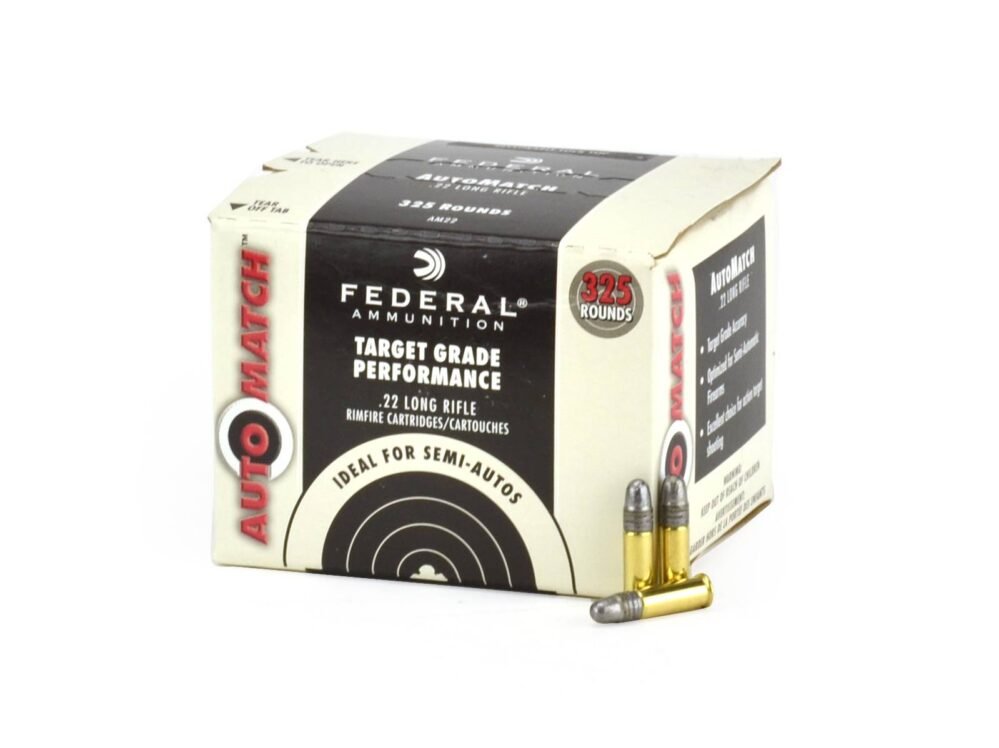
Pack tested ammunition in clearly marked boxes or containers, separated by load type and caliber. Bring a reserve beyond the advertised match round count for make-up shots, chronograph procedures where applicable, and an occasional re-shoot. Match ammunition should be the same dependable load used to confirm zero, function, and power-factor compliance beforehand; a first match is a poor time to introduce unfamiliar reloads or mixed cartridges.
Pack consumables that solve ordinary match-day problems
-
Ammunition support
Bring a small bag or box for loose rounds, a chamber flag if the club expects one, and a simple loading aid only if it is already part of the shooter’s routine. A marker for relabeling magazines or ammunition containers is often more useful than another gadget.
-
Magazine and optic spares
A spare magazine spring or base pad is reasonable for a known weak point, not a reason to rebuild magazines at the range. For an optic-equipped pistol, pack the correct battery, the proper driver or wrench, and the mounting screws only if their fitment is understood.
-
Minimal cleaning supplies
A rag, nylon brush, and a small amount of the lubricant already used on the pistol can address dirt, rain, or a visibly dry contact surface. Keep liquids sealed; a leaking bottle can contaminate ammunition, eyewear, and the range bag.
-
Tools with a proven purpose
Include the exact hex keys, Torx driver, or screwdriver needed for the belt, holster, optic, and grip screws. A compact multi-tool helps only when its drivers actually fit; damaged fasteners are a poor first-match lesson.
-
Repair only what has been rehearsed
Between stages, familiar tasks include replacing an optic battery, retightening a known screw, clearing debris, or swapping a proven magazine. Persistent malfunctions, shifted sights, broken parts, or changes to trigger and safety components belong on the home bench, followed by function checks.
Keep tools and spare parts in a separate pouch so a quick repair does not turn the bag into a search project.
A new part can create a new variable: altered zero, loose thread locker, incompatible screw length, or an untested magazine issue. If a fix cannot be completed confidently and checked safely with familiar procedures, sitting out a stage or finishing with backup gear is usually less disruptive than improvising.
Pack for recovery, not experimentation.
Stay comfortable, checked in, and focused
A long outdoor match taxes attention as much as equipment. Pack water in a quantity suited to the forecast and event length, plus simple food that can be eaten between stages without sticky hands or elaborate preparation. Familiar snacks with a mix of carbohydrate, protein, and salt can be more useful than a single large meal that sits untouched until the final squad.
Weather protection belongs within an outdoor range-day packing plan, not as an afterthought. A brimmed cap, sunscreen, insect repellent, light rain shell, and an insulating layer can keep heat, glare, wind, or rain from becoming the day’s main problem. A small towel, spare socks, and a folding chair or ground pad add disproportionate comfort during long waits; none are glamorous, but fatigue makes rule reading, loading, and stage briefing easier to mishandle.
Keep check-in frictionless
Place the match confirmation, government-issued identification if the club requires it, membership credentials if applicable, and payment method in one easy-to-reach pouch. Review the match notice before leaving for waiver instructions, gate codes, check-in time, and any required classification or division details. Bringing a pen is still worthwhile where paper score sheets, waiver forms, or equipment notes appear.
Keep the phone available for schedule changes and squad communication, but silence nonessential alerts once the match begins. At the range, phone handling must never compete with safety commands, briefing instructions, or gun handling. Checking messages only while gear is secured and the squad is not actively running helps preserve attention and avoids an awkward missed turn in the shooting order.
Pack by access, not by compartment count
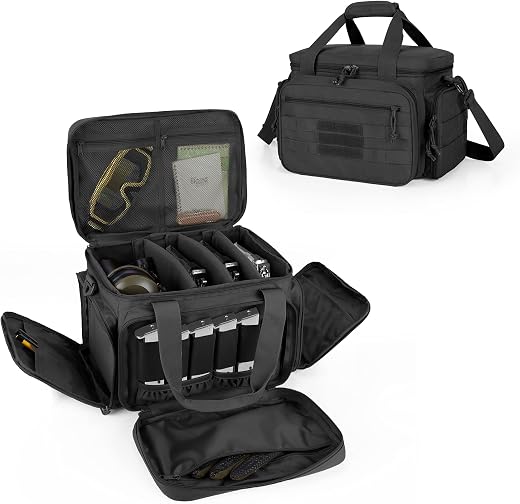
A first-match bag is easier to run when it is organized in access zones, not merely filled with pockets. The first zone is the outer pocket or top compartment: eye and ear protection, water, a hat, and the match paperwork or phone. These are the items needed before the first stage, often while standing in a parking area or at registration.
Keep magazines and ammunition in the protected middle of the bag. A rigid magazine carrier, zip pouch, or divided inner compartment prevents cartridges and loose gear from colliding. Loaded magazines remain reachable without requiring the bag to be unpacked; ammunition stays closed, dry, and separate from the safe-area workflow.
Give small parts a permanent home
Tools, spare batteries, lubricant, tape, and marker pens tend to disappear into a main compartment. A dedicated zip pouch turns this collection into one grab-and-return unit. Personal items—keys, wallet, medication, and identification—belong in a separate closed pocket, away from ammunition, oily tools, and the repeated opening of match gear.
Bag size follows the real carry load. A compact bag suits one pistol, a modest ammunition supply, compact hearing protection, water, and a small tool pouch when parking is close and conditions are mild. A larger, structured bag earns its bulk for multiple divisions, extra magazines, rain layers, larger water capacity, or a long walk from vehicle to bays. Empty volume is not an advantage if it encourages loose gear; nor is a small bag efficient when it forces safety gear or water to be buried.
- Immediate-use zone
The first-open compartment holds protection, hydration, and check-in essentials without digging through ammunition or tools.
Look forA top or exterior pocket with quick, obvious access.AvoidSafety gear buried beneath the day’s equipment. - Protected ammunition access
Magazines and ammunition need orderly containment that remains practical between stages.
Look forDividers or pouches that prevent loose rounds and impacts.AvoidA single loose cavity shared with tools and personal items. - Carry capacity
Distance from parking, weather, and the intended number of guns determine useful volume more reliably than a bag’s appearance.
Look forEnough structure for the actual match-day load.AvoidOversized empty space or an overstuffed compact bag. - Separate personal pocket
A closed location for valuables keeps routine items clean and easy to find.
Look forA distinct zippered pocket for personal essentials.AvoidKeys and wallet mixed into maintenance gear.
For a larger, compartment-led loadout
At 13 × 20 × 10 inches, this PVC competition bag offers substantially more room than a basic one-pistol bag. Its high-density foam interior padding, double zippers, adjustable strap, and mesh bottom netting support a structured approach: protective gear up top, ammunition and magazines inside, and loose support items contained in pouches. It makes most sense when weather layers, extra water, or a longer walk add bulk.
Make packing a short, repeatable inspection
-
Read the latest match notice
Confirm start time, division, round count, weather, payment or waiver requirements, and any club-specific safety procedures.
-
Lay out gear by function
Group safety equipment, pistol-and-belt setup, magazines and ammunition, hydration, documents, and repair items before anything enters the bag.
-
Function-check the essentials
Verify magazine retention, holster security, batteries, eyewear, hearing protection, and the labeled ammunition intended for the match.
-
Load by access order
Keep protection, water, and check-in items immediately reachable; heavier ammunition rides low and close to the back.
-
Use the post-match notes
A brief note on what was used, borrowed, or never touched turns the first match into evidence rather than guesswork.
For a broader baseline, compare the list with first-trip range bag essentials.
First USPSA Match Range Bag: Common Questions
How many magazines should I bring to my first match?
There’s no single number — it depends on division, magazine capacity, stage design, and local round count. Start with the stage’s published or briefed round count, add room for reloads and errors, and make sure you have at least one clearly identified spare that isn’t part of your intended reload sequence.
Can I handle ammunition in the safe area?
No. No ammunition is handled in a safe area, including loading magazines or manipulating dummy rounds. Loading, unloading, and making ready happen only under range-officer direction, outside the designated safe area.
Should I bring a new pistol or optic to my first match?
No. A familiar pistol that has already run reliably in practice is the strongest first-match choice. Last-minute trigger work, a new optic, altered recoil springs, or unfamiliar magazines add variables when your attention is already divided between stage plans and range etiquette.
What repairs are reasonable to do at the range?
Only familiar, low-risk fixes belong in the field kit — things like replacing an optic battery, retightening a known screw, clearing debris, or swapping a proven magazine. Persistent malfunctions, shifted sights, broken parts, or changes to trigger and safety components belong on the home bench, followed by function checks.
How should I organize the bag itself?
Pack by access zones rather than just filling pockets: an outer or top compartment for eye and ear protection, water, a hat, and paperwork; a protected middle section for magazines and ammunition; and a separate closed pocket for personal items like keys, wallet, and identification.
Let the bag evolve slowly
- Every item must support safety, reliability, administration, or comfort.
- Add or remove one variable at a time, based on match notes.
A first USPSA match is a field test, not a verdict on equipment. Pack consistently, note the gaps and the dead weight afterward, then refine the bag gradually with evidence rather than anxiety.
NcSTAR CVCRB2950B 競技用レンジバッグ ブラック
Features
| サイズ | 13"W x 20"L x 10"H |
- 丈夫のPVC素材
- 高密度フォームインナーパディングの優れた保護
- 耐久性の高いダブルジッパー
- 全範囲のサイズで、ほぼ任意のライフルやショットガン
- Vism競合」の範囲の調整可能な真鍮バッグとNcStarトップ描画文字列
- メタルクラスプフック
- メッシュ下部ネッティング
- NCStar Vism保証
- 完全に調整可能なストラップ、完璧にフィット