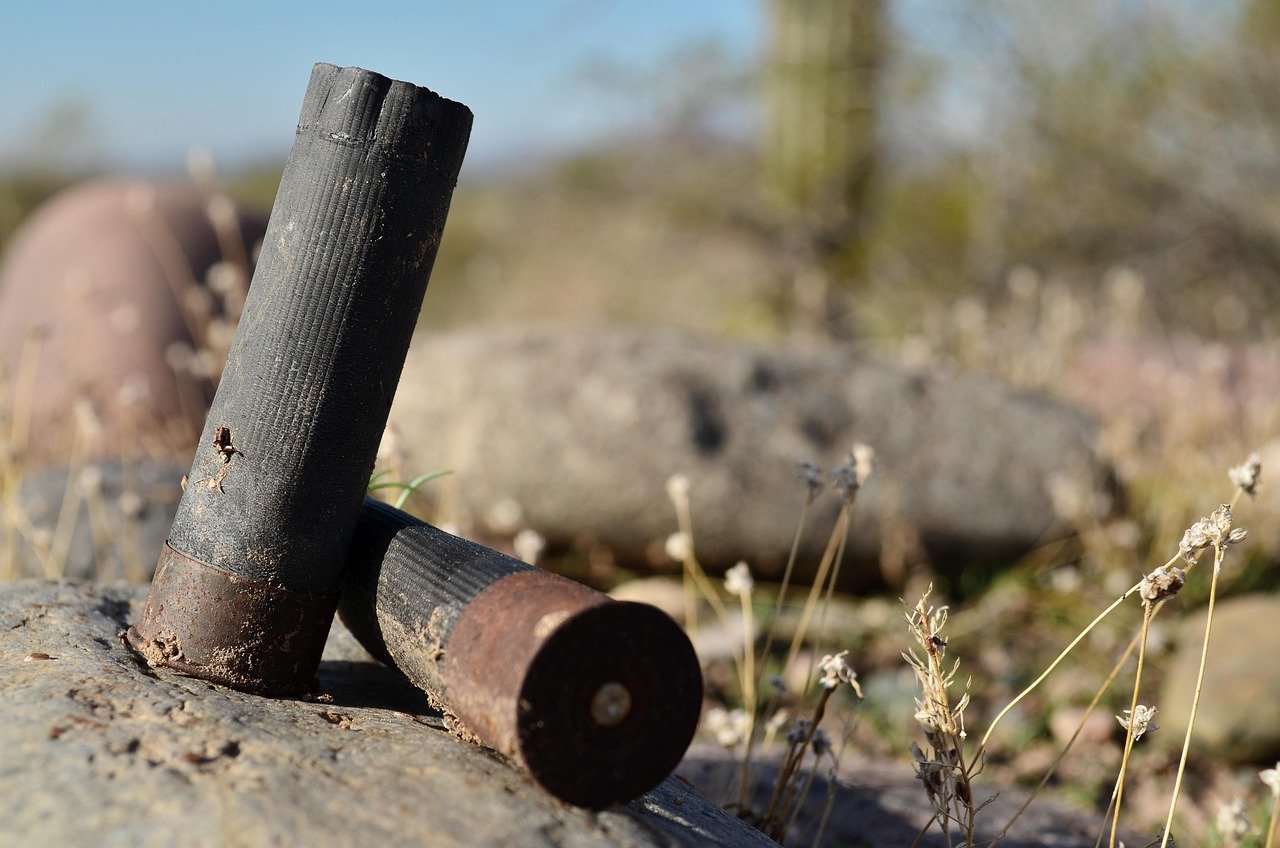
On a shotshell label, “00” answers only one question: the size of the buckshot pellets.
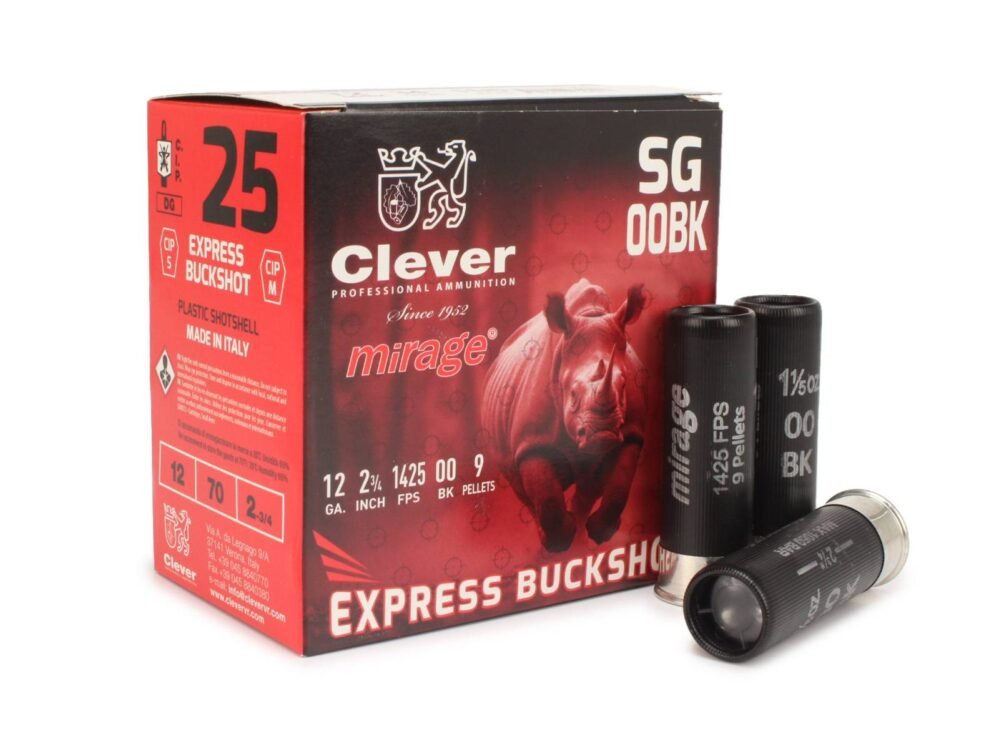
A box might display 12 GA, 2¾ IN, 00 BUCK, a pellet count, and a velocity—all in nearly identical type. Those markings are not interchangeable. Gauge identifies the shotgun’s bore standard, shell length determines chamber compatibility, and “00” (pronounced double-aught) designates the buckshot size.
Mistaking 00 for a gauge or shell length can result in buying unsuitable ammunition. More seriously, loading the wrong gauge or an incompatible shell length can damage the firearm and cause injury. Before purchase or use, the gauge and chamber length printed on the ammunition should be checked against the exact barrel markings and the firearm manufacturer’s instructions. Pellet size and count can then be selected for the intended purpose; they do not establish whether the shell safely fits the shotgun.
- A higher pellet count describes how many projectiles are loaded, not a larger gauge or longer shell.
- Shell length on the box is generally the fired length, so an unfired shell may measure shorter.
What “00” Actually Identifies
- Pellet size “00” is pronounced “double-aught” and names the nominal size category of every buckshot pellet in that load. It does not state how many pellets the shell contains.
- Nominal diameter The ANSI/SAAMI Z299.2 shotshell standard lists 00 buckshot at a nominal 0.330-inch diameter. “Nominal” denotes the standardized size designation, not a promise that every pellet will measure exactly that diameter.
- Traditional sequence The traditional series progresses from No. 1 buck at 0.300 inch to 0 buck at 0.320 inch, 00 at 0.330 inch, and 000 at 0.360 inch, according to SAAMI’s shot-size table. The names form an inherited sequence; the zeros are not a decimal-caliber formula. A closer comparison of No. 1 and 00 buckshot specifications shows why similar-looking labels should not be treated as interchangeable.
- Separate markings On a typical box, gauge, shell length, pellet count, shot size, and advertised velocity appear as separate specifications. In a label such as “9 pellet 00 buck,” only “00” identifies pellet size; “9 pellet” supplies the count.
Dimensions cited from the Sporting Arms and Ammunition Manufacturers’ Institute (SAAMI) shot-size table in ANSI/SAAMI Z299.2.
Reading a 00 buckshot box from left to right
-
12 GA: identify the gauge
On Federal Premium’s Power-Shok Buckshot F127 00 listing, “12 Gauge” identifies the firearm bore category. It does not describe pellet diameter or pellet count.
-
2 3/4 IN: check shell length
This is the shell-length designation, not the length of the loaded round as measured with a ruler. The ammunition must not exceed the firearm’s marked chamber length; the firearm manual controls if markings are unclear.
-
9 pellets: find the projectile count
This load contains nine individual pellets. Pellet count can vary among loads carrying the same 00 designation, so “00” should never be read as a quantity.
-
00 buck: identify pellet size
Each pellet belongs to the SAAMI 00 buck size category, with a nominal diameter of 0.330 inch. “00” is a traditional size name—not a gauge, shell length, or velocity figure.
-
1,325 FPS: read the listed velocity
Federal lists a muzzle velocity of 1,325 feet per second for F127 00. This is the manufacturer’s published load specification; actual firearm results can vary with barrel and test conditions.
Example specifications are from Federal Premium’s current Power-Shok Buckshot F127 00 product listing; dimensional terminology follows SAAMI standards.
Do not skim past the units:
GA means gauge, not grams. IN refers to the shell-length designation, not pellet diameter. 00 is commonly spoken as “double-aught” and names a buckshot size. FPS means feet per second, not foot-pounds of energy.Box layouts vary by manufacturer, so the unit beside each number matters more than its position.
Why 00 does not tell the pellet count
The 00 designation identifies pellet size, not payload quantity. Federal Premium’s published law-enforcement data, for example, lists the 2¾-inch LE133 00 with eight pellets and the 2¾-inch LE132 00 with nine pellets. Both use the company’s FLITECONTROL wad, demonstrating that even matching gauge, length, pellet size, and wad family do not guarantee the same count.
A longer shell can provide more internal capacity, but length still does not encode pellet count. Winchester’s Super-X product data includes a 3-inch 12-gauge 00 load containing 15 pellets, while manufacturers also offer lower-count 00 loads designed around different performance goals.
Several engineering choices explain why pellet counts differ between loads:
- Payload design: Pellet count and total shot weight are selected together.
- Buffering: Granular material between pellets occupies space and may help limit pellet deformation.
- Wad construction: Shot cups and specialized wads use hull volume while supporting a particular patterning design.
- Powder, pressure, and crimp: These constrain how the remaining internal space can be used.
Because manufacturers balance these elements differently, neither “00” nor shell length should be used to infer count. The reliable figure is the pellet count printed on the specific box or listed in current manufacturer data for that exact product code.
What velocity and specialty wording actually mean
Advertised velocity
The feet-per-second figure describes nominal speed under the maker’s stated test conditions—not pellet diameter. Results can vary with barrel length, temperature, and ammunition lot.
Low recoil
This usually identifies a load engineered for less recoil than another product, but no universal threshold applies. Payload, velocity, firearm weight, and action all affect felt recoil.
Magnum
On shotshell packaging, “magnum” generally signals a heavier or higher-performance load within that product line. It does not identify pellet size or guarantee better patterns.
Buffered or plated shot
Buffer material and pellet plating are intended to limit deformation. Either may support more consistent patterns, but results remain firearm- and choke-dependent.
Specialty wad
Branded wad systems manage how the shot leaves the barrel. Their names describe a design approach, not guaranteed performance in every shotgun.
A faster load may produce more recoil, while a higher pellet count can change pattern density, payload weight, and cycling behavior. Neither number alone makes a load preferable.
Check gauge and chamber compatibility first, then pattern the exact shell through the intended shotgun and choke at realistic distances. Compare pellet distribution and point of impact rather than relying only on box claims.
What 00 changes in practice
A 00 load balances pellet mass against pellet count. Larger pellets generally mean fewer projectiles than a comparable payload of smaller buckshot, but the number printed on the box remains decisive. More pellets may produce a denser pattern; they can also increase payload weight, depending on the load.
Recoil cannot be inferred from “00” alone. Payload weight, listed velocity, firearm weight, action type, and stock fit all affect perceived recoil. Reduced-recoil ammunition may be easier to control, but reliability and point of impact should be verified in the specific shotgun.
Pattern size is equally load-specific. Wad design, barrel, choke, pellet construction, and distance all influence how 00 buckshot spreads. Rules such as “one inch per yard” are not dependable substitutes for firing the chosen shell through the actual firearm.
A useful pattern check records:
- firearm, barrel, and choke;
- exact ammunition name and lot;
- measured target distance;
- pellet hits inside a defined aiming area.
Penetration also deserves attention. FBI-style testing uses calibrated 10% ordnance gelatin under controlled conditions; informal water jugs, wet paper, or uncalibrated gelatin are not directly equivalent. Published results should be trusted only when the test medium, barriers, distance, and load are identified.
Buckshot does not become a single projectile after leaving the muzzle. A pellet outside the intended target can still cause serious injury or damage, making confirmed patterns and a safe backstop essential.
Run a compatibility check
-
Match the gauge exactly
The shell’s gauge must match the firearm’s marked gauge. Similar appearance or the ability to enter a chamber does not establish compatibility.
-
Read the chamber marking
Check the barrel or receiver for both gauge and chamber length, then confirm the combination in the firearm manual. Do not use a shell longer than the marked chamber, and follow any model-specific restrictions.
-
Interpret shell length correctly
Shotshell length generally refers to the nominal length of the opened, fired hull. A crimped, unfired shell is shorter, so measuring the loaded shell is not a substitute for reading its designation.
-
Identify the complete load
Confirm gauge, shell length, pellet size, pellet count, listed velocity, and any reduced-recoil or specialty wording. “00 buck” identifies pellet size—not the rest of the load.
-
Evaluate the intended use
For 12-gauge buckshot selection for home defense, consider firearm function, controllability, patterning, likely distances, and penetration concerns. Manufacturer guidance and reputable pattern or terminal testing provide more context than pellet size alone.
Keep the original box or record its full product code; loose shells can be difficult to identify reliably.
Do not chamber or fire ammunition when the gauge, chamber length, or load identity is uncertain. If firearm markings are missing, damaged, or inconsistent with the manual, contact the manufacturer or a qualified gunsmith before use.
00 buckshot is not universally appropriate for every firearm, shooter, building, or defensive plan.
- 1. Check the gauge
Match it to the firearm’s gauge marking and manual.
- 2. Check shell length
Confirm the marked shell length is permitted for the chamber.
- 3. Find the shot size
“00” identifies only the nominal pellet-size designation.
- 4. Find the pellet count
Look for a separate quantity; never infer it from “00.”
- 5. Read velocity and load features
Note the stated velocity, recoil wording, plating, buffering, and wad design.
Read every box in the same order: gauge, shell length, shot size, pellet count, then velocity and load features. If any marking is unclear or missing, check the firearm manual and the manufacturer’s current specifications before selecting the ammunition.

Sellier & Bellot 12 Gauge 2.75 00 Buckshot (Box)
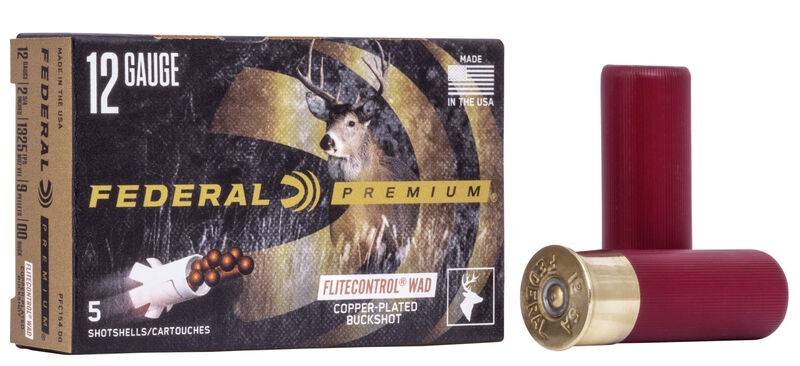
Federal Premium 12 Gauge 2.75 FLITECONTROL 9 Pellet 00 Buckshot (Box)