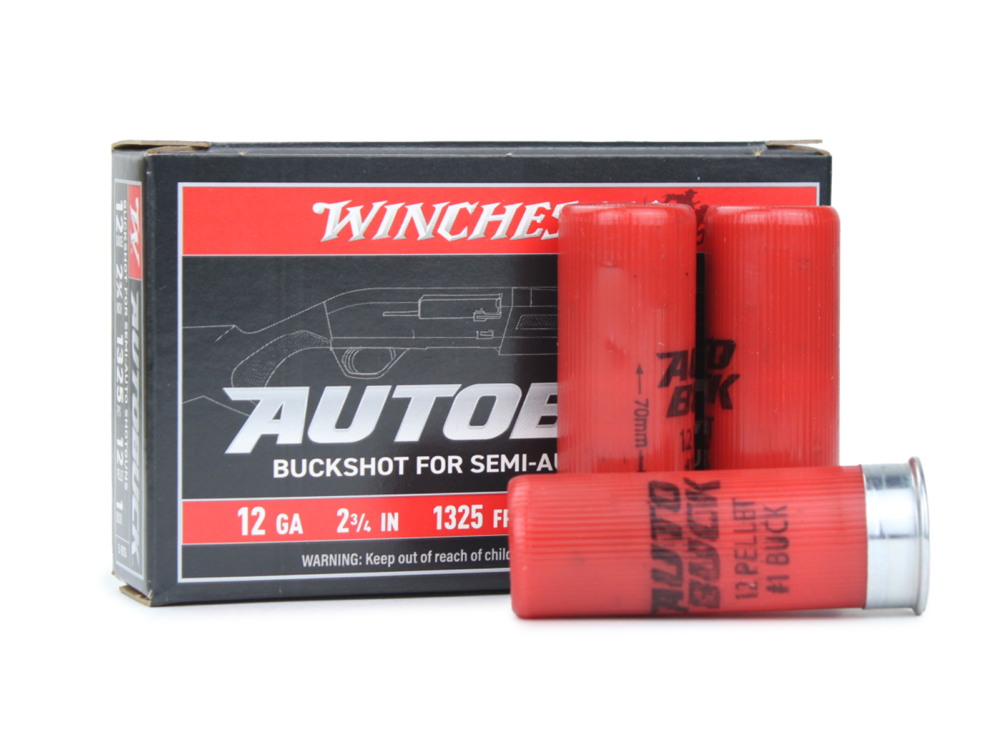
Two 12-gauge buckshot loads can share a shelf and deliver substantially different results.
A hunter comparing No. 4 and 00 buckshot may assume the higher-looking designation means larger pellets. It does not: 00 uses larger pellets than No. 4, while No. 4 loads generally fit more pellets into a shell. Even within one designation, shell length, pellet count, wad design and advertised velocity can vary by manufacturer, affecting recoil and patterning.
Before comparing Sellier & Bellot or Federal loads, three filters come first. Confirm that buckshot is legal for the intended game and location. Match the gauge and shell length to the shotgun’s chamber markings and manual, including any choke restrictions. Finally, use a backstop capable of containing every pellet; buckshot spreads, and patterning results can differ by gun and distance. If any one of those conditions is uncertain, the load is not ready for use.
Loads worth comparing
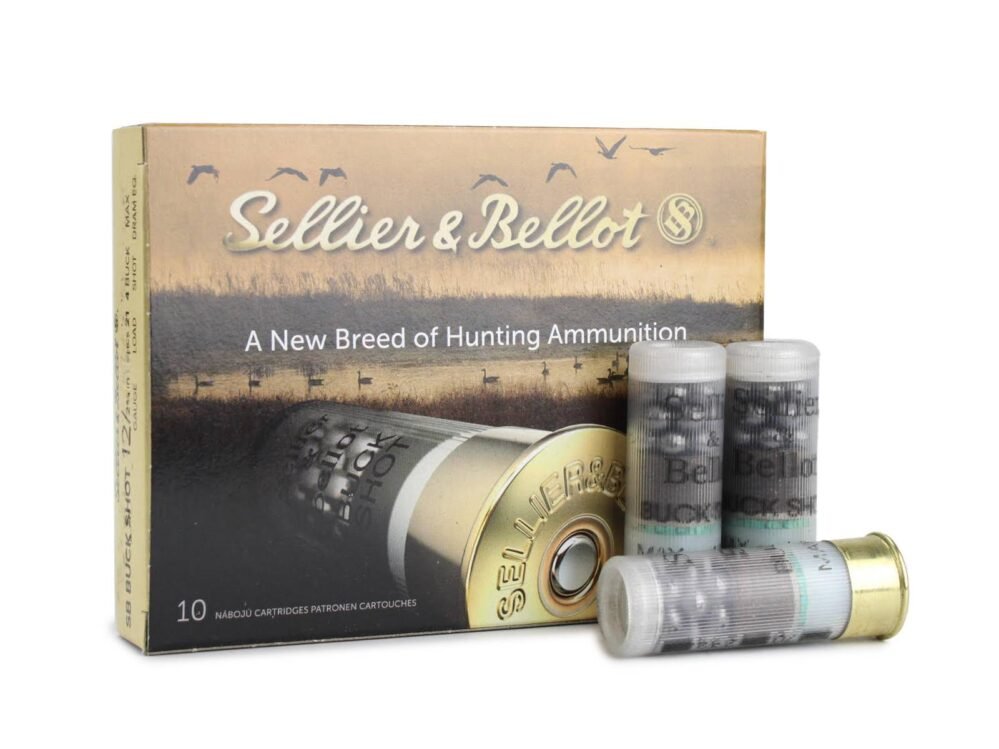
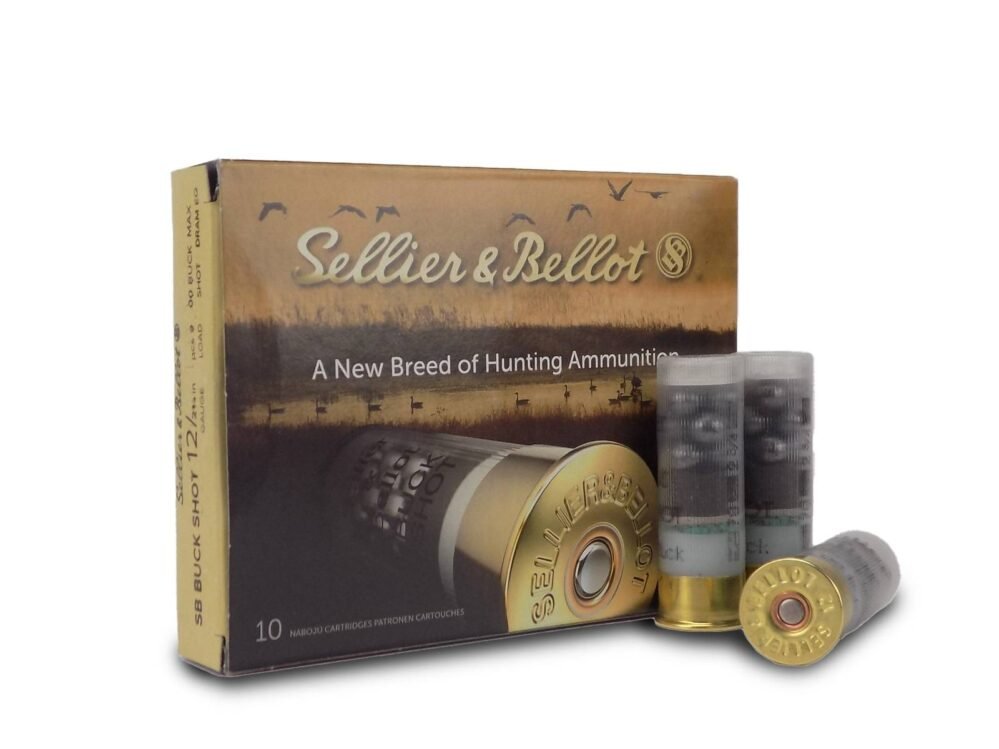
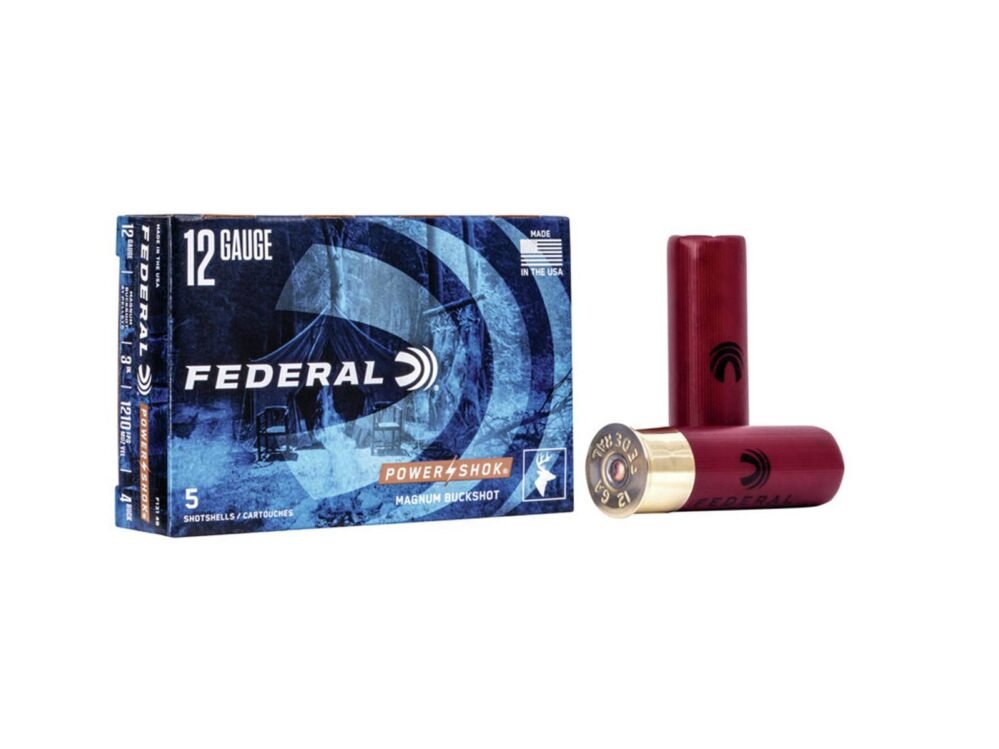
Confirm the manufacturer’s current shell length, payload and compatibility data. Then pattern each candidate through the intended shotgun and choke at realistic distances, recording total pellet strikes and any unexplained flyers. A load that patterns well in one barrel may perform differently in another.
What changes inside the shell
SAAMI’s shot-size table lists #4 buck at a nominal 0.24 inch and 00 buck at 0.33 inch. No. 4 birdshot is different: its nominal diameter is only 0.13 inch. Similar names do not make them interchangeable.
With comparable pellet material, 00’s larger diameter means greater mass and typically more retained energy per pellet. #4 buck fits more pellets into the shell, producing more potential impact points and often a denser pattern. However, total payload depends on the complete loading—not the pellet designation alone.
Manufacturer listings illustrate that distinction. Sellier & Bellot specifies 21 pellets for its 2¾-inch #4 buckshot load and nine pellets for its 2¾-inch 00 load. Federal lists 41 #4 buck pellets in its 3-inch Power-Shok Magnum load. Those counts should not be transferred to other shell lengths or product lines.
A dense pattern is useful only when it stays within the intended target area. Shotgun, barrel, choke, wad, distance and lot variation can all change distribution. Pattern paper remains more informative than a size label.
Compare evidence under matched conditions rather than treating one test as universal.
-
Verify the load
Record manufacturer-listed shell length, pellet count, payload weight and muzzle velocity; similar packaging may conceal different recipes.
-
Match the test conditions
Compare the same distance, barrel length and choke. For retained energy, use measured downrange velocity from a named test source—not muzzle velocity alone.
-
Pattern the actual combination
Use a safe backstop and multiple targets at relevant distances. Judge pellet distribution and consistency, not merely the smallest single pattern.
Manufacturer specifications describe the cartridge; they do not guarantee identical results in every shotgun.
A #4 hunting load for pattern-conscious buyers
Top choice for affordable hunting-focused #4 buckshot
Ammunition Depot lists this Sellier & Bellot load as a 12-gauge, 2.75-inch shell carrying 1-1/8 ounces of #4 buckshot. It may suit lawful hunting applications where more pellet strikes are preferred over the larger individual pellets of 00 buckshot.
Suitability depends on local game laws, realistic shooting distance and results from the buyer’s own shotgun. Confirm the chamber marking and firearm manual, then pattern the load through the choke intended for the hunt.
| Manufacturer | Sellier & Bellot |
| Gauge | 12 gauge |
| Shell length | 2.75 inches |
| Shot size | 4 buckshot |
| Payload | 1-1/8 ounces |
| Listed use | Hunting |
- 4 buckshot offers greater pellet-density potential than 00
- Standard 2.75-inch shell length
- Clearly specified 1-1/8-ounce payload
- No pattern result applies across every shotgun and choke
- Legality varies by location and game species
- Published evidence provided here does not specify velocity or pellet count
Sellier & Bellot 00 for larger-pellet priorities
Reliable option for self-defense or hunting use
This Sellier & Bellot 12-gauge, 2.75-inch load suits buyers comparing 00 buckshot for hunting or defensive use. Its larger individual pellets distinguish it from #4 buckshot, though 00 loads typically carry fewer pellets.
Ammunition Depot lists a muzzle velocity of 1,214 fps. Chamber compatibility should be confirmed from the shotgun’s markings and manual, while suitability requires pattern testing in the specific firearm at realistic distances.
| Brand | Sellier & Bellot |
| Gauge | 12 gauge |
| Shell length | 2.75 inches |
| Shot size | 00 buckshot |
| Listed velocity | 1,214 fps |
| Marketed uses | Defense, hunting |
- Larger individual pellets than #4 buckshot
- Standard 2.75-inch shell length
- Listed for both hunting and defensive consideration
- 00 loads typically carry fewer pellets than #4
- Exact pellet count is not provided
- No named exact-load pattern, penetration or recoil testing
Federal Power-Shok Magnum #4 prioritizes pattern construction
Premium pattern-focused load with buffered pellets
This 12-gauge, 3-inch #4 buckshot load is positioned for buyers who value pattern-focused construction. The Ammunition Depot listing identifies Federal’s Triple Plus wad and a granulated plastic buffer, intended to improve shot alignment and help pellets retain their shape.
Here, “Magnum” is supported by the 3-inch shell length, not by disclosed velocity or payload data. Those missing figures prevent a reliable claim that it carries more shot or produces a specific recoil increase. Patterning in the intended shotgun remains essential.
- Buffered pellets may resist deformation and support denser-pattern potential
- Triple Plus wad is designed to improve shot alignment
- Smaller #4 pellets can place more projectiles in a pattern than comparable 00 loads
- No cited velocity or payload weight for direct recoil comparison
- A 3-inch shell may produce more recoil and slower follow-up shots than lighter loads
- Pattern performance remains shotgun- and distance-dependent
- Requires a 12-gauge chamber marked for at least 3-inch shells
Bottom line A credible pattern-oriented option when buffered #4 buckshot is the priority. Chamber markings must be checked, and its follow-up-shot tradeoff should be assessed through controlled practice.
| Hunting-oriented option Sellier & Bellot Hunting 12-Gauge #4 Buckshot | VS | Broader-use option Sellier & Bellot 12-Gauge 00 Buckshot |
|---|---|---|
More, smaller pellets | Pellet priority |
Fewer, larger pellets |
12 ga, 2.75-inch | Shell specification |
12 ga, 2.75-inch |
1-1/8 oz payload | Merchant-listed data |
1,214 fps |
No test supplied | Pattern evidence |
No test supplied |
Velocity and count | Key evidence gaps |
Count and pattern |
| Check price | Check price |
Start with the intended lawful purpose and applicable local rules. Use only the gauge and shell length marked on the firearm and permitted by its manual. If either source is unclear, seek guidance from the firearm manufacturer before purchasing.
Pellet labels do not predict performance in a particular shotgun. Pattern each candidate at a lawful range and realistic distance, recording point of impact and pellet distribution. Recoil should also remain manageable enough for accurate handling. A purchase is better supported by observed patterns, tolerable recoil and complete manufacturer data than by listing language alone.
Choose by fit, patterns, and control
-
Confirm legality
Check hunting regulations, range rules, and any restrictions on buckshot type or use.
-
Verify shotgun compatibility
Match the gauge and shell length to the barrel markings and manual. Follow manufacturer guidance for chokes and ammunition.
-
Shortlist documented loads
Compare published shell length, velocity, payload, pellet count, and wad construction where available.
-
Pattern each candidate
At a range that permits buckshot, fire multiple paper targets at realistic distances using the same point of aim.
-
Compare repeatability and recoil
Look for consistent pellet distribution in the intended target area and recoil that permits controlled follow-up shots.
Use eye and hearing protection, follow range commands, and inspect targets only when the firing line is safe.
Pellet-size reputation cannot replace shotgun-specific results. Buy small quantities first, then select the lawful, compatible load that repeatedly delivers acceptable patterns without compromising control.
Sellier & Bellot Hunting 12 Gauge 2.75 1-1/8 oz #4 Buckshot (Box)
Sellier & Bellot 12 Gauge 2.75 00 Buckshot (Box)