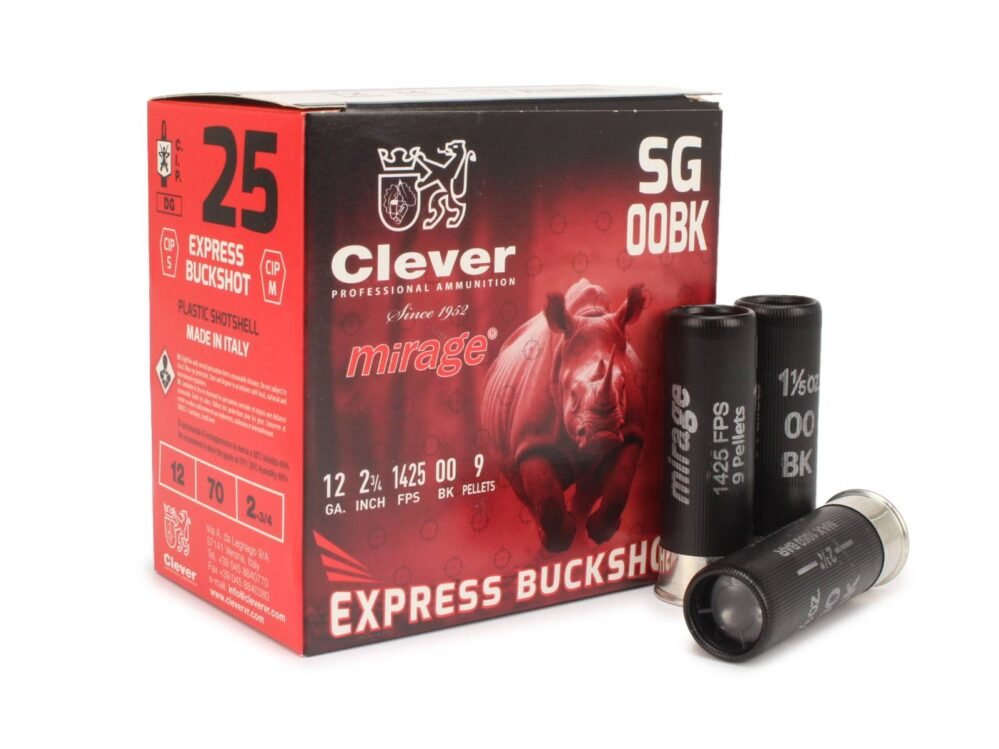
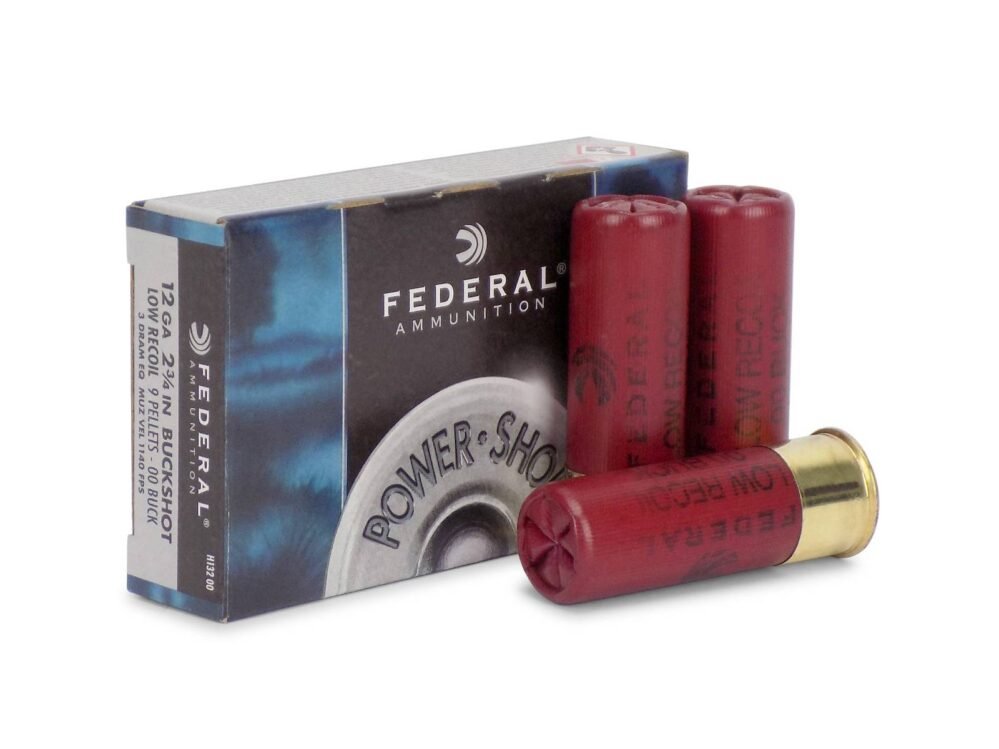
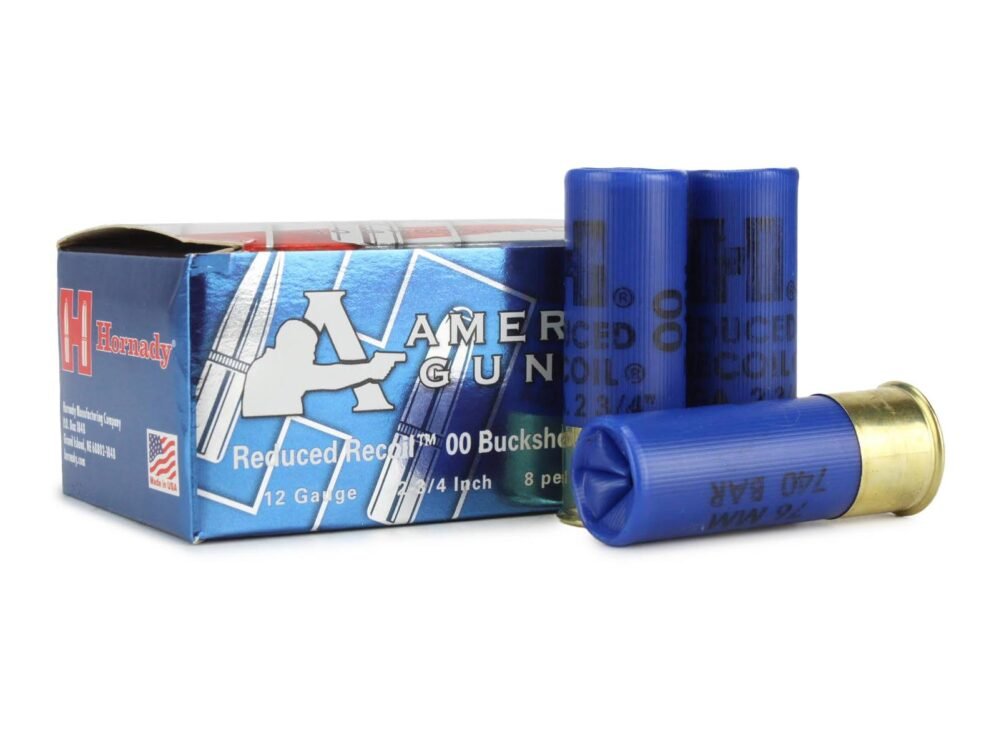
Pellet count is part of the load’s engineering—not a simple measure of quality.
Two boxes can share the same 12-gauge, 00 buck label while listing different pellet counts. “00” identifies the buckshot size; it does not require a fixed number of pellets in every shell.
A nine-pellet load carries one more projectile, but an eight-pellet load may leave that pellet out intentionally to change payload weight, recoil, velocity, or how the shot patterns. Wad design, buffering, shell length, and pellet hardness also affect performance. Consequently, nine pellets should not automatically be treated as more effective, nor eight as underloaded. The practical comparison is whether each specific load functions reliably and produces an acceptable pattern from the shotgun at the intended distance.
What the labels actually describe
00 buckshot
A buckshot size, not a pellet count. ANSI/SAAMI Z299.2 lists 00 buckshot at a nominal diameter of 0.330 inch.
Pellet count
The number of projectiles loaded into one shell. Eight-pellet and nine-pellet loads can use the same nominal shot size.
Payload
The combined mass of the shot charge. Pellet count affects payload, but pellet material and dimensional tolerances also matter.
Wad
The internal component that separates the shot from the powder and may cushion, contain, or guide the pellets.
Crimp
The folded or rolled closure at the shell mouth. It must retain the load while allowing consistent ignition and opening.
One shell, competing demands
The cleanest comparison starts with loads using the same gauge, shell length, shot-size designation, and pellet material. In that context, the meaning of the 00 buckshot label stays constant: it identifies nominal pellet diameter, while “8-pellet” or “9-pellet” states how many projectiles are present. Neither label alone establishes velocity, recoil, pattern quality, or terminal performance.
A shotshell is a tightly packaged system. The hull must accommodate the primer, powder charge, basewad, gas seal, cushioning or shotcup sections, pellets, and enough mouth material to form a secure crimp. Even shells with the same gauge and marked length may use different internal component designs, leaving different amounts of usable room.
Adding a ninth pellet can increase shot payload and alter how pellets stack. The manufacturer may then adjust other variables to keep the load within applicable pressure limits and obtain the intended velocity. Possible changes include:
- a different wad or cushioning section;
- a revised powder charge;
- a lower advertised velocity;
- a different pellet arrangement or amount of buffering;
- changes to crimp depth and internal compression.
An eight-pellet load creates room for a different balance. Some designs use that space for a specialized wad, while others pursue reduced payload, recoil, or pellet deformation. That does not make eight pellets inherently softer-shooting or tighter-patterning; published velocity, total payload, wad construction, and firearm-specific pattern results still need examination.
For an apples-to-apples purchase comparison, the box and manufacturer data should be checked for gauge, shell length, shot size, pellet count, payload weight, and listed velocity. Patterning both loads through the intended shotgun and choke remains the practical way to determine whether the design tradeoff produces a meaningful difference at relevant distances.
Inside the pellet stack
A cutaway view starts with the powder charge at the base, followed by the wad’s gas seal and cushioning section. Above that sits the shot cup containing the buckshot; the case mouth and crimp close the shell. When fired, gas pressure drives this assembly forward, and the wad helps separate the pellets from the bore.
Nine-pellet 00 buckshot is often pictured as three layers of three pellets. Remove one pellet, however, and the remaining eight do not automatically settle into one standard arrangement. Depending on cup dimensions and loading equipment, they may occupy offset layers, paired columns, or a less orderly stack.
Those contact points matter. During acceleration, pellets press against one another, the shot cup, and—after wad release—the bore or choke. A pellet trapped between neighbors and the cup wall may flatten more than one with room to shift. Softer lead generally deforms more readily, while harder shot can better retain its shape under similar forces.
Buffering adds another variable. Granular material can fill spaces around the shot and reduce abrupt pellet-to-pellet contact; this explanation of what buffering does inside a shotshell provides more detail. Shot-cup thickness, cushioning, bore dimensions, choke, pressure curve, and velocity also influence the result.
Consequently, eight pellets is a count, not a shared design. Two eight-pellet loads may use different stack geometry and wad systems, so pattern performance should be evaluated by exact load and firearm rather than inferred from pellet count alone.
What pellet count can—and cannot—reveal
With gauge, shot size, and pellet material held constant, the dependable conclusion is simple: eight pellets make a lighter shot payload than nine pellets. Removing one same-size pellet reduces projectile mass. It does not, by itself, identify velocity, chamber pressure, recoil, pattern quality, or intended use.
Federal Premium’s published specifications illustrate the distinction:
| Load | Shell | 00 pellets | Listed muzzle velocity | Published pressure/recoil |
|---|---|---|---|---|
| Tactical LE133 00 | 2¾ in. | 8 | 1,145 fps | Not listed |
| Tactical LE132 00 | 2¾ in. | 9 | 1,145 fps | Not listed |
| Tactical LE127 00 | 2¾ in. | 9 | 1,325 fps | Not listed |
Source: Federal Premium Law Enforcement product listings for LE133 00, LE132 00, and LE127 00.
The first two loads have different pellet counts but the same advertised velocity. The latter two have the same count yet differ by 180 fps. That is enough to show why neither velocity nor recoil should be assigned from pellet count alone.
Felt recoil also depends on shot mass, velocity, wad and propellant mass, firearm weight, action type, and stock fit. Likewise, shell length and terms such as tactical, reduced recoil, or magnum are not substitutes for actual chamber-pressure data. When pressure limits matter, the ammunition maker’s technical documentation and the firearm’s chamber marking should control the decision.
Two boxes marked 12-gauge 00 buck may behave differently. Check the manufacturer’s exact product code for:
Pellet count and shell length Advertised velocity and test-barrel details Pressure designation, if published Firearm compatibilityRecoil and patterning still require load-specific evaluation in the intended firearm.
When one less pellet patterns better
An eight-pellet load can sometimes produce a more consistent pattern because its internal geometry leaves fewer pellet-to-pellet contact points or allows a less disruptive stack. Hard shot, buffering, and a well-matched wad may further limit flattening as the shell accelerates. A cleaner wad release can also reduce the chance of pellets being disturbed at the muzzle.
That is a load-design explanation, not an eight-pellet rule. A carefully engineered nine-pellet shell may pattern more evenly than a conventional eight-pellet load, and the same ammunition can behave differently through another barrel, choke, or forcing-cone geometry. Differences become even less predictable when comparing the specifications separating #1 and 00 buckshot, because pellet diameter changes along with count and payload arrangement.
The ninth pellet still offers a straightforward potential advantage: more projectiles are available to fill the pattern. If two loads distribute their pellets with similar uniformity, nine pellets can provide greater pattern density. That advantage shrinks when the extra pellet becomes an outlier or when the nine-pellet load produces larger gaps.
A pattern board is therefore more informative than the number printed on the box. Several shells from the intended firearm should be fired at realistic distances, using a safe range and a consistent point of aim. Compare:
- overall spread and pellet placement;
- large gaps within the central pattern;
- recurring outliers;
- consistency from shell to shell.
Pattern tightness does not, by itself, establish terminal performance. Pellet diameter, actual impact velocity, deformation, penetration medium, and the number and location of strikes all affect what happens after impact.
Pellet-count assumptions that miss the mark
Compare the label, then confirm the pattern
-
Record the complete load identity
Note manufacturer, product line or stock number, gauge, shell length, shot size, pellet count, stated payload weight, advertised velocity and any recoil designation. Keep the box’s lot number; a product name alone may not identify an unchanged load.
-
Check firearm and ammunition compatibility
Consult the shotgun and ammunition manufacturers’ instructions for permitted shell lengths, loads and choke restrictions. Broader 12-gauge buckshot selection guidance can narrow the candidates, but the firearm’s markings and manual govern compatibility.
-
Set a repeatable patterning method
Use identical targets with a clearly marked aiming point. Test every candidate at the distances relevant to its intended role, keeping the shotgun, choke, shooting position and aiming method constant.
-
Fire several shells from each load
One shell can produce an unusually tight or loose pattern. Multiple shots help reveal whether pellet placement is repeatable; follow range rules and allow for barrel heat if it begins affecting handling or point of aim.
-
Measure and log the results
For each target, record distance, load and lot, choke, point-of-impact shift, total hits in the chosen scoring area, outliers and pattern dimensions. Also document reliable chambering, extraction and cycling where applicable—without mixing ammunition during a string.
A photographed target labeled immediately after each shot is easier to audit than notes reconstructed later.
Buckshot can travel far beyond the target. Use an established range that permits it, an appropriate backstop, eye and hearing protection, and the shotgun maker’s loading and unloading procedures. Never inspect or change targets until the firearm is unloaded, the action is open and the range is declared safe.
Let verified performance decide
- Compare exact product specifications, not pellet count in isolation.
- Retest after changing the barrel, choke, load, lot or intended distance.
- Favor consistent point of impact, usable pattern density and reliable operation in the specific shotgun.
Eight pellets are not inherently preferable to nine, nor does a ninth pellet automatically improve the result. The stronger choice is the compatible load whose published specifications fit the purpose and whose patterns remain repeatable across several shells at realistic distances.
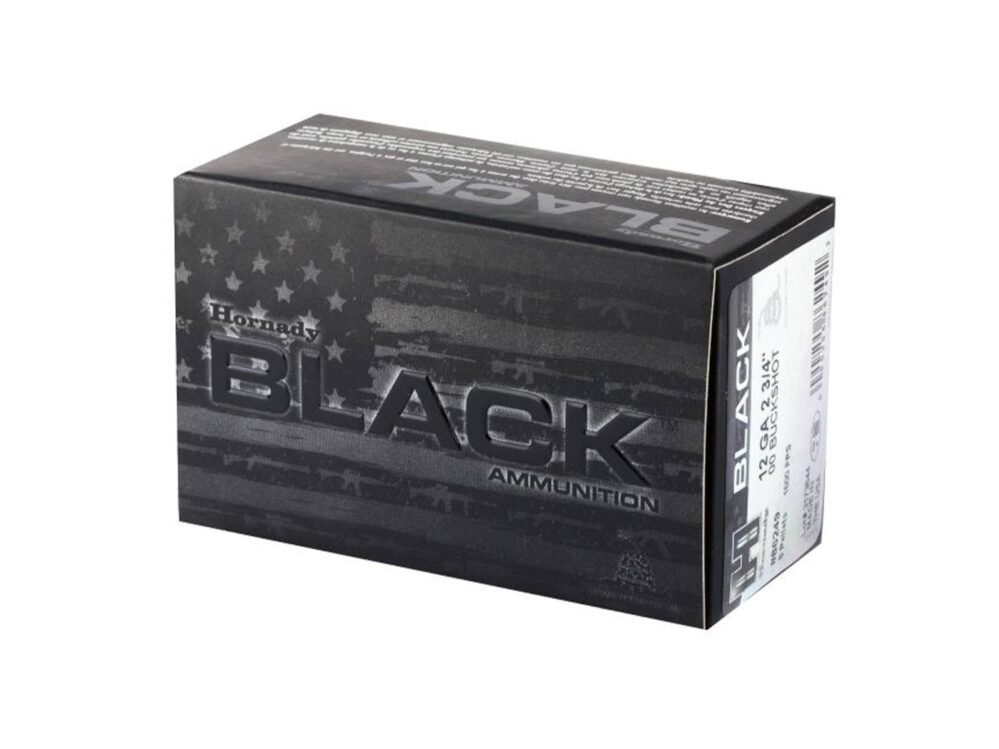
Hornady Black 12 Gauge 2.75 8 Pellet 00 Buckshot (Box)

Fiocchi Field Dynamics 12 Gauge 2.75 9 Pellets 00 Buckshot (Box)