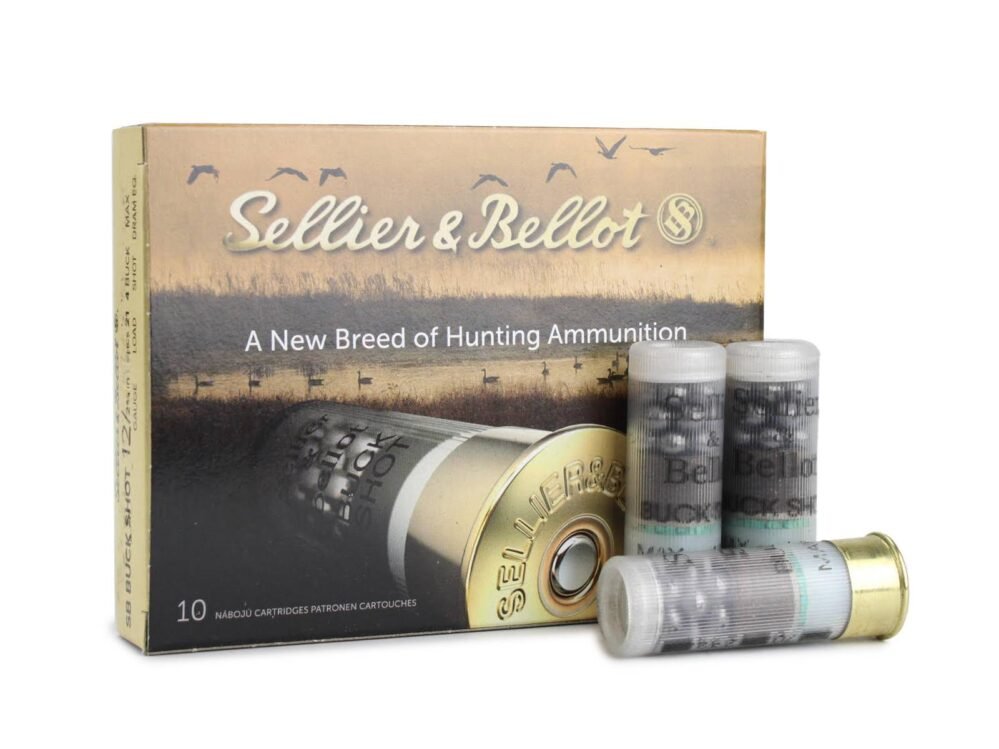
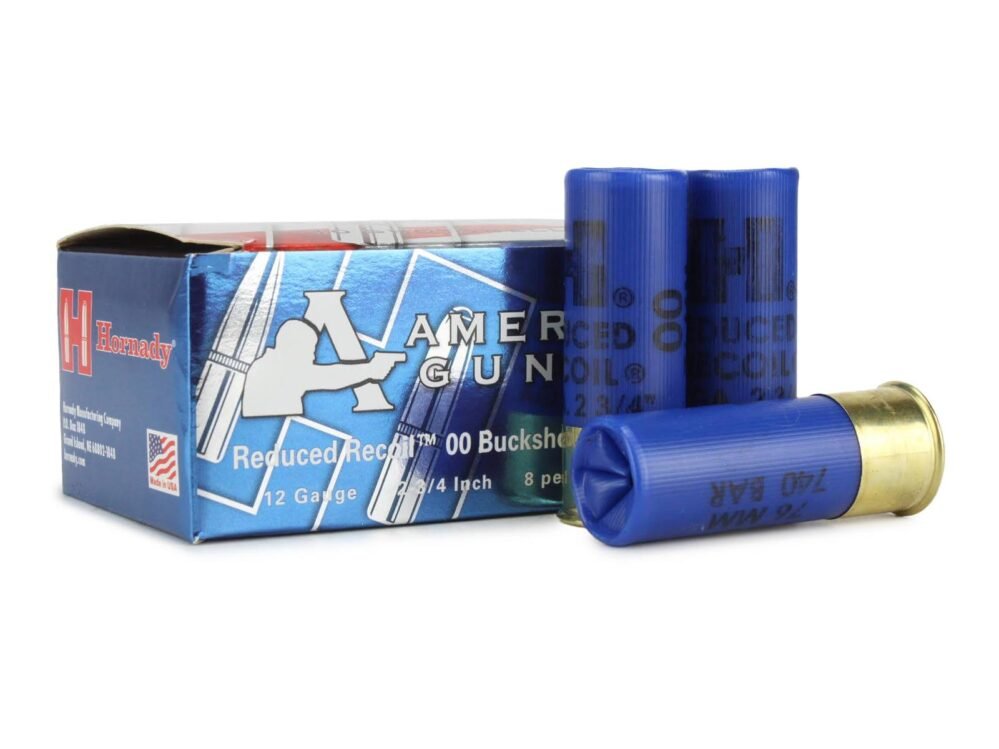
Similar boxes can conceal materially different payloads.
Two 12-gauge loads may share the same shell length and branding, yet one reads #1 BUCK and the other 00 BUCK. Those numbers identify pellet size—not gauge, chamber length, pellet count, payload weight, velocity, recoil, or pattern quality.
SAAMI lists nominal diameters of .30 inch for #1 buck and .33 inch for 00 buck. Because manufacturers can load different pellet counts and velocities around those sizes, the full box specifications matter more than the larger-looking designation alone.
Match the shell’s gauge and length to the chamber marking on the barrel or receiver. Then check the firearm manual and ammunition-maker guidance for choke or load restrictions. A buckshot number does not establish compatibility, and a longer shell must not be fired in a shorter chamber.
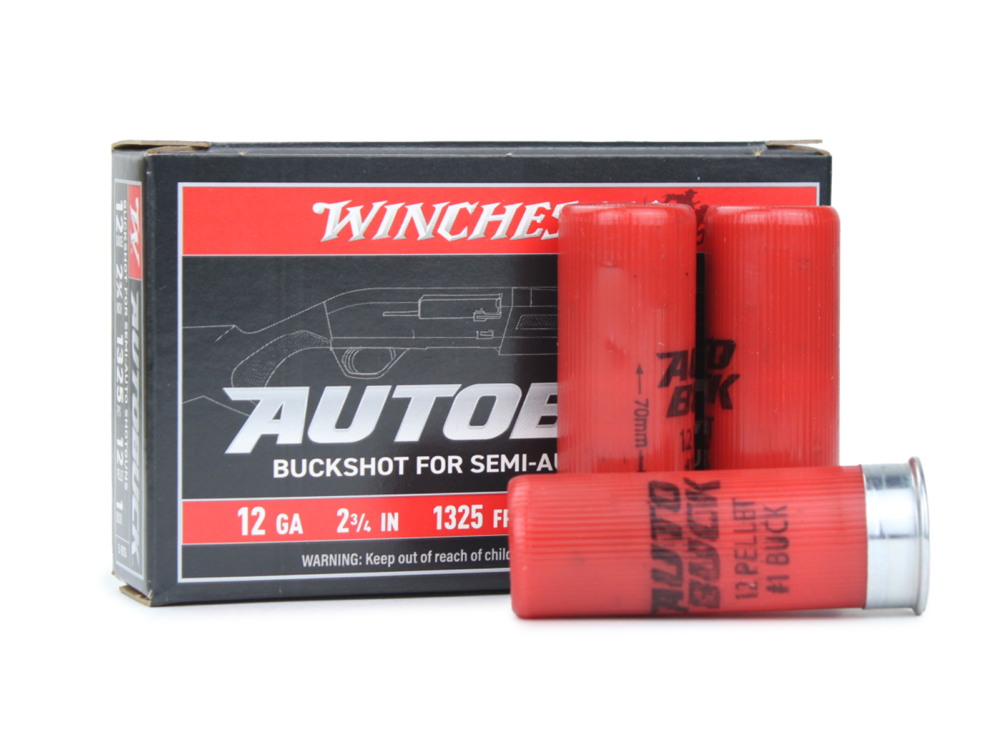
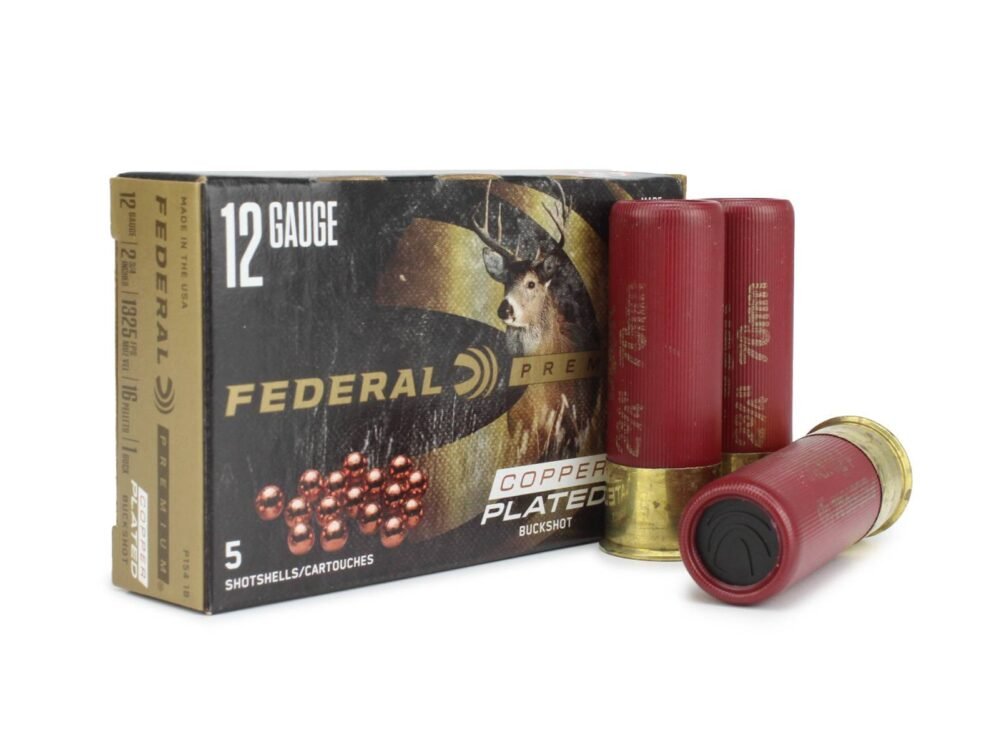
| Smaller nominal pellet Winchester Autobuck 12 Gauge #1 Buckshot | VS | Larger nominal pellet Federal Premium 12 Gauge Copper-Plated #1 Buck |
|---|---|---|
.30 inch | Nominal diameter (SAAMI) |
.33 inch |
Varies by load | Pellet count |
Varies by load |
SKU-specific | Payload and velocity |
SKU-specific |
SKU-specific | Shell length and construction |
SKU-specific |
Load and gun dependent | Recoil |
Load and gun dependent |
| View | View |
Treat each claim according to how it was produced. A catalog specification describes the load; it does not establish how that load performs in a particular shotgun.
-
Start with primary specifications
Use SAAMI for nominal pellet diameter and the ammunition maker for shell length, listed payload, pellet count, construction, and advertised velocity.
-
Prefer instrumented comparisons
For velocity and pattern claims, prioritize independent tests that identify the shotgun, barrel, choke, distance, ammunition lot, chronograph setup, and target method.
-
Keep conclusions narrow
Apply measured results only to the tested load and setup; do not treat gelatin or other test media as direct predictions of real-world outcomes.
How to judge the performance evidence
A heavier 00 pellet does not make pellet count irrelevant, and a larger #1 payload does not guarantee a denser useful pattern. The result depends on how many pellets remain together and sufficiently round after ignition, acceleration, wad release, and passage through the choke.
Variables that can change the result
Wad design, pellet deformation, copper plating, and buffering can affect how consistently pellets separate and fly. Choke geometry, barrel dimensions, firing distance, and lot-to-lot variation add firearm- and sample-specific effects. Shell length also changes the available payload and operating characteristics, so 2¾-inch and 3-inch buckshot payloads should be compared as distinct loads rather than as interchangeable versions of one pellet size.
Manufacturer data remains useful for confirming what is in the box. Winchester, Federal Premium, and Rio product information should therefore anchor construction and advertised specifications for the three featured loads. However, advertised muzzle velocity is not a substitute for chronograph readings from the actual barrel used in a test.
Independent sources such as Lucky Gunner Labs report shotgun, distance, velocity, pattern, and calibrated-gel methods, allowing readers to inspect the conditions behind a result. Pattern evidence is strongest when targets show pellet locations or report a defined circle size—not merely adjectives such as “tight.” Chronograph data should include multiple shots, while a single shell or one ammunition lot supports only a limited conclusion.
Gelatin can compare penetration under a controlled protocol, but it is a test medium, not a literal model of field or defensive performance. Conclusions should stay tied to the measured velocity, pattern, and penetration conditions.
Winchester Autobuck: a straightforward 12-pellet #1 option
Best value for dependable everyday performance
Winchester documents this Autobuck load as a 12-gauge, 2¾-inch shell containing 12 lead #1 buck pellets. That makes it a value-oriented candidate for readers specifically seeking #1 buck’s tendency toward more pellets than comparable 00 loads.
Its straightforward specification is the appeal: no premium pellet or wad technology is highlighted. Selection should therefore depend on whether the load produces an acceptable pattern in the intended shotgun, choke, and barrel—not pellet count alone.
- Twelve documented #1 pellets
- Value-oriented configuration
- Common 2¾-inch shell length
- Basic lead-pellet construction
- Pattern quality remains firearm-specific
- No premium component technology highlighted
Federal Copper-Plated #1 Buck: Built With Pattern Consistency in Mind
Tight patterns and strong downrange energy
Federal lists P154 1B as a 12-gauge, 2¾-inch load containing 16 No. 1 buck pellets. Federal documentation specifies copper-plated shot, making this the more construction-focused option for buyers prepared to pattern a defensive or hunting load in the intended shotgun.
Copper plating may help pellets resist deformation during ignition and barrel travel. More nearly spherical pellets can behave more consistently in flight, but that does not guarantee a particular spread: barrel, choke, distance and ammunition lot still matter.
Check for the exact P154 1B code. Similar Federal packaging may contain a different pellet size, count, wad or shell length.
- Federal-documented copper-plated shot
- 16-pellet No. 1 payload
- Construction intended to limit deformation
- No guaranteed pattern size
- May cost more than plain-lead loads
- Similar load names require careful SKU checks
Rio Royal Buck: a familiar nine-pellet 00 configuration
High-power option for game and defensive use
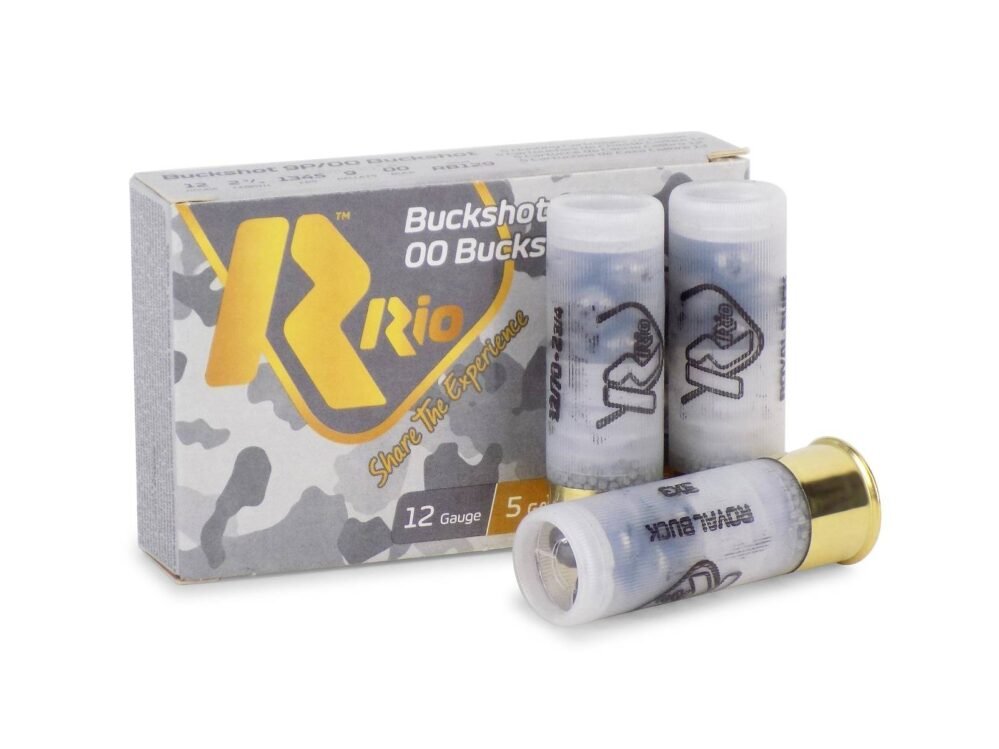
Rio Royal Buck RB129 is documented as a 12-gauge, 2¾-inch shell loaded with nine 00 buck pellets. It suits readers who prefer fewer, larger pellets than the 12- and 16-pellet #1 buck loads compared earlier.
That familiar configuration makes it a practical reference point, not a performance guarantee. The 00 designation establishes nominal pellet diameter; it does not establish recoil, pattern width, point of impact, or reliable cycling. Those characteristics depend on the complete load and shotgun, so patterning the exact lot through the intended barrel and choke remains essential.
- Documented nine-pellet load
- Standard 2¾-inch shell
- Familiar 00 configuration
- Pattern remains firearm-specific
- Recoil not defined by 00
- Fewer pellets than #1 loads
Choose by the Job and the Shotgun
- Pattern density
A #1 load may place more projectiles in the pattern, but pellet count and spread vary by complete load.
Favor whenDocumented patterns from the intended shotgun, choke, and distance.Do not assumeTreating pellet diameter as proof of tighter patterns. - Individual pellet size
00 uses larger nominal pellets and may suit priorities centered on pellet size rather than count. A #4 buckshot and 00 buckshot comparison provides another useful reference point.
Favor whenA load whose pattern and construction match the intended role.Do not assumeJudging effectiveness from shot size alone. - Availability and continuity
Rio Royal Buck may appeal where familiar 00 loads are easier to source; established setups also reduce unnecessary changes.
Favor whenRepeatable access to the exact tested load.Do not assumeSubstituting another shell because its shot designation matches. - Load-specific performance
Winchester Autobuck and Federal Copper-Plated #1 differ in pellet count and construction, despite sharing the #1 designation.
Favor whenShell length, payload, velocity, wad, construction, and recoil together.Do not assumeSelecting solely by the number stamped on the box.
Pattern the chosen shell through the specific shotgun and choke, then confirm reliable feeding, firing, extraction, and acceptable recoil. A load that performs well in published testing may behave differently in another firearm.
-
Record the complete load
Note manufacturer, product code, shell length, pellet count, stated velocity, and lot number.
-
Confirm shotgun compatibility
Check the shotgun manual for permitted ammunition and choke restrictions before firing.
-
Pattern under fixed conditions
Use the same shotgun, choke, distance, target size, and aiming method for every candidate. Follow range rules and ammunition warnings.
-
Measure, repeat, and compare
Count target hits, note dispersion and point of impact, and repeat with multiple shells. Also record function and manageable recoil.
Let measured behavior decide
Pellet diameter alone cannot identify the more suitable load. Choose 12-gauge buckshot by documented specifications, then verify those claims through consistent pattern testing in the individual shotgun. Favor the complete load that functions reliably and produces the required pattern at the relevant distance.
Winchester Autobuck 12 Gauge 2.75" 12 Pellet #1 Buck (Box)
Federal Premium 12 Gauge 2.75 16 Pellet 1 Buck (Box)