

A safe is only quick-access when it works where life actually happens.
At 2 a.m., a drawer may be half-open, a phone charger may block the lid, and a sleepy hand may miss a tiny keypad button. Fast access is not merely an unlock time on a box: it depends on mounting angle, clearance, lighting, power status, and whether the safe stays put when opened.
A bedside unit, vehicle lockbox, or travel case also has to account for children, guests, cleaners, roommates, and theft risk. The question of whether to keep a handgun loaded in a bedside safe adds another layer: the safe’s access control, retention design, and placement all matter. Biometrics can be convenient but may struggle with wet fingers or weak enrollment; mechanical overrides avoid batteries but require key control. A workable setup balances rapid authorized entry with consistent lockup under everyday clutter, movement, and stress.
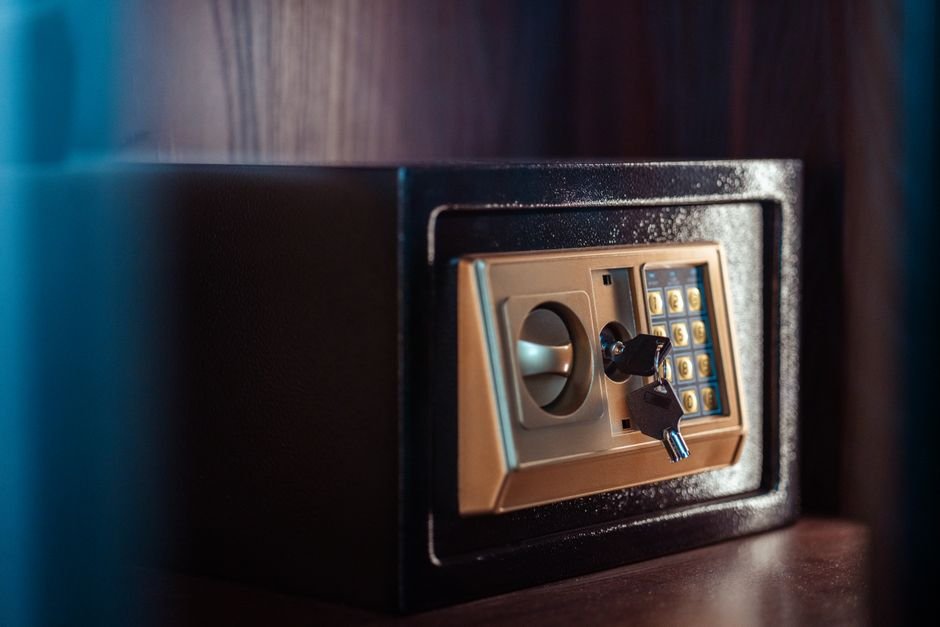
The best quick-access gun safe is the one whose lock, mounting, and interior fit actually match how and where it will be used, not the one with the fastest advertised opening time.
What “quick-access” really means
Compact quick-access safe
A small enclosure designed to present a defensive firearm promptly while restricting casual or unauthorized handling. It is not a substitute for a full-size burglary-rated safe.
Access method
Biometric readers, mechanical pushbuttons, RFID tokens, and electronic keypads trade speed against recognition reliability, battery dependence, and the risk of shared credentials.
Theft deterrence
Steel thickness, seam design, lock protection, concealed placement, and anchoring resist removal or forced entry. Portability generally weakens this layer.
Capacity penalty
Space for a mounted light, optic, spare magazine, or holster can turn a nominally roomy safe into a poor fit. Interior dimensions matter more than firearm labels.
A bedside box may open in seconds yet offer limited resistance if it can be carried away. A heavier, anchored unit can deter removal but may be slower to position or relocate.
The useful comparison is not fast versus slow. It is whether the safe’s opening method, installed location, physical construction, and actual firearm setup work together without creating an easy bypass or an unusable fit.
Choose the location before the lock
A quick-access safe is only “quick” when its footprint, opening path, and power needs suit the place it will live.
Fixed furniture versus mobile spaces
At a bedside, measure not just the nightstand interior but also lid clearance, cord routing, and whether an opening door will strike the bed frame. A low-profile unit can preserve drawer space, while a larger bolted-down model adds retention; tight-nightstand safe options show how quickly external dimensions become limiting. Quiet entry matters here: audible keypads and motorized lids can be disruptive.
A desk drawer or office cabinet favors concealment and a flat opening profile. It also needs enough internal height for the stored item without forcing it against the lockwork. Battery-powered units avoid visible cords, but a clearly understood low-battery procedure matters.
Vehicles impose the harshest constraints: irregular console dimensions, vibration, heat, and a greater need for attachment resistance. Confirm the actual cubby shape and lid swing with console-fit storage choices, rather than relying on a listed width alone.
Temporary lodging changes the priority again. A compact case with a cable can provide retention to a substantial fixture, fit inside luggage, and leave without installation marks. For travel-safe features worth checking, focus on cable geometry, compact power independence, and discreet carry rather than furniture mounting.

Choose the lock for its worst moment
A claimed opening time is measured under ideal conditions: fresh batteries, a clean sensor, a practiced hand, and full attention. Real access is less tidy. The better question is whether an authorized person can repeat the opening process in darkness, while hurried, without creating a new point of failure.
Where each method stumbles
Biometric readers are immediate when enrollment is strong and the sensor is clean, but wet skin, lotion, grime, small shifts in finger placement, or an untrained finger can produce retries. Battery status also matters. A close comparison of fingerprint and mechanical locks is useful because a biometric safe’s backup path—not its scan time—often defines its practical reliability.
Electronic keypads work in low light when buttons are tactile or illuminated, and they avoid fingerprint-recognition errors. Their weak points are depleted cells, missed presses under stress, lockout behavior after wrong codes, and audible beeps. Models with configurable sound are worth examining where discretion matters; these quiet keypad designs show how muted confirmation changes nighttime use.
Mechanical push-button locks, commonly called Simplex-style locks, need no battery and can be operated by feel. They are generally consistent with dirty hands and darkness, though button clicks and the latch can be audible, and the sequence takes practice. For a bedside role, a mechanical push-button safe can trade headline speed for predictable operation.
Redundancy that actually helps
Useful redundancy means two genuinely independent ways in: for example, a keypad plus a mechanical override, or biometric access plus a separately maintained key path. An override key left beside the safe is not redundancy; it merely transfers the vulnerability.
Repeatability can be checked with ordinary drills: operate the safe in darkness, with dry and slightly dirty hands, after replacing batteries, and from its installed position. The meaningful result is not the fastest attempt, but the rate of clean, authorized openings.


Measure the draw, not the box
-
Record the stored firearm’s true envelope
Measure the firearm exactly as it will live in the safe: holster, light, optic, extended magazine, suppressor-height sights, and any tethered cable included. A listed “fits most handguns” claim often assumes a bare, compact pistol laid flat.
-
Check usable interior clearance
Compare those measurements with the safe’s internal width, depth, and height—not its exterior shell. Account for foam thickness, molded trays, gas struts, lock housings, and any inward-projecting bolts that reduce the available cavity.
-
Map the retrieval path
A firearm can fit inside yet still snag during removal. Confirm there is space to establish a normal grip, clear the retention strap or holster, and lift or draw the stored item without striking the lid, door frame, shelf, or nearby furniture.
-
Match the opening to handedness
Side-opening doors, top lids, and drawer-style safes create different access angles. Hinge location, keypad position, and the direction of the release motion can favor one hand or force an awkward cross-body reach in the intended location.
-
Test the installed-space geometry
Use a cardboard template or the published open-door dimensions at the proposed mounting spot. Check wall clearance, drawer travel, mattress overhang, vehicle-seat movement, and whether a fully opened lid blocks the hand or becomes trapped against another surface.
Product photos rarely show the clearance required after the safe is mounted and fully opened.
What a compact safe can—and cannot—stop
Most quick-access safes are delay-and-deterrence devices, not full burglary safes.
A steel shell, recessed door edges, and a protected lock can slow casual prying, but compact dimensions limit leverage resistance and material thickness.
An unanchored compact safe can often be removed and attacked elsewhere.
Mass helps, but a properly designed look at how easily low-cost safes can be pried shows why attachment points and the surrounding structure matter as much as the enclosure.
A cable is mainly a portability restraint unless its diameter, lock path, and anchor point resist easy cutting or bypass.
Bolting through factory mounting holes into substantial furniture framing or masonry generally creates a more credible delay than a thin cable loop.

Install for the way it will be used
Installation changes both security and access. A safe that opens cleanly on a workbench may become awkward when its lid strikes a shelf, its buttons face a cramped gap, or its door blocks the retrieval path.
Match the surface to the attachment
Concrete and structural wood provide the most dependable mounting points. Thin sheet metal, particleboard, hollow-core furniture panels, and vehicle trim can deform or tear under leverage. A furniture installation can still be useful when the piece is substantial and the fasteners pass through a reinforced base or solid frame; these furniture-bolting details matter more than simply adding screws.
Attachment geometry deserves a close look before purchase. Bottom mounting generally resists lifting, while rear mounting can keep a unit from being carried away; models with both options offer more flexibility. Bolts need accessible tightening clearance, and the safe’s predrilled-hole pattern must actually line up with solid material. A security cable can deter casual grab-and-go removal, but it is not equivalent to rigid anchoring.
Test the full opening envelope
Measure the safe with its door or lid fully open, not merely its exterior footprint. Leave room for fingers, an emergency-key route, battery replacement, and the intended retrieval motion. In drawers, confirm that the drawer can extend far enough before the safe opens.
Portable use fits temporary lodging, shared spaces, or locations where permanent attachment is impossible. In that role, a compact safe primarily adds controlled access and concealment; its removal resistance is inherently lower, so the trade-off is deliberate rather than hidden.
A sturdy safe on a weak surface can be easier to remove than a lighter model anchored into sound structure.
Keep access reliable after installation
A quick-access safe is only as dependable as its least-maintained component. Batteries age, contacts corrode, drawers collect lint, and a rarely used override can become inaccessible precisely when it is needed.
Manage power before it becomes urgent
Replace batteries on a calendar rather than waiting for a low-battery warning. Use the battery type specified by the manufacturer; mixed brands, old cells, and rechargeable cells with different voltage behavior can create erratic keypad or biometric performance. If the safe has an external emergency power port, keep its required cable or battery format identified and available.
Make quiet operation repeatable
Disable confirmation beeps only after confirming that muted mode does not remove useful feedback, such as an error signal. Test the opening sequence in the actual room: a lid striking furniture, loose mounting hardware, or a metal object shifting inside can be louder than the lock itself.
Protect backups without losing them
Verify backup codes and mechanical overrides periodically, following the manufacturer’s procedure. Store override keys, codes, and emergency-power accessories away from the safe, inaccessible to unauthorized people but recoverable by authorized adults. Avoid taping a key nearby or placing it in an obvious bedside drawer.
A brief monthly check can confirm battery status, credential recognition, opening clearance, and secure mounting.
Narrow the choice with three hard tests
-
Verify the installed fit
Confirm the actual firearm, permitted accessories, and any retention device fit in the chosen location with the door fully open.
-
Repeat the access test
Run the normal credential, backup method, and low-light retrieval sequence after mounting. A fast lock is irrelevant if recognition, clearance, or body position is inconsistent.
-
Check the failure path
Identify battery status, override control, power-loss behavior, and who can reach spare keys or codes without defeating household access control.
-
Match security to exposure
Anchoring and concealment can limit casual theft and unauthorized handling; a compact safe is not equivalent to a heavy, burglary-rated cabinet.
-
Recheck household conditions
Changes in children, visitors, caregivers, living arrangements, or local storage requirements can alter what responsible storage calls for.
Frequently Asked Questions
Is a compact quick-access safe the same as a burglary-rated safe?
No. Most quick-access safes are delay-and-deterrence devices, not full burglary safes. Compact dimensions limit leverage resistance and material thickness compared to a heavy, burglary-rated cabinet.
Which access method is most reliable in the dark or under stress?
Mechanical push-button locks need no battery and can be operated by feel, making them generally consistent with dirty hands and darkness, though the sequence takes practice. Biometric and keypad methods each have their own failure points, like wet fingers or depleted batteries.
Does a heavy safe mean it cannot be stolen?
No. An unanchored compact safe can often be removed and attacked elsewhere. Removal resistance depends on anchoring into solid structure, not weight alone.
Is a security cable enough to prevent theft?
A cable is mainly a portability restraint unless its diameter, lock path, and anchor point resist easy cutting or bypass. Bolting into solid furniture framing or masonry generally creates a more credible delay.
What should be tested before relying on a quick-access safe?
Verify the actual firearm and accessories fit with the door fully open, repeat the access sequence in darkness with dry and slightly dirty hands, and confirm battery status and override control periodically.
- Verified installation matters more than a promising specification sheet.
- The strongest option is the one whose access and security limits remain understandable under ordinary household conditions.
A suitable quick-access safe is one that fits the real setup, opens reliably through its complete access path, and provides only the level of delay its construction and anchoring can credibly deliver. Local requirements and changing household circumstances remain part of the final judgment.



4 Comments
How often are people really changing batteries? I tend to ignore battery warnings until something starts beeping at 2 a.m. 😅 The calendar reminder idea makes sense, but is once a year enough or should it be tied to the type of lock?
The point about choosing the location before the lock was useful. I was about to buy a fingerprint model for a nightstand, but the drawer barely has room for the lid to open. Is a drawer installation generally a bad idea, or just something that needs more clearance than people expect?
A drawer can work well, but clearance is the first thing to verify. Measure not only the safe’s exterior, but also the lid swing or slide path, the drawer’s usable depth, and whether anything in the drawer blocks your hand during retrieval. Also consider how the safe will be anchored to a sound surface rather than relying on the drawer itself.
Good overview, although I wish more manufacturers were clearer about what “portable” means. A small box that can be carried away is not much reassurance unless it is actually anchored, yet many photos show them sitting loose on a shelf like that is normal.
The distinction here—delay access rather than make a compact safe invincible—seems like the honest way to frame it. Recessed seams and decent steel matter, but installation looks like the part people skip because drilling holes is less fun than shopping.