
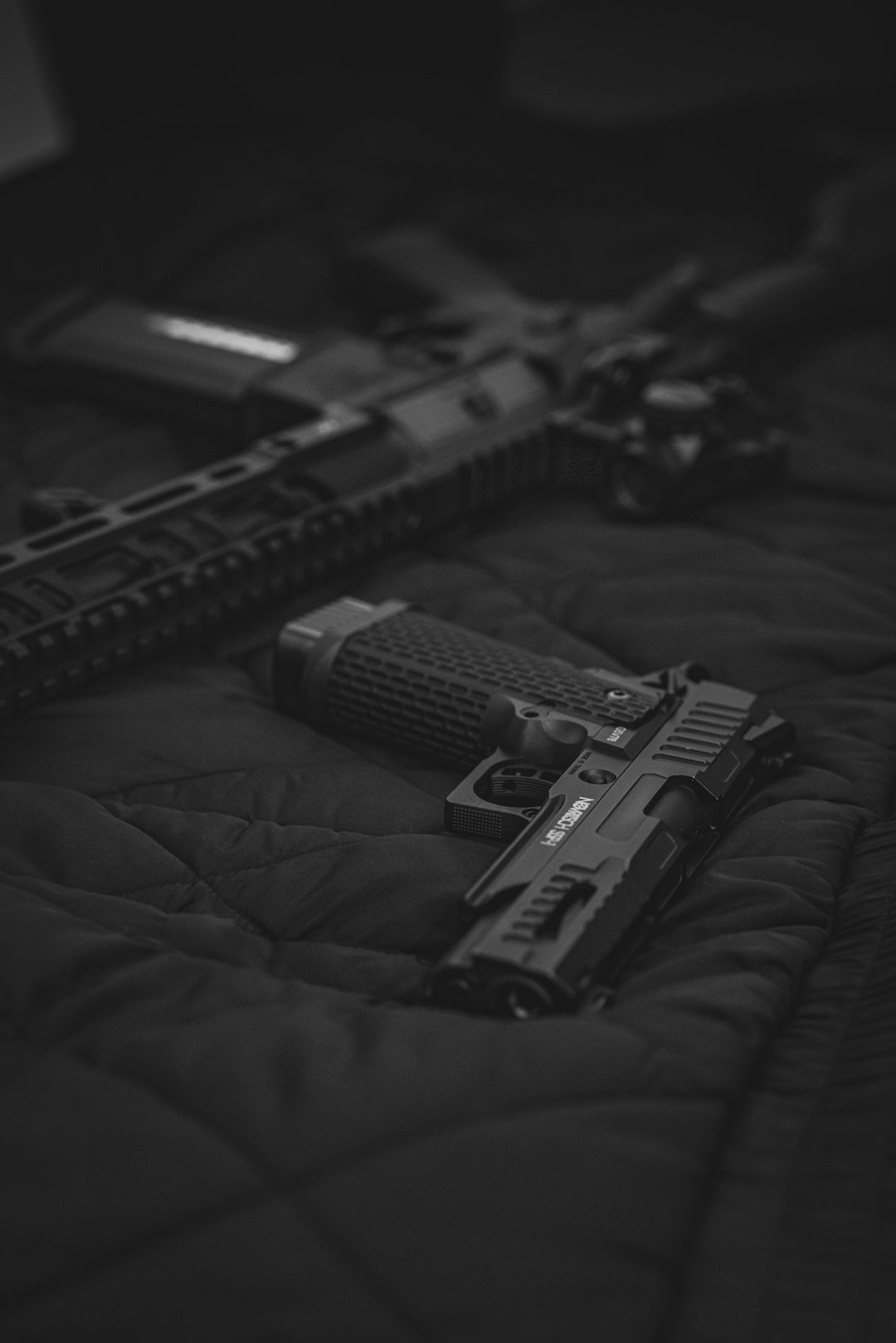
A bedside handgun is only as safe as the system around it.
At 2 a.m., the distinction between a firearm that is available and one that is merely nearby can matter—but so can the difference between secured access and an unsecured loaded gun within reach of a child, guest, or intruder. Bedside storage puts defensive readiness and access control in direct tension.
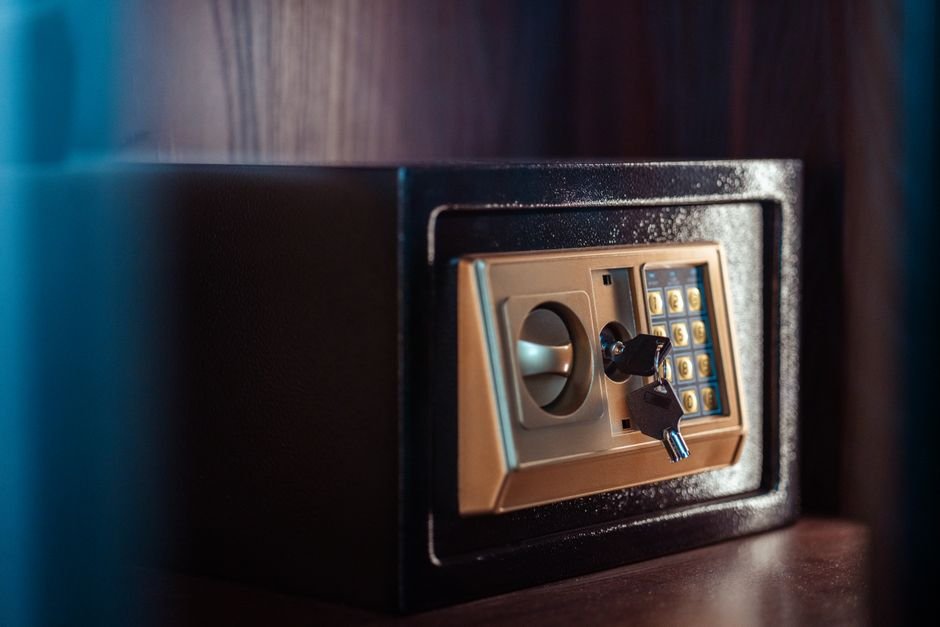
A loaded handgun is not automatically safe or unsafe because it sits beside a bed. Risk is shaped by the whole arrangement: who lives in or visits the home, whether anyone else knows its location, the safe’s resistance to prying or removal, how reliably it opens under stress, and whether its placement prevents casual discovery. A small lockbox may limit opportunistic access yet offer little theft resistance if it can be carried away; a heavier anchored unit changes that calculation but may affect speed. The relevant question is not simply “loaded or unloaded,” but who can reach it, how, and under what conditions.
- Quick-access locks address unauthorized opening; anchoring and concealment address removal and discovery.
Loaded
The word can mean different things: ammunition in an inserted magazine, a round in the chamber, or both. A detached loaded magazine is a different condition again.
Chamber condition
A chambered round shortens the sequence before the handgun can fire; an empty chamber requires the action to chamber one. The practical difference depends on the firearm’s design and the handler’s established, competent operation of that model.
Safe-opening sequence
A bedside safe may release immediately after a biometric, keypad, mechanical, or electronic input, while others add a lid, drawer, cable, or retention device. Access time is the whole sequence, not merely the lock’s advertised speed.
Retention after opening
Some safes present the handgun loose; others hold it in a holster, bracket, or magnetic mount. Those arrangements affect how consistently the firearm can be grasped without contacting the trigger.
Storage is not the only safeguard
A safe limits unauthorized access, but it does not replace muzzle discipline, trigger-finger discipline, confirmation of condition, or familiarity with the particular handgun’s controls, safeties, and malfunction behavior.
Measure access control, not the “quick-access” label
- The lock works for the authorized adult—and only that adult
A keypad, biometric reader, RFID token, or physical key is only as useful as its real-world failure modes. Fingerprint readers can reject wet, dirty, cold, or poorly enrolled fingers; keys and backup codes can become the easiest route for an unauthorized person.
Meaningful signalsA credential that is consistently available to the intended user but not casually accessible to others.Weak signalsAn override key, code, tag, or spare fingerprint left beside the safe. - Opening is verifiable, not merely fast
Under pressure, the relevant sequence includes locating the safe, operating its controls, confirming that the door released, and retrieving the firearm without a snag. Bright controls, a clear open indication, stable mounting, and a door that opens predictably matter more than a claimed opening time.
Meaningful signalsA repeatable access sequence with obvious feedback and no delicate alignment step.Weak signalsSpeed claims based on ideal conditions while ignoring missed scans, lockouts, dead batteries, or a jammed door. - The container resists removal as well as opening
A thin lockbox may deter casual handling yet still be carried away for later attack. Attachment to a substantial structural surface changes that calculation; concealment alone does not provide comparable resistance.
Meaningful signalsRobust mounting provisions, protected fasteners, and a location that makes removal difficult.Weak signalsCalling a portable, unanchored box “theft-proof” because its lock cannot be opened by hand. - Marketing language is separated from tested resistance
“Gun safe,” “tamper-proof,” and “heavy-duty” are not standardized performance grades. A recognized rating can describe a narrowly defined test, but even a residential security-container rating is limited resistance to a short tool attack—not protection equivalent to a high-security burglary safe.
Meaningful signalsSpecific, independently identified test standards and clear limits on what was tested.Weak signalsSecurity claims with no named standard, test duration, tool scope, or mounting context.
A bedside container can be excellent at preventing casual access by a child, guest, or untrained adult while offering little delay to someone who removes it from the room. Conversely, a heavily secured safe can resist removal and forced entry but add enough steps to be unsuitable for immediate access.
The meaningful question is not whether a product is called quick-access or secure. It is whether its lock, credentials, mounting, power or key backup, and placement address the particular unauthorized-access scenario at issue.
An opening method is only as good as its repeatability
Mechanical push-button locks avoid batteries, sensors, and software. A quality Simplex-style mechanism can be highly repeatable in darkness, but its sequence takes practice and can be slower for an unfamiliar user. Buttons also wear, and a weakly mounted safe can still be carried away.
Electronic keypads allow longer codes and often provide audible or tactile confirmation. Their weak points are dead batteries, failed membranes, missed keys under stress, and the temptation to leave an override key nearby. Battery replacement schedules and a practiced response to lockout alerts matter as much as code length.
Fingerprint readers can be convenient when they recognize a registered finger reliably. Moisture, lotion, minor cuts, poor finger placement, sensor contamination, and cold hands can produce a rejection at the wrong moment. Enrollment of several prints and periodic re-testing can reveal whether the reader remains dependable; the mechanical or keypad fallback also needs to be learned.
RFID access can open quickly with a fob, card, ring, or paired item, but that item becomes another credential to control. It may be misplaced, left within reach of a child, or unavailable when clothing or sleep conditions change. RFID systems also commonly depend on batteries and an override method.
Test the whole access sequence
A lock’s advertised opening time says little about real use. Repeated low-light practice—without handling a loaded firearm—can expose whether the safe’s location, door clearance, code, biometric, and fallback procedure work consistently. Test after battery changes, firmware updates where applicable, moves, and cleaning. Any method that occasionally fails for its authorized user, or opens too readily for an unauthorized person, deserves reassessment.


The firearm itself changes the storage equation
A bedside safe is not neutral storage: its interior can either protect the handgun’s controls or place them where a hurried hand can contact them. The trigger guard needs a rigid, unobstructed boundary throughout storage and retrieval. A loose pistol in a shallow compartment may shift against spare magazines, keys, cables, or the safe’s own hardware; a fitted holster, retention bracket, or molded cradle can prevent that movement.
Chamber condition matters because it changes the consequences of an unintended trigger press, but it is only one part of the system. A striker-fired pistol, double-action/single-action pistol, revolver, or handgun with a manual safety presents different controls, trigger characteristics, and snag points. A manual safety, decocker, or heavier initial trigger pull is not a substitute for trigger protection; external controls can also be moved or obstructed by a poorly fitted storage insert.
Retrieval geometry matters
The handgun should sit in a consistent orientation that permits a full, normal firing grip without reaching through the trigger guard or rotating the firearm awkwardly inside the safe. The opening lid, door, gas strut, and retention device should not block the grip, press a control, or force contact with the muzzle end during removal.
Useful checks include:
- With the safe unloaded and the firearm verified unloaded, observe whether the gun shifts when the lid opens.
- Confirm that accessories, optics, lights, and extended magazines do not defeat retention or pinch against the door.
- Check that the chosen position leaves the trigger guard covered and the firearm readily identifiable in low light.
- Keep ammunition, batteries, and unrelated objects from sharing the handgun’s immediate compartment unless the safe is designed for separated storage.
Many compact safes accept a handgun by external dimensions but do not accommodate its optic, weapon light, holster, or magazine baseplate safely. Fit should be judged with the safe fully closed and opened repeatedly, not by whether the firearm merely lies inside.
Access changes the answer
A locked bedroom door does not create exclusive control. Children and teenagers may learn routines, observe a code, find a backup key, or gain access during cleaning or caregiving. A visiting relative, houseguest, contractor, or temporary caregiver can change the exposure profile even when they never handle the firearm.
The relevant question is not merely who normally sleeps in the room, but who can enter it unsupervised, how predictable that access is, and whether they can defeat the safe’s opening sequence. For households with changing occupants or frequent visitors, a bedside safe that is convenient for its owner may offer too little separation from unauthorized people.
Credentials need the same control as the firearm. That includes keypad codes, RFID tags, mechanical keys, app permissions, biometric enrollment, and any override procedure. A hidden backup key is not automatically a secure backup; if its location is discoverable to others with room access, it can defeat the safe entirely. Periodic checks can confirm that only intended users remain enrolled and that no spare credential has become casually accessible.
Storage and access-control requirements differ by jurisdiction and may depend on circumstances such as minors in the home. Current official local rules are the appropriate source for requirements.
A fast credential for one authorized adult can become an easy pathway for another person who has watched, found, borrowed, or inherited access.
Placement changes the security equation
Secure the safe, not merely the room
A portable bedside safe can move between rooms, vehicles, or temporary lodging, but that mobility also makes removal easier. A security cable may slow a grab-and-go theft, yet its protection is limited by the anchor point, cable routing, and the material it is attached to.
Mounting generally improves theft resistance, but the mounting surface matters. Thin drawer bottoms, particleboard nightstands, and loose bed frames can fail before the safe itself does. Bolting a bedside safe to furniture is most meaningful when the furniture and fasteners provide a credible load path, rather than simply hiding attachment hardware.
Keep the opening path clear
Concealment can conflict with dependable access. A safe buried under bedding, placed behind a swinging drawer, or oriented so its door strikes a bed frame may be difficult to open under stress. Its position also needs enough clearance for the door, a repeatable hand approach, and any required keypad, biometric, or RFID reading motion.
A practical placement check includes opening the safe in darkness, with normal bedding and furniture in place. It can reveal snag points, blocked doors, and exposed credentials before the arrangement is relied upon.
Quick access is not the same as complete protection
Fingerprint readers can be fast, but sweat, dry skin, poor finger placement, drained batteries, and sensor contamination can cause failures.
A bedside biometric model is only as dependable as its low-light, one-handed operation and its tested backup method. Recognition speed does not eliminate the need for mechanical familiarity.
A cable usually deters grab-and-go removal; its protection depends on anchor strength, cable construction, exposed cutting access, and the box itself.
A determined thief may attack the cable, anchor, hinges, or thin enclosure. Permanent mounting generally resists removal better, though it can constrain placement.
A locked container can substantially reduce casual or impulsive unauthorized handling, especially by children or visitors, but credentials and keys remain access paths.
Daily habits matter: unattended keys, shared codes, an open door after retrieval, and predictable hiding places can defeat an otherwise capable lockbox.
Recheck the bedside setup when circumstances change
-
Map who can reach it
Revisit children, guests, caregivers, partners, and anyone who could discover the safe or learn its credential.
-
Test the whole access sequence
In ordinary darkness, confirm the safe opens reliably, the firearm clears the compartment, and the intended user can operate the mechanism without shortcuts.
-
Inspect the equipment
Check mounting points, door alignment, batteries, backup entry, corrosion, and whether accessories have compromised fit or trigger coverage.
-
Reassess the room
A move, new furniture, changed sleeping arrangements, or remodeling can alter concealment, door travel, and opportunities for removal.
-
Compare the new risks
If access needs, household exposure, or theft concerns have shifted, a different storage condition, location, or safe design may better balance them.
Frequently Asked Questions
What's the difference between quick access and theft resistance in a bedside gun safe?
They solve different problems. A safe can be excellent at preventing casual access by a child or guest while offering little delay to someone who simply carries it out of the room, and the reverse is also true — a heavily secured safe can resist removal but add too many steps for fast retrieval.
Should a handgun be stored with a round chambered in a bedside safe?
Chamber condition changes how many steps are needed before the firearm can fire, but the right choice depends on the specific handgun’s design and the owner’s established, competent operation of that model — it is only one part of the overall storage system.
How can I test whether my bedside safe will open reliably in an emergency?
Practice the full access sequence in ordinary darkness without a loaded firearm — locating the safe, operating the keypad, biometric, or mechanical lock, and confirming the door releases. Retest after battery changes, moves, and cleaning.
Does mounting a bedside safe to furniture actually improve security?
Mounting generally improves theft resistance, but only if the mounting surface can bear the load. Thin drawer bottoms or particleboard nightstands can fail before the safe does, so bolting is meaningful only when the furniture and fasteners provide a credible load path.
Who else in the household can access a bedside gun safe?
More people than expected. Children, teenagers, visiting relatives, or caregivers may learn a code, find a backup key, or gain access during cleaning, so credentials need the same ongoing control as the firearm itself.
A loaded handgun in a bedside safe can be part of a risk-reduction strategy, but only conditionally. The safe’s lock, construction, anchoring, placement, and ability to protect the firearm from unintended handling all matter; so do who can reach it, who knows the access method, and whether the setup still functions reliably in darkness and under routine use.
No bedside product makes a firearm harmless, theft-proof, or inaccessible to every unauthorized person. A sound assessment treats the safe, the firearm’s stored condition, household controls, and periodic verification as one system—not as a single purchase or a permanent solution.




11 Comments
I appreciate that this didn’t pretend a bedside safe is a magic force field. People argue “loaded vs. unloaded” like that is the entire conversation, while ignoring guests, maintenance, dead batteries, loose mounting, and whether anyone has actually opened the thing under low-light conditions.
Still, I’m a little skeptical of how much testing an average owner will truly do. If a setup needs frequent drills, battery checks, code management, and reevaluation after every life change, isn’t a simpler storage plan sometimes the safer choice?
The point about defining “loaded” by the whole access sequence was useful. If the magazine is in but the chamber is empty, do you view that as meaningfully safer in a bedside safe, or does it mostly just add a step when someone is stressed and half-awake?
It can change the handling and readiness tradeoff, but it does not replace access control. A chamber-empty setup may reduce one part of the risk for some households, while also adding a manipulation step that must be practiced safely and reliably. The important thing is to evaluate the complete setup: who can reach it, what condition it is in, whether the trigger is protected, and whether the intended user can operate the sequence consistently.
This is exactly why I stopped thinking of it as a single “safe/not safe” switch. My sleep-deprived brain is not the same as my range brain, so I tested the sequence with an unloaded firearm and dummy rounds. That was eye-opening.
One thing I wanted more detail on: pistol-mounted lights and optics. They can make a standard bedside box awkward, and I’ve seen people store the firearm in a way that crowds the trigger guard or forces a weird grip on the draw. That seems like a bigger deal than the lock opening 0.3 seconds faster.
I have teenagers in the house, and the credential-control section hit home. A keypad code isn’t really controlled if they can watch me enter it every night, and a backup key hidden in the bedroom feels like defeating the point.
Do people actually rotate codes regularly, or is that overkill? It seems like the bigger issue is whether the setup still makes sense once kids are old enough to notice everything.
The “clear door travel” reminder sounds obvious until you realize your nightstand drawer, lamp cord, and bedspread can all interfere with it. I tested mine in the dark and promptly knocked a water glass over. Better during a drill than at 3 a.m., I guess.
I’m glad you called out biometric locks. Mine worked great in daylight, then failed twice when my thumb was sweaty after a run. “Quick access” is doing a lot of marketing heavy lifting there 🙃
What about a renter who cannot bolt anything to the nightstand or wall? A cable through a bed frame seems better than nothing, but the article makes a fair point that portability and theft resistance are very different things.
Is there a practical middle ground besides taking the safe with you whenever you leave? I worry that an unmounted box is basically a grab-and-go item for a burglar.
That is a common constraint. A cable can add delay and discourage casual removal, but it should not be treated as equivalent to solid mounting. For renters, the practical middle ground is often choosing a location and attachment point that cannot be easily manipulated, using a safe with a design appropriate to the firearm and intended access method, and being realistic about the remaining theft risk. It is also worth checking the lease and local rules before making any semi-permanent changes.
I rent too. I used a heavy furniture-safe style unit secured inside a locked cabinet rather than leaving a little lockbox visible by the bed. Not claiming it’s burglar-proof, obviously, but it felt less like an invitation to carry it out under one arm.