
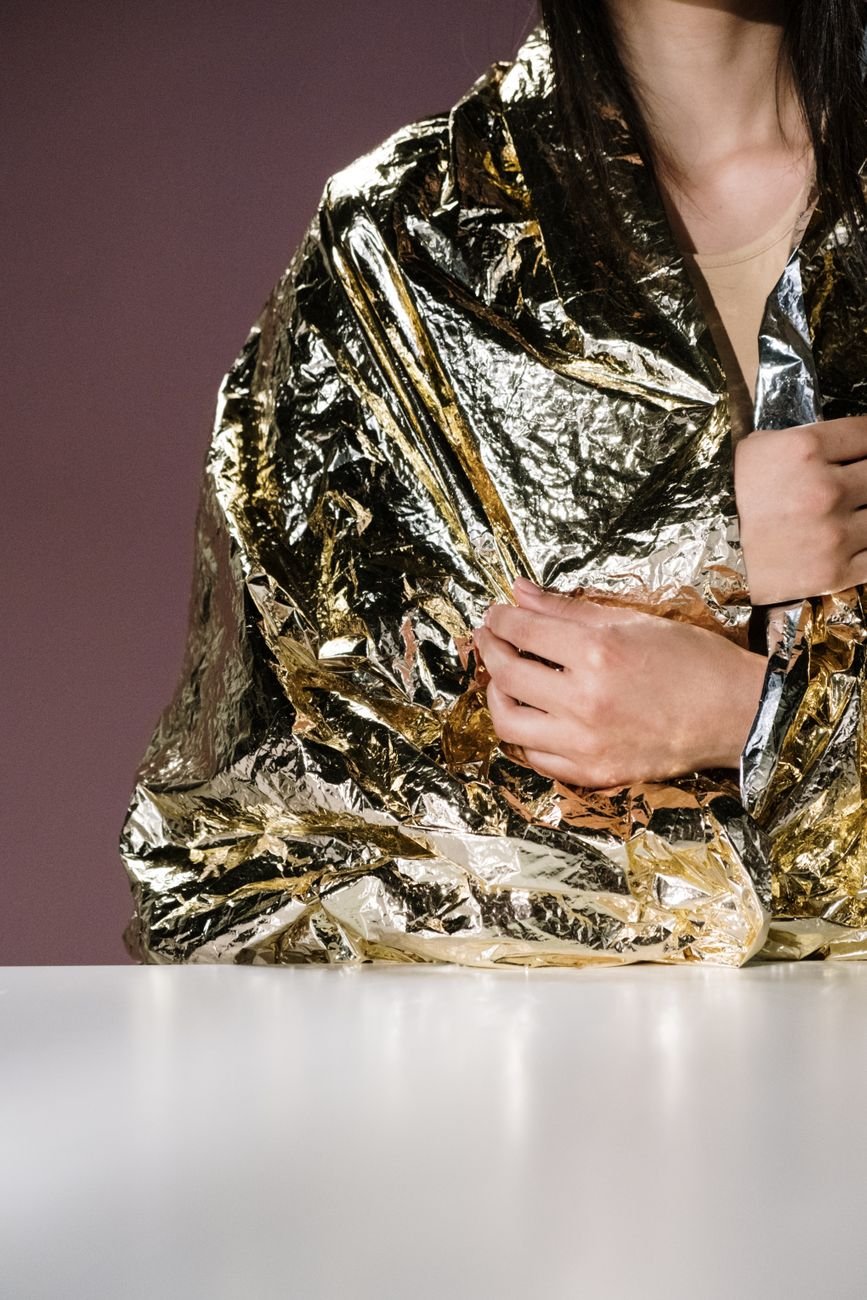
A short delay can become a heat-loss problem long before it looks like an emergency.
A missed turn near dusk, a punctured tire on a wet road, or a stalled hike can leave someone standing still in temperatures that felt harmless an hour earlier. Sweat or rain flattens clothing insulation; a light breeze strips away the warmed air next to the body; fatigue reduces the impulse to keep moving. Mild weather is not the same as mild exposure.
A Mylar blanket can reflect some radiant body heat and block wind, but it has almost no loft and offers little protection from cold ground, pooling water, or tearing. Its tiny packed size makes it easy to carry during a “quick” outing, yet that convenience can invite false confidence. When an exit or assistance is likely but not certain, the relevant question is not whether the sheet works in theory, but whether it can stay intact, dry, and wrapped around an increasingly tired person long enough to matter.
A Reflective Sheet Is Not a Bivy
Flat reflective blanket
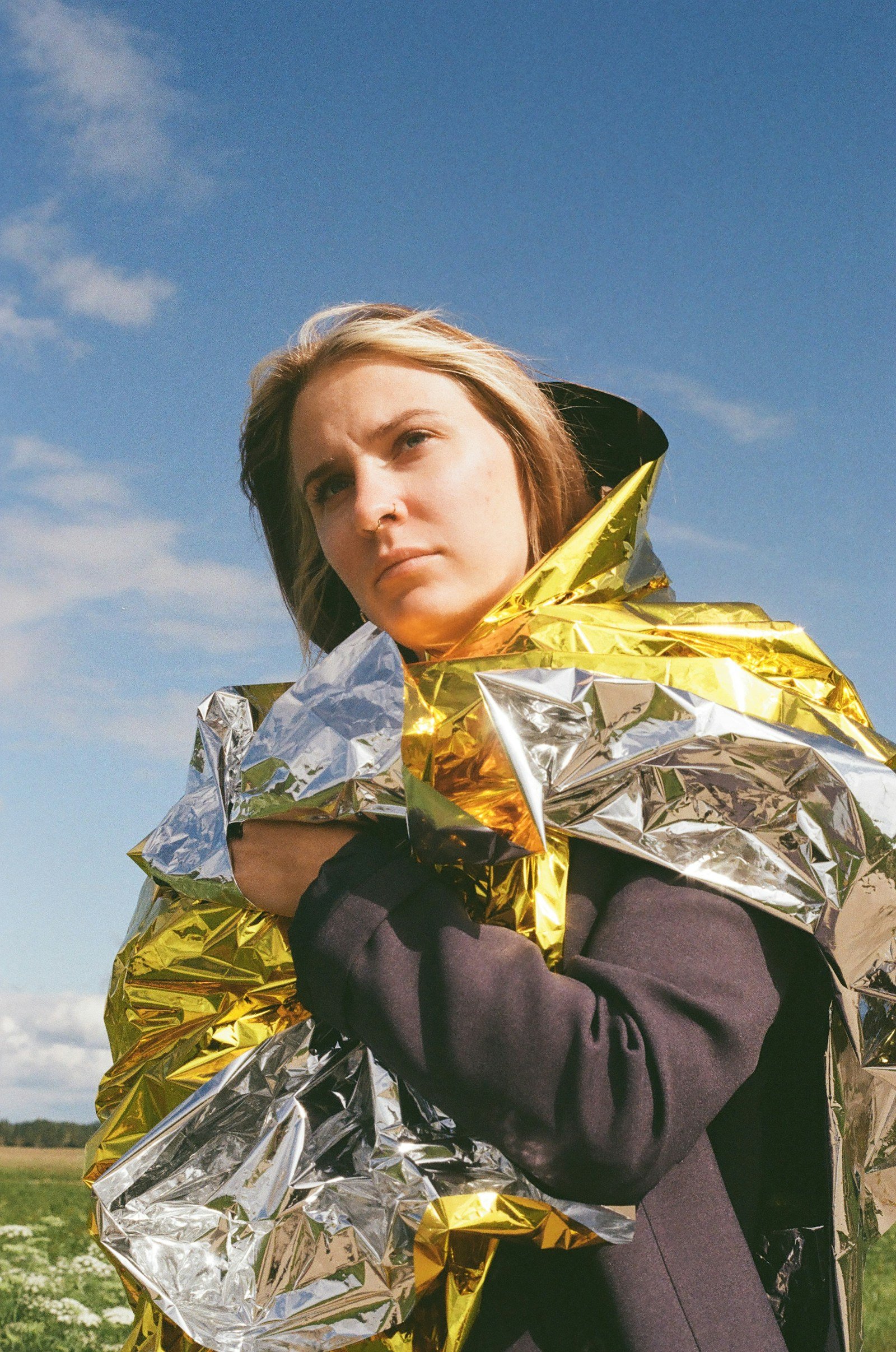
A thin metallized sheet mainly reduces radiative heat loss when it faces an air space. Wrapped tightly against clothing or skin, it has little loft, tears easily, and leaves openings where wind can strip warmed air away.
Emergency bivy
This is a reflective blanket formed into a bag, usually with sealed side seams and one entry opening. Its enclosure blocks wind far better than a flat sheet and traps a small layer of air, but condensation can dampen clothing if ventilation is limited.
Conventional fabric bivy
A fabric bivy is a weather shell for a sleeping bag, commonly using coated or breathable textiles. It is designed for repeated use, abrasion resistance, and more controllable moisture transfer; its warmth still comes primarily from the insulation inside.
Air gaps and seams
Reflective surfaces work most effectively across a still air gap. Seams, drawcord openings, and face apertures determine whether a shelter retains that air, while loose coverage can admit wind and erase much of the expected benefit.
Ventilation trade-off
Closing a shelter improves wind protection but concentrates humid exhaled air and perspiration. A small managed opening can limit condensation, though it also reduces heat retention in exposed conditions.
Useful Bridge, Not Overnight Shelter
Where the heat actually goes
A resting body loses heat through four routes, often at once. Conduction transfers warmth into colder ground, rock, snow, or wet surface, and a thin reflective sheet offers little resistance to it. A foam pad, pack, dry vegetation, or other lofted material interrupts conduction far more effectively.
Convection carries warmth away as moving air replaces the warmed air beside clothing and skin. Wind can turn small openings, loose edges, and torn tape into major heat leaks. A bivy’s closeable shape helps retain a layer of relatively still air, which can matter more than its surface appearance when conditions are exposed.
Evaporation becomes important when clothing, hair, or inner layers are wet. Changing liquid water to vapor requires substantial energy, drawn from the body and nearby materials. A sealed reflective wrap may reduce wind-driven evaporation, but it can also trap humid air; dampness inside can eventually compromise comfort and insulation.
Radiation is the loss Mylar addresses most directly. Its reflective coating can return infrared energy only when it faces a warm body across an air gap. Pressed tightly against clothing or skin, it behaves mainly as a thin conductive layer rather than an effective radiant barrier. The gap preserved by a bivy, clothing loft, or a supported wrap makes the reflective surface more useful.
A reflective blanket can reduce radiant loss and block some wind. It cannot replace the ground insulation, stable air pocket, and durable enclosure that determine survival comfort over time.
What Decides Whether the Swap Works
The low is only one part of the exposure.
A falling temperature during a long, inactive wait steadily reduces the margin. Wind strips the warm air layer; damp clothing adds evaporative loss. A calm, dry half-hour under cover is a different event from several hours before dawn.
Reflective film contributes little insulation by itself.
Its reflective surface works mainly when a still air gap faces the body. Wrapped tightly, torn, soaked, or driven by wind, it cannot replace loft. The comparison between compact shelters and Mylar blankets turns on enclosure and trapped air, not marketing language.
Ground contact can dominate heat loss.
Compressed clothing has limited resistance, and conductive loss into cold ground continues regardless of a shiny outer layer. A pack, pad, dry vegetation, or other insulation beneath the body can change the balance substantially. Rain or wet snow also makes a thin sheet harder to manage and prone to pooling or tearing.
Make the sheet work
Use the sheet as a windbreak, not a sealed cocoon: leave a face opening and air gap. Put a pack, clothing, or debris underneath. Fold stressed edges before tensioning. Condensation wets insulation, increasing heat loss; glove-friendly fire starting shortens exposure.
Tension can tear thin reflective film.
Bivy trade-offs explained
TheOutdoorGearReview considers bivy advantages, limitations, and situations where a bivy may not suit.
Where a flat sheet breaks down
A flat Mylar sheet can look adequate while held in place, then become difficult once its user is tired, wet, or working in gusts. Thin film punctures readily on rock, brush, and sharp hardware; a small tear can propagate under tension. It also shifts off the shoulders or hips unless continually tucked or weighted.
Water creates another weakness. A draped sheet can funnel runoff toward the body or form a sagging pocket that collapses its useful air gap. Hands, feet, and face remain hard to cover without sealing in damp breath, while wrapping and unwrapping the film is awkward in wind. Condensation on the inside can wet clothing over a longer stop.
What a bivy changes
An emergency bivy provides a shaped enclosure, seams, and a footbox for a short, unplanned wait in unsettled weather. A conventional fabric bivy protects a sleeping bag or quilt through a planned night, with tougher fabrics and controlled ventilation. Stability and warmth vary by design between the two.
The choice still depends on the whole sleep system:
- A flat sheet suits brief use behind a windbreak with ground insulation.
- An emergency bivy adds containment when wind, rain, or duration may increase.
- A conventional bivy makes more sense on rough ground or with a bag, quilt, and pad intended for overnight use.
Decide before the delay becomes an ordeal
-
Inspect the actual sheet
A blanket that is pinholed, brittle, or missing from its pouch has far less value. Check its size, unfold it once, and confirm that tape, cord, or clips are available if a windbreak is part of the plan.
-
Define a narrow use case
Flat Mylar is a reasonable bridge only for a brief, dry, sheltered wait when clothing is already adequate and a pad, pack, or other ground barrier is present.
-
Count insulation separately
Reflective film does not replace loft or a sleeping pad. If cold ground, wind, wet clothing, or prolonged stillness are likely, a shaped emergency bivy or fabric bivy provides a more dependable margin.
-
Reassess as conditions change
A longer delay, rising wind, dampness, or shivering changes the calculation. Several modest risks together can outweigh the blanket’s compact convenience.
-
Practice in calm conditions
A short trial exposes noisy film, awkward attachment points, and condensation. It can also connect keeping dry while filtering water and managing a blanket with a realistic shelter routine.
A Mylar blanket has a narrow, useful job
A reflective blanket can add meaningful protection during a short, protected interruption, especially when it preserves an air gap and supplements existing clothing and ground insulation. Its value is speed, weight, and visibility—not durable enclosure.
As exposure length, wind, moisture, or ground contact increase, a bivy becomes the more appropriate shelter component. Inspection and practice make the distinction clearer before conditions make improvisation difficult.



15 Comments
I had assumed an emergency bivy was just a Mylar blanket with better marketing. The seam/shape point changed my mind. Does a reusable fabric bivy always breathe better, or are some basically sweat bags too?
It varies a lot by material and design. Some fabric bivies are more breathable, especially those intended for regular sleeping use, but no bivy eliminates moisture-management concerns; ventilation, the sleeping bag or quilt inside, weather, and exertion all affect condensation.
My inexpensive “breathable” bivy still collected moisture in humid weather. Better than plastic, yes, but I would not call it dry inside. Leaving the opening positioned carefully helped.
Would a contractor bag plus a reflective sheet be a reasonable low-budget backup? I hike mostly in mild coastal weather, where drizzle and wind show up together.
It can be a more capable backup than a flat sheet alone if used thoughtfully. Keep an opening for ventilation, avoid sealing wet clothing inside for long periods, and prioritize something beneath you; a contractor bag is useful for wind and rain control but can build condensation quickly.
Good reminder that the shiny side is not a force field. Ground insulation first, then wind protection, then try to preserve an air gap. Boring advice, but boring is nice when you’re not shivering.
One detail I wish more emergency lists mentioned: if you’re wet, a reflective sheet doesn’t magically dry you. I got caught in a shower on a day hike and wrapping up stopped the wind, but I still chilled once I stopped moving. Dry base layer from my pack mattered far more.
I used a cheap Mylar sheet after an unexpected car breakdown last spring. It cut the wind while I sat behind a hedge, but the cold coming up through the pavement was the real problem. I would not have wanted to spend the whole night in it, even though the forecast was only around 45°F.
That is a good example of the ground-loss issue. The sheet can help as a windbreak, but a folded jacket, floor mat, cardboard, or anything insulating under you often matters more once you are stationary.
Yep. I learned this at a youth soccer tournament—space blanket on wet grass did basically nothing until someone gave me an old foam seat pad.
The distinction between “reflective” and “insulating” is the bit people miss. If it is wrapped tight against wet clothes, where exactly is this magical air gap supposed to appear? 😅
This matches my experience during a delayed ferry crossing. I had dry layers and sat on my backpack, then loosely draped the blanket around my shoulders behind a wall. It made the wait much more tolerable.
Same blanket would have been pretty useless if I had been standing in rain on the dock for four hours. People tend to describe gear as “works” or “doesn’t work,” when the time and exposure are the entire story.
Well put. A short protected delay with dry clothing is a very different problem from an unplanned overnight in wind and rain. The article’s main caution is against treating those situations as interchangeable.
And sitting on the backpack was smart. I used mine as a pillow once and then wondered why my hips were freezing.
I’m mildly skeptical of calling a Mylar blanket useful for anything but signaling. Every one I’ve opened has torn at a corner before I could even decide which side was up.