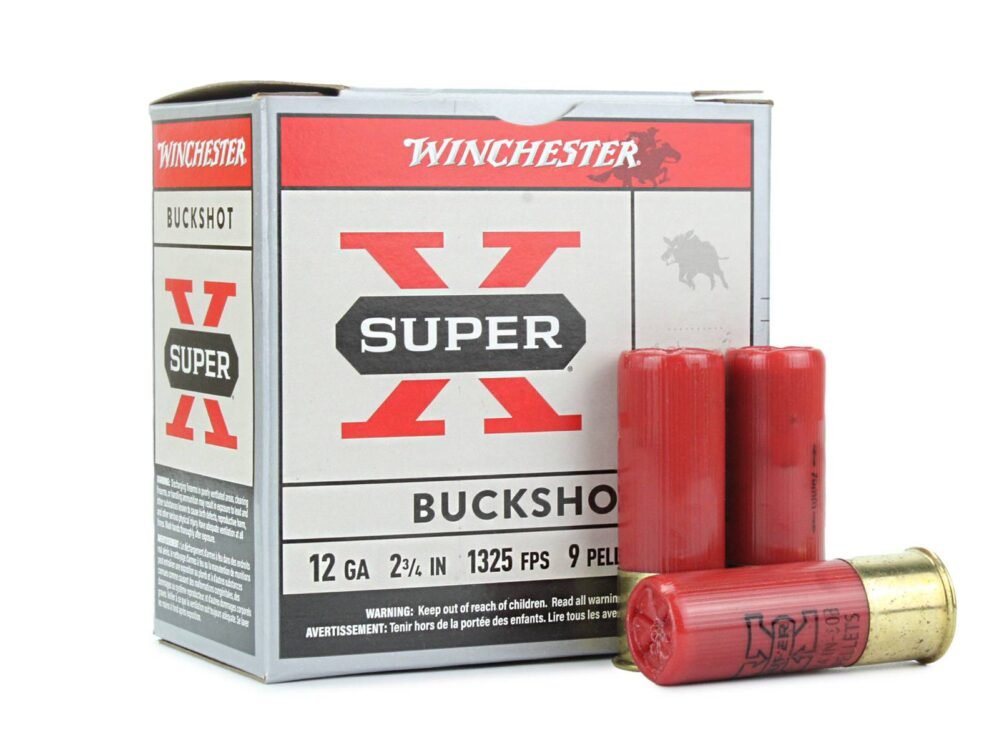
A choke stamp is a starting clue, not a pattern guarantee.
Two published targets fired at the same distance can tell very different stories: one tighter choke may pull more pellets into the center, while another produces thin patches or unexplained flyers. Change the buckshot load—or the shotgun—and the apparent advantage may shrink or disappear.
The useful unit of comparison is the complete combination: shotgun, choke tube, load, and distance. Constriction labels alone cannot predict pellet deformation, wad behavior, or how evenly pellets spread. A sound evaluation compares several targets under identical conditions, recording both pellet count inside a fixed circle and distribution across it. One small group can look impressive while hiding gaps that matter more than its diameter.
What choke actually changes
Choke changes the final passage through which the shot column and wad travel. More constriction can reduce the pattern’s overall diameter, but it may also compress the pellets, alter wad release, or increase pellet deformation. Those effects help explain why 00 buckshot spread is not fixed across guns, loads, chokes, and distances.
The response is not reliably linear. Moving from cylinder to modified choke may tighten one load, produce little change in another, or create a dense center with stray pellets. Wad design, pellet hardness, buffering, barrel geometry, and velocity can all influence what appears on the target.
Tight is not the same as useful
A small extreme spread can look impressive while concealing poor distribution. A practically useful pattern should also be centered near the point of aim, reasonably even, and free of unexplained peripheral hits that could leave the intended target area.
Published tests are more informative when they report:
- total pattern diameter;
- pellet count inside a defined circle;
- location of the pattern center;
- flyers or sparse sectors;
- results from several shots with the same setup.
The qualified conclusion is simple: additional choke often changes buckshot patterns and sometimes tightens them, but it does not guarantee a denser, more even, or better-centered result. The relevant choke must be evaluated with the specific barrel, shell, and distance under consideration.
What a credible pattern test should report
A published result is useful only when its setup can be reconstructed. Record the source, shotgun and barrel, measured constriction—not merely the choke label—ammunition, distance, number of shots, and scoring method.
-
Look for complete, countable targets
Full target images reveal off-center impacts, flyers, and thin areas that a cropped “core” can hide. Pellet counts also support meaningful percentages; estimated pattern diameters are much less informative.
-
Check how the pattern was measured
The report should explain whether the scoring circle was fixed or drawn around the densest area, and whether distance was measured from the muzzle. Those choices can materially change the apparent result.
-
Give repeated shots more weight
Several targets with per-shot counts, averages, and visible variation provide stronger evidence than one selected target. If the total pellet count was established from an unfired shell, the sampling method should also be stated.
Treat comparisons cautiously when barrel, load, distance, or scoring method changes alongside choke constriction.
What matched choke tests show
Published comparisons are most useful when the same shotgun, load, distance, aiming point, and scoring method remain fixed. Read on that basis, the targets generally show increasing concentration as constriction increases—but not a smooth, universal progression.
| Constriction | Typical result in matched series | What can complicate it |
|---|---|---|
| Cylinder | Broadest pattern and lower central density | An efficient shot-control wad may still produce a compact core |
| Improved cylinder | Modest concentration, often with fewer pellets near the target edge | Individual shells can still throw a distant flier |
| Moderate constriction | Denser center and smaller useful spread in many conventional-load tests | Uneven rings or empty sectors may appear despite a smaller diameter |
| Tighter constriction | Frequently the greatest pellet concentration | Some load-and-choke combinations become irregular or gain little over moderate constriction |
Diameter does not tell the whole story
A tighter outer measurement can hide a weak pattern. One stray pellet may enlarge an otherwise dense group, while a compact group can contain a central gap large enough to matter. The stronger published tests therefore show full target photographs or report pellets in a defined central zone, not merely the distance between the two widest impacts.
Consistency also deserves separate treatment. If one choke produces two compact targets and one scattered target, its average diameter may look acceptable while its repeatability remains questionable. Several shots per combination reveal whether fliers are recurring behavior or an isolated shell.
Specialized wad systems are a notable exception to the broad trend. Loads designed to keep the shot together after leaving the muzzle may pattern tightly through relatively open constrictions, and additional constriction does not always improve them. Consequently, results should be compared within each ammunition-and-gun setup; combining different pellet materials, wad designs, barrel dimensions, distances, or scoring circles creates a misleading choke ranking.
Why tighter can become less predictable
Buckshot leaves little room for error inside a choke. Compared with smaller birdshot, large pellets have fewer paths around one another, so increasing constriction can force harder pellet-to-pellet and pellet-to-barrel contact. That contact may flatten pellets; deformed pellets generally shed velocity unevenly and are more likely to leave the main pattern.
The wad adds another variable. A tight or ported choke can grip, strip, or disturb some shot cups, changing when the pellets separate. Uneven release may produce a dense center but also unexplained gaps or flyers—one reason a smaller overall pattern is not automatically a more useful one.
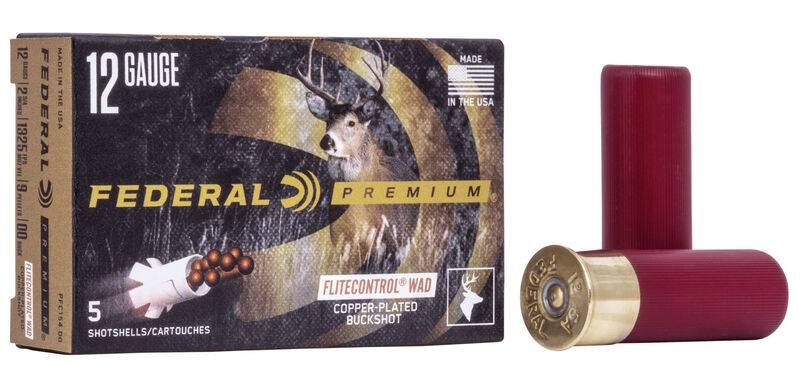
Federal’s published guidance for FliteControl buckshot illustrates the load-specific nature of this problem: the company generally directs users toward chokes without wad-stripping features because the rear-braking wad is designed to control release. Published pattern tests of conventional buckshot likewise sometimes show improvement from cylinder to modified, followed by little additional tightening—or a less even pattern—at greater constriction. Those results are examples, not a rule for every barrel and load.
The practical question is therefore not simply whether full choke can fire buckshot, but whether that exact barrel, choke tube, and shell are approved together and produce repeatable, centered patterns.
Follow the firearm, choke, and ammunition manufacturers’ guidance. Never fire steel, specialty buckshot, or a wad-controlled load through a choke that is not explicitly rated for it. Verify results on multiple complete targets rather than trusting one tight group.
Load construction changes the choke response
A choke result cannot be separated from the shell’s construction. The Lyman Shotshell Reloading Handbook explains that soft lead pellets can flatten during acceleration and choke passage; deformation increases the chance of flyers. Conventional unbuffered buckshot may therefore tighten with added constriction, yet pattern quality can deteriorate if pellet damage rises.
| Load design | Likely interaction with choke |
|---|---|
| Unbuffered, soft lead | More susceptible to deformation and erratic outer pellets |
| Buffered or plated shot | Better protected against deformation, often retaining more uniform pellets |
| Shot-control wad | Pattern depends heavily on how the choke affects wad release |
Buffer fills space around the pellets and limits collision, which explains the purpose of buffering buckshot. Plating can also reduce surface damage, although plating thickness, pellet hardness, and payload arrangement differ among loads. These features may allow useful performance through tighter constrictions, but they do not guarantee it.
Specialized wads require a different reading. Federal says its FLITECONTROL wad remains with the shot longer to control dispersion, while Hornady says its VersaTite wad is intended to produce tight patterns without modified or full choke. Added constriction—or a wad-stripping or ported choke—may disrupt that release sequence.
Published results should therefore be grouped by exact shell and choke. A practical comparison holds the gun, distance, and target method constant, then tests each load through manufacturer-approved constrictions with repeated shots.
Distance changes the pattern
A pattern measured at one range cannot safely be scaled to another. Across published multi-distance tests, buckshot does not expand at a fixed rate: pellets may remain clustered early, separate rapidly after wad release, then produce irregular edges and isolated flyers.
Useful testing therefore fires the same shotgun, choke, shell lot, and aiming method at each relevant distance, with repeated targets. Each target should record both overall spread and pellet distribution. A modest circle with a thin center or a gap near the aiming point may be less useful than a slightly wider, more even pattern.
Interpolation between tested distances may guide expectations; extrapolation beyond them is much less reliable.
Pattern a shotgun repeatably
-
Confirm condition and compatibility
With the shotgun unloaded, inspect the barrel and choke for damage or obstruction. Confirm that the ammunition, shot material, and choke are approved by both manufacturers.
-
Prepare a controlled range
Use eye and hearing protection, a stable firing position, large paper targets, and a safe backstop. Clean the choke threads, install it as directed, and verify that it remains seated only while the firearm is unloaded.
-
Mark the setup
Record the shotgun, barrel, choke marking, load, lot number, measured distance, weather, and aiming point. Use a fresh target for every shell.
-
Fire repeated patterns
Shoot at least three rounds per combination at distances relevant to the intended use. Keep the hold, support, and aiming method consistent.
-
Score every target consistently
Count pellet strikes, measure overall spread, and note empty gaps, detached fliers, and the densest area. Compare that area with the aiming point to identify point-of-impact shifts.
Published tests can identify promising combinations, but they cannot account for an individual barrel, choke, or ammunition lot. A load should be trusted only after repeated patterns from the specific shotgun.
Let the targets choose the choke
Start with the least constricted choke approved by both the shotgun and ammunition manufacturers, then retain it only if repeated targets show adequate pellet distribution without unacceptable gaps or flyers at relevant distances. A choke’s reputation cannot predict one barrel-and-load combination.
Keep a log of ammunition lot, choke, distance, point of impact, pellet count, gaps, and flyers. Pattern again after changing the choke, barrel, load, wad design, pellet material, or ammunition lot. Within broader 12-gauge buckshot selection for home defense, patterning should complement reliable function, controllable recoil, and credible terminal-performance evidence—not replace them.
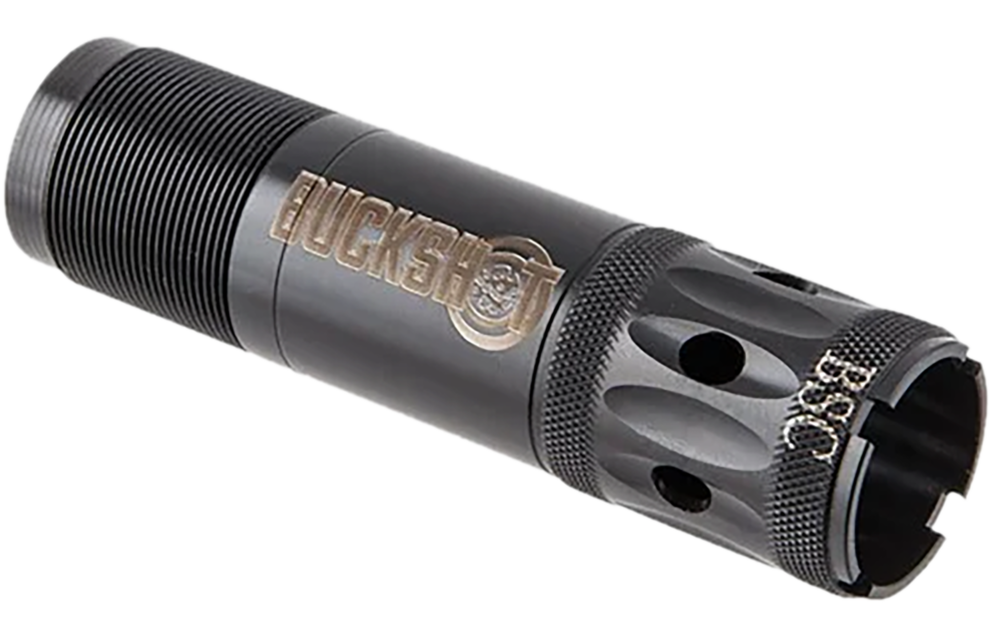
Carlsons Ported 12 Gauge Rem Choke Buckshot Choke Tube
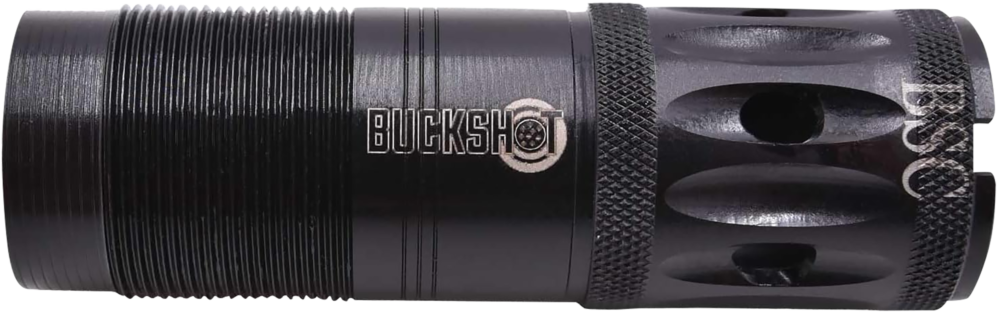
Carlsons Buckshot Ported Choke Tubes Winchester 12 Gauge Stainless Steel