

A fire kit is only as usable as its smallest, coldest step.
In sleet or deep cold, a thumb-and-forefinger task can become a dropped match, a lost striker, or a wrapper that will not open. Wet leather, bulky insulation, soot, and numb hands all reduce pinch strength and tactile feedback.
A glove-ready setup treats gross-motor operation as the standard: items must be separable, held, placed, and ignited with a clenched grip or broad fingertip pressure. Favor larger tinder pieces and obvious shapes; reserve ferro rods for kits that include a substantial striker and a stable place to brace the rod. Test the entire sequence while gloved—not merely the spark.
- Separate one starter from its packaging with gloves on.
- Keep ignition and tinder tethered or contained together.
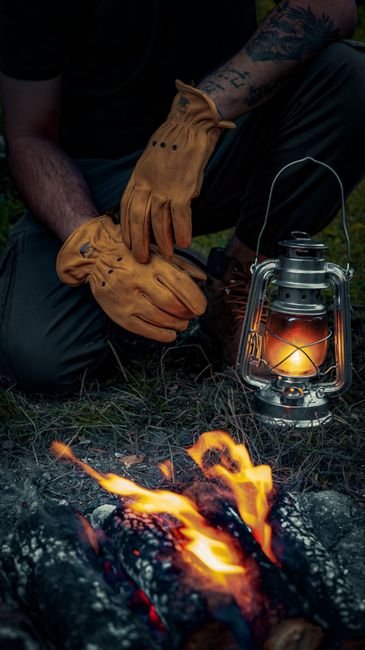


Judge the whole handling chain
- Grip
Test retrieval from the exact pocket, pouch, or kit where it will ride. A raised edge, large pull tab, or rigid body gives insulated gloves a positive purchase.
Works with glovesCan be seized without pinching fingertips togetherFails mid-sequenceSmooth, thin pieces that twist or disappear in a glove palm - Open
Packaging is often the real failure point. Tear notches, foil seams, tight caps, and tiny zip closures may be manageable bare-handed yet defeat cold or wet gloves.
Works with glovesA deliberate pull or twist exposes the fuelFails mid-sequenceFine tabs, flush seams, or tools needed to open it - Place
The fuel must reach the tinder without being crushed, blown away, or dropped into snow. Stable cubes, tabs, and tethered units generally tolerate clumsy placement better than loose fibers.
Works with glovesIt stays where laid and keeps its ignition face accessibleFails mid-sequenceLoose material requiring careful shaping or fluffing - Ignite
Include the actual ignition source in the test. A firestarter that is easy to hold but demands precise lighter-wheel control or a tiny striker target has not passed.
Works with glovesA broad, repeatable ignition target with gloved handsFails mid-sequenceA narrow edge or delicate action at the final moment
With the intended gloves on, remove one unit from its normal storage, open it, position it in a mock tinder bundle, and operate the intended ignition source. Repeat after wetting the gloves or chilling the kit.
A useful result is not merely eventual success: the sequence should be repeatable without removing gloves, setting down small parts, or relying on a second attempt.
Choose tinder with something to grab
A fire starter that works with gloves doesn’t need to disappear into a pocket to be practical.
A defined piece with thickness and structure is usually more usable.
With insulated gloves on, it is better than loose fibers, a tiny tablet, or tinder teased apart before lighting.
Waxed tabs, compressed plugs, bound bundles, and fuel cubes give gloved fingers a clear target. They can be removed from a pouch, placed in the fire lay, and held briefly for ignition. This works without the material scattering or snagging on glove fabric.
That containment matters as much as ignition chemistry when wind and cold reduce dexterity. A fire starter that works with gloves helps maintain grip in cold, windy conditions.
Bulk also buys time.
A small amount of tinder may flare brightly.
It may expire before damp kindling has warmed.
A larger waxed piece generally sustains a steadier flame long enough to dry and ignite surrounding fine fuel.
The trade-off is modest pack volume.
A few self-contained units often replace an awkward bag of loose tinder.
Match the form to the task
The right form depends on the fire being built and the gloves being worn.
- Tabs and plugs suit kits where consistent portions and clean handling matter.
- Bundles can bridge irregular gaps under kindling and present several ignition edges.
- Fuel cubes are stable on a flat base, though their rigid shape may fit poorly in a tightly packed natural tinder nest.
Avoid forms that require peeling, crumbling, or separating into layers.
That preparation must be tested while wearing the actual gloves.
A starter that can be placed whole is preferred, and it can be lit with a long flame or spark.
Self-contained plugs for weather-exposed kits
These waxed fire plugs come as 50 individual starters, providing a more substantial piece to pick up and position than loose tinder. The manufacturer describes them as weatherproof with extended burn time and a long stated shelf life, features that can suit vehicle, camp, and emergency kits. Confirm that the plug lights reliably with the intended ignition source while wearing the gloves carried with it.
Make the ignition source glove-ready
Fuel is only half the setup. A waxed tinder tab held securely is useless if the ferro rod can’t anchor, if its scrape edge is buried under a cap, or if its lighter requires a bare-thumb wheel. The practical test is a continuous sequence: remove, orient, expose, strike, ignite, place the flame—without setting down the gloves.
What commonly breaks the chain
Compact ferro rods can generate ample sparks.
They can be difficult to stabilize against a knee, log, or other support.
A rod around four inches long with a meaningful diameter offers more purchase than key-ring-sized models.
A lanyard or enlarged handle also gives a gloved hand somewhere to hold without covering the striking area.
For a closer look at rod sizing, see the linked guide: ferro rods selected for glove-friendly fire starting.
Short matches create a different problem.
The hand approaches the flame immediately, and a narrow striker strip is easy to miss.
Oversize storm matches, or matches carried with a broad, dry striker surface, are generally easier to control.
The striker must stay reachable when the container is wet, cold, or partly opened—not hidden on a tiny box edge.
Small lighter wheels and recessed buttons are frequent weak links.
A wide lever, protective flip cap, or large piezoelectric button can be operated through insulation.
This is more reliable than a tiny serrated wheel.
Wind resistance still matters.
But control access comes first.
A windproof lighter that cannot be actuated with gloves is not a glove-ready ignition source.
A useful field check is to practice the exact starter–igniter pairing in dry conditions first.
Then practice it with the gloves normally carried.
This exposes awkward cord placement, slippery lids, and strikers that are technically present but not practically reachable.
A larger-format ferro rod for deliberate scraping
The 4 × 3/8-inch ferrocerium rod provides substantially more gripping area than miniature rods. Its attached paracord lanyard and included Striker-Pro scraper—with six striking edges—help keep the rod and scraper together and offer several exposed edges for a broad, controlled stroke. The listed weather-resistant ferrocerium construction suits a backup ignition role; gloved users can still assess whether the lanyard knot and scraper shape work with their particular gloves.
Run the ignition sequence without taking gloves off
-
Retrieve one starter, not a handful
A single starter should come out in one pull, with its wrapper, tab, or rigid edge available to pinch. Loose tinder bundles and nested packets invite dropped pieces and wasted time in wind.
-
Build a base before opening the tinder
Set a palm-sized platform of dry sticks, bark, or split wood on snow, wet ground, or loose duff. The starter needs a firm, raised surface that will not sink, roll, or draw ground moisture into the flame.
-
Expose the ignition face
Open only the portion that must burn or catch a spark. A partially retained wrapper can act as a handle and windbreak, but plastic packaging must be kept clear of the flame unless it is specifically intended as fuel.
-
Add kindling with air gaps
Lean fine, dry pieces over the starter rather than burying it. Finger-thick fuel can wait until flame is established; tightly packed material often turns a long-burning starter into a smoky, oxygen-starved ember.
-
Ignite from outside the flare zone
Bring the lighter flame, ferrocerium sparks, or match in from the upwind side while the gloved hand stays clear of the tinder’s expected flare path. Once lit, let the starter establish itself before rearranging the lay.
At home, remove unnecessary outer cartons, separate individual starters, and stage them in a wide-mouth pocket or pouch that opens with a gloved pull. Orient pull tabs and striker surfaces toward the opening; store the ignition source beside—not beneath—the tinder.
A practical test is simple: with the intended gloves on, retrieve one starter, open it, and return the remainder without emptying the kit. Any item that requires fingernail work, two-handed tearing, or sorting through loose contents is likely to become a cold-weather failure point.
When weather demands a longer flame
A compact spark-catching tinder may work in calm, dry conditions, yet rain and wind change the job entirely.
The starter now needs to produce a concentrated flame for long enough to warm wet wood.
It should evaporate surface moisture and establish a coal bed before gusts pull heat away.
Waterproof packaging protects an unused starter in a pack, but its dependability can fail when wet gloves, rainwater, or a dropped cube dampen its surface. Look for a wax-rich or water-resistant fuel body that remains exposed, lit, and handled without crumbling.
This distinction matters when lighting wet tinder with a ferro rod, since repeated sparks can be lost to wind and moisture. Choosing a fuel that resists moisture makes it far more likely you can get a fire going in damp, gloved conditions.
Build in an ignition margin.
Extra burn time is not merely convenience.
It creates a working interval in which progressively larger material can catch.
- Begin with the driest inner fibers available, not visibly soaked outer bark.
- Keep the flame low and shielded, with small gaps for airflow rather than a tightly packed bundle.
- If conditions are severe, use two starters separated slightly so each contributes heat without smothering the other.
A small, short-lived flame can disappear before damp kindling responds, while a sustained flame gives the fuel stack time to transition from surface drying to self-supporting combustion.
Mini cubes for campfires and cooking fires
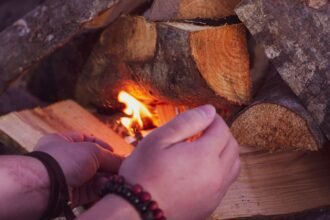
These 1.1-inch starter cubes are described as natural wood and plant-based wax, in a 32-count pack. E500 states they light with one match in wind, rain, or with damp wood; in field use, treating that as a useful claim to verify in local conditions is sensible. The cube format offers a larger target for gloved handling than loose shavings.
Claims That Fail in Gloves
Many sealed packets still require fingernail work: peeling a flush edge, separating laminated film, or tearing along a tiny notch.
A starter can remain perfectly dry yet be inaccessible with insulated, wet, or stiff gloves. Oversized pull tabs, tearable seams, or a reusable pouch with a large closure are more meaningful than a waterproof rating alone.
Loose shavings and crumbly wax products may scatter, slump off a log, or demand close-in lighting while a hand steadies the fuel.
A longer flame only helps after the fuel is placed securely and lit safely. A rigid cup, textured block, or bundled form creates a grab point and keeps burning material contained.
A ferro rod, lighter, or match can each become awkward when wet, cold, or operated through bulky gloves.
A dry-run with the exact carried gloves reveals hidden dependencies: tiny striker edges, recessed lighter wheels, wrappers that cannot be opened, and fuel that needs a second hand. Testing an alternate ignition method exposes a more resilient setup.
Put on the gloves normally carried, then open the starter, position it on its intended base, and light it with every ignition source in the kit. The test is most revealing when the components are cold and packed as they would be carried.
A glove-on fire kit with backups
- Carry a long-burning primary starter, a separate backup starter, and an ignition source that works through the expected gloves.
- Store components so one frozen zipper or damaged pouch cannot disable every ignition path.
Build the kit as a sequence: retrieve, open, place, ignite, and shield. Test that sequence in the actual gloves and likely wind, wetness, and cold-stiffened conditions. Any component demanding bare-hand dexterity breaks the system.
The Ultimate Fire Starter! Black Beard Fire Plugs Demonstration
Black Beard Fire Plugs (50 Plugs) | 100% Weatherproof Fire Starter for Campfires | Can Light 50+ Fires | Extra Long Burn Time | 30 Yr Shelf Life for...
Features
| Brand Name | Black Beard Fire Starter |
| Unit Count | 50 Count |
| Global Trade Identification Number | 00860006832490 |
| UPC | 860006832490 |
| ASIN | B0BCDV6Y6G |
| Flavor | Flavorless |
| Item Form | Pellet |
| Scent Name | No scent |
| Material Type | Wax |
| Item Weight | 0.12 kg |
| EU Spare Part Availability Duration | 30 years |
- 🔥 Quick & Reliable Ignition: Start fires effortlessly, anytime, anywhere, even in wet conditions.
- 🌧️ Waterproof & Windproof: Designed to withstand challenging weather, ensuring dependable fire-starting in all situations.
- ⏱️ Extended Burn Time: Each Fire Plug burns long, providing ample time to ignite your campfire, grill, or fireplace.
- 🛡️ Compact & Lightweight: Easy to carry; ideal for campers, hikers, hunters, and outdoor adventurers.
- ♻️ Environmentally Friendly: Made from Non-toxic and odorless materials; leaves no trace behind in nature.
- 🏕️ Versatile Use: Perfect for the backyard, camping, hiking, BBQs, survival situations, and emergency preparedness.
4" Survival Ferro Rod Drilled Flint Fire Starter and Striker Kit | Ferrocerium Rod with Paracord Landyard Handle and Striker, 4"(Long) x 3/8"(Diameter)
Features
| Brand Name | bayite |
| Included Components | Fire Starter |
| Number of Pieces | 1 |
| Unit Count | 1 Count |
| Manufacturer | bayite |
| UPC | 708624425840 |
| Set Name | Yes |
| Number of Items | 1 |
| Manufacturer Part Number | 1A333 |
| ASIN | B00PSGOM32 |
| Item Weight | 2.46 ounces |
| Material Type | ferrocerium |
- 5ft Paracord included, gives you a good grip and never comes off. Comes with a bayite Striker-Pro striker attached to the paracord, always be prepared to start a fire
- bayite 6 Striking Edges Striker-Pro striker is made from TOOL GRADE HSS STEEL and has a distinct hardness, maximizes a shower of hot sparks, no matter whether you prefer to use your left hand or right hand to scrape. Don't use bad quality Knife as striker. Otherwise it will not produce enough sparks due to insufficient hardness of blade
- Ferrocerium Rod Length:4"(10cm). Diameter: 3/8"(10mm). Large enough for a shower of sparks and small enough to carry
- Made of high effective ferrocerium rod. Waterproof & Weatherproof, fits all weather, works in any weather condition
- Sparks shower at 5,500 F (3,000 C) to ignite a fire in any weather (even wet), at any altitude. Perfect emergency fire starter for Bushcraft, Hiking, Hunting, Fishing, EDC, Emergency, BBQ, Gas Camp Stoves, etc
E500 Fire Starter, Waterproof Firestarter Sticks - Easy Fire Ignition | 32 Cubes Mini Natural Charcoal Starter for Campfires, Chimney, BBQ Grill, Fire Pit,...
Features
| Brand Name | E500 |
| Unit Count | 32 Count |
| Model Number | FAT03-32PCS |
| Manufacturer | E500 |
| ASIN | B0GRGQR4K8 |
| Item Form | Cube |
| Material Type | Wax, Wood |
- [Lights Quickly] Measuring 1.1 inches, helps start fires much faster, perfect for fire starters for campfires, charcoal starters, grill starters, and outdoor fire pits—never struggle to light a fire again
- [Natural & Food-Safe] Made from natural wood and plant-based wax, these fire starters are smokeless, odor-free, and safe for cooking. Ideal for BBQs, pizza ovens, grills, and outdoor cooking, without altering the flavor of your food
- [Quick & Reliable Ignition] Lights easily with just one match—even in wind, rain, or damp wood. Great for charcoal starter cubes, camping fire starters, fire pits, and all types of grill starters, ensuring a fast, dependable fire every time
- [Convenient Pack Grill Starter] Includes 32 mini fire starter cubes, providing a reliable supply for all your fire-starting needs. Compact and portable, perfect for camping, hiking, backyard fire pits, and outdoor adventures
- [Long Burn Time – 8–10 Minutes] Each cube burns up to 10 minutes, enough to light firewood, charcoal, or briquettes without additional starters. Ideal for cozy fireplaces, campfires, and outdoor cooking—burn longer, light faster, and enjoy more time outdoors



17 Comments
Good article. “Waterproof” is not the same as “will start a wet fire” — marketing departments would like a word 😂
Does anyone have a good solution for opening individually wrapped starters with heavy work gloves? I like the waterproof wrapping for keeping a kit in the truck, but every wrapper I’ve tried requires a precise tear at one stupid little notch.
My best improvement was making a stable base first. I used to put the starter directly on snow or soggy leaves, then wonder why it burned down without lighting anything. A couple of thumb-thick sticks side by side keep it off the wet stuff and leave room for air underneath.
Lighting from the upwind side also feels obvious after you do it once. Before that I was basically feeding the flame a face full of wind.
I switched from dryer-lint balls to the little wax-and-wood-shaving nests. They take up more room, sure, but I can actually pick one up and set it on wet ground without it turning into lint confetti. Worth the volume penalty for me.
The “whole handling chain” point is dead on. I had a perfectly decent wax starter that I could light with gloves on, but the little zip pouch it came in might as well have been welded shut when my hands were cold.
Exactly—the starter itself can be excellent and still fail the kit if the package needs fingernails or delicate pulling. A larger pull tab, a simple fold-over bag, or keeping a few starters loose in an easy-open outer pouch can make a major difference.
Same experience with tiny tear notches. They work great at the kitchen table, then vanish completely with insulated gloves on.
I appreciate that you mentioned the lighter, not just the tinder. My butane lighter has a recessed wheel that is basically impossible with ski gloves. A cheap torch lighter with a big trigger has been much easier, although it hates extreme cold.
I made a batch of waxed cotton rounds with a short piece of jute sticking out of each one. The jute gives me something to grab and a place to put the flame, so I’m not trying to shave fuzz off with gloves on.
They are not as neat as commercial cubes, but they’ve lit damp twigs surprisingly well. I keep them in a screw-top container rather than individually wrapping them.
That is a smart home-made version of the “something to grab” principle. The protruding jute improves both placement and ignition access. A wide-mouth container is also often more glove-friendly than individual wrappers, as long as you can open it without exposing the entire kit to rain or snow.
I do almost this exact thing, except with a short cotton string tail. The container has been way less annoying than crinkly packets.
I’m mildly skeptical of carrying two different ignition sources unless people actually practice using both. A ferro rod sounds like a great backup until you discover the striker is tiny, the rod is tied to it with a shoelace-thin cord, and you’re wearing mittens. Ask me how I know 🙃
For winter day trips I prefer a large-button lighter plus several waxed starters, and a ferro rod only if it has a chunky handle and exposed edge.
That skepticism is warranted. Redundancy should reduce failure points, not add untested gear. A backup ignition method is valuable when it has a distinct failure mode and can be operated with the gloves you expect to wear—not merely because it looks good in a checklist.
The tiny cord is always the punchline. I replaced mine with a fat loop of bright paracord and it stopped disappearing into the snow.
One caveat on “long burn time” labels: a lot of them seem to mean a calm, dry test with the starter sitting perfectly level. In rain and wind, the useful question is whether it gives enough heat to dry and catch the first layer of kindling.
I now test starters with damp pencil-size sticks over them, not just by timing a flame. Some of the longest-burning ones make a weak candle flame and never get the wood going.
That is a very useful distinction. Burn duration is only part of the picture; flame size, heat concentration, and how well the fuel tolerates moisture determine whether it can bridge the gap to marginal kindling. Testing with realistic small fuel is much more informative than a stopwatch test.
Yep. I’ve had a “12 minute” puck burn forever but it mostly just melted into the snow. A shorter, hotter waxed bundle did the job.