
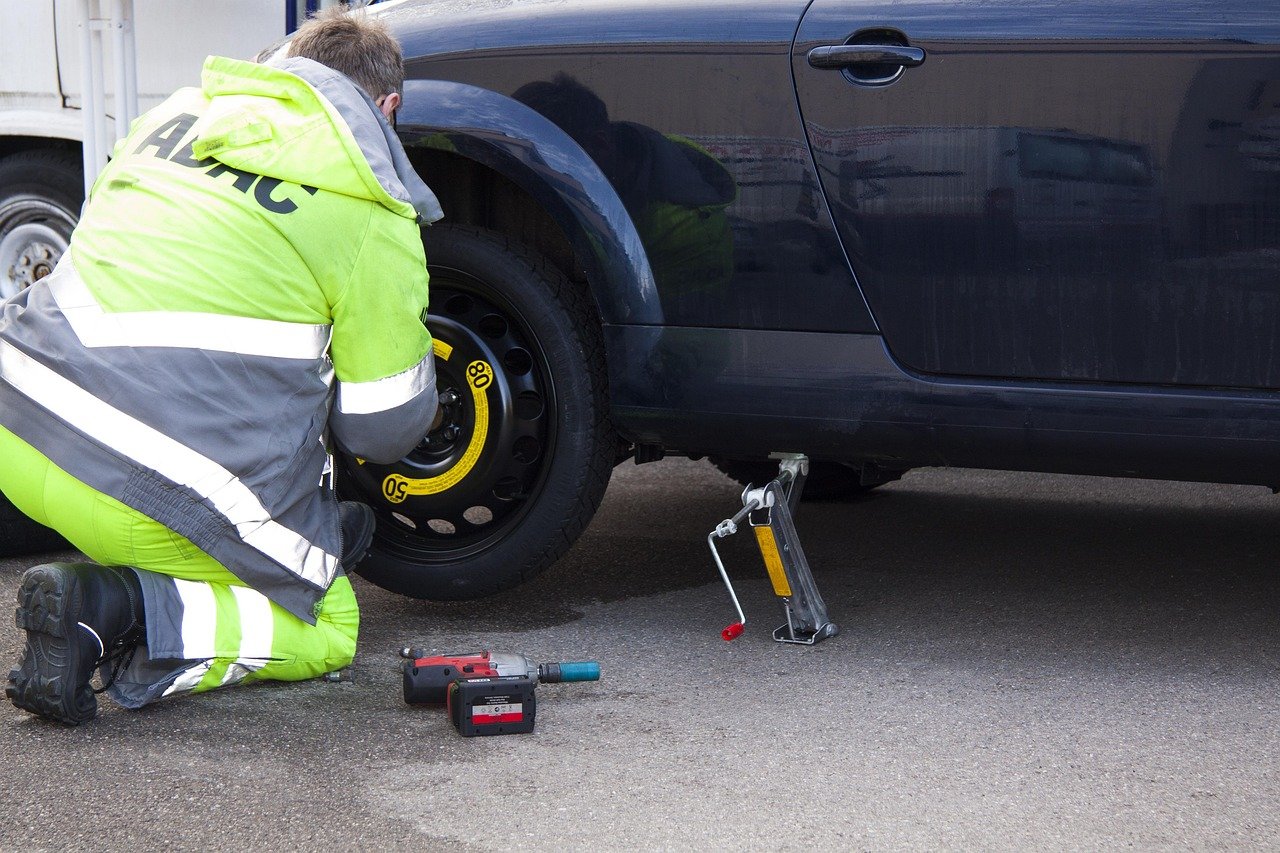
A flat tire becomes most dangerous when attention shifts from traffic to the wheel.
The sudden pull, thump, or tire-pressure warning can tempt a driver to stop at once. First assess the stopping place: a narrow shoulder, blind curve, bridge, steep grade, or fast-moving traffic may be more hazardous than rolling slowly to a wider, visible area. Hazard flashers signal trouble, but they do not create a protected workspace.
Once parked, the vehicle can remain locked with occupants away from the traffic-facing side while the failure is identified. A fully deflated tire, shredded sidewall, damaged wheel, or an unfamiliar warning light changes what roadside help can safely handle. Mobility is secondary; separation from traffic comes first.
- A tire-pressure alert may indicate a slow leak rather than an instantly unusable tire.
- Driving on a collapsed tire can damage the wheel and make a simple repair less likely.
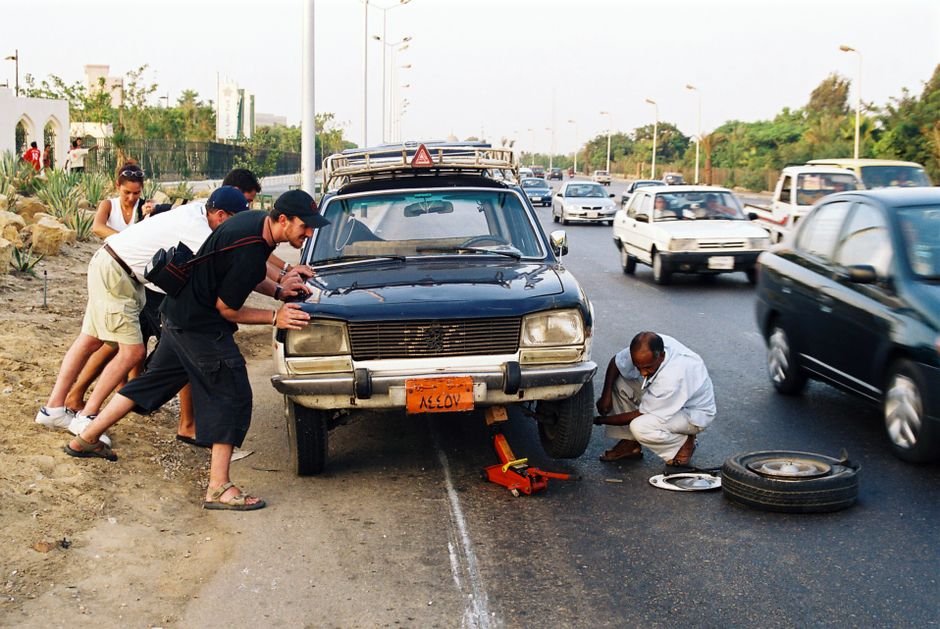
Secure people before assessing the tire
-
Move only if the vehicle can do so safely
A controllable vehicle may be rolled to a parking area, wide shoulder, or other refuge. Do not continue on a visibly collapsed tire farther than necessary; the casing can disintegrate and damage the wheel.
-
Make the vehicle visible and stable
Set hazard flashers, apply the parking brake, and keep occupants belted while the vehicle is exposed to moving traffic. At night or in poor weather, visibility can matter more than a quick inspection.
-
Choose the safer place for occupants
On a high-speed road, remaining inside a vehicle that is fully out of the travel lane can reduce exposure. If the vehicle is in or near an active lane, occupants may need to move away from traffic only when a protected route exists; safe conduct while stopped on a highway depends heavily on the roadway layout.
-
Inspect from a protected position
Look for a shredded sidewall, a tire unseated from the rim, or a damaged wheel without placing any part of the body toward traffic. A failed bead can leave the tire unable to hold air even if no puncture is obvious.
-
Treat structural damage as a recovery case
Sidewall cuts, exposed cords, rim damage, or a tire that will not seat are poor candidates for roadside inflation or sealant. Roadside assistance or towing can be the lower-exposure option.
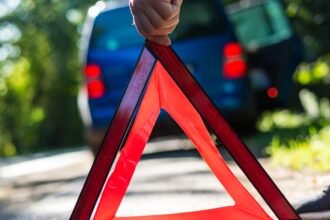
Avoid crawling under the vehicle or placing warning devices where traffic requires walking in a live lane.
A small tread puncture on a quiet, level lot may allow a measured next step. The same puncture beside fast traffic, on a narrow shoulder, or in heavy rain changes the risk calculation.
Stop troubleshooting when the tire has separated from the rim, the sidewall is torn or bulging, the wheel is damaged, or safe access requires entering an active lane. In those conditions, arranging recovery protects people from the hazard that matters most: traffic exposure.
Read the tire, not just the warning
A TPMS warning only reports low pressure. It does not identify the cause or whether the tire’s structure remains intact. A visibly compressed sidewall, however, may have been driven with too little air, generating heat that can weaken internal cords.
Signs that may allow limited movement
After stopping in a low-exposure place, a tire may move briefly to safer ground if it holds air.
It should have no visible bulge or cut, and the pressure loss should appear gradual.
Rechecking pressure after a brief interval can reveal an active leak.
A portable inflator and gauge can clarify whether pressure stabilizes.
Sealant is generally a poor fit for a large opening or damaged sidewall.
Damage that changes the decision
Do not treat these as a routine low-pressure warning:
- A sidewall cut, bubble, split, or exposed cords
- A tire that is flat against the pavement or partly off the rim
- A torn bead, bent wheel, or deep tread damage
- Evidence of driving while flat: rubber dust, a chewed sidewall, or a hot, scorched smell
Tread punctures are sometimes repairable by a tire professional; sidewall damage ordinarily is not. The warning light matters, but the tire’s location of damage and condition determine whether roadside assistance or towing is the safer option.
Match the response to the damage
-
Inflate, then reassess
If the tire has no visible puncture, sidewall injury, bead leak, or rim damage, inflation to the door-jamb placard pressure can clarify the situation. A pressure loss that immediately returns, or a tire that cannot hold pressure, rules out continued travel.
-
Use a temporary measure only within its limits
A manufacturer-supplied inflator/sealant kit may be suitable for a small tread-area puncture when its instructions allow it. It is not a remedy for sidewall cuts, a damaged wheel, an unseated bead, or a large puncture; treated tires still require prompt professional inspection.
-
Request roadside assistance for a serviceable recovery
Roadside help can fit a usable spare, install an approved mobility kit, or assess whether the vehicle can be moved without exposing occupants to traffic. This is often the lower-risk option when the tire is intact but the driver lacks equipment or a safe work area.
-
Arrange a tow when driving could worsen damage
Towing is generally the conservative choice after sidewall damage, a shredded tire, rim contact with the road, repeated pressure loss, or any uncertainty about run-flat capability. Continued movement can turn a repairable puncture into tire, wheel, or suspension damage.
The owner’s manual, tire sidewall markings, and mobility-kit instructions govern: run-flat distance limits, speed limits, permitted sealant use, and towing procedures vary by vehicle.
Some sealants can interfere with tire-pressure sensors, complicate a later repair, or be prohibited for certain tire and wheel combinations. A shop should be told if sealant was used. If the vehicle has run-flat tires, do not assume the tire remains drivable merely because it still looks inflated; the manual’s specific post-pressure-loss limits control.
Inflate, then verify
A portable tire inflator for a low tire can restore door-jamb placard pressure.
If pressure falls, seek service.
Restored pressure can allow you to reach a nearby service center safely.
Roadside service options
Road Trip Tour Guide explains flat-tire service choices when inflation fails.
Sealant and plugs have narrow limits
Sealant may temporarily slow a small tread puncture in a tire that still holds some shape.
It cannot repair sidewall cuts, bead leaks, rim damage, or a tire driven while underinflated. It can also complicate shop inspection and TPMS sensor service.
A plug can sometimes reduce leakage from a simple, accessible tread puncture.
A proper repair normally requires internal inspection and a repair installed from inside the tire. The inspection can reveal liner abrasion, moisture damage, or a puncture too near the shoulder.
TPMS reports pressure status, not the source or consequences of the loss.
Reinflation can extinguish the warning while a slow leak continues. Repeated alerts, vibration, or pressure loss after sealant or plugging warrant prompt tire-shop assessment.
A tire that was driven soft can suffer internal sidewall damage invisible from the outside. Avoid relying on a sealant-filled or externally plugged tire for normal service until a qualified technician has removed it, inspected the interior, and checked the repairability of the injury.
If pressure falls again or handling changes, roadside recovery may present less risk than continued travel.
When roadside help becomes recovery
Escalate rather than attempt a roadside fix when the vehicle is exposed to fast traffic, a narrow shoulder, a blind curve, a bridge, soft ground, or poor visibility from darkness, rain, snow, or fog. The same applies when the tire is flat on the rim, losing air again after inflation, has sidewall damage, or the wheel is contacting the pavement. A run-flat driven beyond its permitted distance also warrants professional assessment.
Location details for safer roadside response
When calling, state the exact location or nearest mile marker and travel direction. Describe the vehicle make and model, and whether you are in a safe pull-off or blocking a lane. These details help dispatch respond appropriately.
Describe the tire as holds air, rapidly loses air, or off the rim. Also mention wheel damage, locked wheels, low clearance, EV status, or a trailer.
Those details help dispatch send tire service, a flatbed, or traffic-aware recovery. Keeping a practical roadside kit in the vehicle also makes waiting safer.
Driving on a deflated tire can damage the tire’s internal structure and the wheel quickly. If the rim is bearing vehicle weight, arrange recovery rather than trying to continue.
Turn the incident into a tire-readiness routine
-
Inspect the damaged assembly after it is off the road
Have the tire’s tread, inner liner, bead area, valve, and wheel flange checked when practical. A bent rim, bead scuffing, or run-flat heat damage can remain hidden after the visible puncture is repaired.
-
Confirm what the vehicle was built to carry
Check the owner’s manual and cargo-area labels for a full-size spare, temporary spare, run-flat tires, a sealant compressor kit, or no factory backup at all. Spare-tire size limits and run-flat distance limits vary by model.
-
Test the recovery supplies, not just their presence
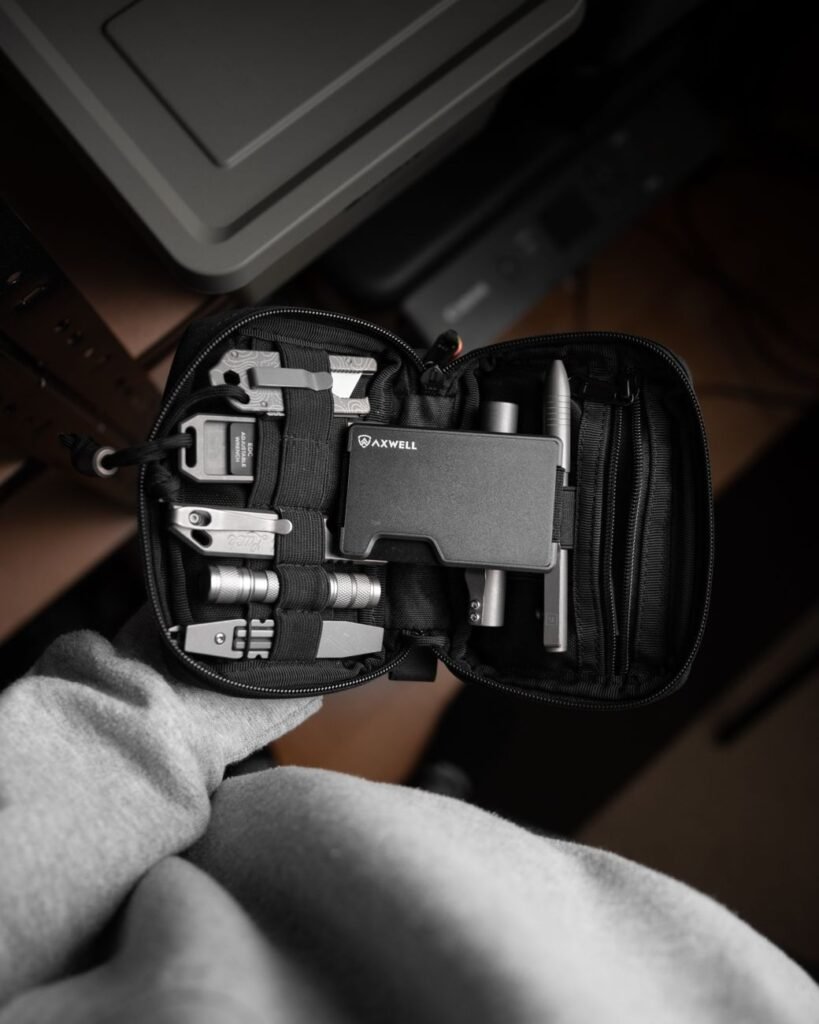
Run the compressor briefly, inspect the sealant expiration date, and confirm the towing eye, wheel-lock key, jack, and lug wrench are present. A corroded spare winch or missing lock key can turn a routine change into a tow.
-
Locate the instructions before a roadside event
Save the manual’s tire-change, jacking-point, TPMS-reset, and towing guidance offline. Note where the roadside-assistance contact, tow-hook cover, and locking-wheel-nut code are kept.
-
Recheck the spare during routine maintenance
Measure its pressure, inspect its age and sidewalls, and ensure cargo has not blocked access. A spare can be underinflated or degraded even when it has never touched the road.
Factory equipment and restrictions can differ across trims, wheel packages, and model years.
Flat Tire Safety: Common Questions
Is it safe to keep driving on a flat tire to reach a gas station?
Only if the vehicle can be moved safely to a wider, visible area and the tire isn’t already collapsed or off the rim. Continuing farther than necessary can let the casing disintegrate and damage the wheel.
Can I always trust a TPMS warning light to reflect the actual damage?
No. TPMS only reports low pressure, not its cause or whether the tire’s structure is intact—a tire that still looks round could have a slow leak or already have internal damage from being driven underinflated.
Will tire sealant fix any flat?
No. Sealant may temporarily slow a small tread puncture but cannot repair sidewall cuts, bead leaks, rim damage, or a tire that’s already been driven while underinflated, and it can complicate later shop inspection.
Does reinflating the tire and the warning light going off mean the problem is solved?
Not necessarily. Reinflation can extinguish the TPMS warning while a slow leak continues, so repeated alerts, vibration, or pressure loss after sealant or plugging call for prompt tire-shop assessment.
When should I call for a tow instead of roadside assistance?
When the tire is flat on the rim, losing air again after inflation, has sidewall damage, or the wheel is contacting the pavement—or when the vehicle is exposed to fast traffic, a narrow shoulder, or poor visibility.
Protect the People and the Wheel
A few extra miles on a deflated tire can convert a manageable puncture into a damaged wheel, shredded casing, or unsafe roadside stop. Occupant safety and tire preservation matter more than reaching the next exit.
A periodically checked car emergency kit, working inflator, correct wheel-lock key, and a saved roadside-recovery contact reduce the pressure to improvise. When the tire cannot safely hold air or the location is exposed, recovery is often the more controlled outcome.
Save the roadside-assistance or towing contact in the phone before it’s needed, along with the vehicle’s make, model, and wheel-lock code. Searching for that information at the roadside, in poor visibility or heavy traffic, adds time to a stop that is already exposed.


16 Comments
I swapped my old donut spare for a full-size spare setup after getting stranded with a cracked sidewall. It takes up cargo room, but for long highway trips I prefer that over relying on a can of goo.
Still, even with a spare, this article’s warning about traffic exposure stands. Changing a wheel on the left side of an interstate is not a personal-growth activity I need to repeat.
I had a low-pressure warning during heavy rain on a two-lane road. There was nowhere with a real shoulder, so I drove very slowly to a lit gas station about a mile ahead rather than stopping half in the lane. It held enough air to get there, but I realize that was a judgment call and not something to copy blindly.
Once safely parked, I found a nail in the tread and used the station air only to verify it was leaking. A tow through my insurance app was much less drama than trying sealant in the rain.
That distinction matters: a short move to a clearly safer place may sometimes reduce exposure, but only if the tire still supports the vehicle and the wheel is not contacting the road. With obvious deflation, unstable handling, or rim contact, stopping and calling for help is the safer choice.
Rain changes the whole calculation too. I’d rather wait somewhere visible than kneel beside traffic with water spraying everywhere.
My car has run-flats, and I wrongly assumed that meant I could drive on any flat forever. The tire shop found a sidewall cut and told me the limited-distance rating did not apply once it had been driven with essentially no pressure. Expensive lesson, but at least the rim survived.
The offline instructions suggestion is underrated. My phone had one bar when I needed the jack-point diagram on a rental, and the rental app would not load. Screenshot the important pages before a trip, folks.
No spare is becoming way too normal, honestly. My new crossover came with sealant that expires, a compressor I had never tested, and an owner manual buried in an app. “Mobility kit” sounds much nicer than “good luck.”
I checked it after reading this and the wheel-lock key was not where I thought it was. It is now in the glove box with a printed roadside number.
That is exactly the readiness check many owners only do after a failure. It is worth confirming the sealant expiration date, compressor power connection, towing-point instructions, and wheel-lock key location before a roadside incident.
Also check whether the compressor has a pressure gauge you can actually read in the dark. Mine technically does… with tiny black markings. Brilliant design 🙃
The point about stopping location is the one people skip. I watched someone immediately jump out on the shoulder of a busy bridge to inspect a tire once. A TPMS light is not worth getting clipped by traffic.
Exactly. If the shoulder is narrow, visibility is poor, or traffic is fast, moving occupants to a protected location and arranging help is usually the safer first decision. The tire diagnosis can wait.
Especially at night. Hazard lights help, but they don’t create a safe work zone.
One thing I would add: don’t keep creeping forward after you hear the rim start making noise. I did that trying to reach an exit, and a repairable puncture turned into a destroyed tire plus a bent wheel. Five minutes saved, several hundred dollars lost.
How do people feel about sealant with TPMS sensors? My mechanic said it can make a mess and may not work for a larger puncture. I carry it because that’s what came with the car, but I’ve never been thrilled about using it.
Your mechanic’s caution is fair. Use only the sealant approved for the vehicle and only within its stated limits; it is generally for a small tread puncture, not sidewall damage, a bead leak, or a damaged rim. Tell the tire shop if it was used so they can clean and inspect the sensor and tire.
I keep a plug kit, but I like that this doesn’t present plugs as magic. Mine got me off a forest road after a small, obvious nail hole in the center tread; the tire was later removed and inspected properly. Would not attempt one on a torn sidewall, no matter how many YouTube heroes say it works.