

A dramatic percentage badge can make a mediocre carry setup feel urgent.
A pocket knife marked down heavily may be an older steel/handle variant, a marketplace listing with thin seller history, or a price anchored to a reference that rarely applied. Likewise, a low-cost admin pouch can stop being a bargain once shipping, tax, and a return label enter the cart.
Treat the discount as a claim, not evidence. The exact configuration matters: blade steel, dimensions, lock type, included accessories, and color can change both value and return eligibility. Then inspect who fulfils it, recent review patterns, return terms, and the delivered total. If any one of those three—item, seller, or checkout figure—looks weak, the urgency is doing the selling.
- Compare the model number, not just the product name.
- Read the lowest recent reviews for fulfillment and defects.
- Screenshot the final cart before deciding.


When a low price is actually a deal
Spotting a real EDC deal comes down to four checks: a credible price baseline, the right configuration, a dependable seller, and the true delivered cost.
Remove any one of them and an impressive-looking discount can become ordinary—or costly. If price is the sole focus, you might miss configuration needs or seller reliability, and the apparent savings may disappear after delivery.
A credible baseline starts with recent selling prices for the exact SKU.
Configuration matters just as much: blade steel, handle material, and battery type.
Pocket-clip orientation, finish, bundle contents, and generation can materially change value.
Judge value by use, not price alone
The lowest listing is not automatically the strongest purchase. A discounted titanium flashlight with an uncommon battery format may be less useful than an aluminum model with ready cells. Likewise, a knife missing its preferred carry orientation or warranty coverage can lose its appeal despite a dramatic percentage-off badge.
Include shipping, tax, import charges where applicable, and any required accessories in the comparison. The meaningful question is not “How low is this price?” but “Does this exact item, from this seller, solve the intended carry need for less than its normal all-in cost?”
A deal comparison is only valid when the model number, revision, included accessories, condition, and fulfillment source match. “Same product name” is often not enough.
Set the spec before opening a deal page
- The exact version
Record the maker’s SKU or part number, not merely the product family. Blade steel, edge type, coating, scale material, pocket clip orientation, and lock revision can change both utility and normal selling price.
Look forA named configuration with its SKU and non-negotiable features.AvoidA family-name listing that hides a cheaper steel, finish, or revision. - Carry geometry and material
A compact tool can still carry poorly if its closed length, thickness, weight, clip placement, or sharp edges differ from the intended setup. Note usable dimensions alongside materials, since titanium, aluminum, G-10, brass, and steel age and feel quite differently.
Look forMeasured carry limits and a material choice suited to the intended use.AvoidAssuming “compact” or “premium” describes pocket behavior or durability. - Service life and replaceable parts
Check whether clips, screws, springs, batteries, lenses, seals, scales, and sharpening parts are available separately. A modest discount matters less when a common wear item turns a usable tool into a drawer piece.
Look forDocumented parts support and ordinary maintenance paths.AvoidAn orphaned variant with proprietary components and no repair route. - Compatible ecosystem and buy band
List the batteries, chargers, bit standards, mounts, sheaths, organizers, and accessories already in use, then mark acceptable alternatives. Set a narrow target range from observed all-in historical pricing for each approved variant before browsing; this keeps a promotion from redefining the requirement.
Look forApproved substitutes and a prewritten delivered-cost target range.AvoidAdding incompatible gear or widening the spec solely because it is marked down.
Use history, not the crossed-out price
MSRP is a launch reference, not necessarily the market price. A crossed-out marketplace price may be a seller-entered “list” price, or a short-lived high point that few buyers paid. The useful comparison is the historical street price for the exact SKU.
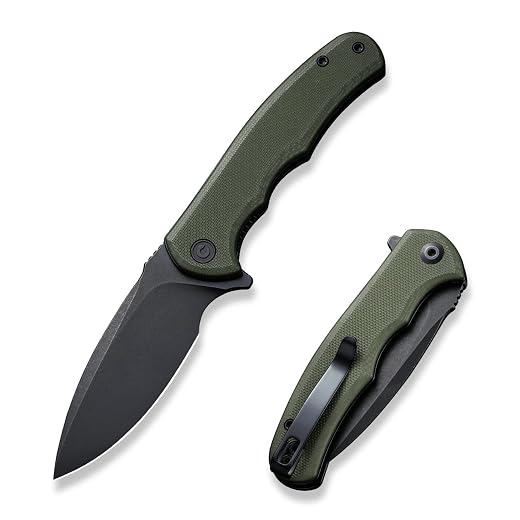
Start with the model code, not the product-family name. For the CIVIVI Mini Praxis shown here, that means C18026C-1 and the listing identifier, not merely “Mini Praxis.” Blade finish, handle color, steel, clip configuration, and included extras can create separate listings with different normal prices. Amazon price-history checks can reveal the usual range, how often a low returns, and whether the current dip is unusual.
Read the pattern, not one low point
A single historical low can be a lightning deal, a pricing error, or a clearance event. More persuasive evidence is a price that stays below the recent norm long enough to be broadly available. Check at least these details:
- Recurring lows: frequent repeats suggest waiting may be reasonable; a rare low may carry more weight.
- Bundle changes: a sheath, lanyard, spare hardware, or coupon can make two “identical” prices unequal.
- Variant substitutions: discounted discontinued colors or older revisions are not a baseline for the current version.
- Listing continuity: a merged or newly created listing may have history belonging to another configuration.
For compact folders, a modest reduction on the intended D2/G10 variant can be more meaningful than a larger headline cut on a color or bundle that was never on the watchlist.
A Big Badge Can Hide a Small Saving
It may use an inflated or obsolete reference price.
Compare the exact SKU’s price trail, not the badge. Warning signs on Amazon deal pages include reference prices that change with the listing.
Accessories, steel, finish, battery, or pouch may differ.
Match the model number and included items line by line. A bare tool is not comparable with a bundled version.
Coupons, membership rules, shipping, and condition can alter it.
Confirm whether a code applies at checkout, who fulfills the order, and whether the item is new, open-box, or refurbished.
A convincing deal matches the same SKU, condition, contents, and delivery terms—not merely a similar product name.
Read the price pattern, not the panic
A price-history chart does not forecast the next drop. It answers a more useful question: where does this exact SKU usually sell? For EDC gear, look beyond the all-time low. That low may have been a brief clearance, a coupon-stacked listing, or a discontinued colorway that will not recur.
Find the normal selling band
Review several months of data and identify the range where the price spends most of its time. A current price near the bottom of that normal band can be worthwhile even if it is not a record low. Conversely, a dramatic crossed-out price means little when the item repeatedly returns to today’s level.
Frequency matters as much as depth:
- Brief, rare lows may justify attention when the item is needed soon.
- Regular dips reduce the value of urgency; another comparable promotion is plausible, though never guaranteed.
- A newly elevated band can signal a model refresh, supply change, or seller shift—not necessarily a bargain.
Set an alert at the delivered price that makes the item compelling, including shipping and any reliable discount terms. A realistic threshold turns a countdown timer into background noise and avoids chasing a tiny additional saving on gear that otherwise fits the carry plan.
Verify the cart, not the badge
A low item price cannot compensate for a questionable supply chain. With EDC gear, counterfeits may imitate a familiar model while substituting lower-grade steel, weak hardware, incorrect batteries, or unsafe charging components. Gray-market stock can be genuine yet lack manufacturer-backed warranty coverage, region-appropriate packaging, or reliable parts support.
Before placing an order, treat the listing as evidence rather than an advertisement. Confirm the exact model number, condition, seller name, and return window; then check who actually ships the parcel. A marketplace listing “sold by” an unfamiliar storefront is not equivalent to inventory fulfilled by the brand or an established dealer. These ways to spot suspicious Amazon sellers are especially useful when a price sits far below normal market history.
Perform one final cart check
The cart is the only version of the offer that counts. Verify:
- Seller and fulfillment have not changed after a variant selection.
- The coupon is attached to the exact SKU, quantity, and condition selected.
- Exclusions do not remove bundles, colors, subscriptions, or third-party sellers.
- Shipping, tax, and return deductions do not erase the apparent saving.
A coupon badge can disappear when stock changes, a threshold is missed, or a promotion is limited to a different seller. If an Amazon coupon fails at checkout, the checkout total—not the product-page badge—defines the deal. A vanished promotion is a reason to pause, not to substitute a riskier listing.
An uncertain seller, restricted return policy, or unsupported item turns a small saving into a larger ownership risk. Walk away when the cart cannot clearly identify what is being bought and who stands behind it.
Open-box value depends on what was opened
An open-box EDC item is not automatically a bargain; it is a risk-adjusted purchase. A small reduction may be sensible for a pouch with a crushed retail carton, but far less compelling for a light with uncertain battery history or a knife whose pivot, edge, and lock may have been handled.
Separate cosmetic evidence from functional exposure. Packaging damage usually has little effect on hard-use organizers, clips, or sheaths. Missing proprietary hardware, stripped screws, frayed elastic, zipper drag, and loosened retention can erase the apparent saving—especially when replacements are difficult to source.
For Amazon Warehouse used-like-new listings, read the condition note as an inspection clue, not a complete report. Confirm the return window and whether the marketplace seller or platform processes returns before ordering.
Match the condition to the gear
- Usually lower risk: pouches, carabiners, non-electronic organizers, and fixed accessories with clearly listed contents.
- Inspect more closely: flashlights, multi-tools, folding knives, watches, and battery-powered gear; switches, threads, locks, charging ports, and alignment reveal use.
- Often poor candidates: items that contact skin or mouth, safety-critical equipment, and products with absent seals, consumables, or authentication paperwork.
The stated discount needs to cover the plausible cost of missing parts, cleaning, troubleshooting, and a return. When photos are generic or the condition description is vague, a simpler return path can be worth more than a slightly deeper markdown.
Treat sale events as checkpoints
Prime Day, Black Friday, and brand-anniversary sales are useful monitoring windows, not verdicts on value. They concentrate temporary coupons, retailer-funded markdowns, bundle offers, and competing-store price matches—but an event badge does not establish that a particular flashlight, multi-tool, or organizer is near its meaningful low.
Keep the SKU-level watchlist active before the event begins. A target should reflect the delivered price for the exact version wanted, including membership requirements, shipping, tax, and any coupon that must be clipped or entered. This prevents an attractive event-only price from displacing a lower recurring price seen outside the sale.
Stacking can matter, but only when every layer survives checkout:
- sale price plus a manufacturer or retailer coupon;
- card-linked or store-credit offer, where applicable;
- bundle value only if every included item has a use;
- price match from a reputable competing seller.
Limited-time timers and low-stock notices are reasons to verify promptly, not reasons to abandon the history check. Event stock may be a special colorway, older revision, or third-party listing; comparison remains SKU-for-SKU.

The stop-or-buy checklist
-
Match the exact model
Confirm SKU, steel or battery version, finish, bundle contents, and condition match the watchlist.
-
Use dated history
Compare the delivered total with prior lows and the normal price band, not the struck-through reference.
-
Vet the transaction
Check the named seller, fulfillment source, return window, restocking terms, and whether a coupon remains in the cart.
-
Count every cost
Include shipping, tax, required membership, and accessories needed to make the item usable.
-
Allow a clean pass
If one essential detail is unclear, leave it and keep the alert active; a price drop after purchase rarely repairs a mismatched order.
Spotting Real EDC Deals: Common Questions
Does a big percentage-off badge mean the deal is genuine?
Not necessarily—badges often rely on inflated or obsolete reference prices, so the percentage is only as credible as its baseline. Compare the exact SKU’s price trail instead of trusting the badge.
What's the most reliable way to check whether a price is actually low?
Review several months of price-history data and identify the normal band where the price spends most of its time. A current price near the bottom of that band can be worthwhile even if it’s not a record low.
Is an open-box or used-like-new listing worth the discount?
It depends on the gear—packaging damage usually matters little for pouches or fixed accessories, but items with moving parts, batteries, or edges, such as flashlights, multitools, and folding knives, need closer inspection since a stripped screw or loosened retention can erase the saving.
Should I trust a Prime Day or Black Friday badge automatically?
No. These events are monitoring windows, not verdicts on value—keep a SKU-level watchlist active before the event and compare event pricing with the delivered price for the exact version wanted.
What should I check right before clicking "buy"?
Confirm the seller and fulfillment haven’t changed after selecting a variant, that any coupon is attached to the exact SKU and condition, that exclusions don’t remove the item, and that shipping, tax, and return deductions don’t erase the apparent saving.
A deal must survive the cart
- A saved watchlist replaces impulse with a repeatable benchmark.
- Passing is a successful outcome when model, seller, or return terms fail the test.
A convincing EDC deal is a verified item at a genuinely lower all-in cost. Keep model-specific alerts, revisit the evidence at checkout, and let any failed essential test end the purchase.
CIVIVI Mini Praxis Folding Pocket Knife, 2.98" D2 Steel Blade, OD Green | G10 Handle with Pocket Clip, Safety Liner Lock, Small EDC Knife for Camping Hiking...
Features
| Recommended Uses For Product | Camping, Hiking |
| Brand Name | CIVIVI |
| Model Name | C18026C-1 |
| Age Range Description | Adult |
| Included Components | Knife |
| Model Number | Mini Praxis |
| Customer Package Type | FFP |
| Set Name | CIVIVI Mini Praxis |
| Manufacturer | WeKnife |
| Manufacture Year | 2021 |
| Number of Items | 1 |
| Part Number | SUVELAM |
| Unit Count | 1 Count |
| ASIN | B0BF8FPH5L |
| Special Features | Foldable |
| Hand Orientation | Right Hand |
| Blade Shape | Point |
| Blade Edge | Plain |
| Reusability | Reusable |
| Blade Type | Folding |
| Color | Green |
| Style | Green G10 |
| Theme | Outdoor & Utility |
| Item Shape | Folding |
| Handle Material | Fiberglass |
| Blade Material | Alloy Steel |
| Product Care Instructions | Hand Wash Only |
| Blade Length | 2.98 inches |
| Item Weight | 4.05 ounces |
| Item Length | 6.79 inches |
| Size | 3" |
- CIVIVI MINI PRAXIS --- Constructed from black stonewashed D2 steel that perfectly blends edge retention, corrosion resistance, and ease of sharpening. This folding knife with the handy pocket clip is the ideal option for everyday carry that is legal in all states and will stay strong through all of your adventures.
- COMFORT GRIP --- We use G10 handle that is smooth to the touch, extremely durable and resistant to moisture and temperature changes. The comfortable handle provides a substantial grip while still being light and maneuverable in hand.
- EXCELLENT DETENT --- In order to ensure smooth and fast operation, we've outfitted the mini praxis with a ceramic ball-bearing pivot construction which allows for quick and snappy one-handed flipper deployment and smooth closing action. A strong detent ensures that this knife will maintain crisp, snappy action for a lifetime of use.
- PERFECT KNIFE FOR EDC --- urban knife, work knife. Box, letter, envelope opening knife. Compact knife to be carried in a purse, backpack, pocket. Good for indoor and outdoor use. Small pocket knife. Hiking, camping knife. Best gifts for men and women.
- USA SERVICE CENTER --- CIVIVI knives and tools provide a lifetime service against defects in material and workmanship, USA service center provides faster response to take care of your requests.
FRTKK Tactical Molle Admin Pouch Utility Laser Cut EDC Tool Pouch Bag Horizontal Modular Pouches Include US Flag Patch and Keychain
Features
| Brand Name | FRTKK |
| Manufacturer | LD free |
| Number of Items | 1 |
| Unit Count | 1 Count |
| Included Components | USA Flag Patch, Keychain |
| Item Type Name | Tactical Molle Admin Pouch |
| Warranty Description | 24 Months Warranty |
| ASIN | B0CH9YYFZH |
| Number Of Pockets | 3 |
| Closure Type | Zipper |
| Pocket Description | Utility Pocket |
| Number of Compartments | 3 |
| Color | Black |
| Material Type | Nylon |
| Item Dimensions L x W x H | 8.7"L x 2.2"W x 5.3"H |
| Item Weight | 0.19 kg |
- LASER-CUT LOOP PALS/MOLLE PANEL: Tactical admin pouch front coverd in 9" by 3" laser-cut Molle/PALS loop panel. Easy to attach extra supplies or Molle gears as need to enlarge the carrying capacity. The free US flag patch & tactical keychain makes the utility pouch more conspicuous and practical. Admin pouch size: 8.7" x 5.3" x 2.2" (22.1cm*13.5cm*5.6cm).
- TOUGH QUALITY: Tactical pouch is made of 1000D nylon, durable and water-resistant, offering long-term durability and keeping your gears stay safe and dry. Sturdy double zippers for the top to the sides quickly allow it to fully open and lay flat. Easily see what you have.
- PARTITION STORAGE: The molle pouch comes with a front zipper pocket and a main compartment. There are two mesh pockets and multiple elastic bands inside the main compartment that can hold keys, flashlights, knife, small notepad, light sticks, tactical pens, first aid supplies, map, compass, multitool, or other a common use for easy access. The bottom of the military pouch has two elastic loops for securing the tourniquet or parachute cord.
- MOLLE SYSTEM: Three vertical straps and metal snaps on the back allow you to add the modular pouch to a tactical backpack, combat vest, belt or other molle gear as an extra exterior pouch, or carry it as a normal pouch to secure essential gears.
- MULTI-PURPOSE: The molle tool pouch is lightweight and portable, and you can carry it with you anywhere, on your bike, in your car or add it to your service dog's vest. It can be used as a vest pouch, pack pouch, tactical waist belt pouch, dump pouch, IFAK pouch, sub abdominal drop pouch, tool pouch etc according to your needs.






12 Comments
A seller verification checklist would have saved me from a marketplace “warehouse deal” last year. The item arrived without the charging cable and the return label had to go overseas. Bargain achieved, apparently 🙃
The delivered-cost point got me. I almost bought a flashlight last week that looked $18 cheaper, then shipping and tax erased all but about $3. Do you include membership-only pricing in your target range, or treat that as a separate deal?
I’d treat membership pricing separately unless you already pay for the membership for other reasons. A useful watchlist can note both a public delivered-price target and a member-price target, but don’t let a “deal” justify adding a subscription you otherwise wouldn’t use.
Really helpful reminder that a 40% badge means basically nothing if it’s based on a price nobody paid. Retail math is so dramatic sometimes 😂
When comparing batteries-included lights, do you count the battery value separately? A light may be $8 more but include a decent 18650, while the cheaper listing is body only. That seems like a different configuration even when the product name is identical.
Yes—compare the usable configuration, not just the flashlight body. Note the exact SKU or bundle, included battery type/capacity, charging method, and whether you would otherwise need to buy a cell and charger. The cheaper body-only option may still win, but only after adding the parts needed for your intended carry.
The advice to set specs first is sensible, but it can turn into spreadsheet homework pretty fast. Is there a stripped-down version for someone only watching two or three items? I mostly need a pocket light and a small organizer, not an EDC command center.
I’m new to buying folding knives and get confused by “same model” listings. If one has G-10 scales and another has micarta, is that close enough for price history, or should I track each version separately? The steel is sometimes different too.
For an open-box multitool, what would you consider an acceptable discount versus buying new? I’m okay with a damaged retail box, but not missing bits, loose pivots, or a tool that has clearly been carried.
Some retailers label everything “open box” with almost no useful condition notes, which makes it feel like a lottery.
That is exactly the right distinction. For a box-only issue, even a modest saving can be fine if the retailer has an easy return process. For a tool with unknown use, missing accessories, altered hardware, or vague notes, I’d want a substantially larger discount—or I’d pass. Check whether the listing confirms completeness, shows actual photos, and states who pays return shipping if its condition is worse than described.
I’ve had better luck with “open box” when the store posts photos of the actual item, not stock pics. If they won’t say whether all the bits are there, I assume they aren’t.
I appreciate the “stop-or-buy” framing. Sale-event countdowns make me feel like I have to decide in five minutes, when most of the time I haven’t even checked whether the coupon applies to the color or size I want.
One thing I’d add: watch for bundles that include filler accessories. A free lanyard and sticker pack shouldn’t magically make a $20 higher price a bargain.