
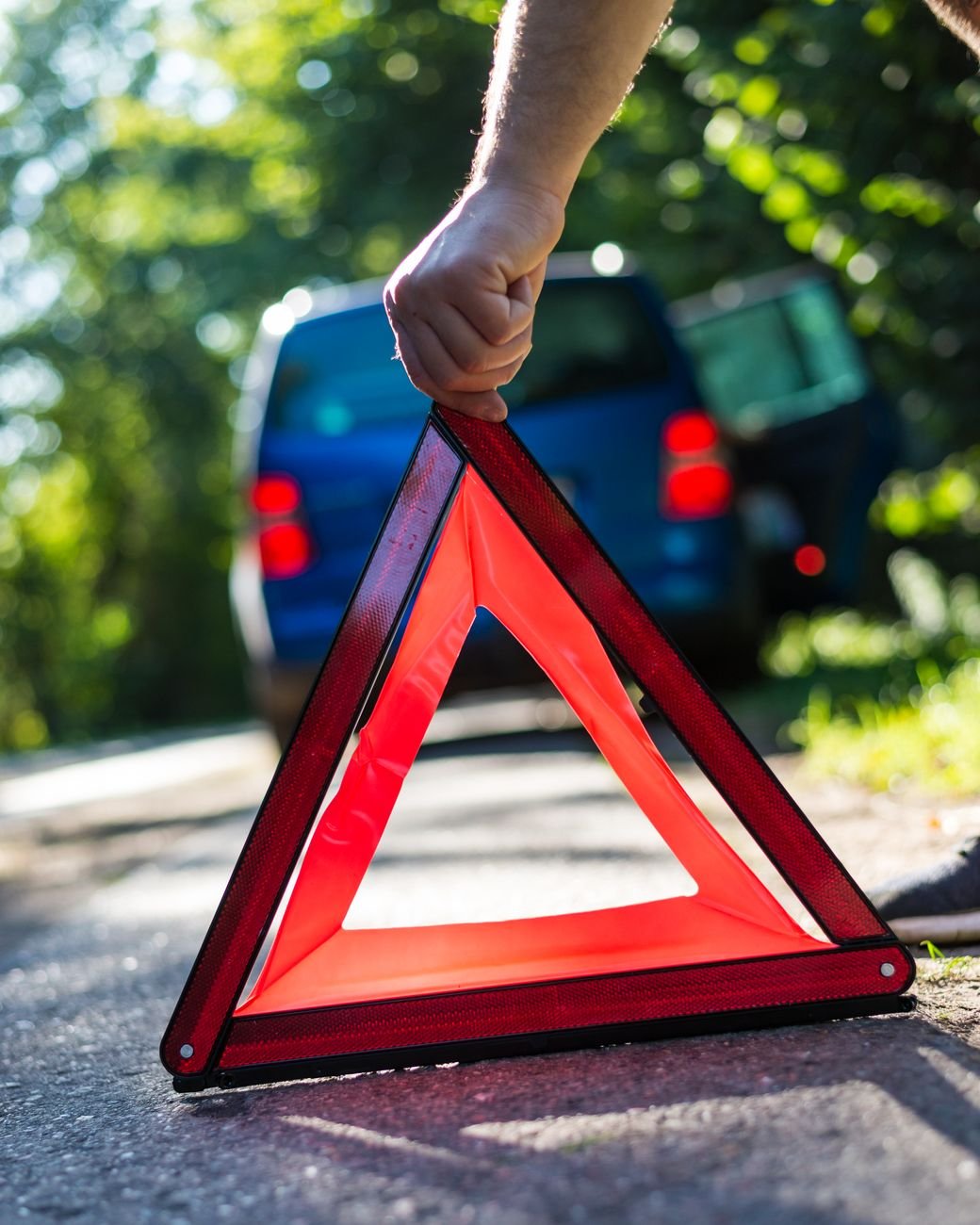
At highway speed, a small fault can become a fast-moving problem.
A steering wheel that suddenly feels heavy, a sharp bang from a tire, or a temperature warning appearing in traffic can trigger an instinct to brake hard. The safer priority is keeping the vehicle predictable: hold the wheel firmly, ease off the accelerator, and maintain a steady path while scanning for a shoulder, exit, or other refuge.
Hazard flashers can make the slowing vehicle easier for following traffic to read, particularly when it is moving well below the flow. Abrupt lane changes, coasting across several lanes, or stopping in a live lane can turn a mechanical fault into a collision risk. The cause—flat tire, overheating, engine misfire, loss of power steering, or smoke—can be assessed only after the car is out of the traffic stream or has reached the safest available position.
- A blown tire may pull the car toward the damaged side; firm steering and gradual deceleration help preserve control.
- If the engine has stalled, braking and steering assistance may diminish, but the vehicle can still be directed with substantially more effort.
- Smoke, flames, or a strong fuel smell raise the urgency of getting clear of traffic without attempting roadside diagnosis.
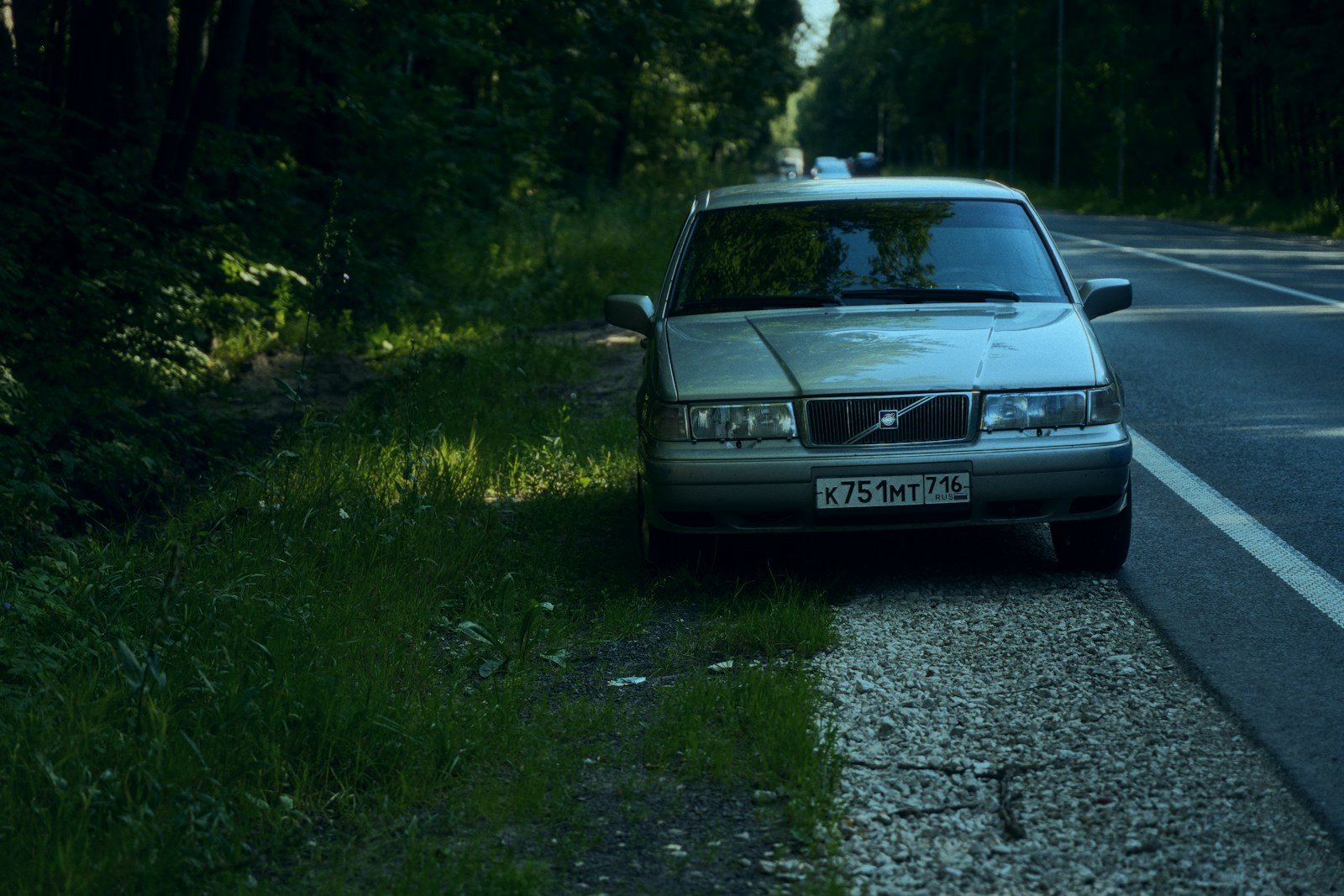
- Control first Keep both hands on the wheel; sudden braking or steering inputs can destabilize a damaged tire or failing vehicle.
- Reduce speed Lift off the accelerator progressively and choose a reachable safe space rather than forcing an exit or shoulder.
- Be visible Use hazard flashers once the vehicle is slowing unexpectedly, so approaching drivers have earlier warning.
Move Out of the Traffic Stream—Only if Control Remains
- Make a rapid control check
A vehicle that still steers, brakes predictably, and responds to gentle throttle changes may be able to reach the next shoulder, exit, or other protected area. Activate hazard flashers, scan mirrors, and avoid abrupt steering or hard braking.
- Use momentum carefully
For a flat tire, warning light, or suspected mechanical fault without smoke or severe drivability changes, easing off the accelerator and moving right can preserve control. A wide shoulder, exit ramp, parking area, or service road is generally safer than stopping beside fast traffic.
- Treat loss of control as an emergency
Sudden steering failure, ineffective brakes, a jammed accelerator, violent vibration, or a vehicle that will not maintain a stable path changes the priority. Keep the vehicle as straight as possible, reduce speed by releasing the accelerator or using controlled braking if available, and seek emergency assistance.
- Stop immediately for smoke, fire, or overheating signs
Smoke from the engine bay, flames, a strong fuel smell, or a rapidly rising temperature gauge can indicate a hazard that is not worth driving farther to escape traffic. Pull over at the first feasible location, stop, switch off the engine, and move occupants away from the vehicle when conditions allow.
- If stranded in a live lane, make the vehicle visible
Hazard flashers can alert approaching traffic, but they do not create protection. Contact emergency services or highway patrol promptly, state the roadway, direction of travel, nearest marker or landmark, and whether the vehicle is blocking a lane.
Do not open a hot radiator cap or investigate under the hood when smoke, steam, or fire is present.
On a high-speed road, remaining inside a disabled vehicle is not automatically safer or more dangerous; the safer choice depends on traffic speed, shoulder width, weather, visibility, and the vehicle’s position.
If the vehicle can reach a protected shoulder, that is usually preferable. If it cannot, emergency responders can manage traffic protection. Avoid standing beside the vehicle, between it and traffic, or in front of it. If leaving is clearly safer, occupants can move well away from the roadway and behind a barrier where one exists.
Make the stopped vehicle visible and stable
Once stopped, create as much lateral separation from traffic as the location permits. On a shoulder, the vehicle can be positioned as far from the travel lane as practical without entering a soft verge, ditch, guardrail, or unstable surface. Keep the front wheels pointed away from the traffic lane where terrain allows; this may reduce the chance that an impact sends the vehicle back into moving traffic.
Apply the parking brake and select Park (automatic) or a low gear/reverse (manual). Leave hazard flashers operating. At night, in rain, fog, snow, or spray, the vehicle’s regular lights can add contrast, but hazards remain the primary disabled-vehicle signal. Avoid relying on interior lights: they can reduce outward visibility and drain the battery.
Account for the road geometry
A narrow shoulder, blind curve, hill crest, bridge, work zone, or high-speed traffic stream makes a stopped vehicle harder for approaching drivers to detect and avoid. If it is safe to do so, occupants can remain restrained in the vehicle while assessing the scene rather than standing beside the traffic-facing side. Warning triangles or flares may help only when they can be placed without exposure to traffic and are permitted by local rules; never use flares near fuel leaks, smoke, or dry vegetation.
Continue watching mirrors for approaching vehicles. A stationary car is not automatically a protected car: poor visibility and limited escape space keep the strike risk high.
Decide whether the cabin is safer
For a vehicle stopped off the travel lane, remaining belted inside is often safer than walking beside high-speed traffic. The cabin provides restraint, lighting, and some protection if another vehicle strikes it. Keep doors locked where appropriate, hazards on, and occupants seated away from the traffic-facing side.
That calculation changes when the vehicle presents an immediate threat. Smoke, flames, a fuel smell with visible leaking, rising water, or a vehicle exposed in an active lane after a collision can make evacuation necessary. Leave promptly if fire or water is developing; do not pause to collect belongings.
When exit is necessary, assess traffic through the mirrors, open the door farthest from traffic, and move everyone behind a guardrail or well beyond the shoulder—not along the vehicle’s traffic side. On bridges, narrow shoulders, or barriers with no protected space, the safer option may be to remain belted until emergency assistance arrives unless fire, water, or another immediate hazard requires leaving.
Children should be unbuckled only when a safe exit route is clear, then kept physically close and away from the roadway. Pets need a leash, carrier, or firm restraint; a frightened animal can bolt into traffic. Never send a person, child, or pet across travel lanes to seek help.
A stopped vehicle can be struck again, especially near curves, crests, ramps, and in poor visibility. If occupants can safely reach protected ground, staying upstream of the vehicle—away from approaching traffic—can reduce exposure. Avoid standing between the vehicle and moving traffic.
Give responders a location they can act on
-
Start with the exact road position
State the highway name or route number, direction of travel, nearest exit number, mile marker, and lane or shoulder position. “Eastbound near Exit 42” is far more useful than naming a town several miles away.
-
Add landmarks and mapping clues
Report a bridge, interchange, service area, sign, distinctive building, or cross street visible from the vehicle. A phone’s map pin can help, but it should be checked against the displayed road and direction before sharing.
-
Describe people and immediate hazards
Say how many occupants are present, whether anyone is vulnerable or unable to leave the vehicle, and whether everyone is inside or outside. Mention live-lane exposure, poor visibility, blocked lanes, smoke, fire, leaking fluid, flooding, or a vehicle stopped around a bend.
-
Identify the vehicle and its condition
Provide the make, model, color, registration details if requested, and whether the vehicle is towing, carrying a load, or has a flat tire, dead battery, overheating warning, or collision damage. This helps dispatch the appropriate patrol, tow, or recovery equipment.
-
Escalate when traffic danger outweighs routine recovery
Highway patrol or emergency services can be appropriate for a vehicle stranded in a travel lane, a crash, fire or smoke, fuel leakage, injuries, hazardous cargo, or a situation creating an immediate risk to traffic. A routine breakdown safely beyond the traffic line may be handled through roadside assistance or a towing provider.
Keep the phone charged where possible and remain available for callback questions; dispatchers may need to refine the location.
A shoulder is rarely a safe workshop
Mechanical skill does not reduce the danger created by fast, nearby traffic.
A narrow shoulder, a curve, a crest, spray, darkness, or a large vehicle’s slipstream can leave too little protected space. A routine wheel change may require working beside moving traffic and placing part of the body near the travel lane.
Flashers improve conspicuity but do not create a buffer or stop an encroaching vehicle.
In rain, glare, fog, or around bends, approaching drivers may see a stopped car late. Flashers are a warning device, not protection for someone working outside the vehicle.
Hands-on checks are generally reserved for genuinely low-exposure locations, such as a parking area or a wide refuge well away from traffic.
On a highway shoulder, opening the hood, retrieving tools, or crouching by a wheel adds time outside and can distract from changing conditions. A description of symptoms from inside the vehicle is often enough for roadside assistance to prepare.
Manage the wait without creating new risks
A breakdown can become more hazardous as conditions change. Keep a phone charged where possible: lower screen brightness, close unnecessary apps, and avoid streaming or repeated calls. A power bank is useful, but a running engine is not a reliable charging plan if overheating, smoke, fuel leakage, or an unknown fault is involved.
Reassess the scene
Watch approaching traffic, darkness, rain, wind, heat, and rising water. If the vehicle’s position becomes less visible or more exposed, update emergency services or roadside assistance with the changed conditions. Preserve phone battery for location updates and responder contact.
Confirm who is arriving
Use the assistance provider’s official app, website, or number to confirm the company, vehicle description, driver name, and estimated arrival. Do not rely on an unsolicited tow operator’s claim that they were dispatched. Keep doors locked and communicate through a partly opened window if an unknown person approaches.
After a collision or roadside damage, photographs can document the vehicle’s position, visible damage, plates, road signs, weather, and the tow truck’s identifying information—but only from a protected location. Avoid entering traffic or standing beside the vehicle to obtain images.
A marked vehicle and confident driver do not confirm authorization. Verification through the original assistance contact reduces the risk of an unauthorized tow or unnecessary vehicle release.
Turn the incident into a better-prepared next trip
-
Preserve the fault story
Before codes are cleared or the battery is disconnected, save warning messages, photos, sounds, smells, road conditions, and the sequence of symptoms.
-
Match the tow to the vehicle
Confirm the owner’s manual and recovery instructions: many AWD, 4WD, electric, and damaged vehicles need a flatbed or specific wheel-lift procedure.
-
Replenish what was used
Replace consumed water, batteries, chargers, gloves, blankets, and visibility items; inspect the spare, inflator, sealant expiry date, and jack equipment.
-
Prepare a technician-ready record
Keep the VIN, key type, towing points, lock-wheel procedure, roadside-assistance details, and recurring fault history in an offline phone note or printed card.
-
Test communication and conspicuity gear
Charge the power bank, verify the emergency-call location feature, and check hazards, flashlight, reflective vest, and any locally permitted warning device.
A fault that disappears after a restart can still leave diagnostic data worth retrieving.
Highway Breakdowns: Common Questions
Should I brake hard if I hear a bang or feel the wheel pull?
No. The safer priority is keeping the vehicle predictable: hold the wheel firmly, ease off the accelerator, and maintain a steady path while scanning for a shoulder or exit. A blown tire may pull the car toward the damaged side, and abrupt braking or steering inputs can destabilize it further.
Is it safer to stay in the car or get out while waiting for help?
For a vehicle stopped off the travel lane, remaining belted inside is often safer than walking beside high-speed traffic, since the cabin provides restraint, lighting, and some protection if another vehicle strikes it. That changes when there’s smoke, flames, a fuel smell with visible leaking, or rising water, all of which can make evacuation necessary.
Should I try to change a tire myself on the highway shoulder?
Exposure to traffic, not repair speed, is the deciding risk. A narrow shoulder, a curve, a crest, spray, darkness, or a large vehicle’s slipstream can leave too little protected space, meaning a routine wheel change may require working beside moving traffic. Hands-on repairs are generally reserved for genuinely low-exposure locations like a parking area or a wide refuge well away from traffic.
How do I know if a tow truck that shows up is actually the one I called?
A marked vehicle and confident driver do not confirm authorization. Use the assistance provider’s official app, website, or number to confirm the company, vehicle description, driver name, and estimated arrival, and keep doors locked, communicating through a partly opened window if an unknown person approaches.
- Intermittent symptoms are often more useful when recorded with conditions and timing than when described from memory.
- Incorrect towing can create damage separate from the original breakdown.
A breakdown is also a maintenance record. Preserving evidence, using the vehicle’s specified recovery method, and rebuilding the kit can make the next response calmer and more accurate.


16 Comments
Really glad you stressed gradual deceleration instead of immediately trying to “get it off the road.” My power steering got very heavy on an interstate once, and keeping both hands on the wheel while easing off the gas was about all I could manage. This would have been useful then.
I appreciate the distinction between a controlled fault and an actual emergency. Most roadside advice acts like every breakdown ends with a neat pull onto a wide shoulder, which is not reality on busy highways.
When my alternator warning came on, I was able to take the next exit and park at a gas station. Keeping the location details—route, direction, exit number, and vehicle color—ready for the tow company saved a surprising amount of time.
Step 3 didn’t quite work for me last winter. I had hazards on, but blowing snow made the car almost invisible from behind, and the shoulder was ridiculously narrow.
A state trooper had me stay belted in until he could block the lane. People treat flashers like a force field, apparently 🙃
That is exactly the kind of situation where hazards are only one small part of visibility, not a guarantee of safety. In snow, fog, curves, or narrow shoulders, staying secured in the vehicle can be the safer choice unless there is an immediate threat such as fire or smoke.
Same experience in rain. I used to think getting out to look at the tire was the responsible move, but traffic was passing way too close. Waiting for a patrol vehicle felt much less heroic, but smarter.
Question about evacuation: if the car is stopped in a live lane but there is no smoke or fire, are you saying people should stay inside? That feels counterintuitive, especially with trucks coming up behind you.
I know there may not be one answer, but this is the part that makes me nervous.
It is understandably scary, and there is no universal answer. The key is to compare the immediate threats: a belted occupant inside has the vehicle’s structure around them, while stepping into or crossing traffic can expose them directly. Call emergency services, use hazards if possible, and follow dispatcher or responder instructions; evacuate when conditions make the cabin itself dangerous, such as fire, smoke, rising water, or another urgent hazard.
A dispatcher told my sister almost the same thing after she stalled in a travel lane: doors locked, belts on, hazards on, and call 911. A police car got there fast. It felt wrong to stay put, but running across lanes would have been worse.
Battery conservation is a little harder than it sounds if it’s nighttime and you’re trying to be visible. Should hazards stay on even if the battery may already be failing?
I had a dead alternator situation at dusk and was worried I’d drain the last bit of power before help arrived.
In an active roadside situation, visibility is generally the higher priority, so hazards should normally remain on while you wait for help. Reduce nonessential loads instead—interior lights, audio, phone charging from the car, and accessories—and use your phone sparingly while keeping enough battery to communicate. If conditions change or the vehicle becomes less visible, update the assistance provider or emergency services.
I keep a charged power bank in the glove box now for exactly this reason. It means I can keep the hazards going and still have phone battery for the tow company and family updates.
“A shoulder is rarely a safe workshop” should be printed on every spare-tire kit. I’ve changed a tire in a parking lot plenty of times; doing it with semis shaking the car is a whole different sport. No thanks.
This worked for me last month after a coolant hose burst on I-95. I saw the temperature climb, turned off the AC, eased over only once there was room, and called for a tow instead of opening the hood right away.
The tow driver later said waiting was the right call because steam can hide a hot leak. I also took photos of the dash warning and the puddle before the car was loaded, which helped the mechanic diagnose it.
That was a very sensible sequence. Photos of warning lights, fluid, and the vehicle’s position can preserve useful diagnostic context, provided they can be taken without putting you near traffic. A cooling-system problem is also a good reminder not to remove a hot radiator cap.
Good call on the photos. My shop kept asking whether the warning appeared before or after the loss of power, and I had no clue. Now I take a quick dash photo anytime something weird lights up.
One minor thing I’d add: verify the tow operator before handing over keys or payment info. My roadside-assistance app gave me a driver name, truck description, and ETA, and I checked all three. Maybe I’m paranoid, but a highway shoulder is not where I want to debate whether someone was actually dispatched.