
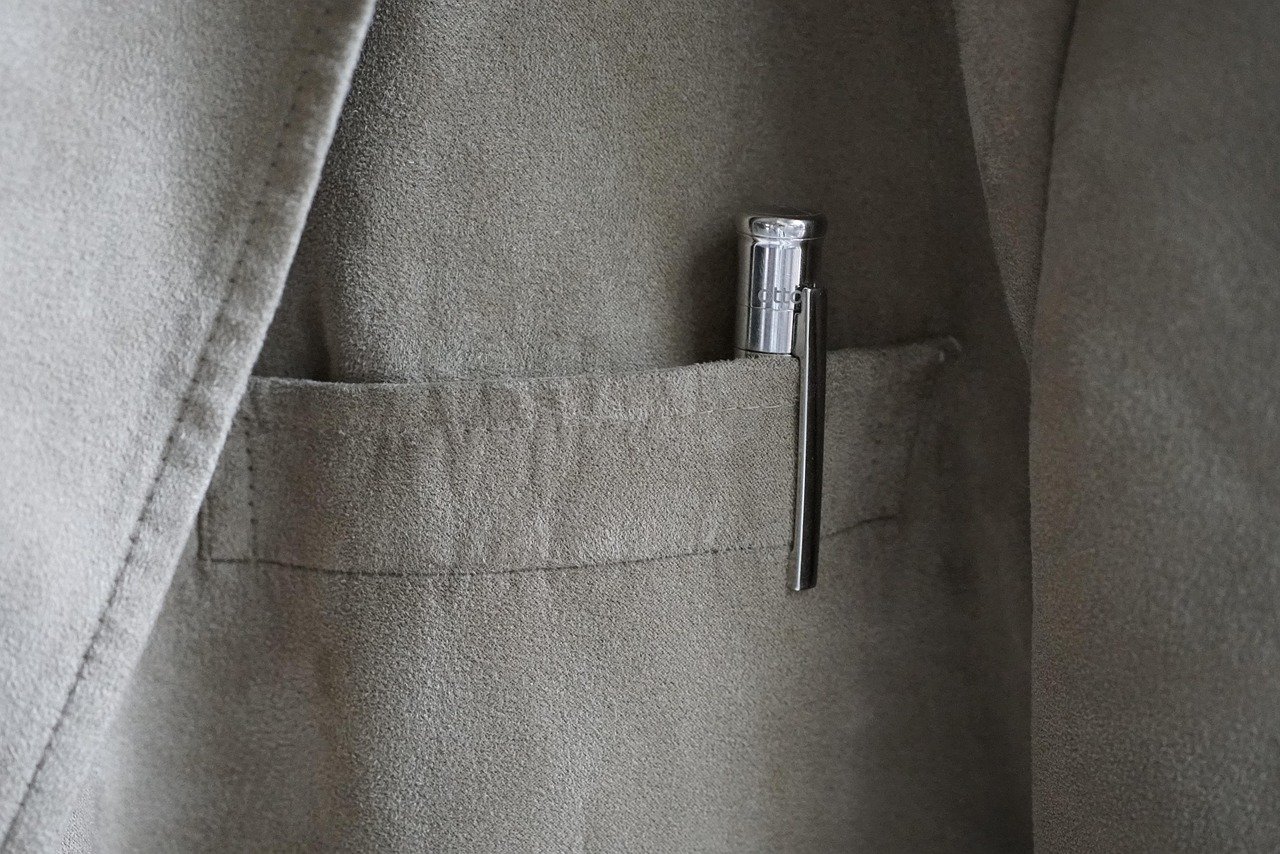
A pen that writes cleanly on a desk can become a small ink pump in a pocket.
At a desk, the nib or tip stays level, cool, and relatively still. In a pocket, body heat thins the ink and expands trapped air; walking adds repeated shocks; sitting may put the pen under compression; tip-down carry lets gravity keep ink at the outlet. What looks like random failure is often a pattern of forces.
A blot around the tip after warm carry can point to heat-driven pressure or a loose seal. Ink concentrated in the cap often suggests the pen travelled tip-up and was shaken. A long streak down a shirt pocket commonly indicates tip-down seepage, while a sudden large release after a flight or elevation change can implicate pressure imbalance. The stain’s location and timing can therefore narrow the cause before any parts are replaced.
- Heat and motion often expose a marginal seal that seems fine during short desk use.
- A clean cap with ink below the tip favours gravity-fed seepage over capillary transfer.

Find the ink’s true origin
Pen leakage indicators
A pocket mark from pen leaking in pocket may come from several routes, and each leaves a different pattern. Typically, leakage begins at a joint: the refill nose, cartridge seal, converter opening, or a crack in the barrel. Additionally, ink often pools there before reaching fabric.
Separate leaks from transferred ink
- Tip transfer: A ballpoint, rollerball, or fountain-pen nib deposits ink directly onto lining when the point rubs fabric. The tip looks wet, but the refill body remains clean.
- Capillary transfer: Ink wicks along threads, a pen loop, lint, or a damp paper receipt. The stain may extend farther than the original contact point.
- Old residue: Dried ink under a cap, around a grip, or in a pen sleeve can liquefy with pocket heat and smear later. Wipe the pen clean, then inspect after a day of normal carry.
- Cracked refill: A fine split often appears as a narrow wet line or isolated bead along the ink tube, rather than at the writing tip.
A tissue-wrap test helps localize the fault: wrap the tip, barrel joint, and refill separately, carry the pen point-up, then check which area first develops ink.
Fix the seal before blaming the refill
A pen carried tip-down keeps ink at the writing end. Walking, sitting, and pocket compression then repeatedly jolt the refill, letting a small amount of ink collect at the ball or felt tip. That can be normal priming in a very wet writer; it becomes a pocket leak when the tip can touch fabric or the pen’s seal leaves it exposed.
Check the closure first
For a retractable pen, extend and retract it slowly while watching and listening for the final click. The tip must disappear completely behind the nose cone. A weakened spring, a refill that is not seated, or an incorrect refill length can leave the point fractionally proud—enough to mark a pocket under pressure.
A capped pen needs a different test: push the cap on firmly, then see whether it wiggles, cracks, or pulls off with almost no resistance. A loose cap permits tip contact and can allow the point to dry and then shed concentrated residue when writing resumes.
Reduce ink delivery and exposure
Try these checks in order:
- Wipe the tip and nose cone clean; old ink can wick onto fabric and mimic an active leak.
- Confirm the refill is fully inserted and compatible with the pen body.
- Replace a refill that leaves a persistent bead after being stored horizontally; its flow may be excessive or its seal damaged.
- Carry the pen tip-up or clip it to a pocket edge, especially during active movement.
- If the problem remains, inspect the nose cone and barrel for hairline cracks or displaced internal seals.
Store the cleaned pen tip-up overnight on tissue, then carry it tip-down in a separate pouch for a day. Ink appearing only after tip-down carry points toward gravity, movement, or point exposure rather than a split barrel.
Why heat and altitude force ink outward
A pocket pen is a limited containment system. It holds ink, trapped air, seals, and a tip designed to dispense pressure.
Body heat warms the reservoir and lowers ink viscosity; trapped air expands and can push ink toward the point.
A hot car intensifies both effects, especially when a pen is left tip-down or compressed against a seat or bag.
This risk explains pen leaking in pocket.
Cabin pressure changes work from the other direction. As an aircraft climbs, outside pressure falls, allowing air inside a refill or converter to expand. That expansion can force ink through the feed, around the ball, or into a cap. Descent is usually less troublesome because the pressure change tends to draw air inward rather than expel ink.
Ink systems most affected
- Fountain pens are particularly responsive: liquid ink and a feed channel offer an easy route for pressure-driven movement.
- Rollerballs and many liquid-ink pens can also leak readily because their ink flows more freely than paste.
- Gel pens vary, but may burp when hot if the refill contains a sizable air space.
- Oil-based ballpoints generally resist heat better because their ink is thicker. Pressurized ballpoint refills can offer additional protection.
Frequent travelers can reduce risk by keeping pens cool, carrying them tip-up during ascent, avoiding partly filled fountain-pen converters when practical, and placing each pen in a small sealed pouch. A pen that has already leaked should be cleaned before the next trip; dried residue can create a misleading repeat stain.
When the pocket itself triggers the leak
A pen that leaks only while sitting, bending, or riding in one compartment is often being mechanically disturbed, not simply overfilled. Seated pressure can drive a click pen’s button against the pocket wall, partially deploy a mechanism, or push a capped pen deeper until its cap contacts the tip.
Compression changes the pen’s geometry
A tight trouser pocket can bow a slim barrel. That flex may unseat a threaded nose cone, open a minute gap around a refill collar, or crack a weakened plastic body. The effect can be intermittent: the pen looks intact once removed, yet releases ink while bent under load.
Surrounding gear matters. Keys, a phone edge, a pocketknife, or a wallet can act as a hard lever against the clip, cap, or clicker. A clip snagged on a pocket seam may pull the cap upward a fraction at a time; a clicker pressed by a phone can leave the writing tip exposed.
Useful checks include:
- Place the pen alone in the suspect pocket and repeat normal sitting and bending.
- Test whether the button deploys under sideways pressure.
- Inspect cap lip, clip mount, and barrel threads for scuffs, looseness, or hairline splits.
- Move the pen to a roomier compartment or use a protective sleeve; if leaking stops, compression was the trigger.
A functional refill cannot compensate for a body or closure that changes position under load.
Trace leaks beyond the tip
Ink found inside the barrel, around the joint threads, or at the clicker end changes the diagnosis. The pen is no longer merely depositing ink from its writing point: ink has escaped the refill or cartridge and migrated through the body. A small amount of old ink near the tip can be residue; fresh wet ink at the tail is strong evidence of a containment problem.
Inspect without making the leak worse
Work over paper towel, keeping the pen level. Unscrew or separate only the parts designed to come apart; do not pry tight seams, twist a stuck refill, or force a click mechanism. Remove the refill and look for these clues:
- a split tube, crushed shoulder, loose metal tip, or damaged rear plug;
- wet threads or a missing, flattened, or displaced sealing ring;
- ink concentrated at one end of the refill, which may reveal the exit point;
- a refill that rattles, sits crookedly, or is held under sideways stress.
Wipe the empty barrel clean, then leave it on fresh tissue before reassembly. If ink reappears with no refill installed, a prior spill may be trapped in a seam; if it stays clean, the refill is the likely source.
Before fitting a replacement, identify the refill format used by the leaking pen. Match not only length, but tip shape, tube diameter, rear-end profile, and whether the mechanism requires a spring. A near-match can seat poorly, press against the tail plug, or prevent full retraction—conditions that recreate the leak.
Match the fix to the ink system
A metal barrel can resist crushing, but it does not contain ink. The refill or reservoir is the pressure boundary; a cracked cartridge, worn tip seal, or loose converter can leak inside an otherwise rugged metal pen.
Different systems fail differently
- Ballpoints use viscous oil-based paste. They usually mark pockets through a contaminated or partially exposed tip, though heat can make low-viscosity formulations flow more readily.
- Gel pens use water-based pigment ink that is less viscous than ballpoint paste. A secure retraction mechanism and tip-up carry matter more, especially in warm, active pockets.
- Rollerballs carry liquid ink and are comparatively vulnerable to heat, altitude, and cap failure. A rigid cap with an effective inner seal is central to safe carry.
- Fountain pens have the largest ink-and-air chamber. They travel most reliably with the nib up and a well-sealed cap; a loose converter or damaged cartridge can mimic a nib leak.
- Pressurized cartridges use a sealed, gas-pressurized refill and a specialized tip. They are often the more suitable option for frequent altitude changes, temperature swings, or tip-down work carry.
A pen that repeatedly leaks under the same conditions may need a different ink architecture, not merely a stronger body.


A pocket-safe check in under a minute
-
Confirm the point is truly closed
Retract the point fully or seat the cap with a deliberate push. A tip left fractionally exposed can mark fabric even when no ink is escaping.
-
Remove ink already on the pen
Wipe the tip, collar, threads, and barrel seam with tissue. Residual ink can wick onto clothing and mimic an active leak.
-
Check the refill under gentle pressure
Make a short scribble, then inspect the refill’s tip, rear plug, and body for fresh wetness, splits, or a loose fit. Ensure it is seated against its stop rather than rattling in the barrel.
-
Snug up the working parts
Finger-tighten the nose cone, barrel, and cap; avoid forcing plastic threads. If a correctly fitted new refill repeatedly leaks, replacing the nose assembly, cap, or barrel is often more practical than further refill swaps.
-
Match the pen to the carry
A sealed cap, firm retraction, and protected pocket position reduce risk during active days. The EDC pens and notebooks guide helps compare carry-friendly setups.
Pocket Pen Leaks: Common Questions
How can I tell if ink on my pocket came from an actual leak or just residue?
Wipe the pen clean, including the tip, collar, and cap, then inspect it again after a day of normal carry. Dried residue under a cap or around a grip can liquefy with pocket heat and smear later, mimicking an active leak even though nothing is actually escaping the refill.
Why do pens leak more on airplanes?
As an aircraft climbs, outside pressure falls, letting the air trapped inside a refill or converter expand. That expansion can force ink through the feed, around the ball, or into the cap. Descent is usually less troublesome, since the pressure change tends to draw air inward rather than expel ink.
Does carrying a pen tip-up or tip-down matter?
Yes. A pen carried tip-down keeps ink at the writing end, and walking, sitting, and pocket compression repeatedly jolt the refill, letting ink collect at the tip. Carrying the pen tip-up or clipping it to a pocket edge, especially during active movement, reduces that risk.
Can a metal pen body still leak?
Yes. Metal protects the housing, not the ink seal. The refill, converter, cap, and tip are what actually determine containment, so a robust metal barrel can still conceal a failed internal refill or a worn seal.
Trust the Evidence, Not the Appearance
A pocket pen becomes predictable once its ink route is treated as a chain of barriers: reservoir, refill joint, barrel, tip seal, or cap. The location of fresh ink identifies the barrier worth fixing; replacing unrelated parts merely hides the clue.
After cleaning and reassembling, hold the pen tip-down over tissue, operate its mechanism several times, and leave it in the intended pocket orientation briefly. A clean result after motion and mild warmth is meaningful evidence. Any renewed ink narrows the fault to a seal, deployment mechanism, refill, or damaged body—and means the pen has not earned pocket duty yet.




7 Comments
The under-a-minute check would have saved a shirt last summer. Mine had ink on the threads, which turned out to be a hairline crack near the refill collar—not the cap. I only found it after gently flexing the empty barrel under a bright lamp. RIP favorite little pocket pen.
I fly fairly often with a fountain pen and have absolutely had the altitude leak happen. Keeping it full and nib-up helps, but saying that the pen “responds strongly” feels a little understated when you open the cap and it looks like an ink crime scene 😅
Still, checking for old ink inside the cap before assuming a fresh leak is smart. I’ve blamed a pen more than once when it was just residue from the previous flight.
“Ink crime scene” is unfortunately accurate. A fuller fountain pen has less air available to expand, and nib-up keeps the air space away from the feed during ascent. Before flying, wipe the section and cap interior clean; then any new ink after the trip is much easier to interpret. If it still leaks while clean, inspect the cartridge/converter fit and the cap’s inner seal.
The tissue-wrap test was the useful bit for me. I was convinced my rollerball was leaking through the tip, but the tissue came back wet around the refill’s back end instead. New refill fixed it, although I had to order the exact short version—my “close enough” refill wouldn’t seat properly.
My click pen kept making a tiny blue dot in my jeans pocket, not a big spill. I finally noticed the button was getting pressed when I sat down with keys in the same pocket. Moved the keys and started clipping the pen to the pocket edge—problem solved. No defective refill, just user error apparently.
I’m a little skeptical of the “match replacement geometry exactly” advice only because the original refill in my metal pen was impossible to identify. I tried two supposedly compatible gel refills; one wrote fine but left the barrel damp after a day in a backpack, while the other was dry but rattled.
Is a damp barrel always a crack or bad refill seal, or can the tip assembly be pushing ink backward somehow? The pen is stored tip-up most of the time.
I had this with a generic Parker-style refill. It was a fraction shorter, so the spring pressed it at a weird angle and the rear plug started weeping. A proper-length refill stopped it. The fact that yours rattles makes me suspect fit before a barrel crack.