This post contains affiliate links. If you buy through one, we may earn a commission at no extra cost to you. It never changes what we recommend.
The right backup battery is the one sized to what you will actually run, not the biggest number on the box.
When the grid goes down, most homes need a few specific things: the refrigerator, the internet, phone charging, some light, and maybe a sump pump or a medical device. A battery power station can run all of that indoors, silently, with no fuel to store.
This guide walks through the sizing math first, then matches four current BLUETTI models to the outage you are planning for.
- Add up watt-hours per day, not just watts.
- Plan on using roughly three quarters of the rated capacity.
- Expandable or 240V systems only make sense if your loads demand them.
How to choose a power station for home backup
A power station for home backup has two numbers that matter, and they answer different questions. Watts (W) is how much it can deliver at once, so it decides what you can plug in. Watt-hours (Wh) is how much energy is stored, so it decides how long those things run.
Most buying mistakes come from reading only the first number. A 2,600W inverter will start a refrigerator easily. But if the battery behind it holds 2 kWh, the fridge, router and phones will drain it in well under a day. So the sizing below starts with watt-hours.
Four capacity tiers, one for each kind of outage
Size a power station for home backup in five steps
You do not need an electrician to estimate this. You need the labels on your appliances and a calculator. The steps below use real label data where it exists, so you can swap in your own numbers.
From appliance labels to a battery size
- List only what must run
Write down the loads you actually need during an outage: refrigerator or freezer, modem and router, phone charging, a few LED lights, and anything medical. Leave out the oven, the dryer and central air. Those belong to a whole-home system, not a portable one.
- Get each load's daily watt-hours
For a fridge or freezer, read the yellow EnergyGuide label. It lists estimated yearly use in kWh. Divide by 365: a label reading 600 kWh per year works out to about 1,644Wh per day. For small electronics, multiply the adapter’s rating by the hours you will run it. A router adapter rated 12V at 1.5A is an 18W ceiling, or 432Wh over 24 hours at most.
- Add them up
A worked example: that 600 kWh fridge (1,644Wh), a router (432Wh worst case), three phone charges (about 57Wh, since a 5,000mAh phone battery holds roughly 19Wh), and four 9W LED bulbs for five hours (180Wh). Total: about 2,313Wh per day.
- Discount the rated capacity
No battery delivers its full label through an inverter. BLUETTI’s own runtime formula on its AC180 page uses a 90% depth of discharge and 85% inverter efficiency, which leaves about 76% of the rated watt-hours. Apply that here: a 2,073.6Wh unit gives roughly 1,586Wh of usable AC power.
- Check surge and continuous watts last
Motors and compressors draw a brief start-up spike above their running watts. Check the nameplate or manual for your fridge, freezer or sump pump. For a pump that lists amps, multiply by 120 to get running watts: a 6A pump runs at about 720W. Then confirm the station’s continuous rating clears your largest single load with room to spare.
Run the example through each pick and the tiers become obvious. The Elite 100 V2 (about 783Wh usable) covers the router, phones and lights for more than a day, but not the fridge. The Elite 200 V2 (about 1,586Wh usable) runs the whole example list for roughly 16 hours. The Apex 300 alone stretches that to about 22 hours. An AC200L with two B300K batteries (about 5,797Wh usable) carries it for around two and a half days.
Solar changes the picture for longer outages. Every pick accepts at least 1,000W of solar input, so a sunny afternoon can put back much of what the fridge used overnight. For a deeper look at what each model costs per stored watt-hour, see our BLUETTI cost-per-watt-hour breakdown.
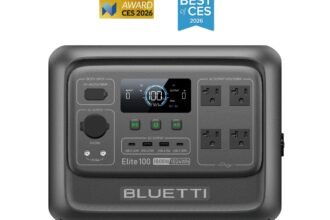
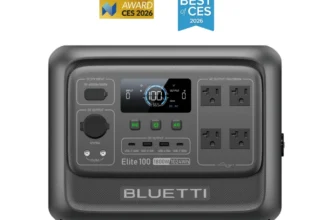
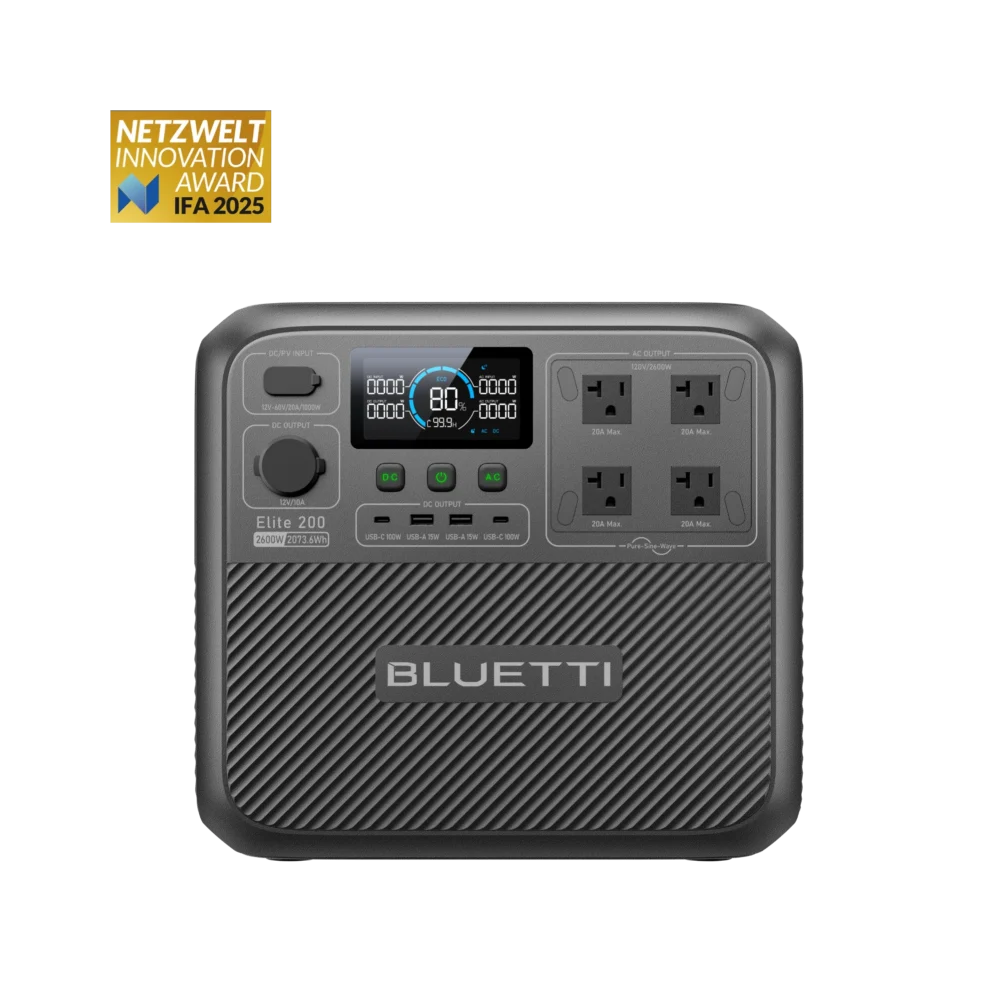
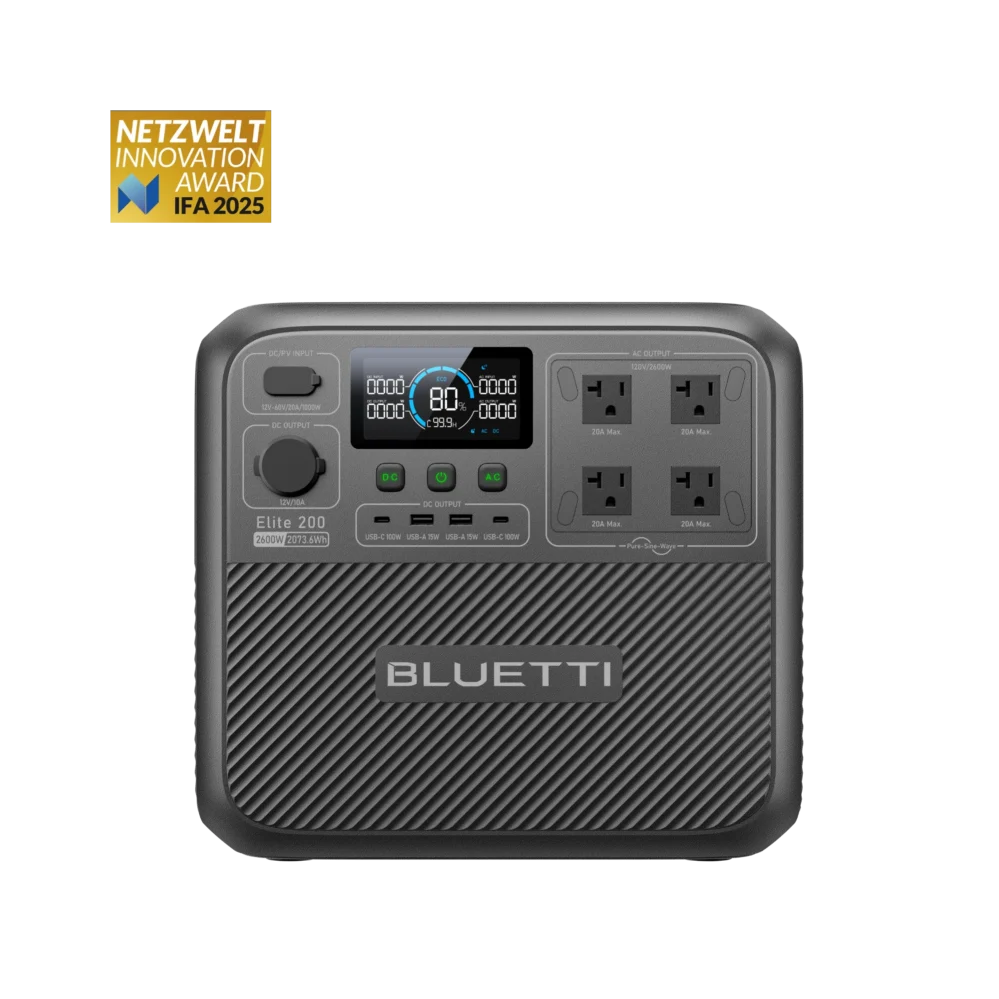
BLUETTI Elite 200 V2: the right size for most homes
01
2,073.6Wh, 2,600W continuous, LiFePO4
About 2 kWh is the point where a portable unit stops being a phone charger and starts covering a fridge overnight. The Elite 200 V2 lands right there, with 2,600W continuous output and a 3,900W Power Lifting mode for resistive loads like a kettle.
BLUETTI rates the cells for 6,000+ cycles to 80% capacity, and its UPS mode switches over within 15 ms. That is fast enough for most routers and computers, though not a substitute for a dedicated UPS on sensitive equipment. It recharges to 80% in about 1.1 hours from the wall and accepts up to 1,000W of solar.
The trade-off is that it cannot be expanded. If you think you will want multi-day runtime later, start with the AC200L instead.
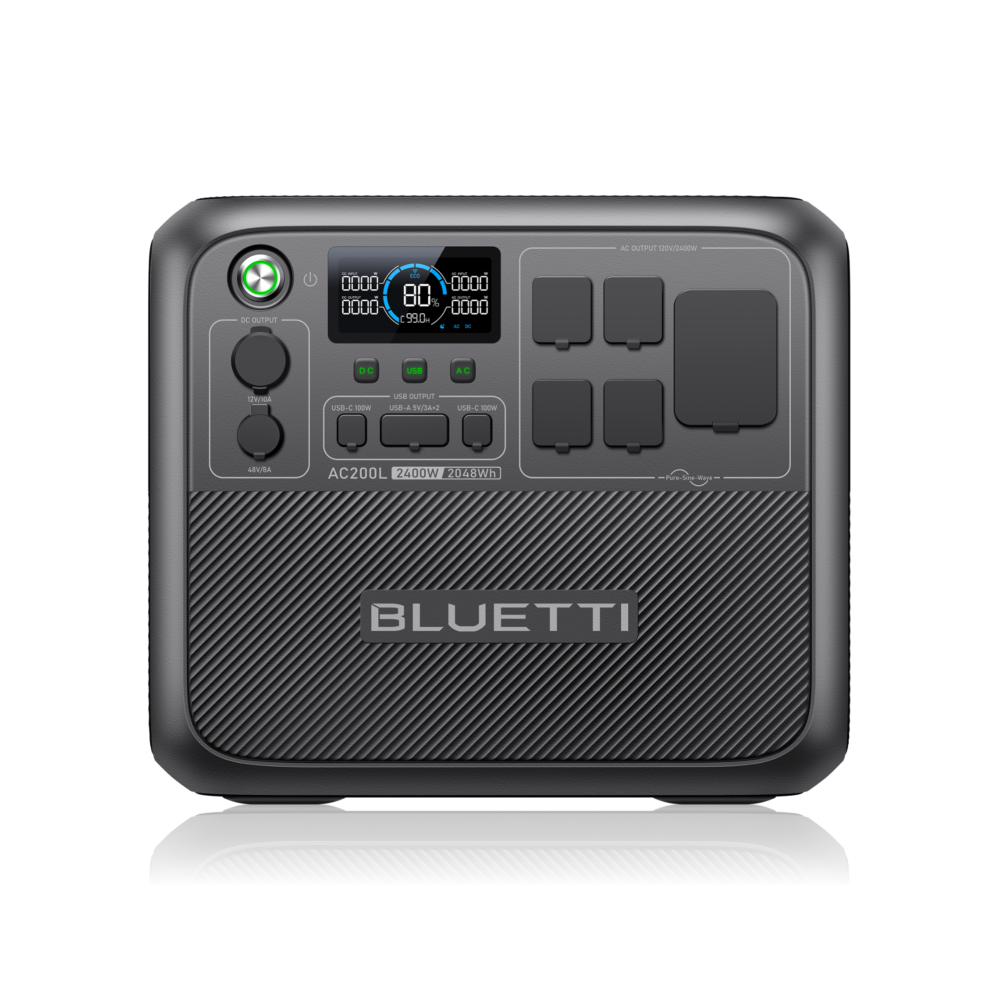
BLUETTI AC200L: buy once, add batteries later
2,048Wh base, expandable to 7,577.6Wh
The AC200L holds about the same energy as the Elite 200 V2 out of the box. The difference is the expansion port: it accepts up to two B300 or B300K batteries, one B230, or two B210s.
With two B300K packs it reaches 7,577.6Wh, enough to run the example load list above for more than two days. It also has a TT-30 outlet and four 20A outlets, charges to 80% in about 45 minutes at its full 2,400W input (that needs the optional 20A plug), and takes 1,200W of solar.
Two caveats. BLUETTI rates these cells for 3,000+ cycles, half the Elite 200 V2’s figure. And the product page does not list a UPS switchover time, so do not count on it for gapless backup.
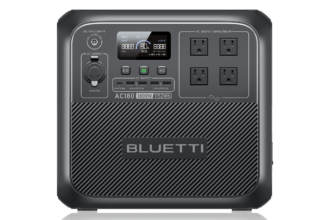
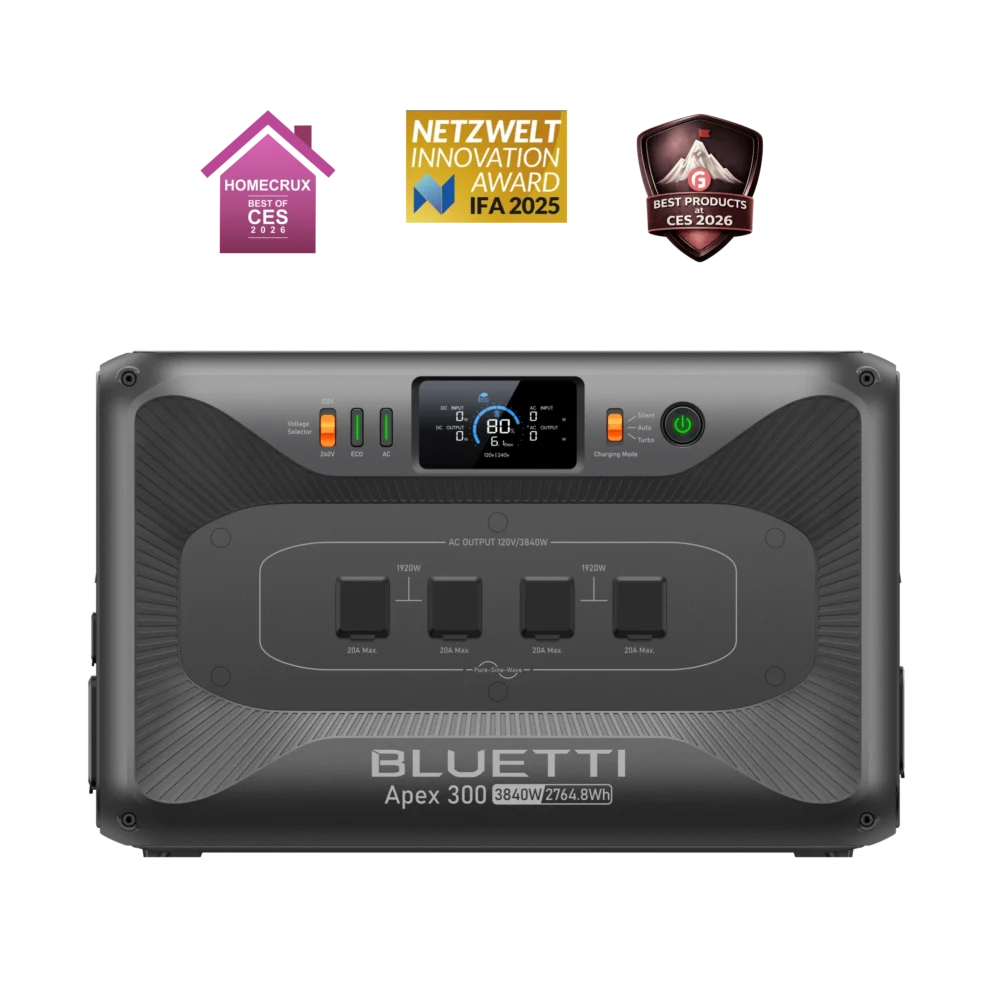
BLUETTI Apex 300: when a portable unit is not enough
2,764.8Wh, 3,840W, 120V and 240V
The Apex 300 is the step up for homes with 240V loads such as a well pump. It has a NEMA 14-50R (120/240V, 50A) outlet alongside a TT-30 and four 20A outlets, and BLUETTI quotes a 0 ms UPS switchover.
It scales by adding up to six B300K-family batteries per unit, and BLUETTI sells home backup kits that pair it with a transfer panel. Any connection to your home’s wiring should go through a licensed electrician and a proper transfer switch.
At 83.78 pounds it is not something you carry upstairs, and on a standard 15A outlet its AC input is capped at 1,800W. Treat it as a semi-permanent installation that you can still wheel out to the garage.
BLUETTI Elite 100 V2: internet, phones and light
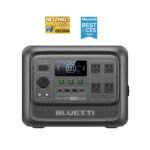
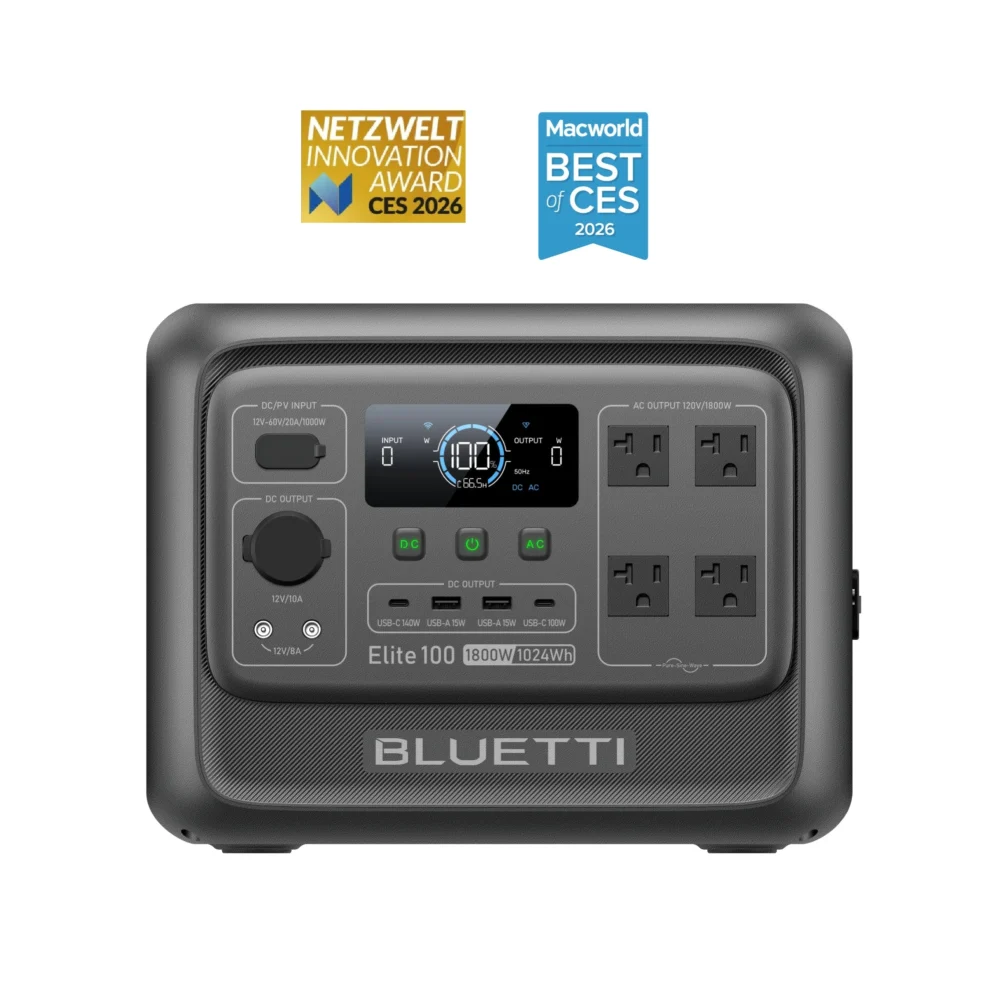
1,024Wh, 1,800W, 25 lbs
Not every outage plan includes the fridge. If yours is about staying online, charged and lit, the Elite 100 V2 does it at half the weight of the Elite 200 V2.
About 783Wh of usable power runs an 18W router for well over a day, with plenty left for phones and lights. It switches over within 10 ms, charges to 80% in about 45 minutes, and accepts up to 1,000W of solar.
We covered it in depth in our Elite 100 V2 review.
Elite 200 V2 | AC200L | Apex 300 | Elite 100 V2 | |
|---|---|---|---|---|
|
|
|
|
| |
| Capacity | 2,073.6Wh | 2,048Wh | 2,764.8Wh | 1,024Wh |
| Continuous AC output | 2,600W | 2,400W | 3,840W | 1,800W |
| Expandable | No | Up to 7,577.6Wh | Up to 6 batteries | No |
| UPS switchover (published) | Within 15 ms | Not listed | 0 ms | Within 10 ms |
| Rated cycles to 80% | 6,000+ | 3,000+ | 6,000+ | 4,000+ |
| Weight | 53.4 lbs | 62.4 lbs | 83.78 lbs | 25 lbs |
| 240V output | – | – | 1 | – |
| Check price | Check price | Check price | Check price |
Battery vs gas generator for home backup
A gas generator stores far more energy per dollar, and it refuels in minutes. For a week-long outage with heavy loads, that is a real advantage. But it can never run indoors. The CPSC warns never to use one inside a home, garage, basement or shed, even with doors open, and to keep it at least 20 feet from the house. The CDC's generator safety fact sheet makes the same point about carbon monoxide.
A battery station sits beside the fridge, runs silently overnight, and needs no stored fuel. That is why it suits the most common outage, which lasts hours rather than days. Many households end up with both: a battery for indoor essentials and a small generator outdoors to recharge it during a long event.
- Size by watt-hours first
Runtime is the usual failure, not output. Work out your daily watt-hours before comparing models.
Look forUsable capacity (about 76% of rated) that covers your list for the outage length you expect.AvoidBuying on the wattage headline alone. - LiFePO4 chemistry
All four picks use LiFePO4 cells, rated from 3,000 to 6,000+ cycles. That matters for a unit that sits on standby for years.
Look forA published cycle rating to 80% capacity.AvoidOlder NMC units with far lower cycle counts. - A real UPS mode
Pass-through charging is not the same as UPS. A published switchover time tells you whether a router or PC will ride through the cut.
Look forA stated millisecond figure.AvoidAssuming every pass-through unit switches without a gap. - A plan for longer outages
If outages in your area last days, decide now between expansion batteries and solar. Both change which model makes sense.
Look forAn expansion port or 1,000W+ solar input.AvoidA non-expandable unit if you already expect to want more. - Storage and upkeep
BLUETTI recommends recharging stored units to 40-60% every three to six months.
Look forApp monitoring so you can check charge without unpacking it.AvoidLeaving it at zero in a hot garage.
Frequently asked questions
Can a power station run my refrigerator during an outage?
Yes, if it has the capacity. A fridge’s daily use, from its EnergyGuide label divided by 365, is often well over 1,000Wh. So a 1 kWh unit will not carry it overnight, while a 2 kWh unit typically covers most of a day.
Can I plug a power station into my house wiring?
Only through a properly installed transfer switch or a manufacturer-supported panel kit, installed by a licensed electrician. Never backfeed a home through an outlet. It can energize utility lines and endanger line workers.
Will a power station run a space heater?
Briefly. A typical plug-in space heater draws 1,500W, so even the Elite 200 V2’s roughly 1,586Wh of usable power lasts only about an hour. Warm layers and a sealed room are a better use of battery power.
What about a CPAP during an outage?
That is its own sizing problem, and a smaller dedicated battery often fits it better. See our BLUETTI X30 CPAP power bank review.
How long does a power station hold its charge in storage?
LiFePO4 units hold charge well, but BLUETTI still recommends topping stored units up to 40-60% every three to six months. Set a reminder when the clocks change.
For most homes the Elite 200 V2 is the right first power station for home backup: enough stored energy to keep a fridge, the internet and phones going through most of a day, in a box one person can move. Choose the AC200L if you want to add batteries later, and the Apex 300 only if you have 240V loads or want panel integration.
Size it to the outage, not the spec sheet
- The Elite 200 V2 covers fridge, internet and phones for most of a day.
- The AC200L grows to 7,577.6Wh when one day is not enough.
- The Apex 300 is the pick for 240V loads and panel integration.
Start from your appliance labels, add up daily watt-hours, and plan on using about three quarters of any rated capacity. That single calculation tells you whether you need 1 kWh, 2 kWh, an expandable system or a 240V installation, and it keeps you from paying for capacity you will never use.
BLUETTI Elite 200 V2 Portable Power Station | 2,600W 2,073.6Wh
BLUETTI AC200L Portable Power Station | 2,400W,2,048Wh AC200L
Apex 300 Versatile Power Station | 3,840W, 2,764.8Wh Apex 300