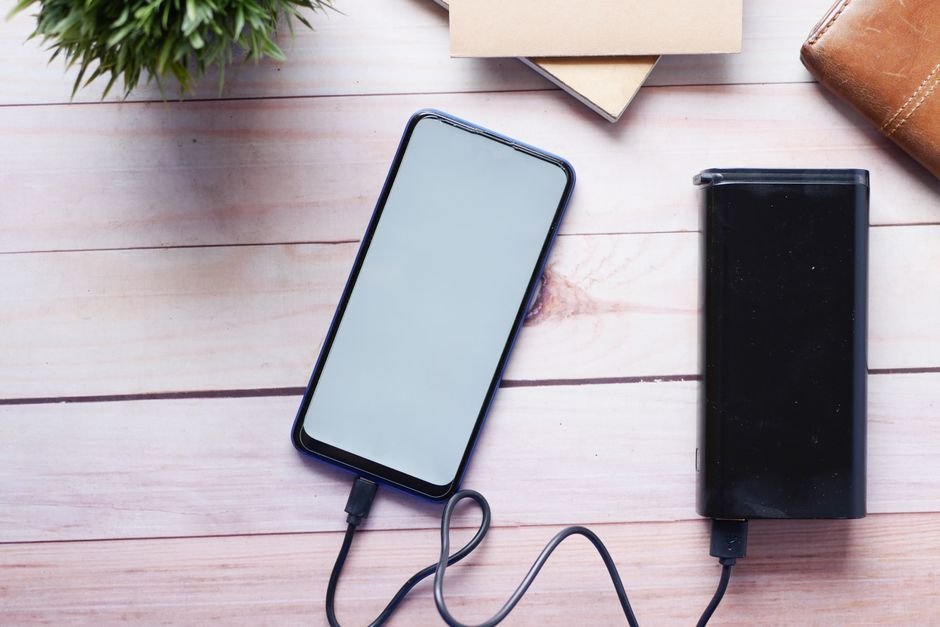
Small package, big promises: mAh labels can be misleading.
Leaving for a day trip with a phone at 20%: a slim 5,000 mAh pack fits a pocket but may not fully recharge the phone; a 20,000 mAh unit will handle multiple top‑ups but is bulky.
Manufacturers list cell capacity; voltage conversion, heat, cables and fast‑charge losses reduce usable energy. That gap matters—one can end up with a dead phone, unnecessary weight, or wasted money.
- Smartphone batteries commonly 3,000–5,000 mAh.
- Usable output typically ~60–75% of labelled mAh after losses.
- Rough examples (for a 3,500 mAh phone): 5,000 ≈ 0.8–1.1 charges; 10,000 ≈ 1.7–2.1; 20,000 ≈ 3.4–4.3.
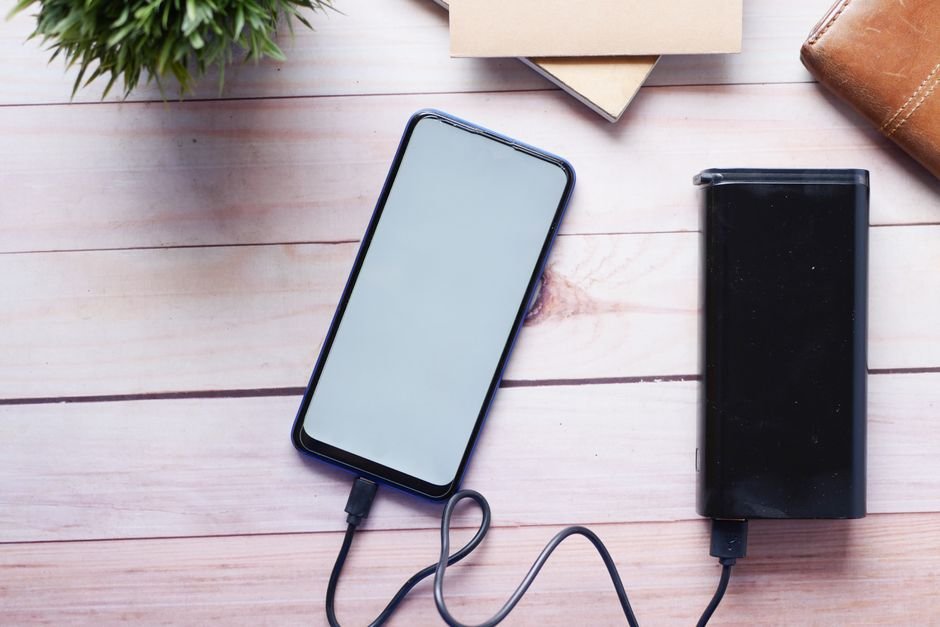
What mAh actually measures (and what it doesn't)
What mAh actually measures
mAh (milliampere-hour) is a unit of electric charge. For example, it shows how many milliamperes a battery can supply for one hour at its nominal voltage. Energy requires voltage. Watt-hours (Wh) = (mAh/1000) × volts. For a power bank mAh rating, consider both mAh and voltage.
Most power bank mAh ratings refer to the internal cell voltage (~3.6–3.85 V).
However, when the pack boosts to 5 V USB, conversion losses reduce usable energy.
Additionally, circuitry adds overhead that further lowers adjusted capacity.
- Conversion efficiency: boost converters and battery chemistry typically waste 10–30% of energy.
- Output capability: maximum current per port and supported protocols (PD, QC) limit how quickly a device charges.
- Device acceptance: the phone’s charging circuitry, battery state, and thermal throttling affect transfer rates.
- Cables and connectors: resistance and quality cause voltage drop and heat losses.
Takeaway: use mAh for rough capacity comparisons, but consult Wh, output amperage, and supported charging protocols for realistic delivered energy and charge speed.
Real-world energy losses
Phone charging systems and power banks trade energy across voltages and hardware, so the number printed on a pack is not the energy that reaches a phone. Major loss sources:
- Voltage conversion. Internal cells are rated at ~3.7 V but USB outputs are 5 V (or higher for fast charge). Boosting voltage raises current draw and waste heat.
- Converter efficiency. The boost/buck circuitry itself has limits. Good converters can hit ~85–95% under optimal load; typical converters run lower at light or very high loads.
- Cable and connector losses. Thin or long cables and poor contacts can drop a few percent to ~10% of transferred power, especially at higher currents.
- Phone-side conversion & negotiation. Fast‑charge negotiation and internal charging circuits add overhead and conversion loss.
- Aging and internal resistance. Cells and converters lose capacity and efficiency over time; 1–3 years of regular use can noticeably reduce delivered energy.
A practical conversion formula: Delivered mAh ≈ (bank_mAh × 3.7 V × efficiency) / 5 V. Example: a 10,000 mAh pack at 70% efficiency ≈ 5,180 mAh delivered.
Typically, whole-system efficiencies are conservative at 60–70% for planning.
Additionally, 75–85% apply to high-quality, new packs.
For old or cheap units, this drops to 50–60%.
Also, plan with the conservative numbers to avoid surprises.
Use 60–70% efficiency when estimating usable energy from a power bank. Multiply labeled mAh by 3.7, apply that efficiency, then divide by 5.
Calculate realistic charge count
-
Convert power bank mAh to watt‑hours (Wh)
Use the cell nominal voltage (usually 3.7 V for power‑bank cells). Wh = (mAh ÷ 1000) × V.
-
Apply an efficiency factor
Multiply Wh by a realistic efficiency (use 60–75%; 65% is a conservative single value) to account for conversion and heat losses.
-
Convert phone capacity to Wh
If the phone lists mAh, convert to Wh the same way: Wh = (mAh ÷ 1000) × phone nominal voltage (often 3.7–3.85 V).
-
Divide usable Wh by phone Wh
Usable Wh ÷ phone Wh = estimated full charges. Round down for conservative planning; fractional results indicate partial charge.
-
Quick shortcut (approximate)
For a fast estimate, multiply the bank mAh by the efficiency (e.g., 0.65) then divide by phone mAh; it approximates the same result.
Step-by-step calculation
A repeatable method: 1) convert the bank rating to Wh, 2) apply an efficiency factor, 3) convert the phone battery to Wh, 4) divide.
- Convert bank to Wh: Wh_bank = (mAh_bank ÷ 1000) × V_cell. If V_cell is not shown, use 3.7 V (typical for lithium cells).
- Apply efficiency: Usable_Wh = Wh_bank × efficiency. Use 0.60–0.75; 0.65 is a safe conservative choice.
- Convert phone to Wh: Wh_phone = (mAh_phone ÷ 1000) × V_phone. Many phones use ~3.85 V, but 3.7 V is an acceptable approximation when voltage is unknown.
- Compute charges: Estimated full charges = Usable_Wh ÷ Wh_phone.
Worked example
A 20,000 mAh power bank (3.7 V): Wh_bank = (20,000 ÷ 1000) × 3.7 = 74 Wh. Using 65% efficiency: Usable_Wh = 74 × 0.65 = 48.1 Wh.
A phone with 4,000 mAh battery at 3.85 V: Wh_phone = (4,000 ÷ 1000) × 3.85 = 15.4 Wh.
Estimated charges = 48.1 ÷ 15.4 ≈ 3.12 → about 3 full charges in real conditions. Using the quick mAh shortcut: (20,000 × 0.65) ÷ 4,000 = 3.25, which is close but slightly higher because of voltage differences.
This method produces realistic, repeatable estimates and makes assumptions explicit (cell voltage and efficiency) so adjustments can be made for faster chargers, pass-through, or device quirks.
Choose by outputs, ports, recharge time, size — not just mAh
- Output power and charging protocols
Rated output (watts) and supported protocols (USB‑PD, Quick Charge) determine how quickly a phone actually charges; a high‑mAh bank with only 5W output will be slow. Match the bank’s maximum wattage to the phone’s fast‑charge spec for realistic top‑ups.
Look forHigh wattage and compatible fast‑charge protocolsAvoidLow‑power outputs that bottleneck charging speed - Port types and simultaneous charging
Number and types of ports (USB‑C, USB‑A, Lightning) dictate convenience and whether multiple devices can be charged without dividing output. When sharing power, total output across ports matters more than individual port mAh.
Look forUSB‑C PD plus enough ports for intended devicesAvoidOnly legacy USB‑A ports or insufficient simultaneous output - Recharge time and input power
Input watts determine how fast the power bank itself recharges; large capacity needs high‑wattage input (and preferably USB‑C) to avoid very long refill times. Fast recharge capability reduces downtime between uses.
Look forHigh‑wattage USB‑C input or dual‑input chargingAvoidSlow 1A inputs on large banks - Weight, size and real portability
Higher capacity increases weight and bulk; decide whether extra charges justify the added carry cost. Consider energy density (Wh per gram) as a practical complement to mAh when portability matters.
Look forBalanced capacity for intended carry useAvoidOversized banks that are rarely carried
Prioritize certified safety features: overcurrent, overvoltage, temperature protection, and reputable cell suppliers. Cheap, unlabeled units often skip protections — learn to avoid unsafe cheap power banks.
When capacity and fast charging are attractive, verify certifications (UL, IEC) and read tested reviews; a slightly lower‑capacity, certified bank is safer than an uncertified jumbo pack.
Choose capacity by use case
Capacity map and trade-offs
Match capacity to how often and where charging is available. Typical delivered energy (after conversion losses) means:
- 5,000–10,000 mAh (≈18–37 Wh) — pocket carry for daily top-ups; roughly one full phone charge to two charges. Very portable, usually <200 g, quick to stow with other budget pocket-sized EDC accessories.
- 10,000–20,000 mAh (≈37–74 Wh) — commuter or light travel: 1.5–3 charges, more flexibility for midday top-ups; moderate weight (200–400 g) and often faster recharge when PD inputs are present.
- 20,000–30,000+ mAh (≈74–111+ Wh) — weekend trips or multi-day use: multiple full charges and possible device-sharing. Heavier (350–700 g), longer recharge times, sometimes requiring multi-hour USB‑C PD recharging or wall charging.
Trade-offs are simple: higher capacity = more weight, bulk, and longer recharge; lower capacity = lighter and quicker to recharge but fewer charges.
Heuristics by mobility profile
- Minimalist commuter: 5k–10k mAh.
- Frequent traveler or heavy user: 10k–20k mAh with fast-input support.
- Multi-day trips or emergency stash: 20k+ mAh; prioritize recharge speed and a carry solution (backpack or vehicle).
Use these ranges alongside output types, recharge wattage, and portability.
Then pick the right balance.
Common mAh myths debunked
mAh is charge at a cell’s nominal voltage—not delivered watt‑hours.
Convert mAh→Wh and apply conversion efficiency; output voltage and losses set actual energy.
Not always—labels may show cell vs pack mAh or different nominal voltages.
Use Wh or independent tests for apples‑to‑apples comparisons.
Only roughly—larger banks suffer proportionally higher conversion and cable losses.
Phone charging efficiency and battery acceptance reduce incremental gains from very large banks.
mAh doesn’t change; fast charging affects delivery speed and can reduce usable energy via heat.
Higher currents raise losses and may trigger thermal throttling, lowering effective energy per cycle.
Practical test method for delivered energy
Prefer Wh as the unit of delivered energy and measure what actually leaves the bank rather than trusting label mAh. Use inexpensive inline USB power meters to record energy (Wh or mAh at 5–20 V) and run realistic charge cycles.
-
Measure delivered Wh with a USB meter
Place a USB power meter between the bank and phone and record total Wh (or mAh × V) during a full charge. Repeat two cycles to average results and capture conversion losses and any reduced output at low battery.
-
Test using realistic phone usage
Charge a phone from a representative state (for example 20% to 90%) while running typical apps or with the screen off — don’t rely on trickle-charge tests. Test each output type (PD, QC, USB‑A) because protocol negotiation affects delivered energy and speed.
-
Interpret markings and safety labels
Treat PD/QC labels as protocol indicators (affecting voltage/current negotiation), while CE/FCC/UL indicate regulatory or safety compliance, not effective capacity; look for explicit energy specs (Wh) for apples‑to‑apples comparisons.
For deeper technical background on converting mAh ↔ Wh and accounting for efficiency, see the related technical guide below.
Frequently Asked Questions
What does mAh actually mean for a power bank?
mAh (milliampere-hour) is a measure of electric charge at the battery cell’s nominal voltage — usually around 3.7 V internally. It does not directly measure delivered energy. Because power banks boost voltage to 5 V USB (or higher for fast charging), conversion losses reduce the actual energy that reaches your phone. Use Watt-hours (Wh = mAh ÷ 1000 × voltage) for a more accurate energy comparison.
How do I calculate how many times a power bank will charge my phone?
Convert both the bank and phone capacities to Watt-hours, apply a conversion efficiency factor, then divide. The formula is: Usable Wh = (bank mAh ÷ 1000) × 3.7 V × efficiency. Then divide by the phone’s Wh. For a quick estimate, multiply bank mAh by 0.65 and divide by phone mAh. For example, a 10,000 mAh bank at 65% efficiency delivers about 1.6 full charges to a 4,000 mAh phone.
What efficiency factor should I use when estimating charges?
Use 60–70% for conservative planning — the post recommends 65% as a safe single value for most scenarios. High-quality, new power banks with good converters can reach 75–85%, while older or cheaper units may fall to 50–60%. Planning with the lower end avoids unpleasant surprises when you need that last charge.
Should I buy a 10,000 or 20,000 mAh power bank for daily carry?
For a minimalist commuter who charges once a day, 5,000–10,000 mAh is usually sufficient and significantly lighter. A 10,000–20,000 mAh bank makes sense for frequent travelers or heavy device users who need multiple charges or want to share power with other devices. The trade-off is always weight and bulk versus the number of charges available.
Does fast charging reduce the total number of charges I get from a power bank?
Slightly, yes. Higher charging currents increase conversion losses and heat, which can lower the effective energy delivered per cycle compared with slower charging. However, for practical everyday use, the difference is minor — the bigger gains from matching fast-charge protocols (USB-PD, Quick Charge) are in charging speed, not in total delivered capacity.
Quick checklist to size and choose a power bank
- Find phone capacity: check settings or the manufacturer's spec (mAh).
- Convert to Wh when possible: Wh = (mAh × nominal voltage) / 1000; use 3.7 V for cells.
- Prefer Wh on the bank label; convert bank mAh to Wh to compare apples‑to‑apples. (Note: some labels already show Wh.)
Final quick checklist for sizing and choosing a bank. Prefer working in Wh (convert phone mAh to Wh) and apply a conservative efficiency factor (60–70%) when estimating delivered charges. For compact guidance on pairing a bank with everyday carry, see EDC gear for beginners.
Beginners should balance portability and redundancy: choose a modest 5–10k mAh for daily carry, or pair a smaller bank with a backup for longer trips or emergencies.