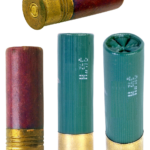
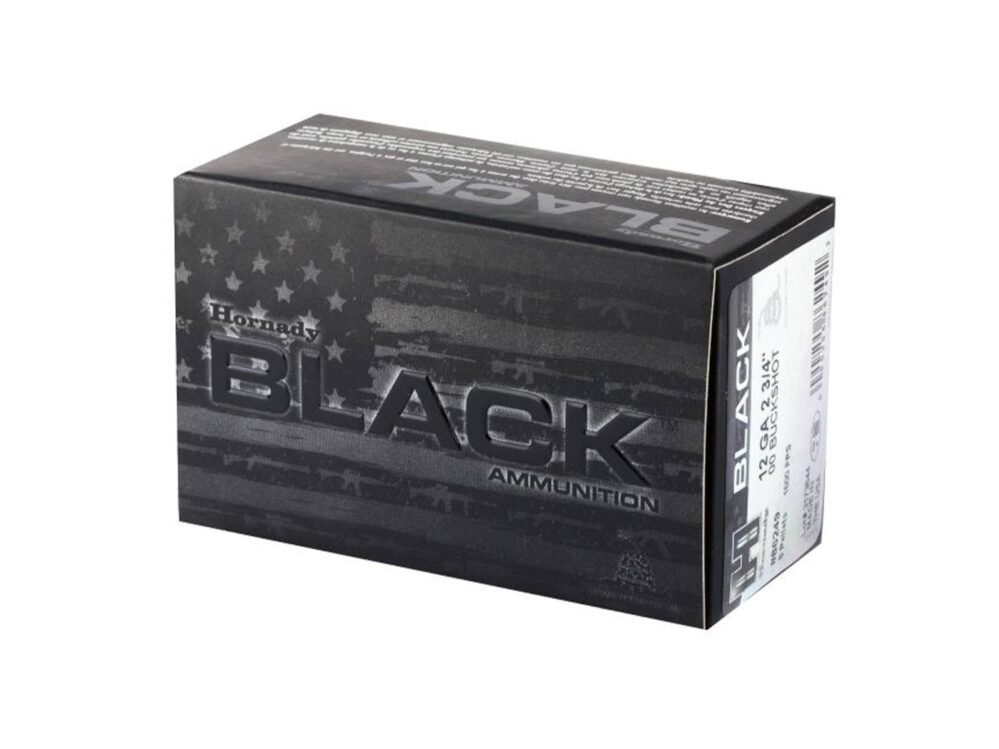
Similar boxes can hide meaningful differences downrange.
Two buckshot loads may list the same gauge, shell length, pellet size, and velocity, yet one box says BUFFERED while the other promises a “tight pattern.” Neither label proves how either load will perform in a particular shotgun.
Buffering material fills space around the pellets and can limit deformation during firing, which may produce more consistent patterns. Results also depend on pellet hardness, wad design, barrel, choke, and distance. The practical comparison happens on a pattern board: fire multiple shells from each load at realistic distances, then compare pellet distribution and point of impact. Before testing, confirm the shell matches the shotgun’s gauge and chamber, and that the choke is approved for the load.
What “buffered” actually means
- Granular buffer
Loose granules fill spaces between pellets inside the shot charge. Federal Premium’s shotshell documentation describes buffering as reducing pellet deformation under acceleration, which can help preserve rounder pellets and tighter patterns.
- Wad and shot cup
The wad seals propellant gases and may provide cushioning; its shot cup surrounds the pellet column and limits contact with the bore. These are formed components, not granular buffer.
- Pellet plating
Copper or nickel plating coats individual pellets to help resist surface damage. A plated load is not necessarily buffered, and buffer does not make unplated pellets plated.
- Pellet material
Buckshot may use lead alloys or other manufacturer-specified materials. Core composition and hardness affect deformation, but they remain separate from any loose buffering material.
- Unbuffered construction
An unbuffered shell may still use plated or hardened shot, a sophisticated wad, and a protective shot cup. Construction should be confirmed through manufacturer specifications, catalog cutaways, or published loading manuals—not by cutting apart live ammunition.
What happens inside the barrel
When the powder charge ignites, expanding gas pushes the wad and shot payload forward. The rapid acceleration creates setback forces within the pellet stack: pellets press against neighboring pellets and the wad base, concentrating force at small contact points.
Loose buffer occupies some of the spaces between pellets. Rather than allowing every load to pass through a few pellet-to-pellet contact points, the granules can provide additional support around each pellet. This may reduce flattening and denting, especially among softer lead pellets exposed to high acceleration.
The stack then encounters the forcing cone and, in many barrels, choke constriction. These transitions can add lateral pressure as the payload is guided into a smaller diameter. A suitable wad or shot cup helps isolate pellets from the bore, while buffer may help the stack resist pellet-on-pellet deformation.
After muzzle exit, misshapen pellets generally experience less predictable aerodynamic forces than round ones. They may slow unevenly or depart from the central swarm, appearing as flyers or contributing to thin areas on a pattern board.
Buffer is only one influence on that result. Pattern quality also depends on:
- Pellet hardness and plating
- Wad and shot-cup design
- Payload weight and launch velocity
- Forcing-cone and choke geometry
- Pellet size and manufacturing uniformity
Consequently, buffering can improve pellet protection without guaranteeing a tighter or more even pattern. The practical test remains multiple shots on paper through the specific shotgun and choke.
Why load-to-load comparisons get messy
Commercial loads rarely differ by buffer alone. A buffered shell and an unbuffered alternative may also use different hulls, wads, crimps, pellet hardness, payload weights, velocities, or pellet counts. Comparing their patterns therefore measures two complete load designs, not the isolated effect of buffer.
Plating is a separate feature
Buffer fills spaces between pellets; plating coats each pellet. Copper or nickel plating may help protect the pellet surface, but it does not perform the same mechanical role as granular buffer. Some loads combine both, so copper-plated and plain-lead buckshot cannot serve as a buffer-only comparison unless every other component matches.
Pellet count changes the stack
Even with the same gauge and pellet diameter, adding pellets changes column height and how pellets nest inside the hull. That can alter pellet-to-pellet contact, deformation, wad behavior, and the way the payload passes through the choke. It also changes apparent pattern density: more pellets create more opportunities for hits, even if the percentage landing inside a chosen circle is lower.
That is why pellet count changes a load beyond simply adding projectiles. For a useful comparison, record:
- exact product and lot;
- pellet count and plating;
- choke, distance, and firearm;
- both hit count and pattern percentage.
Unless the manufacturer offers otherwise identical versions, conclusions should be framed as load-specific, not proof that buffer alone caused the result.
What changes downrange
Manufacturer literature from Federal Premium and Winchester commonly describes buffer as a way to limit pellet deformation. Downrange, that may appear as a denser central core, fewer pellets far from the main pattern, or less variation between shells. The result still depends on the shotgun, choke, distance, pellet material, wad design, and individual load.
A tight-looking pattern does not establish penetration. Patterning measures pellet placement and distribution; penetration testing examines how deeply individual pellets travel through a test medium. Buffer is not a substitute for pellet mass, hardness, velocity, or a properly designed penetration test, and penetration should not be inferred from a paper target.
Maximum tightness is not automatically desirable. A very compact pattern can provide useful density at distance, but it also leaves less margin for aiming error. Conversely, a broad pattern may place too few pellets in the intended area while sending more pellets outside it—an especially important accountability concern in defensive use.
A practical comparison should use the same shotgun and choke at the intended distance:
- Fire several shells from each load, rather than judging one target.
- Mark the main cluster and record obvious flyers.
- Compare pellet density inside a realistic target area.
- Note shell-to-shell consistency, not just the single tightest pattern.
Penetration should then be evaluated separately using credible, calibrated testing for the same load. The useful pattern is the one that delivers adequate density with acceptable dispersion for the specific task—not simply the smallest or largest spread.
How to judge a pattern claim
A useful comparison isolates buffering as far as the available evidence allows. Photos of targets are not enough unless the load construction and test conditions can be verified.
Look for manufacturer documentation, cut-shell photographs, or another named source confirming buffer material inside the shell. Record pellet material, plating, wad design, pellet count, and other disclosed construction details.
Credible results include multiple shots at defined distances, with the firearm, barrel length, and choke used for the published buckshot patterns clearly identified. Pattern measurements should state the target area and calculation method.
Treat published patterns as context rather than a forecast for another shotgun. Comparisons with different chokes, barrels, distances, pellet counts, or measurement methods do not isolate buffering; every numerical specification should be attributed to the manufacturer or a named test source.
Cost, availability, and practical value
Buffered buckshot often costs more than a comparable unbuffered load because its construction and loading process are more involved. That premium has practical value only when repeated pattern-board results show a useful gain—such as fewer flyers or more consistent pellet placement—at the distances that matter.
Availability deserves equal weight. A load that patterns well but rarely appears locally can be difficult to replace or maintain for regular practice. A sensible stocking approach is to:
- Test several commercially loaded options in the specific shotgun.
- Choose by measured pattern performance, not by the word buffered on the box.
- Buy enough of the selected load to confirm function and support foreseeable use.
- Recheck patterns after a lot-number change, since ammunition variation can affect results.
Unbuffered buckshot may offer better practical value when it is readily available and already delivers suitable, repeatable patterns. Buffering is a possible performance feature, not an automatic requirement.
Buffer must not be poured into factory shells or combined with substituted components. It changes internal volume, compression, and potentially pressure. A buffered shotshell must be treated as a complete, pressure-tested recipe from a reputable manufacturer—not as a modification to improvise.
Choose by evidence, not the label
- Distance-specific patterns
Pattern the exact load through the intended shotgun and choke at the longest realistic distance, using multiple shots. Start with documented 12-gauge buckshot specifications for home defense, then verify them on paper.
Look forRepeatable pellet placement within the chosen target area.AvoidAssuming “buffered” guarantees a useful spread. - Reliable, controllable operation
Confirm feeding, extraction, recoil tolerance, and point of impact relative to the sights. A tighter pattern has little value if the load disrupts function or accurate follow-up shots.
Look forReliable cycling and manageable recoil with the actual firearm.AvoidChoosing solely from velocity claims or premium branding. - Pellet count and consistency
Record total pellets, hits in the selected scoring area, overall spread, and obvious flyers for every shot. Compare shot-to-shot variation, not just the tightest target.
Look forAdequate pellet coverage with limited variation across repeated patterns.AvoidTreating one unusually good pattern as representative. - Documented specifications and supply
Match manufacturer-listed gauge, chamber length, pellet size, pellet count, and intended use to the firearm and task. Favor loads available often enough to support both testing and replacement.
Look forClear specifications, repeatable results, and practical availability.AvoidPaying more for vague labels without target evidence.
How to compare buckshot loads on paper
-
Confirm firearm and shell compatibility
Check the barrel markings and firearm manual against the shell’s gauge, chamber length, shot material, and any choke restrictions. Record the load name, pellet size, pellet count, and whether the maker identifies it as buffered.
-
Set controlled, realistic distances
Use an established range with a safe backstop and follow all range rules. Test each load through the same firearm, barrel, and choke at distances relevant to its intended use.
-
Fire several separate patterns
Use a fresh, clearly marked target for every shot and maintain the same point of aim. Three shots provide a basic comparison; more shots give a clearer view of variation.
-
Measure what matters
Mark the point of aim, pattern center, pellet strikes, main-pattern diameter, and distant flyers. Note whether point of impact shifts from the sights and count hits inside a predefined target area.
-
Compare repeatability, not one target
Set an acceptance threshold before testing—for example, required pellet density within the chosen area. Favor the load that meets it repeatedly while functioning reliably and producing manageable recoil.
Follow the firearm and ammunition manufacturers’ instructions; do not alter factory shotshells.
Buffering is a design feature, not a result. The preferred load may be buffered or unbuffered; selection should follow repeated patterns showing acceptable density, limited flyers, suitable point of impact, and consistent performance.
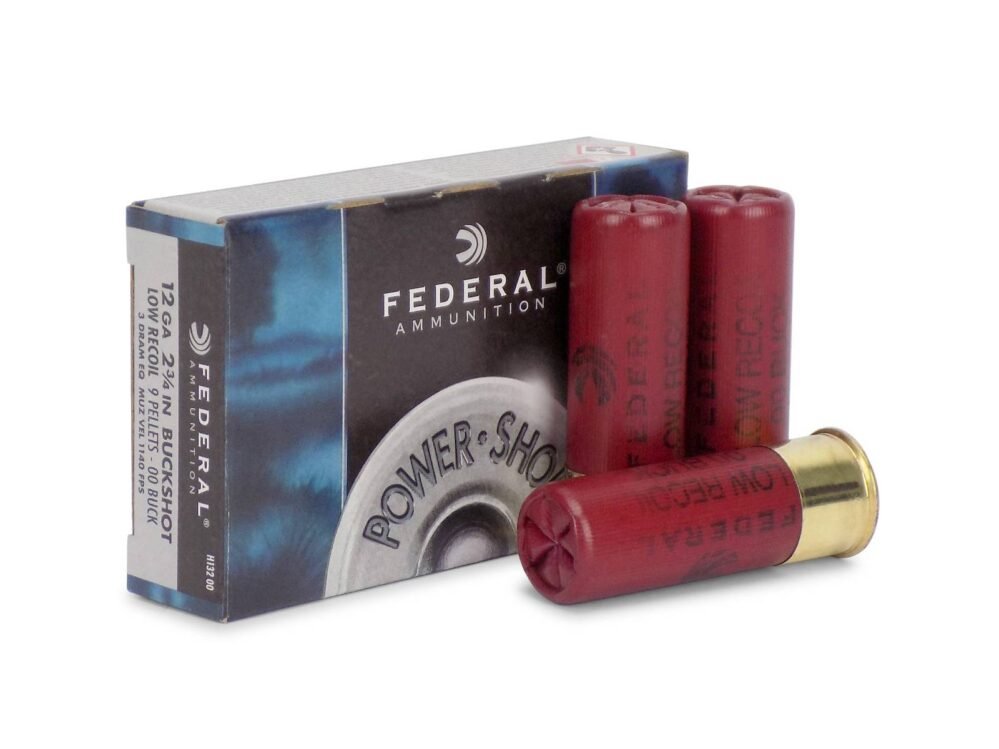
Federal Power-Shok 12 Gauge 2-3/4 9 Pellet 00 Buckshot (Box)
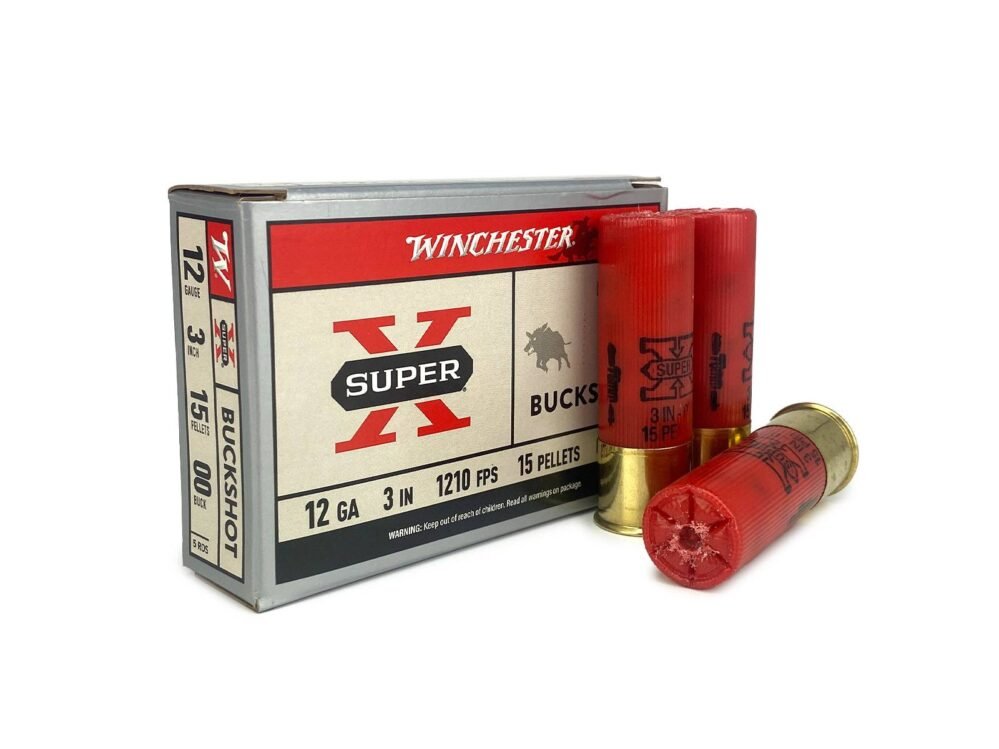
Winchester Super X 12 Gauge 3 00 Buckshot (Box)