
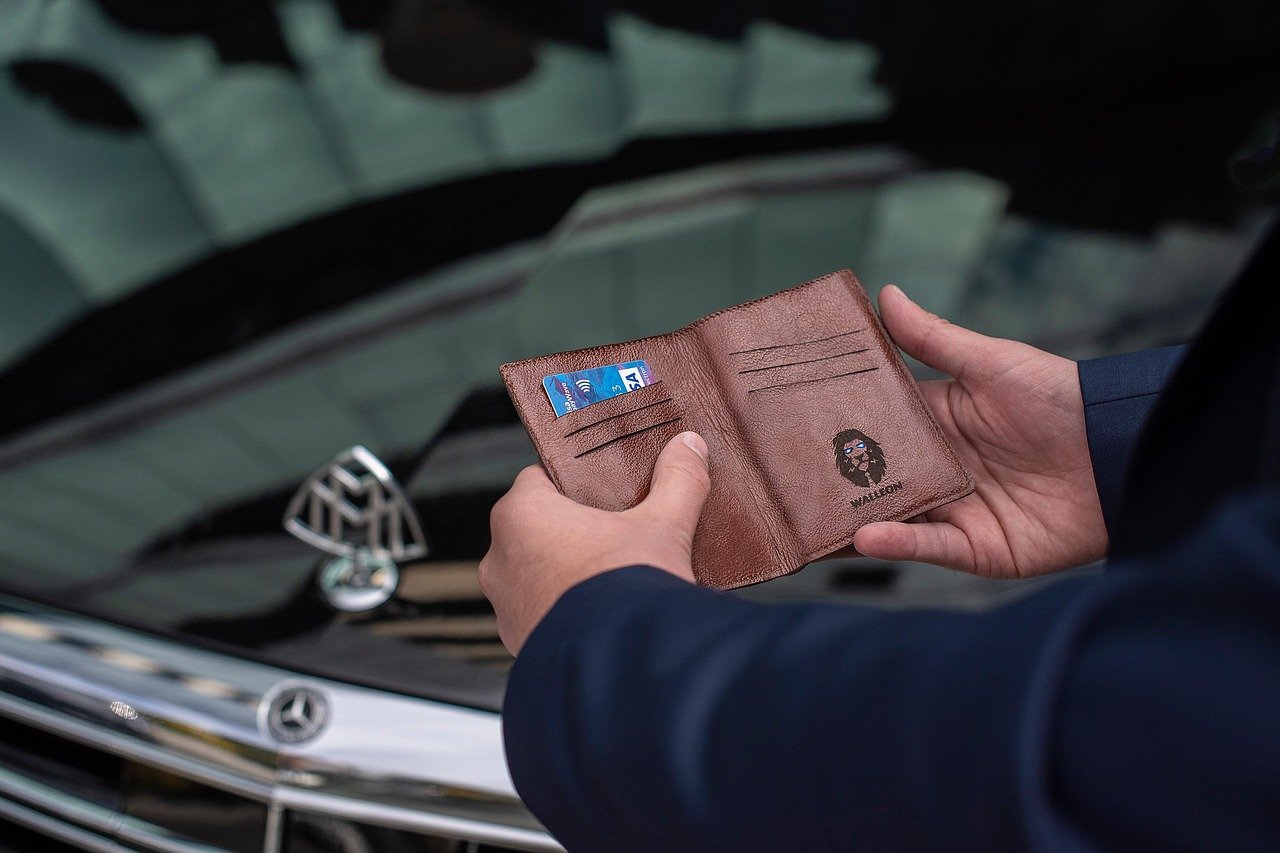
A sharp jacket can lose its cleanest line to the smallest overloaded object.
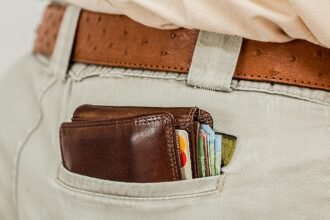
The distortion often appears only after the jacket is buttoned or its wearer sits down: a hard rectangle pulls at the pocket mouth, tents the cloth, and creates a shadow that reads as bulk. In pale linen, fine wool, and softly structured jackets, even a modest wallet is easier to spot because the fabric drapes rather than disguises.
It is not simply a question of how many items are carried. Load, geometry, and placement interact. A thin wallet packed with rigid cards can make a more obvious ridge than a slightly thicker, flexible card holder; a full breast pocket can upset the chest line, while a loaded inner pocket may drag the lapel and front panel out of balance. Sitting concentrates that pressure, making a pocket that looked acceptable while standing suddenly strain and crease.
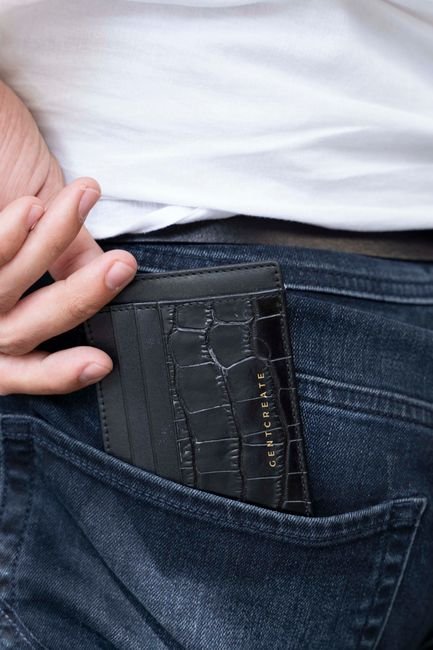
Edit what the jacket carries
Start by sorting every item into daily, occasion-specific, and archive groups. That first pass makes it much easier to see what’s actually earning its place in the jacket.
Daily items typically include one payment method and identification where required.
A transit or building pass and a small amount of cash may be used regularly.
Occasion-specific items, such as a hotel key and loyalty card, may be used occasionally.
A parking stub, extra bank card, or receipt need not shape every suit outing.
One useful test is simple.
If an item hasn’t been used in the last several outings, it’s probably not an on-body essential.
Expired cards, duplicate access fobs, business-card stacks, and folded receipts add thickness faster than they add utility.
Decide placement by access frequency and consequence of loss:
- Keep immediate-access essentials in a slim wallet or inner breast pocket.
- Move event-only items to a trouser pocket, briefcase, or coat pocket when practical.
- Leave archival items at home in a designated tray or card holder.
This creates a stable daily carry, rather than a wallet that quietly accumulates every temporary item.
Diagnose the shape of the bulge
A bulge has more than one cause. Thickness pushes the pocket outward, creating a rounded mound that is most obvious in profile. Width stretches the pocket mouth and pulls the front panel sideways, often making the jacket look tight even when its chest fit is correct. Rigid edges—from stacked cards, a metal case, keys, or a squared bill fold—print as sharp corners through smooth worsted cloth.
Two quick pocket checks
These checks help separate a wallet problem from a jacket-fit problem.
First, inspect the closed jacket with every pocket empty. When a breast or hip pocket gapes, droops, or pulls horizontally, identify the cause. Possible causes include pocket placement, insufficient pocket depth, or a torso that is too tight.
Then load only the wallet into its intended pocket and stand square, turn sideways, and sit briefly. Compare the change:
- A new rounded projection points to excess wallet depth.
- A widened or distorted pocket opening points to wallet width.
- A visible corner or crease points to hard, angular contents.
If the empty pocket lies clean but the loaded one changes sharply, reducing or reshaping the wallet is likely more effective than changing jackets. If both states look strained, a tailor can assess whether the pocket or overall jacket balance is the limiting factor.
Match the wallet to the load
A slimmer wallet works only when its design fits what it must hold. Overload it with extras, and even a slim design will start to bulge.
An ultra-thin card sleeve can hide in a breast pocket. It becomes a hard, uneven stack when used for folded cash, receipts, building passes, and six cards. The aim is balanced capacity with no empty bulk.
Start by sorting wallet contents by type—payment and ID cards, cash, and occasion-specific items—then trim from there. This keeps the wallet slim enough to disappear under a jacket. For more ways to pare down further, see minimalist wallet formats.
This inventory makes wallet formats easier to judge by function than fashion.
Choose the structure that fits
- Card sleeve: suited to a small, stable card set and perhaps one or two folded notes. It is low-profile, but loose cash and frequent card rotation can make it untidy.
- billfold with few slots: useful where several cards and flat bills are genuinely needed. A thin, unpadded billfold often spreads the load more evenly than an overfilled sleeve.
- Money clip or cash strap: keeps notes flat and accessible, though it offers little protection for cards and rarely accommodates receipts gracefully.
- Coin pouch or separate key holder: can prevent metal coins and rigid keys from printing through the jacket. It is often better carried elsewhere than forced into the wallet.
Avoid oversized models with unused card banks, zip compartments, or thick leather folds. Conversely, do not compensate for a too-small wallet by stacking cards behind cards; that concentrates thickness exactly where suit cloth reveals it.
Pack the wallet in layers, not piles
-
Empty every compartment first
Start with the wallet completely empty, including hidden sleeves and pull tabs. Old transit slips, duplicate cards, folded notes, and expired passes often account for more bulk than the daily carry itself.
-
Create one flat card plane
Place the most-used cards in separate accessible slots, rather than stacking them behind one another. Keep similarly shaped cards aligned in the same direction; a lone thick, embossed, or metal card can otherwise create a visible high point.
-
Keep cash as a thin, squared stack
Carry only the notes needed for the immediate outing, aligned edge to edge. Bills kept flat or folded once on an existing crease stay markedly flatter than a wad folded repeatedly into a compact block.
-
Balance the wallet’s two sides
In a bifold, avoid loading every card into one panel while leaving the other empty. A roughly even distribution keeps the closed wallet parallel and reduces the wedge shape that pushes one corner of the jacket outward.
-
Give receipts a short exit route
Receipts belong in a temporary slot only, with a regular clearing point after the day or event. Once several are folded around cards, they act like a stiff spacer and turn a slim wallet into structural bulk.
Coins, keys, and access fobs are usually better carried separately: their rigid, irregular shapes resist flat packing.
Put the wallet where the jacket can carry it
For a slim wallet, the inside breast pocket is usually the most forgiving location. It sits against the chest canvas and lining rather than on the jacket’s visible face. This setup helps a modest, flat load stay close to the body.
The pocket’s vertical orientation also lets the wallet read as part of the jacket’s structure instead of a lump hanging below it. This alignment contributes to a clean silhouette and steady support. It reduces bulk noticeable when sitting.
An exterior breast pocket is designed for a light pocket square, not dense contents. A wallet can pull its top edge open, make the welt ripple, or create a rectangular print across the chest—especially in smooth worsted wool or closely tailored jackets.
Lower pockets are more exposed still. Their unsupported position lets weight drag the skirt downward and outward, breaking the clean line from waist to hem. Flapped pockets can gape; patch pockets may bow visibly.
Check the jacket in motion
Fabric and construction determine how much load shows. Lighter fabrics, unstructured jackets, and soft canvassing reveal edges quickly. Heavier cloth and firmer chest construction can disguise a flat wallet somewhat better. The seated view matters most. A wallet that seems discreet while standing may press against the chair, tilt the pocket, and create a conspicuous outline. A quick stand–sit–turn check in a mirror reveals whether the inside pocket remains calm or needs a lighter load.
A folded pocket square adds visual interest with almost no weight. Reserve it for soft fabric; keep cards, keys, and metal items out.
Balance everything else
A slim wallet can be undone by a crowded key ring or a phone in the opposite jacket pocket.
Treat the suit as a balanced system.
The inside breast pocket is for one flat item, while heavier or rigid objects belong elsewhere.
Assign each item a home
- Phone: A front trouser pocket usually keeps the jacket front cleaner than an interior pocket. A bare phone or very thin case reduces the rectangular print.
- Keys: Carry only daily keys on a compact organizer; keep car fobs and bulky rings out of jacket pockets. Distributing this weight can reduce back pressure and jacket bulge, especially when seated.
- Sunglasses: A hard case is too deep for most suit pockets. Wear them, use a briefcase, or choose a slim sleeve placed in an inside pocket only when it stays flat.
- Paper: Folded receipts, tickets, and business cards quickly become wedges. Use one card sleeve or a document compartment, then clear it after the event.
Regular coin users need not abandon coins. A small, zippered coin-friendly slim wallet that remains trim can work when its coin section is capped at a modest handful; excess change belongs in a separate pouch carried off-jacket.
Keep access gentle on the pocket
Keep access gentle
A slim wallet loses its advantage when repeatedly forced through a tight pocket opening.
Before leaving, it should slide in and out one-handed when held by the broad edge—not pinched at a corner.
That motion limits strain on the lining and keeps the jacket from being pulled off line.
Keeping the wallet in one pocket prevents uneven wear. Removing it before long sitting or driving also protects the pocket edge. During screening, a tray or coat-check pouch is neater than juggling it at the pocket mouth; when returned, it can go back in flat, with its longest edge parallel to the pocket seam.
If the lining catches, the opening feels tighter, or the edge curls, reducing the load can prevent the fabric from taking a lasting set.
Run a 60-second jacket test
-
Check the mirror standing
Button the jacket, relax both arms, then turn through front, side, and three-quarter views. Look for a rounded point, a pulled pocket mouth, or an uneven hem.
-
Sit before leaving
Use a firm chair and let the jacket settle naturally. A pocket that looks flat while standing may flare, twist, or press against the torso when seated.
-
Rehearse retrieval
Remove and return the wallet once, without tugging the pocket edge. Snagging, visible stretching, or a wallet that returns crooked signals an overloaded or poorly placed carry.
-
Make one correction
Move one rigid item, reduce a card layer, or relocate the wallet—not all three. Recheck the same position before making another change.
The goal is a smooth drape in ordinary movement, not a pocket packed to theoretical capacity.
- Seated posture often reveals distortion missed at the mirror.
- A single change makes the source of a remaining bulge easier to identify.
A suit jacket passes the practical test when it hangs evenly, remains calm while seated, and allows the wallet to be retrieved without pulling on the pocket. If a flaw remains, adjust the load once and test again rather than forcing more into the pocket.



8 Comments
The 60-second test was embarrassingly useful. I thought my suit was cut too tight, but it was a stack of old receipts and three loyalty cards making the wallet round out. Moved the phone to my trouser pocket and flattened the cash—problem basically gone.
I’m mildly skeptical about putting anything in a lower jacket pocket, even “flat” stuff. My keys made one side sag at a wedding and every photo looked like I was carrying a small potato. Assigned keys to trousers, cards inside breast pocket, and glasses to a case elsewhere. Much better balance.
Step 3 (figuring out thickness vs. width) didn’t totally work for me. My wallet is thin, but the inside breast pocket still pulls sideways when I sit down. Is that usually a pocket-placement issue, or does it mean the jacket is simply too fitted?
If a thin wallet pulls sideways mainly while seated, pocket placement and jacket ease are more likely than wallet thickness. Try the empty-versus-loaded check while sitting: if the pocket pulls even with a flat card holder, the jacket may be cut close through the chest or the pocket may sit too far toward the side seam. Also make sure the wallet is centered and vertical rather than pushed toward the pocket edge.
I had this with a slim-fit jacket. A card holder helped a little, but the real fix was using the other inside pocket for it; that one was closer to the center and didn’t tug as much.
This worked for an event last weekend! I normally carry coins, a backup key, random receipts, and apparently half a stationery store in my wallet.
I switched to just ID, two cards, one folded bill, and the hotel key card. The jacket finally draped normally, even sitting through dinner. Still not sure where people are meant to put a phone without ruining *another* pocket though 😅
That is exactly the kind of edit that makes the biggest difference. For the phone, trousers are usually the least disruptive option if the pocket is deep enough; a clean front trouser pocket is often better than loading one side of the jacket. If you need it immediately accessible, keep the wallet on one side and the phone in the opposite trouser pocket, then test the balance seated.
For formal events I use a very slim phone case and put it in the inside pocket opposite my card holder. Not perfect, but it works if the jacket has enough room and the phone isn’t a giant one.