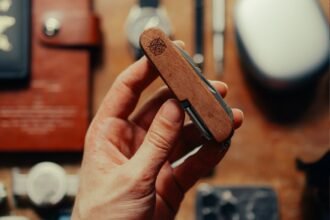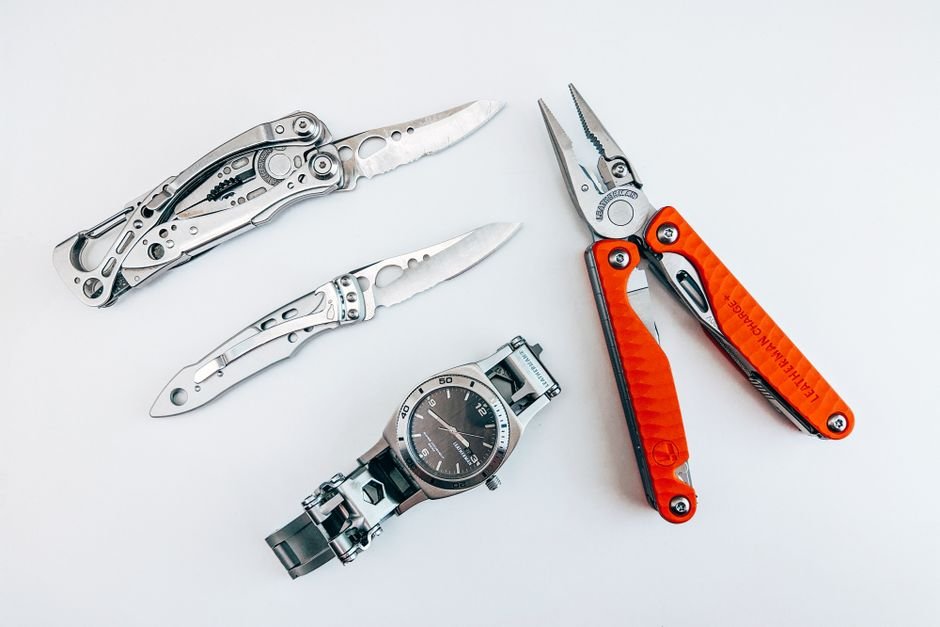
Worth the pocket space? Small metal decisions save time—or add clutter.
Late-night bike repair, stripping open packaging on a hike, or fixing a loose cabinet hinge: these moments make the tradeoff tangible. The choice is usually between bulk vs usefulness, whether the multitool duplicates tools already in a garage, and concerns about legality and safe carry. Evaluate by frequency of small fixes, how often tools are needed away from home, and how comfortable a pocket carry feels. A slim, high-quality multitool reduces redundancy; a heavier plier-first model replaces more workshop tools but adds bulk. Legal risk depends on blade type and local rules; folding knives generally draw fewer restrictions than fixed blades. Treat the multitool as risk-managed convenience, not a complete substitute for a full toolbox.
- Typical multitools contain about 6–12 tools (pliers, blade, screwdriver, wire cutter, can/bottle opener).
- Weights commonly range 60–200 g; thin models around 50–90 g, plier-centric models 120–200 g.
- Thickness roughly 8–25 mm; clip, sheath, or visibility affect pocket comfort and legal perception.
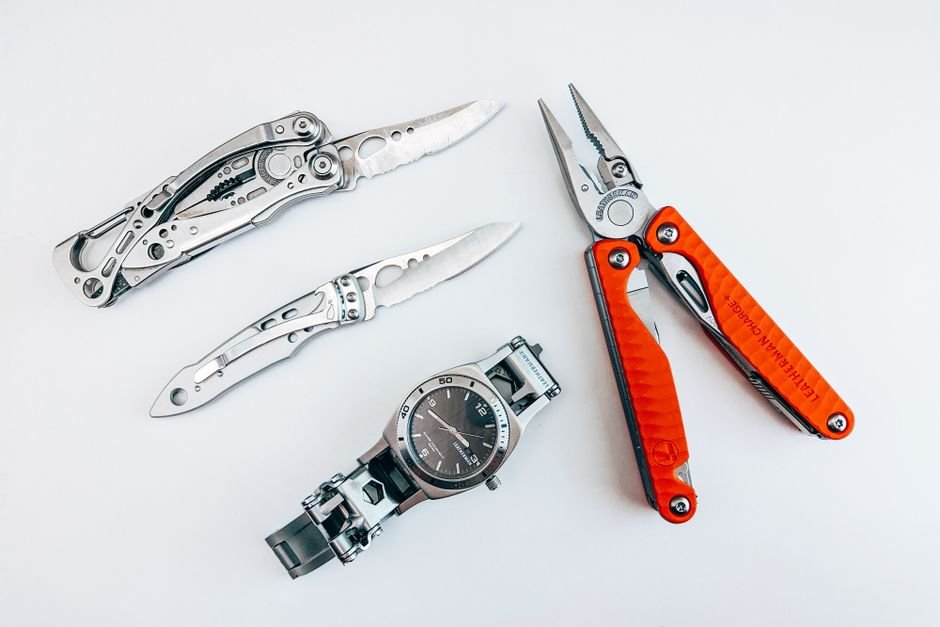
What each tool actually does
Typical tools and what they handle
- Knife blade — Good for cutting cordage, opening boxes, light food prep, and delicate trimming. Limit: thin multitool blades rarely hold an edge for heavy batoning or repeated field use like a dedicated fixed blade.
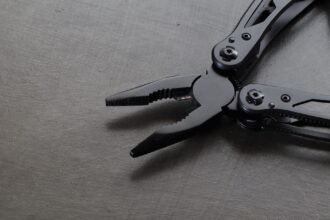
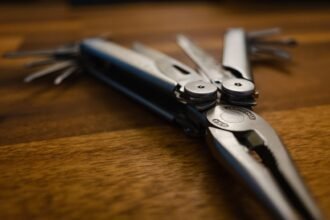
- Pliers (needle-nose/regular) — Gripping, bending, and pulling small fasteners; integrated pivot gives mechanical advantage. Limit: small pliers struggle with large-diameter bolts and can flex under high torque.
- Wire cutters/wire strippers — Cut soft electrical and light-gauge wire; some include hardened edges for repeated use. Limit: they are not intended for piano wire or large-gauge steel; expect dulling if abused.
- Screwdrivers (flat, Phillips) & bit driver — Handle most common screws; a bit driver accepts removable bits for added versatility. For information about compatibility and bit standards, see details about bit drivers. Limit: leverage and access are limited compared with a full-size driver.
- Can opener / bottle opener — Reliable for occasional food cans and sealed bottles; can open thicker military-style cans slowly. Marketing note: openers are robust but slow and require careful control to avoid spills.
- Saw, file, scissors, awl — Saws cut small branches or plastic; files deburr and finish; scissors do textile work; awls punch holes. Limit: each is a reduced, purpose-limited version of the dedicated tool.
A quick pragmatic rule: multitools excel at light-to-medium tasks and emergency improvisation. For sustained heavy work, a purpose-built tool remains superior.
- Leverage
Mechanical advantage from handles and pivots; short handles on multitools limit torque compared with full-size tools.
- Hardened cutting edge
Steel treated for wear resistance; helps wire cutters and blades keep bite, but still wears faster under heavy use.
- Bit driver
A socket-like holder for interchangeable screwdriver bits, increasing screw-compatibility while occupying little space.
- Needle-nose pliers
Long, tapered jaws for precision gripping in tight spots; less robust for high-force tasks.
- Awl (punch)
A pointed tool for making starter holes in leather or fabric; not designed for heavy prying.
Everyday scenarios, matched tools
Quick scenario map
- Opening boxes and packaging: use the knife or scissors for clean cuts. Tip: retract blades when not in use and avoid food prep with the same blade for hygiene.
- Minor hardware tweaks (loose glasses, small toys): the screwdrivers and pliers handle quick turns and pulls. For many repeated screws, a dedicated driver or drill is faster and less tiring.
- Light wire work and small electrical fixes: the wire cutters/strippers manage thin cables. For household electrical or high-voltage tasks, use insulated tools and trained personnel instead.
Outdoor trail fixes (tent zippers, rope, small branch clearing): the saw, file, and pliers are handy. For heavy limb removal or extended chopping, a full-size saw or ax is safer.- Quick adjustments on bicycles or gear: the hex keys and wrenches can get a temporary fix. For torque-critical bolts or wheel work, a proper wrench set and pump are preferable.
When a separate tool is better
- Choose a dedicated tool for repetitive tasks, precision tuning, or safety-critical work (power drills, chef knives, insulated pliers). For broader guidance on replacing a home kit with a multitool, consider whether a multitool can replace a toolbox by consulting whether a multitool can replace a toolbox.
- Fast checks before using a multitool: ensure the right tool is fully deployed, blades are sharp, and the locking mechanism engages.
Key myths and safety
Portability sacrifices power and precision; use dedicated tools for heavy or precise work.
Overloading a multitool risks breakage and personal injury.
Laws differ by place; blade features, concealment, and intent affect treatment.
Some venues and jurisdictions prohibit certain blades or concealed carry.
Lock blades, fold unused implements, avoid heavy prying, control cutting motion, wear eye protection as needed, and maintain pivots.
Simple habits prevent most accidents and extend tool life.
Frequently Asked Questions
Can a multitool be taken through airport security?
Rules vary by airline and country. Blades are generally banned from carry-on bags but allowed in checked luggage. Always check the TSA or your national aviation authority’s guidelines before traveling, and consider a bladeless multitool if you primarily travel by air.
Are multitool blades legally classified as weapons?
It depends on local law, blade length, blade type (fixed vs. folding), and the manner of carry. Many folding blades are treated as tools rather than weapons under most jurisdictions, but some locations restrict blade length, locking mechanisms, or concealed carry. Check your local laws before carrying.
How should a multitool be maintained?
Open implements deliberately and confirm locks engage before applying force. Keep hands clear of blade paths. Clean pivots periodically with isopropyl alcohol, apply a light drop of synthetic oil, and work it in by opening and closing. Retire any tool with loose pivots, damaged locking mechanisms, or chipped blades that cannot be safely sharpened.
Size, carry, and real-world usefulness
Multitool effectiveness is shaped less by specs and more by how a tool is held and carried. The basic trade-off: portability versus leverage, comfort, and tool breadth. Small wins convenience; large wins capability.
- Keychain — ultra-light, always-on access, limited leverage and few tools; best for quick fixes and cutting threads. Often sacrificed ergonomics and fine cutting performance.
- Compact — balanced toolset, reasonable pliers leverage, pocketable with a clip; better for repeated small tasks while staying discreet.
- Full-size — maximum leverage, full-sized pliers and cutters, room for specialized tools; bulkier and usually carried in a belt sheath for comfort.
Picking a fit strategy
To fit an EDC multitool, match size to the most frequent tasks and hand size. Prioritize handle length and pliers pivot quality for torque-heavy work.
Choose a pocket clip or sheath based on daily carry comfort and draw speed.
Always test deployment, grip, and one-handed access in hand where possible. Ergonomics determine whether a tool gets used or ignored.
Performance checklist: what actually makes a multitool work
Real-world strength and longevity come down to metallurgy, geometry, and tolerances. Focus on these measurable factors when judging a multitool.
Technical checklist
- Steel alloy and composition. Look for modern stainless steels (e.g., 154CM/420HC/CPM variants) or tool steels; higher-carbon or powder metallurgy grades hold an edge longer.
- Heat treatment. Hardness (HRC) and tempered toughness determine edge retention vs. chipping; manufacturers rarely publish full specs, so independent testing matters.
- Pivot design and tolerances. A well-supported pivot with hardened washers or bearings reduces wear and keeps tools aligned under load.
- Cutter and blade geometry. Cutting performance depends on edge angle, relief, and how the cutters mate—pure materials and tight geometry beat brute force.
Quick hands-on checks (2–5 minutes)
- Open/close action: operate the pivot to feel smoothness and minimal lateral play.
- Alignment: close blades and pliers to ensure faces meet cleanly with no gaps.
- Bite test: cut a short length of soft wire and strip insulation; see the detailed wire-cutting tests for methodical comparisons.
- Repeatability: cycle tools several times to detect loosening or binding.
If a tool fails these checks—excess play, poor cutter geometry, or inconsistent cuts—expect compromised performance and quicker wear. Deeper tear-down and hardness testing reveal root causes for advanced vetting.
Which multitool fits each routine
Commuter. Prioritizes a slim profile, one-hand opening, and a secure pocket clip so the tool disappears in a suit or backpack. Corrosion-resistant finishes and a locking blade prevent surprises during daily use.
Technician. Needs repeatable torque and fast access to bits, stout pliers, and reliable wire cutters; a bit driver with good bit retention matters more than weight. A folding design with positive lock and serviceable pivots stays usable under frequent abuse.
Hiker. A lightweight EDC multitool prioritizes low weight and corrosion resistance — ultralight pliers or scissors cover most trail tasks. Consider tools under 100 g and bring a compact sharpening stone for long trips.
Minimalist. Prefers a single multi-function tool that covers basic cutting, a screwdriver, and a bottle opener — thin, lockless designs or keychain formats keep bulk to a minimum.
Mechanic. Demands full-size pliers, replaceable wire cutters, and strong locking features; see the best multitool picks for mechanics for workshop-grade options and why construction choices matter.
Quick checklist before buying or reaching for a multitool
-
Clarify the task
Define expected loads, precision, and repetition. Light, occasional repairs suit a multitool; sustained or high‑torque jobs favor a dedicated tool.
-
Assess frequency and context
If the job is frequent, professional, or time‑sensitive, ergonomics and efficiency of a specialized tool typically outweigh pocket convenience.
-
Check required leverage and reach
Multitool pliers and drivers have limited leverage and reach; tasks needing long handles, torque, or extensions require full‑size tools.
-
Evaluate safety and compliance
Safety‑critical, electrical, or regulated work often demands certified, insulated, or calibrated tools rather than a pocket multitool.
-
Weigh portability versus performance
When on‑person access and minimal kit weight matter, accept multitool compromises; if performance is primary, choose a specialist.
-
Check material and cutter capacity
Cutting hardened wire, rivets, or thick metals quickly exceeds most multitool cutters — select dedicated snips or bolt cutters for those jobs.
Fast signals that a specialist is better:
High torque: stubborn bolts, large fasteners, or prying tasks. Precision work: fine fittings, calibration, or repeatable torque specs. Frequent use: daily or professional tasks where efficiency matters. Safety‑critical systems: electrical, pressurized, or life‑safety equipment. Hard materials/cutting: hardened steel, thick wire, or repeated cutting.A multitool excels at convenience and immediate fixes; when any cue above appears, favor the specialist for durability, safety, and speed.
When to Reach for a Multitool
An EDC multitool is the right pocket solution when portability, quick improvised fixes, and moderate-strength tasks matter more than tool-specific precision or prolonged heavy use. Real-world value depends on ergonomics, metallurgy, and cutter/pivot design rather than marketing.
Three immediate actions: 1) Consult “Quick checklist before buying or reaching for a multitool” to confirm whether a multitool fits the need. 2) Verify pivot smoothness, cutter geometry, and handle comfort using the “Performance checklist” before purchase or first use. 3) Practice a short maintenance and safety routine (clean, lube pivot, check locks) weekly. For deeper context, revisit “Which multitool fits each routine” and “Key myths and safety.”