When every gram matters, the tool choice becomes a strategic sacrifice.
AT THE TRAILHEAD, a runner notices a loose vest strap and a zipper that sticks — there is five minutes to decide what to clip on before a sunrise run. That moment frames the central trade-off: weight versus capability. Carrying a 3 oz multitool may fix a broken buckle and shave minutes off an unexpected repair, but it also competes with energy, pack volume, and silence.
- Pick 2–3 functions that solve the most likely problems (cutting + a single hex size + a pry/screw function).
- For runners, vest-strap or sternum-clip carry beats keychain for accessibility and reduces jangling.
- Aim for ≤3 oz for fastpacks; consider <1 oz micro-tools when absolute minimalism matters.


How to compare ultralight multitools
Confirm the stated weight and, if possible, weigh units on a postal scale. On long runs every gram matters — check both listed and real-world weight with attachments.
Inventory the individual tools and ignore gimmicks; a well-chosen small set of usable tools beats many tiny, unusable bits. Consider which functions match common trail tasks.
Check steel/titanium grades, coatings, and fastener finish. Exposure to sweat, salt, and rain makes corrosion resistance and durable pivots more important than cosmetic plating.
Test grip comfort, deployment force, and whether blades/tools lock securely. Attachment options (keyring hole, clip, micro‑carabiner) determine how the tool rides while running.
Perform these short, replicable tests before committing to a model.
Weigh it: use a small scale with any included clip or keyring attached to confirm real weight. Deploy and lock: open each primary tool repeatedly; a usable tool set has clean deployment and a firm lock. Match functions to use: review what an EDC multitool does and prioritize the few functions that handle most common trail needs.If one model passes the measurable checks but feels awkward in the hand, favor ergonomics — user comfort often matters more than an extra function or two.
How the tools were tested
Lab-grade metrology and controlled field trials verified weight and durability claims, pairing precise measurements with real-use stressors. The protocol emphasized measured carry weight in practical configurations and component longevity under repeated use.
-
Weight verification
Each tool was weighed on a calibrated 0.01 g digital scale with three readings averaged; configurations recorded (bare tool, keyring, typical keys). Measured mass was compared to manufacturer specs and any variance greater than 2% was noted.
-
Mechanical and corrosion tests
Moving parts underwent 200–500 open/close cycles and torque checks for driver/wrench functions; blades faced controlled cutting and drop tests. Corrosion susceptibility was screened with accelerated salt‑spray exposure to reveal rust‑prone finishes.
-
Field simulation
Tools were carried on multiple runs and hikes (totaling dozens of miles) across wet and dry conditions and used for representative tasks—cutting cord, opening packaging, tightening screws—with ergonomics and failure modes logged.
Compact travel multitool for minimalists
01
TSA-friendly bladeless travel companion
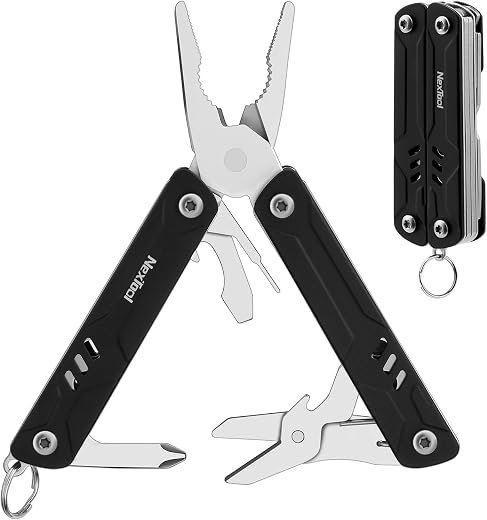
NexTool Mini 9‑in‑1 condenses a surprising set of functions into a truly pocketable, bladeless chassis that fits on a keyring and passes airline screening. Its design prioritizes travel convenience and everyday fixes — ideal for active travelers, runners who want emergency function without bulk, and anyone who needs basic pliers, scissors, and drivers on the road.
- TSA‑friendly bladeless layout
- Useful tool mix (pliers, scissors, SIM ejector)
- Keychain‑ready and very compact
- Good corrosion resistance for travel
- Limited torque from small jaws and drivers
- Thin linkages reduce heavy‑use durability
- Scissors and cutters are tiny — not for tough jobs
NexTool Mini 9‑in‑1 is a top pick when travel constraints and weight matter more than brute strength. Excellent for quick fixes, SIM swaps, and light cutting, it will not replace a full‑size multitool for high‑torque tasks. Choose it as a daily travel companion or emergency backup; skip it for wrenching, heavy prying, or sustained mechanical work.
Mount on a secure keyring or micro‑carabiner to keep it accessible. For stubborn screws, use short, controlled turns and accept that a full‑size driver is a better choice; reserve the NexTool for light adjustments, bottle opening, and SIM removal.
Mini 12-in-1 Multitool Knife — best value pick
Best small tool for hiking
Best‑value, high function‑density multitool that squeezes a dozen useful implements into a compact aluminum skeleton — suited to lightweight hikers and runners who need many capabilities without bulk.
- Outstanding function‑per‑weight: a dozen tools in a compact folding package
- Spring‑loaded pliers with built‑in wire cutter/stripper for common trail repairs
- Aluminum skeleton handle reduces mass while keeping grip real estate
- Includes saw, file, multiple screwdrivers and bottle opener — fewer missing tools on a trip
- Comes with a nylon sheath for convenient carry
- 420 stainless components sacrifice top‑end corrosion and edge retention versus premium steels
- Aluminum handles and small pivots limit heavy‑torque tasks and leverage
- Some blades/tools show faster wear under sustained, heavy use
- Locking geometry can feel marginal compared with full‑size locking multitools
Excellent function density for minimal carry cost. The Mini 12‑in‑1 trades some high‑end material durability for a suite of practical tools that solve most trail problems. With basic upkeep — periodic cleaning, pivot lubrication, and edge touch‑ups — it remains a reliable, budget‑friendly companion for lightweight adventurers.
Rustproof Mini Wrench Keychain Tool — budget pick
- Stainless or coated — resists salt corrosion
- Extremely lightweight and flat profile
- Simple geometry tolerates torque well for its size
- Very limited tools — basically wrench + pry + bottle opener
- No locking bits or fold-out drivers
- Small size reduces leverage
For runners who spend time on wet or coastal trails, this mini wrench’s rust-resistant finish and simple shape mean fewer failures over seasons. Not a replacement for a full multitool; the tradeoff is deliberately narrow—carry reliability instead of versatility. Bargain construction and keychain fit keep weight negligible.
Accept the small toolset when corrosion risk and weight matter more than function density. Consider pairing with a compact bit driver for occasional needs.
Match carry method to activity and tool form
-
Keychain — quick, low-effort carry
Best for short runs and travel where minimal fuss matters. Low-profile keychain tools like the NexTool Mini 9‑in‑1 or the Rustproof Mini Wrench stay compact; keep items stacked and slim to reduce swing.
-
Lanyard / tether — chest access with low bounce
Light shock‑cord tethers clipped to a zipper or chest loop provide fast access without hand fumbling. Pair with slim folding tools (the Mini 12‑in‑1 compresses functions without excessive bulk) and use a quick‑release bead to prevent snagging.
-
Lace pouch — ultralight, stabilized on the foot
Silicone or fabric lace pouches sit close to the shoe and minimize vertical motion, ideal for fast trail reps. Flat, single‑piece tools (rustproof wrench or thin bladed keychains) work best here.
-
Clip‑on — fast access for moderate activity
Bolt‑on clips or micro carabiners on belt loops or strap webbing suit moderate‑pace hiking where accessibility is important. Heavier multi‑function tools like compact 12‑in‑1 pieces clip securely if oriented flat against the body.
-
Interior pack — low‑bounce, long hauls
Stow tools in hip‑belt pockets or inside the main compartment on a small carabiner for zero bounce and weather protection. For guidance on pack selection and pockets, consult choosing an everyday carry bag.
Orient tools flat and trim excess rings or tags.
Use elastic shock cord or a slim lace pouch for dynamic movement.
Test any setup on a short run to confirm stability before venturing farther.
Reduce trail problems to the smallest functional set
- 01Cutting and slicing — small blade or serration
Handles cord, loose threads, food wrappers, and basic first‑aid dressing. A short, lockable straight blade or micro‑serration gives predictable control without added weight.
- 02Fastening and torque — bit driver + small hex/wrench
Replaces screwdrivers and common hex keys for trekking poles, sunglasses, pack hardware, and stove fittings. A compact bit driver with a Phillips and flat bit plus 6–8 mm wrench openings covers most on‑trail fastener needs.
- 03Prying and opening — thin flathead/pry edge
Freed stuck zipper sliders, opened stuck packaging, and levered lodged tent stakes with a slim pry edge that doubles as a flat screwdriver. Avoid bulky bottle openers if weight is critical.
- 04Gripping and extracting — pinch or jaw function
Needed for splinter removal, pulling staples, or holding small parts while tightening. Small jaws or a notch that provides positive grip are more useful than full pliers for ultralight situations.
- 05Punching/repairing fabric — awl or small pick
Mends zipper pull failures, starts a replacement cord hole, or clears clogged valve ports. A pointed awl or tapered pick adds high leverage for fabric and webbing repairs with minimal mass.
Prioritize functions that cover multiple failure modes. A micro blade + bit driver + tiny wrench + awl covers the vast majority of runner/hiker repairs; extras like large saws, heavy pliers, or multiple specialty drivers often add weight with little return.
Durability myths — what's true and what's not
Well‑designed ultralights use robust geometry and heat‑treated steels to handle light‑to‑moderate trail repairs.
Tests show that limited leverage and proper edge geometry keep stresses within material limits; oversized prying still risks failure.
Stainless resists corrosion but can pit where salt, sweat, or surface damage concentrate; coatings wear off.
Salt‑spray screening found pitting on lower‑grade alloys; higher‑grade stainless or rinsing after exposure reduces risk.
Small tolerances and light finishes require periodic care to preserve function and longevity.
Dust, salt, and wear compound quickly in compact mechanisms; simple upkeep prevents binding and corrosion.
A light, low‑viscosity lubricant applied sparingly protects pivots without gumming or harming finishes.
Synthetic light oils shed water and prolong service life better than heavy greases; excess should be wiped away.
These steps preserve function without adding appreciable weight or complexity.
Frequently Asked Questions
What weight makes a multitool truly ultralight for running?
A multitool qualifies as ultralight for running when it weighs 3 oz (85 g) or less, confirmed on a calibrated scale with any attached keyring or clip included. For maximum minimalism on fast runs, sub-1 oz micro-tools are available that sacrifice function density to eliminate nearly all carry weight.
Are TSA-compliant, bladeless multitools worth it for trail use?
Yes, when travel is part of your adventure. Bladeless tools like the NexTool Mini 9-in-1 pass airline screening while still providing pliers, scissors, and drivers for light trail tasks. For purely local trails where air travel is not a factor, a bladed option may deliver more functional versatility at the same weight.
How should I carry a multitool while running to prevent bounce?
The post recommends three low-bounce options: a vest-strap or sternum-clip carry for accessibility with minimal swing, a lace pouch that sits close to the shoe for ultralight stability, or a lanyard clipped to a zipper with a quick-release bead. Test any setup on a short run before committing to a longer route.
Can ultralight multitools handle real trail repairs?
Yes, for light-to-moderate tasks. Well-designed ultralight multitools use heat-treated steels and proper geometry to handle cutting cord, tightening pack screws, opening stuck zippers, and extracting splinters. They are not built for heavy-torque wrenching or sustained mechanical work — a full-size multitool is the better choice for those demands.
How often do ultralight multitools need maintenance?
Basic care after each exposure is recommended: rinse with fresh water after salt or sweat exposure and dry immediately, apply one small drop of synthetic oil to pivots periodically, and inspect for loose screws or corrosion. Small tolerances in compact tools mean minor issues compound quickly, so simple routine upkeep prevents binding and extends the tool’s service life significantly.
Final recommendations and quick checklist
- Weigh it: confirm under 3 oz on a precision scale.
- List the top three functions needed (cut, fasten, pry, etc.).
- Pick an attachment that prevents bounce (keyring, shoelace clip, zipper pull). Match form to activity surface and carry method.
NexTool Mini 9‑in‑1 Keychain is the top pick for most trail runners—minimal weight with a balanced set of cutting, fastening, and prying tools suited to light repairs and travel compliance. Mini 12‑in‑1 Multitool Knife delivers higher function density and better leverage for multi‑day trips or basecamp tasks. The Rustproof Mini Wrench Keychain Tool prioritizes corrosion resistance, ideal for coastal or humid conditions and steady keyring carry.
Before committing to carry, perform the short pre‑carry checklist below to ensure the chosen tool meets weight, function, carry, and comfort needs.
NexTool Mini Multitool - 9 in 1 Keychain Multitool with Needle Nose Pliers, Scissors, SIM Extractor and Screwdrivers for Travel, EDC, TSA Approved
Features
| Brand Name | NEXTOOL |
| Included Components | Plier |
| Model Number | NE20314 |
| Manufacturer | NEXTOOL |
| Manufacturer Part Number | NE20314 |
| Unit Count | 1.0 Count |
| ASIN | B0D2HBX2SH |
| Item Dimensions | 1 x 0.52 x 2.79 inches |
| Item Weight | 67.5 Grams |
| Folded Size | 70.8x25.3x13.2mm |
| Color | Mini Sailor Lite |
| Material Type | Stainless Steel |
| Number of Pieces | 1 |
- 9 TOOLS IN 1: This multipurpose keychain multitool packs 9 high-quality tools into one compact unit, including a keyring, needle nose pliers, regular pliers, wire cutters, scissors, bottle opener, SIM extractor, phillips head and flathead screwdrivers, offering versatile functionality in a single device. Whether you are opening a bottle, tightening a loose screw, or take the SIM card out, Mini Sailor Lite is there for you when you need it.
- TSA COMPLIANT: Bladeless design makes this ultimate pocket-sized multitool TSA friendly, allowing you to carry it with you wherever you go, making it an excellent travel companion and everyday carry gift option. The SIM extractor would surprise you before the airplane landed.
- HANDY STORE & KEYCHAIN READY: Measuring only 2.78''x1''x0.52'' when closed and 4.1" when deployed, and weighing just 2.38 oz, this mini multitool is designed for portability and convenience. Its compact size allows it to fit seamlessly on any keychain or key ring, ensuring you always have essential tools at hand without adding bulk. Small but effective gadget, perfect to use around the house, at work, or travel.
- DURABLE AND MADE TO LAST: This small multitool pliers is made of 420J2 stainless steel, which has strong anti-oxidation, anti-corrosion, wear-resistant, strong, and not easy to discolor. Allows you to better enjoy its quality and durability.
- BUY WITH CONFIDENCE: NexTool alwasys stand behind our products, you can apply replacement or return to get a refund if unsatisfied with purchase, NO RISK to try. Any questions for NexTool Mini Sailor Pliers Lite, please do not hesitate to contact us, NexTool Customer Service always here for your better soluction and buying experience.
Mini Multitool Knife 12 in 1 Small Pocket Multi Tool with Knife and Pliers - Best Small Multi Purpose All in One Utility for Men & Women - Best Gear...
Features
| Brand Name | Grand Way |
| Included Components | Knife |
| Model Number | 2229 |
| UPC | 649823939656 |
| Manufacturer | Grand Way |
| Manufacturer Part Number | 2229 |
| Unit Count | 1.0 Count |
| ASIN | B087748K2V |
| Item Dimensions | 3.94 x 1.38 x 0.79 inches |
| Item Weight | 100 Grams |
| Folded Size | 1.38 inches (l) x 2E-1 inches (w) x 1E+1 inches (h) |
| Color | 1. Yellow/Black |
| Material Type | Stainless Steel |
| Number of Pieces | 1 |
| Drive System | Center Drive |
- 12 integrated components - spring loaded pliers, wire cutter and wire stripper, folding blade knife, serrated edge knife, bottle opener, metal file, screwdrivers, saw-like blade with wavy chisel teeth, scoring blade. High quality mini multitool.
- Perfect multi-tool for everything - Camping, Hiking, Hunting, Survival, Military, Army and Emergency. A perfect car, bike ,EDC multi tool for men and women.
- 12 in 1 Tools set is made of high quality 420 stainless steel, handle material is aluminium. Small utility tool has a total length of 4,3", weight 3,5 Oz. All in 1 tool is a modern lightweight multipurpose tool with unique skeleton design handles which significantly decrease the weight of the utility tool.
- Comes with a nylon sheath which makes it possible to carry the multitool on. Belt knife. Multitool can also be carried in a pocket, purse or a backpack. Lightweight gear, accessories for EDC. Great for travelers, retired and young men, cyclists, outdoorsy men, military men, fisherman, country boy, gardeners, hunters, campers, marines, working men, hikers.
- STOCKING STUFFERS FOR ADULTS. Excellent gift for all men from young boys to grandpas. Unique choice for your husband, dad, father in law, stepdad boyfriend, brother, grandpa, papa, groomsmen, son, uncle, nephew, cousin, boy, best friend, or any family member. Cool gift for boss, coworker, college, student, employee, retirement. Great for guy, hunter, welder, hiker, teen, or neighbor. It also fits police, fisherman, traveler, military, navy, truck drivers, camper, marines.