
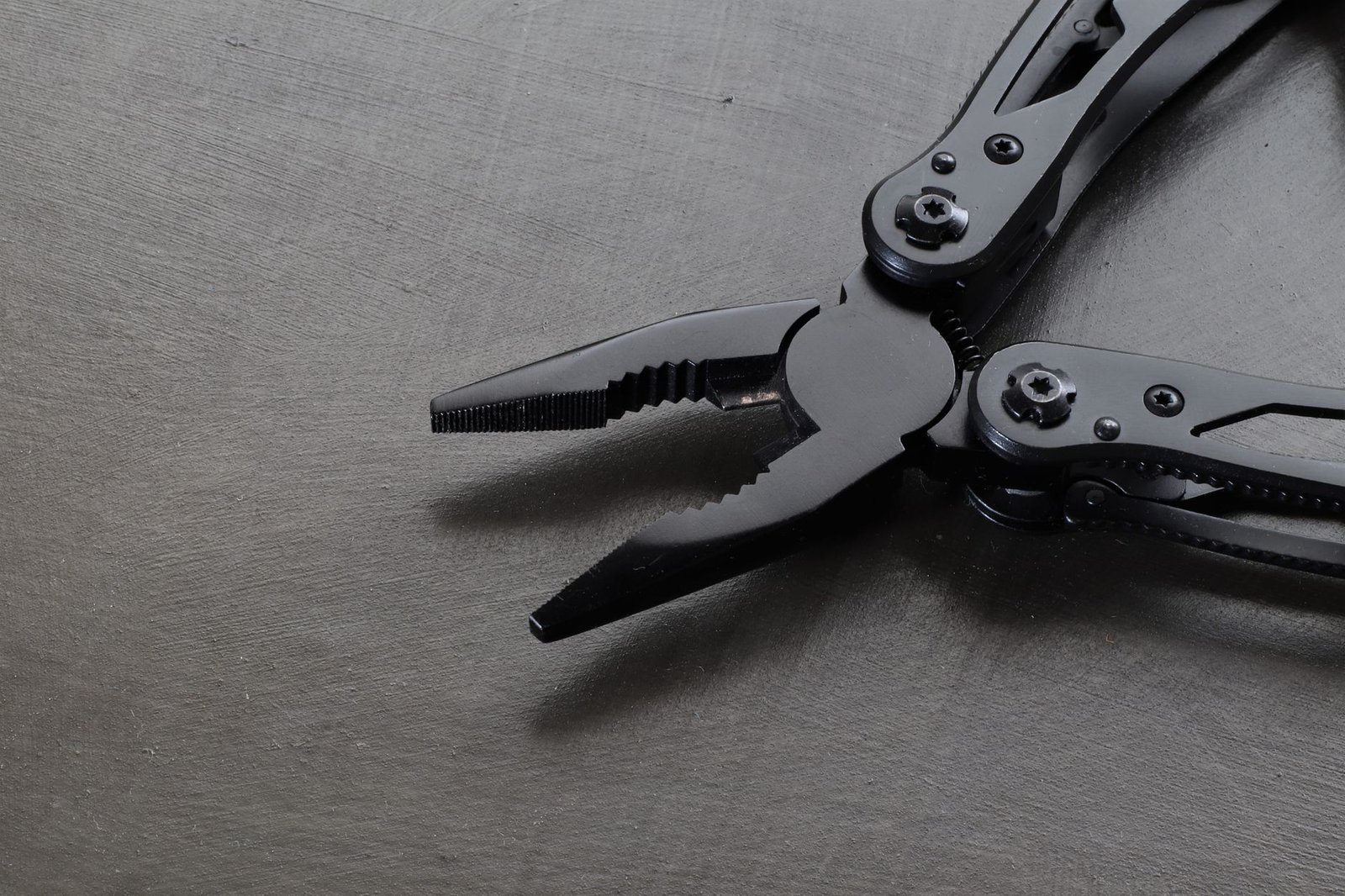
A multitool can look fully equipped and still make a poor first cut.
The failure usually shows up at the worst moment: the cutters bite halfway through a stranded lead, the “stripper” scores copper beneath the jacket, or a hard squeeze turns soft insulation into a flattened collar. None of those results is fixed by adding more functions to the handle.
Wire is not one material. Fine stranded copper, solid building wire, tough automotive insulation, and small-gauge electronics leads each react differently to jaw pressure and edge shape. A clean result depends on matching the wire to a cutter’s pivot leverage, bevel geometry, and intended gauge range—then using a controlled, square closing motion rather than twisting or tearing. A multitool’s wire-cutting notch can be useful, but it is not automatically a precision stripper or a substitute for dedicated diagonal cutters.
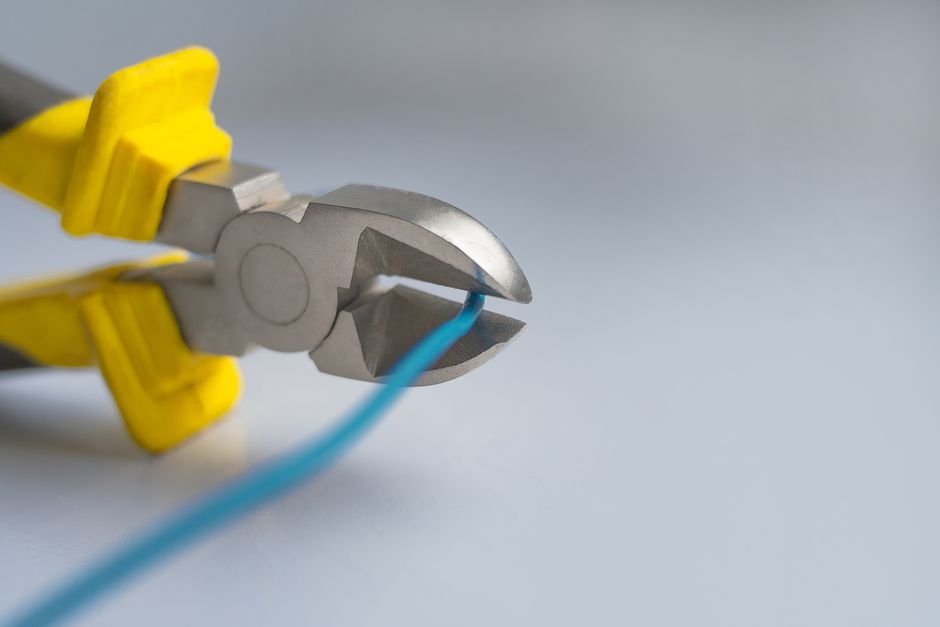
What a Pass Actually Looks Like
Clean cut
The conductor separates in one closing motion with a nearly square end, no crushed oval, flared strands, or partly sheared tail.
Clean strip
Insulation releases at the intended length while the copper remains bright and intact. A nicked solid core or missing strand is a fail.
Solid copper
House-wire conductors are relatively forgiving to cut, but even a shallow nick creates a weak point when the wire is bent repeatedly.
Stranded copper
Fine strands need a cutter that closes evenly and a stripper matched to gauge; blunt jaws commonly squeeze, spread, or sever outer strands.
Hard or steel-cored wire
Spring steel, music wire, wire rope, and copper-clad steel can chip edges or overload pivots. They are outside the clean-cut range of most compact multitools.
A cut that looks acceptable at a glance may conceal crushed strands or a scored conductor. For electrical terminations, all strands retained and no copper nicking is the practical pass standard. Hard wire calls for dedicated cutters rather than forcing a multitool past its intended material range.
Find the feature that actually strips
A multitool’s wire-related feature usually falls into one of three categories: a dedicated stripper, a cutter notch, or an improvised edge.
A dedicated stripper has shaped openings or a controlled jaw profile sized for particular gauges. With the tool closed lightly around insulation, it should grip the jacket firmly while leaving room for the conductor inside. After a test strip, copper should appear smooth and round; bright score lines, flattened spots, or missing strands mean the geometry is cutting too deeply.
A cutter notch is often a small semicircle near the pivot. It may nick light insulation, but its sharp, converging edges are designed to sever wire, not limit depth. It is usable only when gauge and hand pressure happen to align.
Plain plier jaws, knife blades, and scissors are improvised options. They can remove insulation in a pinch, but demand a shallow score-and-bend technique rather than a full squeeze. For stranded wire, a true stripping feature is markedly more reliable.
What makes a cutter sever cleanly
A clean cut is a shear, not a squeeze. Overlapping sharpened edges concentrate force until the wire separates; blunt, flat-facing jaws crush first, leaving a flared end and displaced strands.
Forged-in cutters usually withstand repeated use because their geometry is integral to the plier head. Replaceable hardened inserts can keep a very hard edge, but only when their seats and fasteners stay secure. A fine, acute edge favors clean copper cuts; a tougher, broader profile better survives harder wire.
Pivot wear lets jaws meet unevenly. One side then pinches while the other barely engages, especially on small wire. Persistent skew may require correcting plier alignment that affects the cutters. Longer handles add leverage, but cannot overcome chipped edges or poor jaw registration.
If the jaws twist sideways, spread wire before severing, or leave a shiny crushed spot, the tool is pinching rather than shearing.
Match tool size to the wire job
- Bench electronics and small leads
A compact multitool can trim light copper conductors and occasional cable ties when its pliers close squarely. Treat it as a convenience tool, not a production stripper.
Best fitCompact pliers for infrequent light-gauge work.Poor fitRepeated cuts in hard wire or thick insulation. - Household and field repairs
Full-size outside-opening pliers deploy quickly and provide the handle spread needed for common stranded wire. A genuine stripping feature matters more than a cutter notch.
Best fitOutside-opening pliers with dedicated stripper geometry.Poor fitCompact jaws forced through heavy cord conductors. - Automotive and mechanical work
Harness repairs, fencing wire, and stubborn ties reward the wire-cutting multitools mechanics prefer: robust pivots, durable cutter inserts, and substantial handles.
Best fitMechanic-oriented full-size cutters for demanding repairs.Poor fitKeychain tools for repetitive or hardened wire. - Pocket-emergency use
Keychain tools can nip a single light lead in a pinch, but short handles amplify crushing and poor control. They are backup tools rather than wire-work tools.
Best fitOne-off, fine-wire emergencies.Poor fitStripping insulation or cutting steel-cored wire.
Choose by the job, not the capacity claim
No multitool is the best answer to every wire job. The useful shortlist separates controlled stripping from brute cutting—and treats a listed gauge range as a starting point, not a guarantee.
For repeatable electrical stripping
Pair a full-size multitool with a dedicated automatic or gauge-indexed stripper. This is the most dependable arrangement for stranded copper: the stripper sets the cut depth, while the multitool handles trimming, gripping, and screw work. A Leatherman Wave+ or Surge is a strong companion because its replaceable bypass-style cutter inserts tolerate routine wire cutting. Their built-in stripper notch remains a convenience feature; insulation thickness and fine strands can still defeat a clean pull. See Leatherman’s official site for the current bypass-cutter lineup and replacement-insert availability.
For frequent cutting and serviceability
The Leatherman Surge earns its bulk on jobs involving cable ties, copper, and occasional harder wire. Its replaceable 154CM cutter inserts can be renewed rather than forcing retirement after edge damage. The trade-off is substantial weight and a broad head; it is less pleasant for tight panels. Consider bit-driver compatibility alongside cutter performance, since terminal and enclosure work often follows the cut.
For compact carry
The Leatherman Skeletool CX provides replaceable wire-cutter inserts in a much slimmer package. Its pliers are adequate for light electrical repairs, but shorter handles reduce leverage and its stripper feature is not a substitute for a proper gauge-specific tool.
For occasional work
Entry-level multitools with fixed cutter edges can cut soft copper acceptably when sharp. They are poor candidates for repeated stripping or hard wire: once the jaws nick or spread, clean cuts become inconsistent and the cutter cannot be replaced.
Run a Controlled Scrap-Wire Test
-
Check the jaws before any cut
Close the pliers slowly under good light. Cutter edges should meet evenly, without a visible gap, side shift, chipped tips, or a pivot that lets one jaw pass the other.
-
Cut scrap that matches the intended work
Use short pieces of the actual conductor type and size: stranded copper, solid copper, or the small cable likely to be encountered. Make several cuts rather than judging the first, unusually favorable one.
-
Read the cut end
A capable cutter leaves a flat, nearly round end with strands severed at the same plane. Flared strands, an oval crushed profile, deep pinch marks, or a wire that must be twisted free indicate poor shearing.
-
Strip a known gauge independently
On labeled wire, use the tool’s dedicated stripping station where available and remove a short section of insulation. The insulation should release cleanly while every strand remains intact and the conductor shows no circumferential score.
-
Inspect the edges after repeated work
After a modest series of representative cuts, recheck alignment and examine the edge for nicks, rolling, or looseness. Record cutting and stripping results separately: strong cutters can still have inaccurate or overly aggressive stripper geometry.
Let technique expose the tool
Place wire deep in the cutter throat, near the pivot, rather than at the tip. Keep the jaws square to the wire so both cutting edges meet at the same moment, then close steadily until the cut releases. A clean sever needs alignment and edge contact—not a sudden squeeze.
For stripping, make a light circular score in the insulation, then bend and pull the jacket away. Do not rotate while cutting through metal: twisting loads one edge, smears soft copper, and can nick strands.
Extra hand force cannot compensate for hard wire, steel reinforcement, an oversized gauge, or worn/misaligned cutters. If the wire crushes, walks sideways, or needs repeated bites, the geometry is unsuitable.
Know when to leave the multitool behind
A multitool is practical for soft copper and small stranded wire. Dedicated strippers take over when insulation must come off repeatedly at a set gauge, or when a nicked strand compromises a termination. Cable cutters suit larger, finely stranded cable: curved blades support the bundle, avoiding flared, flattened “birdcage” ends. Hardened-wire cutters belong on piano wire, springs, and steel messenger strands—not general-purpose multitool edges.
Check the tool before trusting it
Before relying on any cutter, close it empty and check for side play, uneven edge meeting, loose pivot hardware, or chips and rolls. Clean grit from the jaws, lubricate the pivot lightly, then retest on scrap wire. Renew replaceable inserts when damaged; fixed misaligned jaws generally need manufacturer service or retirement, since grinding can alter their geometry.
Readers weighing carry convenience against repeatable cutting can also check whether multitools are allowed in carry-on luggage before choosing which one to pack, and compare whether a multitool can replace a toolbox for cutting tasks.
Frequently Asked Questions
What's the difference between a multitool's stripper and its cutter notch?
A dedicated stripper has shaped openings or a controlled jaw profile sized for particular gauges, letting insulation release while the copper stays intact. A cutter notch is usually a small semicircle near the pivot with sharp, converging edges designed to sever wire, not limit depth—it may nick insulation, but it only strips cleanly when gauge and hand pressure happen to align.
Why do multitool cuts sometimes crush or flare stranded wire instead of cutting cleanly?
A clean cut is a shear, not a squeeze. Blunt, flat-facing jaws crush the wire first, leaving a flared end and displaced strands, and pivot wear lets the jaws meet unevenly so one side pinches while the other barely engages. Placing wire deep in the cutter throat, keeping the jaws square, and closing steadily helps the edges meet at the same moment.
Which multitools handle wire cutting and stripping well?
A Leatherman Wave+ or Surge is a strong companion for stranded copper because its replaceable bypass-style cutter inserts tolerate routine wire cutting, and the Surge’s replaceable 154CM inserts can be renewed rather than forcing retirement after edge damage. The Leatherman Skeletool CX offers replaceable wire-cutter inserts in a slimmer package, though its shorter handles reduce leverage compared to full-size tools.
When should I use dedicated cutters or strippers instead of a multitool?
Dedicated strippers take over when insulation must come off repeatedly at a set gauge, or when a nicked strand would compromise a termination. Cable cutters suit larger, finely stranded cable since their curved blades support the bundle and avoid flared, flattened ends, while hardened-wire cutters belong on piano wire, springs, and steel messenger strands rather than general-purpose multitool edges.
How can I test whether a multitool cuts wire cleanly before relying on it?
Close the pliers slowly under good light to check that the cutter edges meet evenly, then cut several pieces of scrap matching the actual conductor type and size rather than judging a single favorable cut. A capable cutter leaves a flat, nearly round end with strands severed at the same plane; flared strands, a crushed oval profile, or deep pinch marks indicate poor shearing. Also strip a known gauge independently and recheck the edges after a series of cuts.
What's the right technique for cutting wire with a multitool?
Place the wire deep in the cutter throat, near the pivot, rather than at the tip, and keep the jaws square to the wire so both edges meet at the same moment before closing steadily. Don’t rotate while cutting through metal—twisting loads one edge, smears soft copper, and can nick strands; rotation is only useful for lightly scoring insulation before stripping.
Buy for the Wire That Appears Most Often
- Prioritize a real stripper for insulated stranded copper; prioritize serviceable cutter inserts for repeated cutting.
- Treat published maximum capacities as an outer limit, not the wire size that will remain pleasant or clean to work with.
Start with the conductor encountered most often: stranded copper, solid building wire, small electronics leads, or occasional light cable. Then verify that the multitool’s cutter closes squarely on that material and that its stripping feature controls depth without nicking the conductor. A long feature list cannot compensate for poor jaw geometry or an ill-suited stripping method.
For infrequent field repairs, a well-matched multitool can be entirely practical. For repeated terminations, larger conductors, hard wire, or work where every strand matters, dedicated cutters and strippers remain the cleaner, faster choice.



9 Comments
Keychain multitools are adorable right up until you ask one to cut anything tougher than a bread tie. Useful reminder that carry convenience and leverage are not the same thing 😂
Step 3/the cutter section didn’t quite work for me: how do you tell whether rough cuts are from bad jaw alignment versus using wire that is simply too hard for the tool? My full-size multitool leaves a clean enough face on 18 gauge copper, but 12 gauge solid comes out with a little flattened burr even when I place it deep in the throat.
I don’t want to blame the tool if my technique is the real issue.
That comparison is a good diagnostic. If 18 AWG copper is consistently clean but 12 AWG solid develops a burr, the tool may simply be reaching its practical leverage or edge-profile limit. Test several fresh cuts of the same 12 AWG, holding the wire square and as deep in the cutter as possible. A burr always favoring one side, or a visible gap/overlap between the closed cutter edges, points more toward alignment; a symmetrical flattening usually points to capacity and material resistance.
Also try turning the 12 gauge 90 degrees between cuts. Mine showed the same burr every time until I noticed one side of the cutters had a tiny chip. Copper was hiding the problem on smaller wire.
The scrap-wire test was the most useful part for me. I tried it with some leftover 14 AWG stranded copper and found one cutter insert was slightly loose before I trusted it inside a junction box. Tightened it up, retested, and the cut stopped looking like it had been chewed by a tiny robot.
This worked! I had been using the little notch near the cutter on my compact tool as a “stripper” and wondered why I kept nicking strands. Scoring the insulation lightly, rotating it, then pulling it off made a huge difference on the thin speaker wire.
Glad it helped. That light score-and-rotate approach is much safer when a dedicated stripping gauge is not available, especially on fine stranded wire. Stop as soon as the jacket separates rather than squeezing deeper on the first pass.
Same here. I used to clamp down hard and pull, then act surprised when half the strands came off with the insulation 🙃
I appreciate that this does not pretend every multitool is a wire tool. The advertised cutter “capacity” on a lot of compact models seems optimistic at best.
For occasional thermostat wire or small stranded copper, mine is fine. But steel-core picture wire flattened the edge quickly, and cutting it felt more like bending it repeatedly than actually shearing it. Dedicated cutters are not exciting, but neither is re-terminating a damaged cable.