

One packed case is tidy—until its most important attachment does not match the firearm.
On a bench holding a 9 mm pistol, .22 rifle and 12-gauge, one hard case keeps brushes, patches and adapters from wandering into drawers. Yet universal means assortment, not assured fit: bore diameter, chamber access, rod length, thread pattern and gauge still need matching to the firearms at hand.
The case count matters less than its working pieces. Loose-jointed rods, rough threads and short-lived brushes make cleaning frustrating, while frequent use quickly consumes patches. A broad kit can suit occasional care of common calibers; unusual gauges or high-volume use benefit from durable core tools and separately selected caliber-specific parts.


Safety and access come first
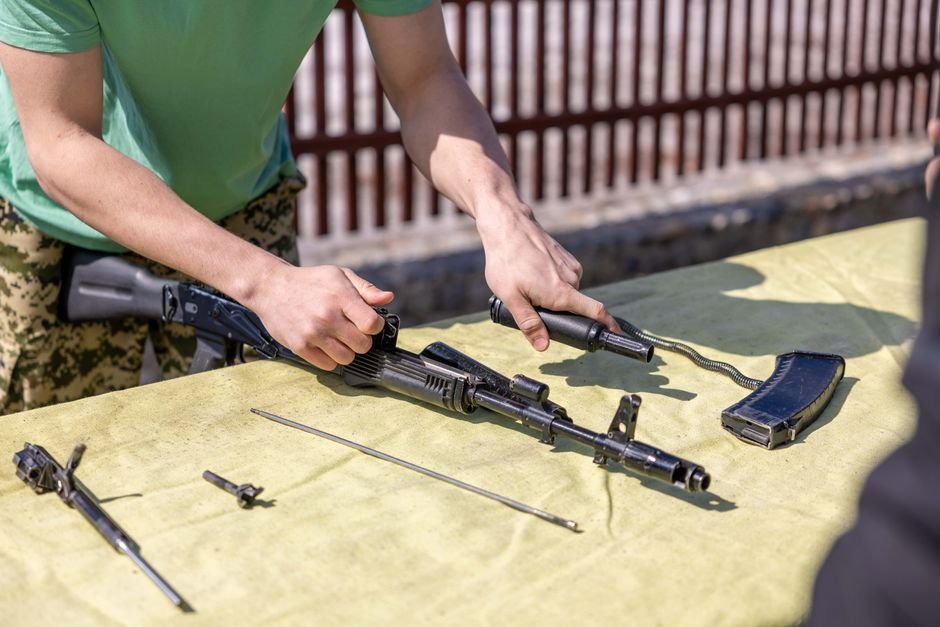
No universal kit can compensate for an unsafe or unsupported cleaning procedure. Before selecting rods, cables, brushes, or solvents, the owner’s manual establishes the sequence: verify the firearm is unloaded, remove all ammunition from the work area, and follow the maker’s approved disassembly points.
Bore access is the practical dividing line. A bolt-action rifle may permit straight, chamber-to-muzzle rod travel with a bore guide; some semi-automatic platforms require a pull-through or another method specified by the manufacturer. Forcing a rod from the muzzle, overextending a cable, or stripping beyond approved field-service steps can damage crowns, finishes, small parts, or optics mounts.
Solvent compatibility also outranks kit variety. Check the manual and product labels for restrictions involving coated bores, polymer frames, wood, optics, suppressors, and rubber seals.
If the firearm’s approved access method is unknown, pause the purchase comparison. The right kit is the one that supports the documented procedure without improvisation.
What “universal” actually covers
“Universal” can describe three very different things, and only one may matter for a given collection.
- Multi-bore coverage means brushes, jags, patches, and mops sized for a stated range of calibers or gauges. This is the core claim. Look for the actual sizes listed—not “fits most firearms.” A .22 brush is not a substitute for a .30-caliber brush, and shotgun gauges need their own implements.
- Platform adapters cover access and attachment styles: threaded rod sections, chamber brushes, muzzle guards, flexible pull-through cables, and specialized jags. These expand what can be reached, but do not automatically provide correct bore sizing.
- Oversized assortments inflate the count with duplicate patch holders, generic picks, empty bottles, or numerous patches. Those items can be useful, yet they say little about fit.
A credible universal kit states its thread standard and bore/gauge range, then includes consumables that match those claims. Standardized 8-32 firearm-cleaning threads, for example, make replacement accessories easier to source; proprietary threads can limit the kit’s useful life. The strongest kits have fewer, correctly sized working pieces than a large case full of near-duplicates.
The parts that determine whether a kit will actually work
- A rod that stays straight under load
A sectional rod needs rigid, cleanly machined sections that join without a noticeable step. Brass, coated steel, or carbon fiber can all work; wobble and loose joints cannot.
Look forStraight sections, secure joints, smooth finishAvoidThin rods that flex or bind at joints - Declared threads and bore-specific ends
Threads are the kit’s hidden compatibility system. Brush, jag, and rod threads should be identified, while each brush and jag should carry a legible caliber or gauge marking.
Look forMarked threads and clearly sized attachmentsAvoidUnmarked ends and vague “fits all” claims - Consumables that contact the bore correctly
A brush should offer firm, even resistance without being forced; a jag must hold a patch snugly enough to wipe rather than merely push it through. Mops are useful for light application or finishing, not a substitute for a fitted patch.
Look forCorrect brush, jag, patch, and mop sizesAvoidOne-size tips and undersized loose patches - A case that protects small parts
Storage matters when adapters, jags, and brushes are easily mixed or lost. Molded slots or labeled compartments make missing sizes and damaged threads visible before cleaning begins.
Look forOrganized, durable, labeled storageAvoidLoose pieces in a novelty-heavy case
Broad assortment with mat and portable case
This iunio set is positioned as a rifle, shotgun, and handgun kit, with six solid-brass rod sections, a cleaning mat, portable case, and nylon, phosphor-bronze, and stainless-steel utility brushes. The included user guide can make the assortment less intimidating for a first-time owner.
Its value depends on inspection rather than piece count. Before relying on the kit for a particular firearm, confirm that the supplied bore tools are explicitly sized for that caliber or gauge, that rod-to-accessory threads mate cleanly, and that the case keeps those matched parts identifiable. The three utility brushes add surface-cleaning flexibility, but they do not establish bore fit.
When a pistol kit is enough
Handguns reward short, controllable cleaning tools. A compact rod or cable is easier to guide through a barrel removed from the slide, while a narrow nylon brush, swabs, and a pick can reach slide rails, breech-face corners, extractor recesses, and magazine-well debris. Those detail tools often matter more than owning adapters for cartridges the firearm will never use.
A single 9 mm, .38/.357, or .45 platform can be maintained with a deliberately small set: a correctly sized bronze brush and jag, patches, a compact rod or pull-through, a utility brush, and a precision oiler. For comparisons of compact handgun cleaning kit options, the useful question is whether the included tools fit that platform—not how many empty slots the case has.
Rifles change the equation
Rifles commonly need longer rods or pull-throughs, caliber-specific brushes across a wider range, and enough reach to clean from the chamber end where appropriate. A pistol-first kit can service a rifle only when its rod length, threads, and bore tools genuinely match; a vague “universal” label does not create that capability.
The GuardBarrel kit includes brushes and brass jags for .22, .38/.357/9 mm, .40, and .45, plus swabs, picks, dual-end brushes, and a needle oiler. That is sensible breadth for several common handguns, but a one-pistol owner may leave much of it unused.
Shotgun coverage is rarely universal
A kit labeled “12-gauge capable” may only include one brush and a short pull-through. That is not the same as covering every part of a field gun or extended-tube sporting shotgun.
Gauge, bore, and chamber details
Each gauge needs correctly sized phosphor-bronze brushes and cotton mops; a 12-gauge tool is not a substitute for 20, 28, or .410. Also check whether the rod reaches from breech to muzzle without a precarious stack of extensions. Long barrels and fixed cleaning stands favor rigid, coated rods over compact cable systems.
Chambers accumulate residue differently from bores, particularly with plastic wad fouling. A kit earns its shotgun claim when it includes a chamber brush or can accept one, plus a jag or mop sized for the gauge. For broader comparisons, shotgun cleaning-kit recommendations can reveal which claimed gauges receive complete tool sets rather than token attachments.
The cleaning rod changes the result
Segmented rods pack neatly into a universal case and are adequate for occasional, light cleaning. Their joints can introduce slight runout, however, and each connection is a potential place to collect grit. That makes them less convincing for repeated full-length rifle work, especially when a tight brush is involved.
Cables and pull-throughs are the portability winners. A coated cable can be fed from chamber to muzzle and needs almost no case space; a pull-through is fast for removing loose fouling in the field. Neither offers the straight-line rigidity or measured pressure of a rod, though. The practical choice between a bore snake and a rod for routine cleaning depends on whether speed or close inspection is the priority.
A one-piece rod provides the best alignment, rigidity, and feedback. Used from the chamber end with an appropriate bore guide, it keeps cleaning tools centered and makes resistance easier to feel rather than force. Frequent rifle maintenance, precision barrels, and long bores justify a dedicated rod even when the universal kit supplies everything else.
For an infrequent cleaner of a compact pistol or a lightly used carbine, the storage advantage of a segmented rod or cable can be a sensible compromise. The upgrade threshold arrives when cleaning becomes regular enough that repeatable tool alignment matters more than compact storage.
Dedicated long-bore upgrade
This 36-inch carbon-fiber rod is built around a two-ball-bearing rotating handle, allowing a brush or jag to follow rifling. It includes a storage tube and uses a light, rigid shaft with slight recoverable flex—useful when replacing a compact multi-section rod for rifle cleaning.
Treat included chemicals as a bonus
Patches, brushes, cotton swabs, and small bottles of cleaner or oil make a new kit usable immediately, but they are starter supplies, not a lifetime inventory. Patches disappear quickly, bronze brushes wear with use, and caliber-specific replacements are often better than the generic assortment packed into a case.
Check liquid bottles before purchase or packing: caps and seals should be intact, labels legible, and no residue visible around the neck. A leaking solvent can soften foam inserts, stain fabric cases, and contaminate adjacent tools.
Match chemicals to materials
A supplied solvent or lubricant is only useful when it suits the firearm’s finish, polymer components, optics-adjacent surfaces, and the maker’s published guidance. Aggressive copper removers, ammonia-based products, and aerosol cleaners deserve particular scrutiny; “universal” does not mean harmless on every coating or stock material.
For long storage or travel, a dry kit—rods, jags, brushes, picks, and empty compatible bottles—has practical advantages. It avoids leaks, evaporation, shipping restrictions, and the uncertainty of aging chemicals, while allowing preferred consumables to be added later.
Who benefits most from one consolidated kit?
A universal kit earns its place through verified fit and storage discipline—not the highest accessory count.
More Pieces Do Not Mean More Capability
Duplicate brushes, patches, and loosely sized adapters can inflate the count without improving fit or reach.
Capability comes from the right bore diameter, thread standard, rod length, and access geometry—not from a crowded case.
Long rifles and precision barrels often expose flex, joint runout, and inadequate reach in universal segmented rods.
A rigid, bore-guided one-piece rod can provide better alignment and feedback, while a long-action chamber may require dedicated reach.
Less common bores, suppressor mounts, compensators, and tightly recessed crowns may need exact brushes, specialized picks, or platform-specific fixtures.
High-volume firing also consumes patches and brushes quickly, making replenishment quality more important than the starter assortment.
A practical final check
-
List every platform and bore
Separate pistols, rifles, and shotguns; note calibers, gauges, and any unusual chamber or muzzle requirements.
-
Match reach and threads
Confirm rod length, thread standards, and adapters against the tools each firearm actually needs.
-
Inspect the working pieces
A rigid rod, correctly sized brushes, secure jags, and durable patch loops matter more than a crowded case.
-
Price the omissions
Add the likely cost of missing bore tools, chamber brushes, and consumables before judging overall value.
Frequently Asked Questions
Is a universal gun-cleaning kit really universal?
Not automatically. “Universal” usually means multi-bore coverage, platform adapters, or an oversized assortment, and only the actual stated sizes and thread compatibility determine whether it truly fits a given firearm.
What's the safest way to start cleaning a firearm with a new kit?
Follow the owner’s manual first: verify the firearm is unloaded, clear all ammunition from the work area, and use only the manufacturer’s approved disassembly points and bore-access method before picking any tool from the kit.
Are segmented rods as good as one-piece rods?
Segmented rods pack neatly and are adequate for occasional, light cleaning, but their joints can introduce runout and trap grit. A one-piece rod offers better alignment, rigidity, and feedback, which matters more for frequent rifle maintenance or precision barrels.
Does a 12-gauge shotgun brush work for other gauges?
No. Each gauge needs its own correctly sized phosphor-bronze brush and cotton mop; a 12-gauge tool is not a substitute for 20, 28, or .410 gauge.
Should the cleaning chemicals included in a kit be relied on long-term?
They’re best treated as starter supplies rather than a lasting inventory. Patches disappear quickly and bronze brushes wear with use, so caliber-specific replacements are often better than the generic assortment packed into the case.
Who benefits most from one consolidated cleaning kit?
Owners with mixed pistol, rifle, and shotgun collections, people assembling their first cleaning setup, and occasional cleaners who want matched tools kept together all benefit, provided the kit’s rods and bore tools are verified to fit each firearm.
- Compatibility claims describe possible fit; tool quality determines usable fit.
- A smaller kit plus targeted additions can outperform a sprawling assortment.
The strongest purchase matches the collection already owned, not the widest label on the package. Known gaps are manageable when they are identified before purchase.
iunio Gun Cleaning Kit, Universal Gun Cleaning Kit for All Caliber Shotgun Pistol Rifle Cleaning Kit with Mat Portable Case
Features
| Brand Name | iunio |
| Included Components | 3x solid brass rods for .17-.270 caliber rifles and pistols 3x solid brass rods for .30 caliber larger rifles pistols shotguns and muzzleloaders 3x utility brushes (Brass, Nylon, Stainless) 13x spear pointed jags 14x bronze gun brushes 9x cotton mops 4x slotted patch loops 3x muzzle guards; 3x accessory adapters 100x cleaning patches; 4x polishing clothes 2x empty oil bottles; 1 gun cleaning mat |
| Set Name | iunio 63PCS Universal Gun Cleaning Kit |
| Manufacturer | iunio |
| UPC | 607128071280 |
| Manufacturer Part Number | ICP-HPT40011MIX |
| Model Number | ICP-HPT40011MIX |
| Unit Count | 117.0 Count |
| ASIN | B078ZDK2RZ |
- →Universal gun cleaning kit provides all the tools needed to properly clean any type of rifle, shotgun, or handgun. This gun cleaning supplies kit has everything you will need to do a great job cleaning. Full-featured user guide for beginners is also included. The firearm cleaning kit is the premium choice for both new beginners, hunters, gun enthusiasts, and professional shooters!
- →Universal pistol, rifle, and shotgun cleaning kit also include a cleaning mat that is large enough to hold additional gun accessories. The gun cleaning kits for handguns and rifles come with 3 utility brushes: stainless steel brush, phosphor bronze brush, and nylon brush that can handle different surfaces
- →Premium Gun Accessories with 6 solid brass gun rods for multiple gauges and calibers in the rifle cleaning kit, 12 spear pointed gun jags, 9 mops, 14 bronze brushes, 3 muzzle guards, 3 utility brushes, 4 slotted patch loops, 1 black power jag, 3 accessory adapters, 4 polishing cloths, 100 cleaning patches, 2 oil bottles (empty)
- →Includes portable convenient storage case which is specifically molded to fit all multi gun cleaning kit accessories. You can neatly place components in their own compartments to prevent losing anything when you are done cleaning your guns. The gun cleaning kit with oil and cleaner bottles (30ml and 50ml), so you can store them in your pocket
- →we have the full range of accessories stored in our Las Vegas warehouse. If you meet any issue during the cleaning process, just reach us by Amazon message then we will follow up by sending the replacement parts immediately!
Gun Cleaning Kit for .22,.357,.38,.45, 9mm Cleaning kit with 30ml Gun Cleaning Oil, Cotton Mop, Cleaning Swabs, Bronze Bore Brush and Brass Jag Adapter with...
Features
| Brand Name | GuardBarrel |
| Included Components | 1 |
| Set Name | Universal Calibers |
| Manufacturer | GuardBarrel |
| UPC | 745823635779 |
| Model Number | GB-MUTI |
| Warranty Description | 3y |
| ASIN | B0G2YT4V8W |
| Liquid Volume | 29.57 Milliliters |
- UNIVERSAL COMPATIBILITY: Gun cleaning kit fits all types of handguns, rifles, and pistols—perfect for cleaning common handgun calibers (.22 to .45). This 9mm cleaning kit is your one-stop solution, packing everything you need in a single case to simplify cleaning tasks
- COMPLETE COMPONENT SET: Gun cleaning kits includes: .22Cal., .357Cal./.38Cal./9MM, .40Cal., and .45Cal. , 1oz gun cleaning oil, gun Cleaning Swabs, phosphor bronze bore brushes with matching brass jags, large and small slotted bronze tips, gun cleaning patches, dual-end brushes, a nylon brush, and a metal cleaning pick - everything for thorough, caliber-specific care
- PRECISION APPLICATION: 1oz needle oiler designed for precision oiling, deal for hard-to-reach areas, ensuring every nook and cranny is in prime condition. Gun cleaning oil suitable for all types of guns , which makes it great solution for both beginners and experienced gun owners
- PRECISION BRASS CONSTRUCTION: Pistol cleaning kit features CNC-machined solid brass jags and provide superior durability over plastic. Paired with an effective brush and stainless-steel pick, they quickly remove residue for a faster, more efficient cleaning process
- COMPACT & ORGANIZED CASE: Handgun cleaning kit 22 pieces store securely in a padded, zippered pouch measuring 7.9" x 3.9"x1.8". The gun cleaning kit 9mm compact design keeps components neatly organized and protected, making it easy to carry to the range, on trips, or to store in your gear bag
- DURABLE & BACKED BY ASSURANCE: 9mm gun cleaning kit cleaning rods, jags, and slotted tips are crafted from sturdy bronze brass for long-lasting performance. Supported by reliable customer assurance—should any issue arise with these components, assistance is available through our official support channels
Raiseek Gun Cleaning Rod 1 Piece Carbon Fiber 36 Inch, Pistol Rifle Cleaning Rod (Choose Your Caliber Sizes)
Features
| Brand Name | Raiseek |
| Included Components | Cleaning Rod |
| Manufacturer | Raiseek |
| Manufacturer Part Number | JWGM00185ZH |
| Model Number | JWGM00185ZH |
| ASIN | B08929B1NT |
- The ergonomically designed handle is a comfortable fit in your hand. Handle is the right size for a good grip and control
- The carbon fiber that is superior to other material would not scratch or damage the barrel. The carbon fiber shaft allows the rod to flex or bend slightly and pop right back in shape
- This single piece gun cleaning rod has a convenient hanging hole in the handle. It comes with a tube with the cap for storage
- The bearings rotate smoothly while pushing a brush or jag through barrel. The 2 ball bearings in the handle make cleaning smooth and accurate. It spins freely to allow the rod to follow the rifling
- Carbon fiber is light, strong and rigid. The threads are precise making brushes and jags to easily be threaded on and off


18 Comments
Glad you called out shotgun “compatibility.” My old kit included one sad-looking brush labeled for 12 gauge and nothing for the chamber. Calling that universal is generous 😂
Are included solvents worth using at all? I worry about an old bottle leaking in the case, and I have no idea whether it is safe on polymer parts or a coated barrel.
When a kit lists .22 through .30 caliber, does that usually mean the same rod and brush setup is safe for all of those, or just that it has a pile of loosely related attachments? I have a .22 rifle and a .308, and I don’t want to bend a skinny rod trying to save a few dollars.
It should mean the kit includes correctly sized bore tools for that range, but the rod is a separate question. Check the rod diameter, material, thread marking, and whether the manufacturer specifically rates it for rifle-length use. A rigid coated or carbon-fiber rod is usually a better choice for regular .22 and .308 rifle cleaning than a generic thin segmented rod.
This was my mistake with a bargain kit. The .30 brush technically fit, but the little screw-together rod flexed like a fishing pole. Fine for a quick pistol cleanup, not great for a long rifle bore.
How important is a one-piece rod if I only shoot a bolt-action .223 at the range once or twice a month?
I like the compact case of a segmented kit, but the article makes it sound like I’ll ruin my bore without a one-piece rod. Is that a real concern or mainly for people who clean constantly?
You are unlikely to ruin a bore simply by owning a segmented rod, especially with careful use. The advantage of a one-piece rod is better alignment, less flex, and more consistent feel during frequent rifle cleaning. For your use, a segmented rod can work if the joints are smooth and secure, but a one-piece rod plus a bore guide is a worthwhile upgrade if you have storage space.
I shoot about the same amount and started with a segmented rod. It worked, but I eventually bought a one-piece rod because the joints kept catching patches. Not an emergency purchase, just nicer to use.
Could you explain what thread standards I should actually look for? A lot of listings say “universal threaded accessories” without giving a number.
Is 8-32 the common one, or are there enough exceptions that a beginner should avoid mixing brands altogether?
8-32 is very common for many rifle and pistol cleaning accessories in the U.S., but it is not universal. Shotgun tools often use 5/16-27, and some brands use proprietary or metric threads. You can mix brands when the thread specification matches, but don’t force an attachment that merely looks close; verify the stated thread size on both pieces.
Yep, check the packaging before tossing it. I bought a shotgun mop that looked perfect for my handle and then discovered the threads were different. Tiny detail, surprisingly annoying.
The “100+ piece” kits always make me laugh a little. Half the pieces seem to be tiny patches that disappear after two cleanings. I’d rather have fewer things that aren’t made of mystery metal.
I mostly own handguns and clean them maybe every few months. Is a pistol kit with a cable pull-through actually adequate, or is a rod still necessary?
For occasional handgun cleaning, a quality cable system can be perfectly adequate if it supports the correct caliber tools and lets you clean from the chamber toward the muzzle when your pistol’s design allows it. A short rod is useful for more controlled brushing, patching, and stubborn fouling, but it is not automatically required for every pistol owner.
The point about checking the firearm manual first is appreciated. I assumed cleaning was basically the same for everything, but my pistol manual has very specific warnings about solvent around certain finishes.
For a mixed collection, would you buy one decent universal kit and then add separate shotgun tools later, or start with individual kits from day one?
I have two pistols, a .22 rifle, a .308 hunting rifle, and a 12-gauge. Storage is limited, so one organized case is appealing, but I don’t want a case full of filler.
Your collection is a good candidate for a consolidated base kit, provided its pistol and rifle tools are genuinely sized and threaded for your firearms. Then add dedicated 12-gauge items: a proper full-length rod or suitable cable, gauge-matched brush and mop, and a chamber tool if your cleaning routine calls for one. That approach keeps storage manageable while avoiding the usual weak point of “universal” kits: superficial shotgun coverage.
That is basically my setup. One case for patches, jags, brushes, and small tools, then a separate tube with the long shotgun rod. Much less clutter than buying three complete kits.