
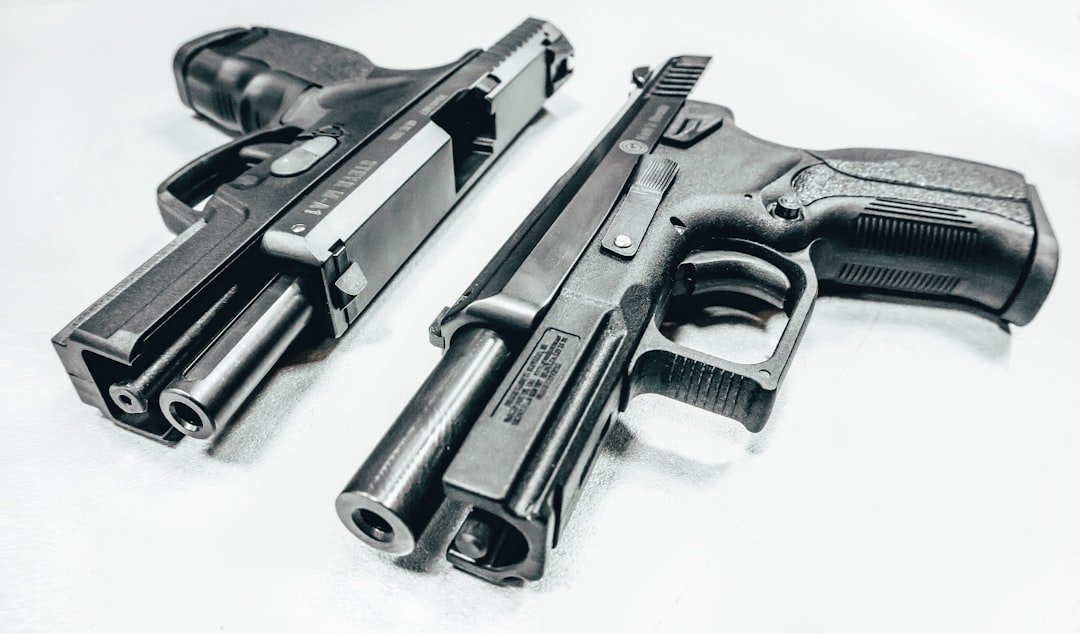
A bottle labeled “gun solvent” reveals far less than its name suggests.
A carbon-blackened slide, polymer frame, rubber overmold, painted markings, and protective finish can all meet the same wet patch—yet they do not react alike. “Gun solvent” is a job description, not a chemical family. One product may be a mild petroleum distillate; another may contain aggressive aromatic solvents, ammonia-based copper removers, alcohols, surfactants, or fast-evaporating ketones.
Compatibility therefore turns on three variables: the actual formula, the material and coating beneath it, and exposure time. A brief wipe on glass-filled nylon can be uneventful while repeated soaking softens an elastomer insert, dulls a painted logo, or attacks an adhesive. Hard-anodized aluminum, nitrided steel, Cerakote-type coatings, blued steel, and polymer can also differ sharply in solvent tolerance. Labels that merely claim “safe for firearms” leave those distinctions unresolved.
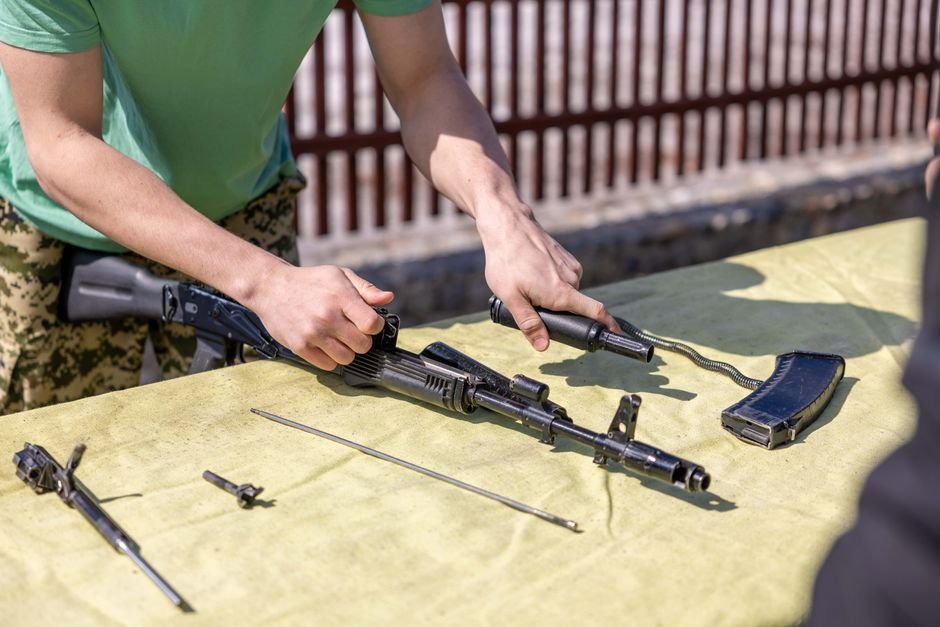
Confirming that a product is genuinely safe on polymer frames means checking the actual solvent formula and contact time, not just trusting a bottle labeled polymer safe gun solvent at face value.
Most routine cleaning is compatible—within limits
“Polymer-safe” is a useful claim, but it does not automatically cover every coating, grip insert, adhesive, optic seal, or painted marking on the firearm.
A “polymer frame” is not one material
A frame described as polymer may be built around glass-filled nylon, but that label does not describe every exposed or concealed component. The grip can include a softer overmold; controls, magazine-release parts, followers, or spacers may use acetal, ABS, or another engineering plastic. Each resin has its own response to hydrocarbons, alcohols, ketones, and chlorinated solvents.
Glass reinforcement improves stiffness and dimensional stability, yet it does not make the nylon matrix immune to solvent. A liquid that penetrates the polymer can cause swelling, loss of surface gloss, or environmental stress cracking—fine cracks that develop where molded-in stress, sharp corners, or mechanical load already exist. Damage may not appear while the part is wet; it can emerge after the solvent evaporates and the part is flexed.
Molded-in rails, pins, threaded bushings, and other inserts add further interfaces. Solvent can wick into narrow gaps and remain there longer than on an open surface. The relevant question is therefore not merely whether the frame is “polymer safe,” but whether the product is compatible with all materials it can reach and whether it is left in contact long enough to matter.
Metal compatibility does not guarantee finish compatibility
Most common gun-cleaning solvents do not harm bare steel or aluminum during ordinary wipe-on contact. That says little about the surface treatment. Paint-fill, dyed markings, decals, and touch-up paint can dissolve, fade, or smear well before the underlying metal is affected. Some protective coatings are highly chemical-resistant once fully cured, while others depend on a thinner film or can be dulled by repeated exposure.
Hard-anodized aluminum is generally durable, but colored anodizing, clear coats, and decorative finishes may be less forgiving. Likewise, rubberized grip panels and soft-touch coatings can swell, become tacky, or lose plasticizers when exposed to aggressive solvents. Polymer accessories—lights, optic housings, magazine base pads, holsters, and lens seals—may use materials different from the frame itself.
Adhesive joints deserve particular caution. Solvent can creep under grip tape, loosen emblem adhesive, compromise thread-retained accessories, or leave residue where two materials meet. A practical conservative approach is to apply cleaner to a patch or brush rather than flooding the assembly, keep it away from nonmetal finishes where possible, and remove residue promptly. When compatibility is uncertain, a small inconspicuous-area test can reveal softening, color transfer, or tackiness before broader exposure.
Why exposure matters as much as the solvent
No solvent family is uniformly “safe” or “unsafe.” Petroleum distillates and light oils are often relatively mild on many firearm-frame polymers during a wipe-on, wipe-off cleaning cycle, but can soften some rubber-like overmolds, labels, and adhesive residues. Alcohols generally flash off quickly, yet concentrated formulas can dull certain coatings or affect paint-fill. Ketones, strong aromatic hydrocarbons, chlorinated solvents, and powerful paint-remover-type blends carry a greater risk of attacking susceptible plastics, finishes, and bonded parts.
The same product can behave very differently in use. A brief application on a cool, intact frame gives little time for absorption. Saturation under a grip panel, inside a magazine well, or around a pinned insert can keep solvent in contact for hours. Heat speeds chemical movement through a polymer; vigorous brushing can turn a slight softening effect into visible surface wear. Repeated cleaning matters because small changes can accumulate before failure becomes obvious.
What damage looks like
Early damage is not always dramatic. Haze or a chalky bloom can indicate a disturbed surface texture or coating. Tackiness, swelling, or softened edges suggest solvent uptake or attack on an elastomer, adhesive, or finish. Crazing—fine, spiderweb-like cracks—often occurs when a stressed molded part encounters an incompatible chemical. It may start near sharp corners, pin holes, molded-in logos, or areas held under tension.
A dull spot from scrubbing may be cosmetic; spreading haze, persistent softness, cracking, or a loosening insert indicates that cleaning should stop until the affected material and product instructions can be checked.
Molded polymer can retain residual stress from manufacture, and installed parts add local tension. A solvent that leaves a flat test area unchanged may still craze a stressed corner or thin section.
Verify compatibility from primary documents
For a warranty-sensitive firearm, the manufacturer’s owner’s manual and care instructions are the controlling source. Look beyond a general statement that the firearm is “polymer framed”: makers may separately specify approved cleaners for the frame, slide coating, optics-ready plate, grip inserts, seals, or factory-applied finish. A named prohibition—such as avoiding chlorinated solvents, acetone, ammonia, or prolonged contact—matters more than a cleaner’s broad “safe on plastics” claim.
The cleaner’s label and technical documents add the other half of the record. Check for:
- Intended use: gun-cleaning solvent, degreaser, bore cleaner, or adhesive remover are not interchangeable.
- Warnings and ingredients: hazard language may flag aggressive carriers even when the full formulation is proprietary.
- Safety Data Sheet (SDS): Sections 2, 3, 7, and 10 can identify solvent families, handling limits, and reactivity information; “trade secret” ingredients may limit certainty.
- Contact instructions: spray-and-wipe directions do not authorize soaking, ultrasonic cleaning, or leaving residue under panels.
When documentation is silent, treat compatibility as unconfirmed rather than inferred from forum reports. Anecdotes rarely identify formulation revision, exposure time, finish batch, or prior damage. Start with the basic equipment needed to clean a gun, then use the least aggressive documented product and method for the particular model. Product-support confirmation in writing is especially valuable for proprietary coatings and warranty claims.
Keep solvent on the parts that need it
-
Unload, open, and position the firearm for drainage
After confirming the firearm is unloaded, orient it so the bore and metal action surfaces can drain outward rather than toward the frame interior, grip cavity, stock, or optic mount. A bench mat or absorbent cloth makes stray liquid visible before it migrates into seams.
-
Use patches for the bore and accessible metal
A patch lightly wetted with the appropriate solvent puts a measured film on fouling without turning the barrel or receiver into a reservoir. Run it through the bore, let the product work only for its stated dwell time, then follow with dry patches until they emerge clean and no wet solvent remains at the muzzle or chamber.
-
Use swabs and brushes sparingly in the action
Cotton swabs, lint-free applicators, and solvent-dampened nylon or bronze brushes can reach rails, bolt faces, locking recesses, and feed areas with far less runoff than a pour or spray. Keep applicators damp rather than dripping, and change them when they begin carrying dissolved residue back onto nearby polymer or finished surfaces.
-
Wipe adjacent surfaces promptly
Any solvent that reaches a polymer frame, coating, painted marking, rubber overmold, or adhesive-backed accessory can be removed promptly with a clean dry cloth. This matters most around pinned joints, grip panels, trigger openings, slide or receiver seams, and under-mounted accessories, where liquid can remain in contact long after visible surfaces appear dry.
-
Avoid flooding, overspray, and sealed-in residue
Immersion and heavy aerosol application create the longest, least predictable exposure. Aerosol mist can settle beneath optics, into adjustment turrets, around lens seals, and inside magazines or controls; runoff can also wick into frame seams and absorbent case foam. Allow the firearm to air out completely before closing it in a case, and inspect low points for pooled liquid.
Product instructions and the firearm maker’s cleaning guidance take priority where they specify application method or prohibited areas.
Match the cleaner to the fouling
The safest cleaner is usually the least aggressive product that removes the actual deposit in a short, controlled contact time. A solvent does not need to be powerful enough to strip hardened copper merely to lift ordinary powder residue from a slide or frame.
- Loose carbon and routine residue: dry brushing, patches, and a mild, label-compatible gun cleaner are often sufficient.
- Oil, grease, and old lubricant: use a cleaner intended to cut petroleum films, then remove residue rather than letting it pool in seams.
- Copper, lead, or tenacious bore deposits: reserve purpose-made bore chemicals for the barrel and other appropriate metal parts.
- Baked-on deposits: mechanical action with a suitable brush or pick can reduce the chemical strength—and dwell time—required.
Labels describe only part of the risk
Low odor may mean lower volatility, not universal material safety. “Natural” citrus or terpene-based cleaners can be strong solvents; “non-toxic” commonly describes a human-exposure classification rather than compatibility with paint, elastomers, adhesives, or polymer blends. Water-based products can still contain surfactants, alcohols, alkaline builders, or corrosion inhibitors that affect finishes differently.
For stubborn deposits, the lower-risk approach is localized, metal-only treatment: apply a small amount to a patch, swab, or bore tool; allow only the stated dwell time; then wipe the area clean. Whole-firearm soaking gives the chemistry access to pins, springs, bonded inserts, paint-fill, optics seals, and hidden joints that do not need cleaning at all.
Three assumptions that can damage a frame or finish
Polymer is a material class, not a compatibility rating.
Nylon, glass-filled blends, elastomeric overmolds, and molded-in inserts can react very differently. A solvent tolerated by one maker’s frame may haze, soften, or stress-craze another.
Short contact lowers risk, but does not make a strong solvent harmless.
Highly active solvents can attack a vulnerable coating or adhesive quickly, especially on warm parts, stressed molding, sharp edges, or residue trapped in a seam.
A finish can protect surfaces and hold visual markings together.
Paint-fill, clear coats, grip textures, bonded panels, and protective coatings may be the first components to discolor, lift, turn tacky, or lose adhesion.
Stop using the product on that area if it produces clouding, whitening, tackiness, swelling, color transfer, lifting edges, cracking, or a persistent chemical odor. Do not try to “clean off” the reaction with another solvent; additional exposure can deepen it.
The conservative rule is simple: apply the mildest cleaner that addresses the residue, in the smallest practical amount, to the intended surface only. When compatibility is unclear—or an unexpected change appears—manufacturer guidance is the useful next source.
Frequently Asked Questions
Is "polymer safe" gun solvent safe on every part of the firearm?
Not necessarily. A “polymer safe” claim doesn’t automatically cover every coating, grip insert, adhesive, optic seal, or painted marking on the firearm — those materials can respond differently than the frame itself.
Can a quick wipe of solvent still damage a polymer frame?
Short contact lowers the risk but doesn’t make a strong solvent harmless. Highly active solvents can attack a vulnerable coating or adhesive quickly, especially on warm parts, stressed molding, or residue trapped in a seam.
What does early solvent damage look like on a polymer frame?
Watch for haze or a chalky bloom, tackiness, swelling or softened edges, and crazing — fine, spiderweb-like cracks that often start near sharp corners, pin holes, or molded-in logos.
Are "natural" or "non-toxic" gun cleaners automatically safer for polymer and finishes?
No. “Natural” citrus or terpene-based cleaners can be strong solvents, and “non-toxic” usually describes human-exposure safety, not compatibility with paint, elastomers, adhesives, or polymer blends.
What should I do if I notice a reaction after applying solvent?
Stop using the product on that area immediately if you see clouding, whitening, tackiness, swelling, color transfer, lifting edges, or cracking. Don’t try to “clean off” the reaction with another solvent — additional exposure can deepen the damage.
Compatibility is specific, not assumed
A solvent can be suitable for metal fouling yet unsuitable for a nearby polymer, coating, adhesive, or elastomer. Controlled, minimal application and prompt verification of unusual changes keep uncertainty from becoming damage.



8 Comments
I’m slightly skeptical of “labeled compatible” as a practical standard when some labels just say safe for firearms. That tells me almost nothing about a particular overmold, optic seal, adhesive, or aftermarket grip.
Would you treat a manufacturer’s general cleaning recommendation as enough, or does compatibility really need to name the solvent/chemical family? It seems like the burden gets pushed back onto the owner unless the firearm maker publishes a fairly specific list.
Agreed. “Safe for firearms” can mean safe for steel barrels and nothing more. I look for the gun maker’s manual first, then the cleaner SDS if I’m considering something stronger than ordinary CLP.
That is a fair criticism. A broad product claim is not the same as documented compatibility with every nonmetal part on every firearm. A firearm maker’s manual is useful when it gives a defined maintenance method or approved product type; for an unusual cleaner, coating, or accessory, the strongest answer is written confirmation from the relevant manufacturer. In the absence of that, use the least aggressive product that addresses the residue and avoid prolonged contact with the uncertain component.
This clears up a lot. What about a polymer frame with factory paint-fill in the markings? I usually put solvent on a patch, but some inevitably gets around the lettering. Is that mostly a cosmetic risk, or can it migrate into the frame material too?
Paint-fill is often the more vulnerable item, especially if the formula or adhesion method is unknown. A small, promptly wiped amount on the surrounding frame is generally a different exposure than letting solvent pool in the markings, but it is still best to keep it off the fill. Apply cleaner to the patch or brush rather than spraying the frame, and stop if the lettering softens, smears, or changes sheen.
Good reminder that “polymer” isn’t a magic force field lol. I’ve seen people soak the whole lower because a video guy did it once. For stubborn carbon, wouldn’t a dedicated bore cleaner on a brush be the sane approach—keep it on the metal, wipe it off, and quit escalating chemistry just because the bottle says ‘extreme’?
The point about closed cases is one I wish more cleaning advice mentioned. I once cleaned a handgun, thought it was dry, then put it straight into a foam case. A day later there was a weird dull spot on a rubberized grip insert. Not exactly a scientific test, but “let it air out first” has become my rule.
What about tiny amounts that wick into the frame seams around pins or removable backstraps? You can be careful with a patch and it still seems impossible to keep every drop out of there. Is compressed air after cleaning a good idea, or could that just drive solvent farther into places it shouldn’t be?